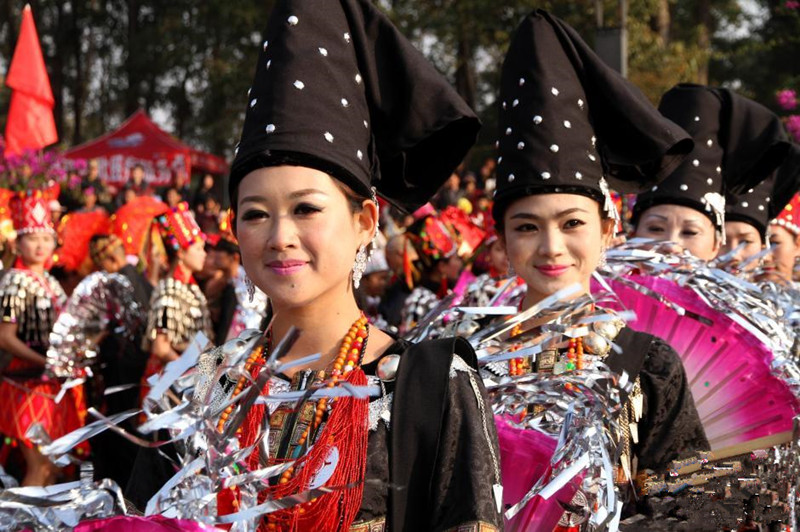
An evening at Mangshi Square (芒市广场) offers visitors a chance to experience Jingpo culture through music, movement and shared celebration. The Daily Munao Zongge Dance (天天目瑙纵歌) brings local dance groups and visitors together in long, winding lines around the square’s ceremonial pillars. You can watch from the edge, take photographs or join the dancers and learn the steps as you go.
This regular evening activity is different from the annual Munao Zongge Festival (目瑙纵歌节). The major festival celebration takes place at the International Munao Zongge Cultural Park (国际目瑙纵歌文化园), generally around the fifteenth day of the first lunar month. It has its own programme, ceremonial activities and much larger gatherings.
According to the supplied event information, the regular evening programme began on August 7, 2026, with local Jingpo groups taking turns to lead the dancing. Schedules, participating groups and individual appearances may change, so confirm the evening’s arrangements with your accommodation before visiting.
Evening Dance Times and Visitor Information
| Item |
Details |
| Location |
The Munao Zongge dance area at Mangshi Square, around the ceremonial pillars |
| Address |
No. 48 Mangshi Avenue (芒市大街) |
| Scheduled hours |
7:30–9:00 p.m. each evening, subject to weather and local arrangements |
| Reservations |
The supplied programme information states that advance booking is not required |
| Participation |
Visitors can watch from the perimeter or join the moving dance lines |
| Seating |
This is a participatory gathering without fixed audience seating |
| Monday, Wednesday and Friday |
The local senior dance troupe is scheduled to lead; individual performers are not guaranteed |
| Weather disruptions |
Heavy rain, storms or other exceptional circumstances may lead to cancellation |
The dance follows flowing routes around four tall Munao Shidong Ceremonial Pillars (目瑙示栋), whose painted patterns are closely associated with Jingpo cultural traditions. Follow the people ahead of you and allow the line to carry you through the turns.
Jingpo Culture and the People Behind the Dance
Pai Legan and the Local Dance Tradition
Pai Legan (排勒干) is a Jingpo intangible cultural heritage practitioner and deputy leader of the Mangshi Senior Munao Zongge Dance Troupe (芒市地区老干部目瑙纵歌团). The supplied account describes how he first encountered large Munao Zongge gatherings as a young person in Xishan Township (西山乡), began leading dances in 2008 and helped establish the troupe in 2017.
His commitment centres on keeping the tradition active through regular practice. Rather than reserving the dance for an annual celebration, the evening programme gives local residents opportunities to participate throughout the year and allows travellers to encounter Jingpo culture during an ordinary visit.
The troupe is scheduled to lead on Monday, Wednesday and Friday evenings. These are useful nights to choose if you hope to see Pai Legan, although his personal attendance depends on other commitments.
Ceremonial Objects and Dance Movements
Some dance leaders carry long ceremonial blades. Their handling and orientation have cultural meaning, and the supplied account distinguishes the peaceful movements used at the square from historical military ceremonial actions.
For visitors, the best approach is to observe these details respectfully, follow the leaders’ directions and avoid touching ceremonial objects. The gathering provides an introduction to a living tradition, while the annual festival offers a broader ceremonial setting.
How to Join Respectfully
You do not need previous dance experience. Start by watching the rhythm and direction of movement, then join at a suitable opening when the organisers or dancers welcome you.
- Respect the ceremonial pillars. Do not climb, lean against or touch them; photograph them from a suitable distance.
- Move with the dance line. Avoid crossing through the procession or walking against its direction.
- Leave ceremonial blades to the performers. Do not approach or handle them.
- Follow local guidance. Keep enough space for other dancers and avoid stopping abruptly for photographs.
- Ask before taking close-up portraits, especially when photographing individual performers.
Comfortable shoes make participation easier. The steps may look simple, but the procession involves sustained walking and repeated turns.
Getting to Mangshi Square
Taxis and Ride-Hailing
A taxi or ride-hailing car is a convenient way to reach the square from central Mangshi (芒市). Show the driver the square’s Chinese name and allow extra time during busy evenings.
For visitors driving themselves, the supplied information notes an underground car park at the square. Check access and opening arrangements on arrival.
Electric Scooters
An electric scooter can be useful for exploring the city and continuing to a night market after the dance. Wear a helmet, check the rental conditions and use designated parking areas.
Public Buses
The supplied transport information lists Bus Routes 1 and 2 as serving the Mangshi Square stop. Confirm current routes and the last departure before relying on a bus for your return journey.
Suggested Evening and Short-Stay Itineraries
An Evening of Dance and Local Food
Have dinner before heading to the square, then leave enough time to look around and find a comfortable place to watch.
| Time |
Suggested activity |
| 6:00–7:15 p.m. |
Enjoy Jingpo or Dai food in the city |
| Around 7:15–7:20 p.m. |
Arrive at the square, photograph the pillars and observe the gathering |
| 7:30–9:00 p.m. |
Watch the dance or join the procession |
| After 9:00 p.m. |
Continue to Xinwanchang Night Market (新玩厂夜市) or Dai Ancient Town Night Market (傣族古镇夜市) |
Arriving before the scheduled start gives you time to understand the dance route and join before the square becomes crowded.
A Two- or Three-Day Mangshi Visit
Day 1: City landmarks and evening dancing
Visit the Tree-Wrapped Pagoda (树包塔), followed by Menghuan Golden Pagoda (勐焕大金塔) and Menghuan Silver Pagoda (勐焕银塔). Leave time for sunset before travelling to the square for the evening dance. Finish with a relaxed night-market visit.
Day 2: Markets and a countryside excursion
If its opening day matches your visit, explore Bingwu Market (丙午集市), described in the supplied itinerary as a weekend market. Continue to Jewellery Street (珠宝街), then choose either Xianfo Cave (仙佛洞) or Heihe Laopo (黑河老坡) for the rest of the day. Check travel times before combining a countryside excursion with another evening at the square.
Day 3: The festival venue
Visit the International Munao Zongge Cultural Park before departure, subject to its current opening arrangements. Do not assume that the park hosts the square’s regular evening programme: the large festival celebrations follow a separate calendar.
Local Food to Try in Mangshi
Jingpo Dishes
Jingpo food is a rewarding choice before or after the dance, particularly for travellers who enjoy fresh herbs, bold seasoning and shared meals.
Look for Jingpo Gui Ji Chicken (景颇鬼鸡), Bamboo-Tube Rice (竹筒饭) and Fire-Roasted Pork (火烧肉). Leaf-Platter Hand-Eaten Rice (绿叶手抓饭) offers a communal dining experience, with rice and accompanying dishes arranged together for sharing.
Dai Flavours
For a Dai meal, try Lemon Sapie (柠檬撒撇), Pounded Chicken Feet (舂鸡脚) or Pineapple Rice (菠萝饭). Ask about ingredients and chilli levels when ordering, as preparation varies between restaurants.
Drinks and Seasonal Snacks
Paoluda (泡鲁达) and Burmese Milk Tea (缅甸奶茶) are drinks to look for while browsing local food stalls. You may also encounter Yangnaiguo Fruit (羊奶果) when it is in season.
Practical Tips for Your Visit
Wear flat, comfortable shoes. Trainers or other supportive footwear are suitable for following the procession.
Carry a light layer if the evening feels cool, and bring insect repellent. Check the weather before leaving your hotel, particularly during rainy periods.
Local shops offer ethnic clothing rentals for visitors interested in photographs. If you choose to wear Jingpo or Dai clothing, ask the shop for help with the correct arrangement and treat the garments respectfully.
Keep your phone and belongings secure while dancing, and step out of the moving line before stopping to take pictures.
If your trip falls near the Lunar New Year, check the annual festival programme separately. The regular square dance and the formal Munao Zongge Festival offer different experiences, so plan around the one you want to attend.