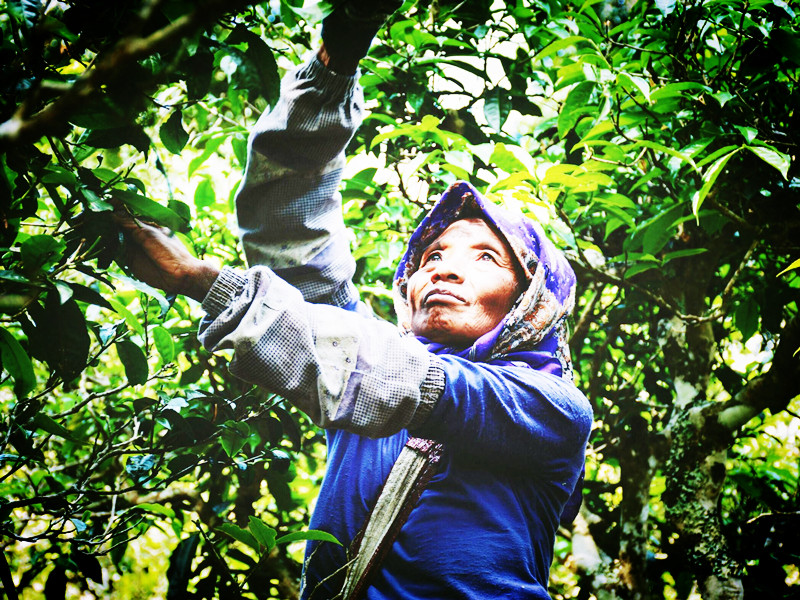
Lincang Tea Culture Garden (临沧茶文化风情园), also known as Lincang Tea Culture and Customs Garden, is a cultural tourism attraction located in Linxiang District (临翔区), Lincang City (临沧市), Yunnan Province (云南省), China. Covering approximately 110 hectares, the garden introduces visitors to the history of Chinese tea, traditional tea ceremonies, ethnic minority tea customs, tea-making techniques and the cultural significance of tea in southwestern China.
Situated on Qinglong Mountain (青龙山), approximately 3 kilometers north of downtown Lincang, the park combines landscaped gardens, tea plantations, cultural sculptures, exhibition areas and traditional tea-making facilities. Its major attractions include the Tea Culture Relief Wall, a statue of the Chinese tea sage Lu Yu, stone inscriptions of The Classic of Tea, the Mansheng Eighteen Teapot Designs, tea culture exhibitions and traditional tea ceremony demonstrations.
Lincang is one of China's most important tea-producing regions, known for its ancient tea trees, Pu'er tea (普洱茶), Dianhong black tea (滇红茶) and diverse ethnic tea-drinking traditions. Visiting the garden provides an introduction to these traditions before exploring famous tea-growing areas such as Bingdao (冰岛), Xigui (昔归) and Baiying Mountain (白莺山). For tea enthusiasts, families, educational groups and cultural travelers, it is a convenient place to begin discovering the history and everyday traditions behind Yunnan tea.
Overview of Lincang Tea Culture Garden
Lincang Tea Culture Garden is a landscaped cultural park devoted to the relationship between tea, history and traditional life in Yunnan. Its exhibitions and outdoor attractions introduce tea cultivation, traditional tea utensils, tea ceremonies, ethnic customs and the historical connections between Yunnan's tea-producing mountains and regional trading routes.
The garden was developed as one of Yunnan's 25 major tourism development projects and has historically been recognized as a National AA-Level Tourist Attraction. Unlike commercial tea estates focused primarily on production and sales, it serves as a cultural destination where visitors can learn about the broader history and significance of tea.
The park is arranged across a hillside, with open plazas, cultural monuments, exhibition buildings, tea gardens and pathways that connect different areas. Visitors can explore the main attractions in approximately one hour, although two to three hours is more suitable for those interested in exhibitions, tea ceremonies and hands-on cultural activities.
| Visitor Information |
Details |
| Attraction |
Lincang Tea Culture Garden |
| Chinese Name |
临沧茶文化风情园 |
| Address |
No. 1 Chayuan Road (茶苑路1号), Linxiang District, Lincang, Yunnan, China |
| Location |
Qinglong Mountain, approximately 3 km north of downtown Lincang |
| Reported Area |
Approximately 110 hectares |
| Attraction Type |
Tea culture park, cultural exhibitions and gardens |
| Historical Tourism Rating |
National AA-Level Tourist Attraction |
| Opening |
Park grounds are listed as open year-round, 24 hours a day |
| Admission |
General park admission is listed as free |
| Recommended Visit |
1–3 hours |
| Main Attractions |
Tea Culture Relief Wall, Lu Yu Statue, Classic of Tea inscriptions, teapot sculptures, exhibitions and tea gardens |
| Cultural Activities |
Tea ceremonies, tea tasting and tea-making experiences, subject to availability |
| Best Visiting Hours |
Daytime, particularly morning |
The park's published visitor listing indicates year-round access. Exhibition halls, workshops and cultural performances may operate on separate schedules. The current AA rating and all individual activity arrangements should be reconfirmed before publication or travel.
History and Development of Lincang Tea Culture Garden
Establishment of the Tea Culture Park
The development of Lincang Tea Culture Garden began in 1997, when the former Lincang regional authorities approved the project as part of efforts to promote the area's tea industry and cultural tourism.
In 1998, the project was included among Yunnan's 25 major tourism development initiatives. Construction proceeded in stages, with the objective of creating a cultural attraction that combined traditional tea heritage, gardens, recreational spaces and visitor facilities.
The park began trial operations on January 24, 2001, and officially opened on April 15 of the same year. Its development reflected the growing recognition of tea culture as an important part of Lincang's regional identity and tourism economy.
At that time, Yunnan's international reputation for Pu'er tea and ancient tea-tree heritage was still developing. The garden provided an early public venue for introducing the region's tea traditions through monuments, exhibitions and cultural activities.
Lincang Tea Culture Expo and Public Events
One of the park's notable historical events took place on April 30, 2007, when it hosted the opening ceremony of the Second China Lincang Tea Culture Expo.
The event included a large cultural performance known as Impressions of Lincang Tea (临茶印象), together with tea-tasting activities, cultural presentations and regional tea-related exhibitions.
Thousands of visitors and tea enthusiasts participated in the celebrations, demonstrating the importance of tea as both an economic product and a cultural symbol for Lincang.
Over time, the garden has evolved into a public recreational and cultural space, providing residents and visitors with opportunities to explore tea traditions in a landscaped environment close to the city center.
Why Lincang Is Famous for Its Ancient Tea Culture
Lincang and the Origins of Tea Cultivation
Lincang is widely recognized as one of the most significant regions in the historical development of tea cultivation in China. Its mountainous landscape, subtropical climate and extensive forests provide suitable conditions for both wild and cultivated tea trees.
The region contains important ancient tea-tree populations, including those in Mengku Daxue Mountain (勐库大雪山) and Baiying Mountain. These tea-growing landscapes contribute to scientific research on tea biodiversity, historical cultivation and the relationship between local communities and tea trees.
Lincang's tea heritage is also closely associated with the Lancang River (澜沧江) basin, where tea-growing communities have developed distinctive cultivation and processing traditions over many generations.
The garden introduces this broader history through its displays, sculptures and cultural exhibits, helping visitors understand why tea is central to the region's identity.
Lincang's Famous Tea-Producing Areas
Some of Yunnan's most highly regarded teas originate in the mountainous counties surrounding Lincang.
Bingdao Ancient Tea Village (冰岛古茶村), in Shuangjiang County (双江县), is renowned for Pu'er tea produced from local large-leaf tea varieties. Xigui Ancient Tea Village (昔归古茶村), in the Bangdong region, is another well-known origin associated with distinctive mountain-grown Pu'er tea.
Baiying Mountain is celebrated for its diversity of tea-tree varieties, while Fengqing County (凤庆县) is particularly famous for Dianhong black tea.
These tea-growing regions are located well beyond downtown Lincang, making the Tea Culture Garden a convenient introductory attraction before a longer journey into the tea mountains. Recent regional reporting continues to document the importance of tea cultivation, traditional processing and tea tourism throughout Lincang.
Main Attractions and Things to See in Lincang Tea Culture Garden
Tea Culture Square and Relief Wall
The Tea Culture Square (茶文化广场) is one of the main public spaces in the garden and provides an introduction to the historical and cultural themes represented throughout the park.
A large decorative Tea Culture Relief Wall (茶文化壁雕) illustrates subjects connected with Yunnan tea, traditional tea-growing communities and the historical importance of tea trading routes.
The relief designs bring together imagery associated with tea cultivation, processing, trading and ethnic traditions, creating a visual introduction to the region's diverse tea culture.
The square also features a dry fountain and landscaped open areas, providing a spacious setting for walking and photography. Visitors can begin their exploration here before continuing toward the teapot sculptures, historical monuments and exhibition buildings.
Statue of Lu Yu and The Classic of Tea
One of the park's important cultural landmarks is the statue of Lu Yu (陆羽), the Tang Dynasty writer traditionally honored as the Tea Sage of China.
Lu Yu is best known for writing The Classic of Tea (茶经), an influential work on the cultivation, preparation and appreciation of tea. Completed during the Tang Dynasty, the text discusses tea production, water selection, utensils and methods of preparation, helping establish tea as an important subject of Chinese cultural writing.
The garden includes stone inscriptions associated with The Classic of Tea, connecting Lincang's regional tea traditions with the broader history of tea in China.
Although tea was consumed long before Lu Yu's lifetime, his writing helped shape later understandings of tea preparation and appreciation. The monument offers visitors an opportunity to consider how tea developed from an agricultural product into an important element of Chinese social and cultural life.
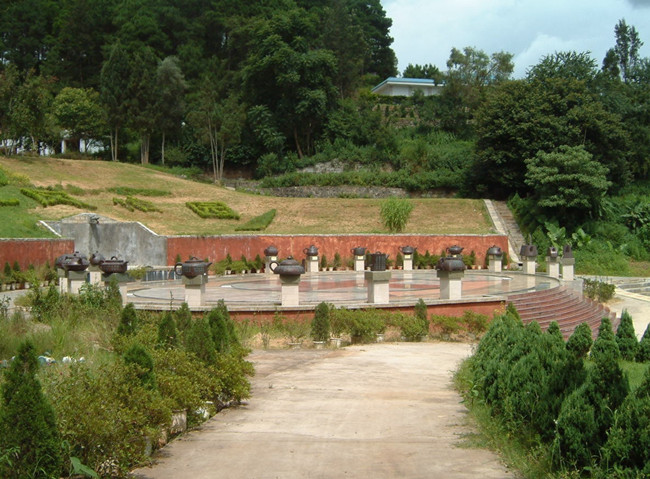
Mansheng Eighteen Teapot Designs
The garden also features sculptural representations of the Mansheng Eighteen Teapot Designs (曼生十八式), a celebrated tradition in Chinese teapot design associated with the Qing Dynasty scholar and artist Chen Mansheng (陈曼生).
Chen Mansheng collaborated with the renowned potter Yang Pengnian (杨彭年) and other craftsmen in developing teapot forms that combined functional design with calligraphy, poetry and scholarly aesthetics.
The traditional designs include forms such as the Shipiao Teapot (石瓢壶), Jinglan Teapot (井栏壶) and Handuo Teapot (汉铎壶), each reflecting a different approach to shape, proportion and cultural symbolism.
Visitors can observe the different forms represented in the sculpture collection and learn about the importance of teapot design in Chinese tea culture.
These displays are particularly interesting for tea enthusiasts, collectors and visitors who want to understand the relationship between traditional pottery and tea preparation.
Tea Culture Exhibition Hall
The Tea Culture Exhibition Hall (茶文化陈列展馆) introduces different aspects of tea history, production and traditional consumption.
Its exhibitions have been described as including tea utensils, historical materials, illustrations and displays associated with tea cultivation and the Ancient Tea Horse Road.
Traditional tools used for preparing, roasting, boiling and serving tea help visitors understand how tea practices developed in different regions and among different ethnic communities.
The exhibitions also introduce aspects of tea trading, including the role of packhorse caravans that transported tea and other goods through the mountains of southwestern China.
Although the exhibition style is relatively traditional, the displays provide useful cultural background for travelers visiting Lincang's tea-growing areas for the first time.
Exhibition opening hours and access arrangements may differ from the general park schedule, so visitors should confirm whether the hall is operating on their intended visiting date.
Tea Art and Tea Ceremony Hall
The Tea Art and Tea Ceremony Hall (茶艺茶道馆) is one of the most interesting facilities for visitors who want to observe traditional tea preparation.
Tea demonstrations may introduce the selection of tea leaves, preparation of utensils, warming of cups, controlled pouring and serving methods used in Chinese tea culture.
Rather than simply displaying tea utensils, demonstrations help visitors understand how these objects are used and how brewing techniques influence flavor, aroma and the overall tea-drinking experience.
Depending on the program, guests may also have opportunities to learn basic tea-serving etiquette or participate in guided tasting activities.
Demonstration schedules can vary, and regular performances should not be assumed to operate throughout the day.
Traditional Tea Ceremonies and Ethnic Tea Customs
Chinese Ceremonial Tea Traditions
Traditional tea ceremonies are an important part of the cultural presentations associated with Lincang Tea Culture Garden.
The park's historical program has included demonstrations described as Royal Tea Ceremony (皇家茶道), emphasizing formal etiquette, coordinated movements and the ceremonial presentation of tea.
Such performances illustrate how tea has been associated with hospitality, social relationships and cultural refinement throughout Chinese history.
Visitors can observe the arrangement of tea utensils, the preparation process and the careful serving of tea to guests.
Gongfu Tea Brewing
The park has also featured demonstrations associated with Gongfu Tea (工夫茶), a style of tea preparation emphasizing control over brewing time, water temperature, tea quantity and repeated infusions.
Gongfu tea traditions are especially well known in southern China, particularly in the Chaoshan region of Guangdong and parts of Fujian Province.
The brewing process commonly uses a small teapot or covered bowl, small drinking cups and carefully controlled pouring techniques.
For visitors unfamiliar with Chinese tea preparation, a Gongfu tea demonstration provides an introduction to how different brewing methods can bring out distinctive flavors and aromas from the same tea leaves.
Wa Ethnic Tea Traditions
The Wa Ethnic Group (佤族) is one of the important ethnic communities of southwestern Yunnan, with a strong cultural presence in Lincang, particularly in Cangyuan County (沧源县) and surrounding areas.
Tea plays a role in traditional Wa social life, hospitality and community gatherings. In some communities, tea leaves are roasted before being boiled or infused, creating a strong and aromatic drink.
The use of fire, clay vessels and locally prepared tea reflects the close relationship between tea consumption and everyday mountain life.
Ethnic tea demonstrations can help visitors appreciate the differences between formal Chinese tea ceremonies and tea traditions rooted in local household customs.
Yi Ethnic Tea Traditions
The Yi Ethnic Group (彝族) also preserves tea-drinking customs associated with traditional mountain communities.
In some Yi communities, tea is roasted in a clay pot before hot water is added, producing a concentrated and fragrant drink. This preparation method is often associated with household hospitality and conversations around the hearth.
The garden's historical cultural programs have included Yi tea demonstrations, allowing visitors to discover how ethnic communities have developed distinctive ways of preparing and serving tea.
Performances may not be available every day, and travelers interested in a specific cultural presentation should confirm the current program in advance.
Traditional Tea-Making Workshops and Hands-On Experiences
Learning How Yunnan Tea Is Produced
The Tea-Making Workshop (制茶作坊) introduces the main stages involved in transforming fresh tea leaves into finished tea.
Depending on the activity and type of tea being produced, visitors may learn about picking, withering, heat treatment, rolling, drying and pressing.
Different tea categories require different production methods. For example, Pu'er raw tea, black tea and green tea follow distinct processing techniques that influence their flavor, color and storage characteristics.
Observing traditional processing equipment helps visitors appreciate the skill required to produce high-quality tea.
Tea Picking and Processing Activities
During suitable seasons, organized tea experiences may introduce visitors to the selection and picking of fresh tea leaves.
Tea-making demonstrations can show how leaves are heated, rolled and dried, while selected workshops may provide supervised hands-on activities.
For educational groups and families, these experiences offer a practical introduction to agricultural production and traditional craftsmanship.
Participants can learn why the timing of picking, processing temperature and handling techniques influence the quality of finished tea.
The availability of tea-picking and tea-making activities depends on seasonal conditions, staffing and workshop schedules. Visitors should arrange any hands-on experience in advance rather than assuming that all workshops operate daily.
Tea Tasting and Appreciation
Tea tasting is another important part of learning about Lincang's tea culture.
Visitors may have opportunities to taste regional varieties, including Pu'er tea and Dianhong black tea, while learning about differences in aroma, flavor, mouthfeel and processing methods.
Raw Pu'er Tea (生普洱茶) is commonly appreciated for its changing character over time, while Ripe Pu'er Tea (熟普洱茶) undergoes an accelerated microbial fermentation process that produces a different flavor profile.
Dianhong black tea, traditionally associated with Fengqing, is known for its fragrant aroma and rich infusion.
Guided tasting sessions can help visitors recognize these differences and develop a better understanding of the relationship between tea varieties, processing techniques and regional growing conditions.
Tea Gardens and Scenic Landscapes
Tea Plantations on Qinglong Mountain
The garden's hillside setting incorporates tea-growing landscapes and planted areas that introduce the appearance and cultivation of tea bushes.
The tea gardens are particularly attractive during periods of active growth, when fresh green leaves contrast with the surrounding trees and landscaped pathways.
Visitors can walk along designated routes, observe tea plants and learn about the environmental conditions required for tea cultivation.
Unlike the ancient tea forests of Lincang's remote mountain districts, these planted areas function primarily as an accessible educational and sightseeing environment close to the city.
Photography and Nature Walks
The landscaped grounds offer opportunities for photography, casual walks and relaxation.
Tea-related sculptures, garden pathways and hillside views provide different photographic subjects, while the greenery creates a peaceful setting away from the busiest urban streets.
Morning and late afternoon generally provide softer natural light, particularly for photographing the tea gardens and outdoor monuments.
As the park is arranged across a hillside, visitors should expect some walking on sloping paths and steps.
Suggested Visiting Routes at Lincang Tea Culture Garden
One-Hour Tea Culture Visit
Recommended for travelers with limited time
A one-hour visit is sufficient to explore the principal outdoor landmarks and gain an introductory understanding of the park's tea culture displays.
Begin at the main entrance and Tea Culture Square, where the large relief wall introduces the history and traditions of Yunnan tea. Continue to the statue of Lu Yu and the stone inscriptions of The Classic of Tea, before exploring the Mansheng teapot sculptures.
If the exhibition hall is open, spend some time examining the historical tea utensils and cultural displays. Complete the visit with a short walk through the tea garden areas.
This route is suitable for visitors passing through Lincang or looking for a convenient cultural activity near the city center.
Half-Day Tea Culture Experience
Recommended duration: 2–3 hours
A half-day visit provides more time to explore the exhibitions and participate in available cultural activities.
Begin with the outdoor cultural monuments before continuing to the Tea Culture Exhibition Hall. Spend time learning about tea cultivation, historical trading routes and the traditional utensils used by different ethnic communities.
If a tea ceremony is scheduled, visit the Tea Art and Tea Ceremony Hall to observe traditional brewing techniques. Travelers interested in tea-making can also inquire about supervised workshop activities.
Finish with a walk through the landscaped tea gardens and enjoy the park's quieter hillside atmosphere.
Family and Educational Tea Tour
Recommended duration: Approximately 3 hours
For families and educational groups, the park can provide an introduction to the relationship between tea cultivation, traditional craftsmanship and ethnic culture.
Begin by explaining where tea comes from and how fresh leaves are transformed into different types of tea. The sculptures and exhibitions can then be used to introduce the historical role of tea in Chinese culture.
A supervised tea-making demonstration or workshop, when available, is particularly suitable for children because it allows them to observe and participate in practical activities.
A traditional tea ceremony can introduce the importance of hospitality and etiquette, while a final walk through the planted tea areas connects the cultural displays with the living tea plant.
Schools and organized groups should arrange educational activities in advance to confirm staffing, access and suitable supervision.
How to Get to Lincang Tea Culture Garden
Location and Access from Downtown Lincang
Lincang Tea Culture Garden is located at No. 1 Chayuan Road, approximately 3 kilometers north of central Lincang, in the Qinglong Mountain area of Linxiang District.
The park is relatively convenient to reach by taxi, private vehicle or local transportation.
A journey from the central urban area may take approximately 10–15 minutes by car, depending on the departure point and traffic conditions.
Travelers can navigate using the attraction's Chinese name, 临沧茶文化风情园, or its street address.
From Lincang Airport
Lincang Boshang Airport (临沧博尚机场) is located southwest of the city near Boshang Town (博尚镇).
The airport is approximately 22–25 kilometers from the central urban area, depending on the chosen route. Travelers arriving by air can arrange a taxi or private transfer to the city and continue to the Tea Culture Garden.
Driving time varies with traffic and road conditions, so visitors should allow sufficient time when planning a visit before an onward flight.
From Lincang Railway Station
Lincang Railway Station (临沧站) is served by the Dali–Lincang Railway (大临铁路), which connects Lincang with Dali and onward rail services.
Travelers arriving by train can arrange a taxi or private vehicle to the Tea Culture Garden. The drive is relatively short, although the precise time depends on traffic and station access arrangements.
Train schedules and journey times should be checked for the intended travel date because services may change.
Private Car and Local Transportation
For visitors already staying in central Lincang, a taxi is generally the simplest way to reach the garden.
Private vehicles are particularly convenient for families and small groups who wish to combine the park with other cultural visits.
Visitors planning to continue into Lincang's remote tea-growing areas will generally benefit from private transportation, as destinations such as Xigui and Bingdao are located well outside the city center.
Opening Hours and Visitor Arrangements
Lincang Tea Culture Garden is listed as open throughout the year, with general access to the park grounds available around the clock. However, daytime is strongly recommended, as lighting may be limited in some outdoor areas after dark.
General entry to the park is listed as free. Specific cultural activities, including guided tea ceremonies, tea tasting and hands-on workshops, may operate under separate arrangements.
Visitors should understand that general park access does not guarantee admission to every exhibition building or participation in a scheduled performance.
For a complete tea culture experience, it is advisable to confirm the following arrangements before arrival:
-
Opening status of the Tea Culture Exhibition Hall
-
Availability of tea ceremony performances
-
Schedule of tea-making workshops and tasting sessions
-
Whether group activities require advance reservations
For visitors with limited time, the outdoor cultural monuments and landscaped tea areas remain the principal attractions to prioritize.
Best Time to Visit Lincang Tea Culture Garden
Spring Tea Season: March to April
March and April are particularly attractive months for tea enthusiasts visiting Lincang, as spring tea production becomes active in the surrounding tea-growing regions.
Fresh tea growth and seasonal processing activities create opportunities to learn about tea production, while the region's tea estates may offer related cultural experiences.
For travelers planning a broader tea-focused journey, spring is one of the most rewarding seasons.
Summer: May to August
Summer brings greener scenery and seasonal rainfall to Lincang.
The park's landscaped grounds and tea-growing areas can be particularly attractive during this period, although visitors should prepare for occasional showers.
Comfortable footwear and rain protection are recommended, especially when walking on hillside paths.
Autumn: September to November
Autumn is another pleasant season for exploring the park and surrounding region.
Depending on weather conditions, visitors can enjoy comfortable walking temperatures and opportunities for photography around the landscaped grounds.
For those planning a longer trip, autumn can also be suitable for visiting tea villages and other cultural destinations in Lincang.
Winter: December to February
Lincang generally experiences relatively mild daytime temperatures compared with many northern Chinese cities, although mornings and evenings can be cool.
Winter can be a comfortable season for walking through the garden, particularly on clear, sunny days.
Visitors should bring a light jacket for cooler periods and plan their visit during daylight hours.
Practical Travel Tips for Visiting Lincang Tea Culture Garden
Lincang Tea Culture Garden is best approached as a cultural park and introduction to Yunnan tea heritage, rather than a modern amusement park or large commercial tea factory. Its main appeal lies in the combination of cultural monuments, traditional exhibitions, landscaped grounds and opportunities to observe tea-related activities.
For most visitors, one to two hours is sufficient to explore the principal outdoor landmarks and exhibition areas. Travelers interested in tea ceremonies, workshops or educational activities should allow additional time and confirm the relevant arrangements in advance.
Because the garden is built across a hillside, comfortable walking shoes are recommended. Some paths and steps may become slippery after rainfall, and sun protection is useful during clear weather.
Visitors should remain on designated paths in the planted tea areas and avoid picking leaves or disturbing plants without permission. Those participating in workshops should follow the instructions of the supervising staff, particularly when activities involve heated equipment.
The exhibition buildings and cultural presentations may operate on schedules different from the park's general opening arrangements. Visitors who particularly want to see a tea ceremony or participate in tea making should contact the attraction beforehand.
Travelers interested in purchasing locally produced tea should take time to understand its origin, processing method and storage requirements. Lincang produces several distinct tea styles, and a guided tasting can be useful for comparing their characteristics.
Explore Lincang Tea Culture Garden with Yaso Trip
Yaso Trip (亚索旅业) specializes in private cultural tours, tea experiences, ethnic minority journeys and customized travel throughout Yunnan and China.
As a Kunming-based inbound tour operator with more than 20 years of experience, Yaso Trip can arrange Lincang tea culture tours, private transportation, English-speaking guides and customized tea-related travel programs for international visitors, families, educational groups and tea enthusiasts.
A visit to Lincang Tea Culture Garden can be included in a private sightseeing program or used as an introduction to a longer journey exploring the tea-producing landscapes of Lincang. Depending on travelers' interests, arrangements may include tea history interpretation, guided tasting, traditional processing demonstrations and visits to local tea-growing communities, subject to availability.
For groups interested in deeper tea exploration, Yaso Trip can also organize customized journeys to famous tea regions such as Bingdao, Xigui, Baiying Mountain and Fengqing, with opportunities to learn about Yunnan's traditional tea cultivation and processing heritage.
Our services can include English-speaking tour guides, private drivers, comfortable vehicles, hotel arrangements and flexible itineraries, helping travelers discover the tea culture and landscapes of southwestern Yunnan.
To arrange a visit, please provide your travel dates, group size and preferred tea activities. Yaso Trip can help coordinate an itinerary suited to your interests and available time.





 View All Yunnan Tours


 View All Yunnan Theme Tours by Interest




 Home




 2 Days
 2 Places