Shadian Village History Museum (沙甸村史馆) is located inside the second courtyard of Yufeng Academy (鱼峰书院) on Jiancheng Road in Shadian Subdistrict, Gejiu City, Honghe Prefecture, Yunnan Province. It is about a 5-minute bicycle ride from Shadian Grand Mosque (沙甸大清真寺) and can be easily included in a Shadian cultural cycling route.
An important point for visitors is that Shadian Subdistrict has three village history museums, and the Shadian Village History Museum discussed here is not an independent building. It is a dedicated historical exhibition space located inside the second courtyard of Yufeng Academy. Visitors who come to Yufeng Academy can therefore visit the village history museum together with the academy's other cultural facilities.
Detailed Introduction to Shadian Village History Museum
Basic Overview
Shadian Village History Museum uses the historic buildings of Yufeng Academy as its setting and presents the local history of Shadian Village. It is a community-oriented historical exhibition venue rather than a religious place of worship. The museum focuses on the development of the Hui Muslim settlement of Shadian, local customs and traditional life, the history of education, and the long-term interaction and exchange among different ethnic communities.
The exhibitions use old photographs, historical objects, documents, farming tools, household items, and other materials to reconstruct different periods of village life. For travelers, the museum provides a more local and detailed perspective on Shadian than a general regional history exhibition.
It is useful to distinguish the museum from the Shadian Theme Education Center for Building a Strong Sense of Community for the Chinese Nation. The Shadian Village History Museum focuses primarily on the local history and development of Shadian Village, while the theme education center presents a broader historical narrative about Gejiu's tin industry and interaction and integration among different ethnic communities in the wider region. The two venues therefore complement each other rather than duplicate the same content.
Main Exhibition Themes
Village Origins and Historical Development
This section introduces the early settlement and migration history associated with Shadian and the formation of villages around Jinyu Mountain. Historical materials concerning old village entrances, bridges, and other local heritage features help visitors understand how the settlement developed over time.
Education and Cultural Development
Education is an important part of Shadian's local history. The exhibition introduces the development of Yufeng Academy, the history of modern education in the community, and figures associated with education and scholarship, including Bai Liangcheng (白亮诚) and Ma Jian (马坚). Historical photographs and documents also present the experiences of students who later traveled overseas for further study, including studies in Egypt.
Traditional Life and Local Customs
Historical farming tools, household utensils, traditional textile-related objects, Hui cultural items, and other everyday objects show how local residents lived and worked in earlier periods. These exhibits provide a tangible picture of agriculture, household life, handicrafts, and community customs in historic Shadian.
Ethnic Unity and Community Development
The museum also presents the history of interaction, mutual assistance, and shared community development between the Hui people of Shadian and surrounding Han, Yi, Hani, and other communities. Materials relating to local development and rural revitalization show how the village has changed in the modern period.
Architecture and the Yufeng Academy Setting
The museum is housed in the second courtyard of Yufeng Academy, a historic two-story Chinese timber-and-rammed-earth complex with white walls, gray tiled roofs, wooden corridors, and traditional courtyard architecture.
This arrangement gives the visit two complementary cultural themes in one location. Travelers can explore the historic academy buildings while also viewing the local village-history exhibition. There is therefore no need to treat the village history museum as a separate cycling destination.
Travel Guide for Cyclists
Getting There
From Shadian Grand Mosque, the museum inside Yufeng Academy is approximately a 5-minute bicycle ride away. The roads around the town are relatively convenient for cycling, and bicycles can be left near the academy entrance where appropriate.
Travelers arriving by car can navigate to Yufeng Academy; the village history museum is inside the academy's second courtyard. Local motorcycle taxis and ride-hailing vehicles can also be used for short-distance transportation within Shadian.
Visiting Information
The village history museum is free to visit as part of the Yufeng Academy visit and does not require a separate admission ticket. Allow approximately 25–35 minutes for the village history museum itself, or around 40–60 minutes to visit the first courtyard and second courtyard of Yufeng Academy together, including the library and village history exhibition.
The reference visiting period is 09:00–17:00, with Monday generally used as the closing day except during statutory holidays. Because opening arrangements can change, travelers should confirm locally before visiting.
The period between 09:00 and 11:00 is a convenient time for a visit, when the historic courtyard is generally suitable for quiet sightseeing and photography.
Visitor Etiquette
As a public historical and cultural exhibition venue, the museum does not require visitors to wear a headscarf. Appropriate and respectful clothing is sufficient. Visitors should keep quiet inside the exhibition areas and set mobile phones to silent mode.
Historical objects, old photographs, documents, and displays should not be touched. Follow the venue's photography rules and avoid flash photography where prohibited. Food and drinks should not be consumed inside the exhibition areas, and visitors should take care not to damage the historic buildings.
Food and Accommodation in Shadian
After visiting Yufeng Academy and the village history museum, travelers can return to the main Shadian town area for local halal food. Popular local choices include Youdian Beef Jerky (油淋牛干巴), beef patties, cold rice noodles, and halal beef hot pot.
Accommodation is concentrated around Shadian Grand Mosque and the central town area, including local hotels and guesthouses. Because the main cultural sites are relatively close to one another, staying in the town makes it practical to explore Shadian by bicycle.
Updated Shadian Cultural Cycling Route
Because Shadian Village History Museum is located inside Yufeng Academy, it does not require an additional cycling detour or separate route segment. Visitors should simply visit the village history museum together with the academy's library and historic courtyard.
The recommended route is:
Shadian Grand Mosque → Xiying Mosque → Jinjizhai Mosque → Baifangzi Mosque → Chuanfangzhai Mosque → Yufeng Academy, including Shadian Village History Museum → Shadian Hui Culture and Art Museum → Shadian Theme Education Center → Ethnic Unity Theme Park → Shadian Town
The overall cycling distance is approximately 11 km. With a relatively gentle route and sufficient time at each stop, travelers can complete the cultural circuit in approximately half a day, although a full day allows more time for photography, museum visits, meals, and cultural exploration.
Cultural Stops Along the Route
1. Shadian Grand Mosque (沙甸大清真寺) — A major landmark and prominent Islamic architectural site in Shadian.
2. Xiying Mosque (西营清真寺) — A smaller community mosque notable for its Chinese timber architectural character.
3. Jinjizhai Mosque (金鸡寨清真寺) — A quiet and relatively simple community mosque reflecting everyday religious life.
4. Baifangzi Mosque (白房子清真寺) — Known for its Chinese-style double-eaved entrance and blue glazed-tile minaret.
5. Chuanfangzhai Mosque (川方寨清真寺) — A distinctive mosque with traditional Chinese palace-style architecture and sweeping rooflines.
6. Yufeng Academy (鱼峰书院), including Shadian Village History Museum — A historic Chinese academy containing the local village-history exhibition, making this one stop with two complementary cultural themes.
7. Shadian Hui Culture and Art Museum (沙甸回族文化艺术馆) — A specialized cultural venue featuring Arabic calligraphy, Hui folk art, handicrafts, and local cultural history.
8. Shadian Theme Education Center for Building a Strong Sense of Community for the Chinese Nation — An exhibition center presenting the broader history of Gejiu's tin industry and interaction and integration among different communities.
The Ethnic Unity Theme Park (民族团结主题公园) outside the theme education center provides additional green space for walking, photography, and a short rest before returning to Shadian town.
Practical Tips
The Shadian Village History Museum is part of Yufeng Academy rather than a separate building. Travelers visiting the academy should enter both courtyards and include the village-history exhibition in the same visit.
The museum is particularly suitable for travelers interested in local history, village development, Hui culture, traditional community life, education history, and ethnic cultural interaction in southern Yunnan. Its old photographs and everyday historical objects offer a more intimate village-level perspective than a large regional museum.
Shadian has two other village history museums, associated with Jinchuan Community and Xinshadian Community. They are located farther away, so travelers with limited time can focus on the Shadian Village History Museum inside Yufeng Academy as part of the main cultural cycling route.
For cyclists, take care at village intersections and around areas shared with motor vehicles. Combining the academy, village history museum, Hui Culture and Art Museum, and theme education center makes it possible to explore Shadian's local history and cultural development efficiently without adding unnecessary cycling distance.
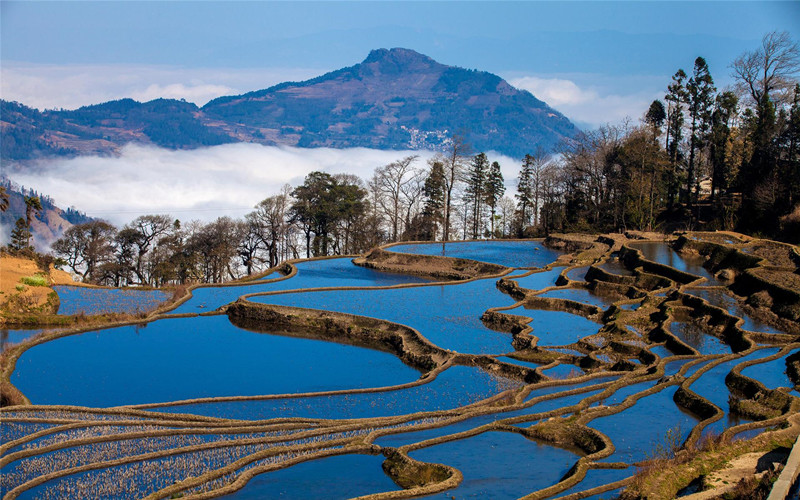
With Yaso Trip, the Shadian cultural cycling route can be combined with the Yuanyang Rice Terraces, halal food experiences, mosque visits, and onward travel to Mengzi or Jianshui for a deeper southern Yunnan cultural journey.