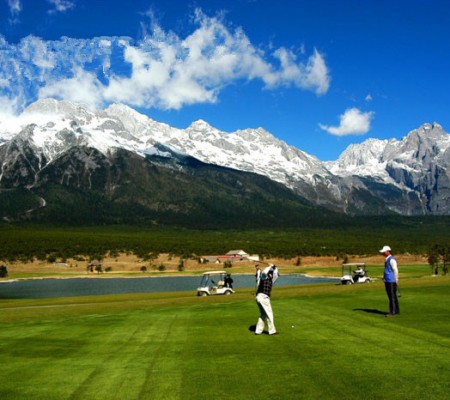
Jade Dragon Snow Mountain (玉龙雪山) is the defining mountain landscape of Lijiang and one of the most spectacular high-mountain systems in Yunnan. Located about 30 kilometers north of Lijiang, the range extends approximately 35 kilometers from south to north, forming a continuous chain of steep snow peaks, glaciers, alpine valleys, forests and high mountain meadows.
The famous expression Thirteen Peaks (十三峰) is a traditional description of this continuous mountain chain. It should not be misunderstood as an official modern list in which every summit has an independently standardized Chinese geographic name. Several major peaks have well-established traditional or commonly used names, while a number of secondary summits do not have widely recognized standardized Chinese names. For this reason, this guide identifies those secondary summits as Unnamed Peak A–F rather than adopting invented names circulated on social media.
For ordinary travelers, the Thirteen Peaks are a snow-mountain sightseeing and designated-trail hiking destination rather than a summit-climbing area. Visitors can experience the mountains through officially open areas such as Glacier Park, Yak Meadow, Spruce Meadow and Blue Moon Valley. Undeveloped high-altitude ridges, remote valleys and old mountaineering tracks should not be treated as public tourist trails.
Jade Dragon Snow Mountain at a Glance
Jade Dragon Snow Mountain lies in Yulong Naxi Autonomous County (玉龙纳西族自治县) and rises dramatically above the Lijiang basin. Its highest summit is Shanzidou, generally reported at approximately 5,596 meters, although some survey references use slightly different elevations.
The mountain is dominated by strongly weathered limestone and related rock formations. Sharp ridges, fractured cliffs and extensive scree create the dramatic skyline but also make undeveloped mountain terrain exceptionally unstable.
From the lower valleys upward, the landscape changes through broadleaf and mixed forest, spruce and fir woodland, rhododendron shrubland, alpine meadow, scree and finally snow-and-ice terrain.
This enormous vertical range allows travelers to experience several completely different mountain environments within a relatively short distance.
All 13 Peaks of Jade Dragon Snow Mountain
The following table organizes the complete traditional Thirteen Peaks sequence according to the mountain information commonly used in local and outdoor reference materials.
It is important to distinguish between named peaks and secondary summits without a widely standardized Chinese name. The use of "Unnamed Peak" below is intentional and avoids adopting unofficial names invented or popularized by online content.
| No. |
Peak |
Elevation |
Main Characteristics |
Visitor / Climbing Status |
| 1 |
Shanzidou Peak / Wulupan (扇子陡・乌鲁盘) |
5,590.2–5,596 m |
Highest summit of Jade Dragon Snow Mountain. Distinguished by an enormous fan-shaped rock, snow and ice face. Baishui No. 1 Glacier develops below this high mountain sector. Glacier Park reaches only the lower glacial environment and not the summit. |
No public summit-climbing route. View from Glacier Park and other developed scenic areas. |
| 2 |
Wuluna / Yulong Second Peak (乌鲁纳・玉龙二峰) |
5,501 m |
One of the highest secondary summits, with sharp mixed rock-and-snow ridges and heavily fractured terrain. The upper ridge overlooks Haba Snow Mountain and the greater Shangri-La mountain region. |
No public backcountry access. Remote viewing only. |
| 3 |
Green Snow Peak (绿雪奇峰) |
5,391 m |
Prominent summit associated with the main glacial landscape. Light reflected from glacier ice has historically contributed to its distinctive "green snow" imagery. |
No public summit route. View from permitted scenic areas. |
| 4 |
Busongmaogua Peak (布松毛卦峰) |
5,387 m |
Narrow, rugged mountain ridge associated with the traditional sacred-mountain landscape. Glacially shaped terrain occurs in the surrounding high valleys. |
Undeveloped high mountain. Scenic viewing only. |
| 5 |
Xuelian Peak / Wuluhan (雪莲峰・乌鲁含) |
5,321 m |
One of the best-known northern high peaks. Upper terrain contains heavily weathered scree, steep slopes and seasonal snow and ice. Historical mountaineering activity has left old GPS tracks online, but these should not be treated as current tourist routes. |
No standard commercial summit route. Best viewed from Yak Meadow. |
| 6 |
Unnamed Peak A |
5,137 m |
Sharp rocky summit with heavily weathered mountain rock. Loose rock and unstable high-altitude terrain are characteristic of this section of the ridge. |
No developed hiking or climbing route. View only. |
| 7 |
Unnamed Peak B |
5,070 m |
Secondary rock-and-snow summit with deeply dissected ridges and gullies forming part of the continuous Jade Dragon skyline. |
No public summit access. View only. |
| 8 |
Unnamed Peak C |
4,945 m |
Dark exposed rock dominates much of the summit, with comparatively limited permanent or seasonal snow coverage creating a black-and-white mountain appearance. |
Undeveloped mountain terrain. View only. |
| 9 |
Unnamed Peak D |
4,941 m |
Broader and more rounded than several neighboring summits. Rhododendron and alpine meadow environments occur on lower slopes and surrounding valleys. |
No public summit route. View from permitted areas. |
| 10 |
Unnamed Peak E |
4,910 m |
Located farther north in the range, above valleys containing dense fir and other high-mountain forest ecosystems. |
Backcountry access not a tourist activity. View only. |
| 11 |
Hualeng Peak / Black-and-White Peak (花冷峰・黑白峰) |
4,850 m |
Known for contrasting dark and light rock faces. Unofficial wilderness tracks have historically appeared in the surrounding mountain area, but they are not established tourist hiking routes. |
Do not follow unofficial backcountry routes. Scenic viewing only. |
| 12 |
Unnamed Peak F |
4,735 m |
Smaller northern rock-and-snow summit with alpine shrubs and high mountain vegetation on the lower slopes. |
No public summit route. View only. |
| 13 |
Hualuobu Gushan (化洛布孤山) |
4,662 m |
Northern terminal summit in this traditional sequence. Its proximity to the high meadows makes it an important element of the northern Jade Dragon landscape. |
View from the Yak Meadow area. Do not continue into undeveloped backcountry. |
Important: The Thirteen Peaks are a traditional description of the Jade Dragon Snow Mountain skyline rather than a modern official climbing list. Several secondary summits do not have widely standardized Chinese names. Their elevations may also vary between historical, topographic and modern survey references. The table is intended for geographical and tourism orientation, not as a list of climbable peaks.
Shanzidou – The Highest Peak
Shanzidou dominates the high central section of Jade Dragon Snow Mountain. Its enormous rock-and-ice face forms one of the range's most recognizable profiles and rises to approximately 5,600 meters.
The summit should never be confused with Glacier Park. The developed tourist facilities reach the lower glacial environment at around 4,500–4,680 meters when the highest visitor sections are open. They do not provide a route to the summit.
The terrain above the tourist area becomes a completely different high-mountain environment of fractured rock, snow, ice and steep exposed slopes.
For international visitors, the distinction is simple:
Glacier Park is a high-altitude sightseeing destination. Shanzidou is not a tourist summit-climbing route.
Xuelian Peak – The Best-Known Northern High Peak
Xuelian Peak is one of the most recognizable mountains in the northern section of the Thirteen Peaks.
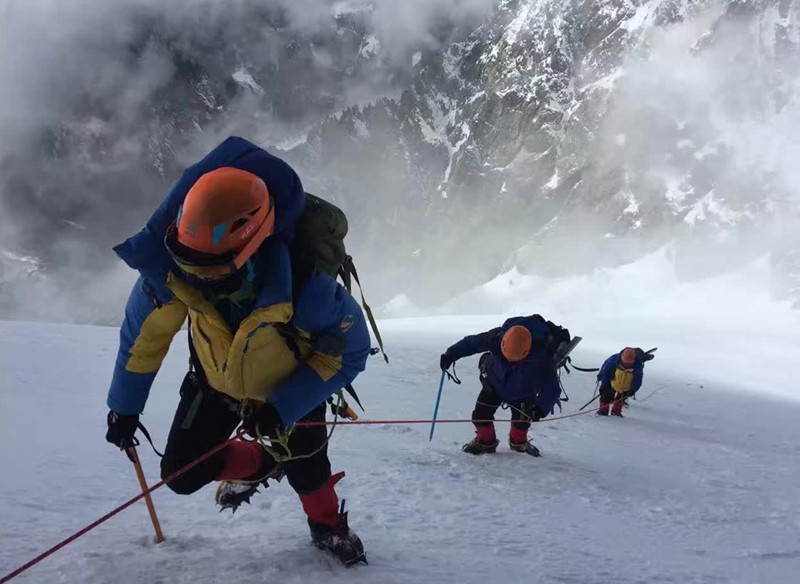
Historical outdoor reports document mountaineering activity on the mountain, which explains why old route descriptions and GPS tracks remain available online. These historical records should not be interpreted as current permission to climb the peak.
The upper mountain contains extensive scree, fractured rock and seasonal snow and ice. Weather can deteriorate extremely rapidly, while reliable communications cannot be expected in remote high-altitude terrain.
For contemporary visitors, Xuelian Peak is best appreciated from Yak Meadow and other officially open viewpoints.
Glaciers and Alpine Landscapes
Jade Dragon Snow Mountain is famous for its low-latitude glacial landscape. Modern glaciers and older glacial landforms have shaped high valleys, cirques and mountain basins across the range.
Baishui No. 1 Glacier is the best-known example and forms part of the dramatic scenery around Glacier Park.
The wider mountain range also contains glacial valleys, ancient glacial basins and remote alpine lakes. Some of these locations appear on outdoor websites and social-media platforms, but their presence on a map does not mean they are open tourist destinations.
Glaciers are also changing over time. The number, area and classification of individual ice bodies can differ according to survey date and scientific methodology, so old glacier statistics should not be treated as permanently fixed figures.
Vertical Mountain Ecology
One of the greatest natural features of Jade Dragon Snow Mountain is its enormous vertical ecological range.
Lower elevations contain broadleaf and mixed forest. As elevation increases, these transition into spruce and fir forest, followed by rhododendron shrubland and alpine meadows.
Around May and June, rhododendrons add extensive seasonal color to parts of the mountain environment. Autumn brings another transformation as forest and alpine vegetation turn yellow, gold and red beneath the snow peaks.
Above the vegetation line, the landscape becomes increasingly severe. Grassland gives way to scree, exposed rock, snow and ice.
Visitors can observe much of this ecological transition from officially developed scenic areas without entering the remote backcountry.
Naxi Sacred-Mountain Culture
Jade Dragon Snow Mountain is one of the most important sacred landscapes in traditional Naxi culture.
The mountain is closely associated with Sanduo (三朵), an important protective deity of the Naxi people, and has occupied a central position in local religious traditions and mythology for generations.
Beiyue Temple in Baisha (白沙北岳庙) is an important cultural site associated with traditional mountain worship and provides valuable context for travelers who want to understand Jade Dragon as more than a scenic attraction.
The traditional image of thirteen continuous peaks also appears in local legends. Such stories form part of the cultural interpretation of the mountain rather than a scientific explanation for the geological formation or formal naming of the individual summits.
Can Tourists Climb the Thirteen Peaks?
The Thirteen Peaks should not be promoted as thirteen commercially climbable mountains.
Ordinary visitors should remain within officially open scenic areas and designated walking routes. Undeveloped high-altitude ridges, remote valleys and summit approaches should not be treated as recreational trails.
Old expedition reports, historical mountaineering descriptions and GPS tracks may show approaches toward Xuelian Peak or other parts of the range. Their existence does not establish current legal public access.
Similarly, online advertisements offering unofficial summit attempts, ridge traverses, backcountry camping or "secret routes" should not be treated as equivalent to authorized tourism products.
Scientific research and other officially approved activities can operate under different access arrangements. Such special authorization does not establish general recreational access.
Legal Hiking Routes for Ordinary Visitors
Travelers can still enjoy excellent walking experiences within the developed parts of Jade Dragon Snow Mountain.
Glacier Park Boardwalk
Glacier Park (冰川公园) provides the highest developed tourist experience on the mountain.
The cableway reaches the high visitor zone at approximately 4,500 meters. When weather, maintenance and conservation conditions permit, the developed stairway and boardwalk system can provide access to viewpoints around 4,680 meters.
Although the walking distance is relatively short, the altitude makes it physically demanding. Visitors should walk slowly, avoid running and pay attention to altitude symptoms.
The boardwalk ends within the developed visitor area. It is not the beginning of a route toward Shanzidou.
Yak Meadow Alpine Walk
Yak Meadow (牦牛坪) is the most rewarding developed walking area for viewing the northern Thirteen Peaks.
At roughly 3,600–3,800 meters, the landscape combines alpine grassland, forest and snow-mountain scenery. Developed paths allow visitors to walk through the meadow while viewing Xuelian Peak, Hualuobu Gushan and other northern mountain formations.
Spring and early summer bring wildflowers and rhododendrons, while autumn generally offers excellent visibility.
Visitors should remain on officially open paths and must not cross barriers toward the undeveloped mountain interior.
Spruce Meadow Forest Walk
Spruce Meadow (云杉坪) lies at approximately 3,200–3,300 meters and offers a much gentler walking experience.
The combination of spruce forest, open meadow and snow-mountain views makes it particularly suitable for families, older travelers and visitors who prefer to avoid the very high altitude of Glacier Park.
The area is also associated with Naxi legends surrounding the "Third Kingdom of Jade Dragon," adding a cultural element to the landscape.
Blue Moon Valley Walk
Blue Moon Valley (蓝月谷) provides one of the easiest and most photogenic walks around Jade Dragon Snow Mountain.
Its turquoise and milky-blue waters create a spectacular foreground for the snow peaks. Developed walking areas are relatively gentle and can be combined easily with one of the higher mountain attractions.
For many visitors, Blue Moon Valley is best scheduled after the higher-altitude section of the day.
Best Viewpoints for the Thirteen Peaks
Ganhaizi – Best Panoramic View
Ganhaizi (甘海子) is one of the best places for appreciating the overall scale and north–south alignment of Jade Dragon Snow Mountain.
Its open landscape provides a broad perspective toward the range, making it particularly suitable for panoramic photography.
Clear early mornings offer some of the best opportunities for seeing the long line of snow peaks illuminated by sunrise.
Yak Meadow – Best for Northern Peaks
Yak Meadow places alpine grassland directly beneath the northern section of the range.
It is particularly useful for observing Xuelian Peak, Hualuobu Gushan and neighboring summits, while meadow and forest provide attractive foregrounds for photography.
Baisha Ancient Town and Yuhu Village
Baisha Ancient Town (白沙古镇) combines distant snow-mountain views with one of Lijiang's most important historic Naxi settlements.
Yuhu Village (玉湖村) lies closer to the mountain and offers stone houses, rural scenery and imposing mountain backgrounds.
These locations are especially rewarding for travelers interested in combining landscape photography with Naxi culture.
Best Time to Visit
April to June is one of the best periods for spring vegetation, rhododendrons and lingering snow on the upper mountains.
September to November is generally excellent for visibility and mountain photography. Clearer autumn skies frequently provide better opportunities to see the complete ridge.
The main summer rainy season from approximately June through August can bring heavy cloud and mist, sometimes hiding the snow peaks for entire days.
Winter produces beautiful snow scenery but can be extremely cold and windy at higher elevations. Scenic-area operations may also change according to snow, wind and weather conditions.
High-Altitude Safety
Altitude is the principal health concern for ordinary visitors.
The journey from Lijiang to Glacier Park involves a rapid increase from roughly 2,400 meters to more than 4,500 meters. Headache, dizziness, nausea, unusual fatigue and shortness of breath can occur.
Walk slowly and avoid unnecessary physical exertion. Warm clothing, sun protection and adequate hydration are important even on apparently clear days.
Oxygen may help some visitors manage mild symptoms, but it should never be used to justify remaining at high altitude when symptoms are severe or worsening.
Visitors with significant medical conditions should seek appropriate medical advice before traveling to very high elevations.
Unofficial Backcountry Routes to Avoid
Old outdoor forums and social-media platforms contain descriptions of unofficial routes entering the back side of Jade Dragon Snow Mountain.
These include historical approaches toward Xuelian Peak, remote alpine lakes, valleys and high mountain ridges.
Such routes should not be promoted as normal hiking itineraries.
Unstable rock, cliffs, fog, snow, high winds and poor communications make the undeveloped mountain significantly more dangerous than the scenic area. Unauthorized travel can also damage fragile alpine vegetation and increase pressure on local rescue services.
A downloaded GPS track does not prove that a route is currently open, permitted or safe.
One-Day Classic Jade Dragon Snow Mountain Tour
Begin early from Lijiang Old Town (丽江古城) and travel toward the mountain.
Stop around Ganhaizi in the morning for panoramic views of the Thirteen Peaks when weather conditions are favorable.
Continue to Glacier Park for the high-altitude glacial experience, or choose Yak Meadow if the priority is alpine walking and northern-peak photography.
After descending, explore Blue Moon Valley before returning to Lijiang.
Because cableway tickets, weather conditions and daily visitor controls can affect the itinerary, travelers should avoid trying to force every high-altitude attraction into one day.
Two-Day Thirteen Peaks & Naxi Culture Tour
Day 1 – Ganhaizi and Yak Meadow
Travel from Lijiang to Ganhaizi for panoramic views of the mountain range. Continue to Yak Meadow and walk through the officially open alpine meadow area while viewing the northern peaks.
Stay overnight in Baisha, Yuhu Village or Lijiang.
Day 2 – Spruce Meadow, Blue Moon Valley and Naxi Culture
Visit Spruce Meadow for an easy forest-and-meadow walk before continuing to Blue Moon Valley.
Later, explore Baisha and Beiyue Temple to learn about the relationship between the Naxi people and their sacred snow mountain.
This two-day itinerary provides a more complete understanding of the Thirteen Peaks than a simple cableway excursion.
Jade Dragon Snow Mountain vs. Haba Snow Mountain
| Category |
Jade Dragon Snow Mountain |
Haba Snow Mountain |
| Highest Peak |
Shanzidou, approx. 5,596 m |
Main summit, 5,396 m |
| Main Travel Style |
Scenic sightseeing and developed walking |
Trekking, village travel and organized mountaineering |
| Commercial Summit Experience |
No public summit route |
Guided climbing available subject to current requirements |
| High-Altitude Tourist Experience |
Glacier Park |
Base camp and organized climbing program |
| Best for General Sightseeing |
Excellent |
Excellent |
| Best for a 5,000m Climbing Objective |
Not appropriate |
More appropriate established option |
The distinction is important. Jade Dragon Snow Mountain is one of Yunnan's premier snow-mountain sightseeing destinations, while Haba provides a more appropriate option for travelers specifically seeking an organized high-altitude mountaineering experience.
Jade Dragon Snow Mountain Thirteen Peaks in a Yunnan Hiking & Climbing Guide
| Category |
Jade Dragon Snow Mountain Thirteen Peaks |
| Location |
Yulong County, Lijiang |
| Traditional Number of Peaks |
13 |
| Highest Summit |
Shanzidou, approx. 5,596 m |
| Range Length |
Approx. 35 km north–south |
| Commercial Summit Climbing |
No public commercial summit routes across the Thirteen Peaks |
| Public Hiking |
Official scenic-area paths and boardwalks |
| Best High-Altitude Walk |
Glacier Park |
| Best Alpine Meadow Walk |
Yak Meadow |
| Best Easy Forest Walk |
Spruce Meadow |
| Best Easy Valley Walk |
Blue Moon Valley |
| Best Panorama |
Ganhaizi |
| Best Northern-Peak Views |
Yak Meadow |
| Best Cultural Landscape |
Baisha and Yuhu Village |
| Best Season |
Apr–Jun, Sep–Nov |
| Cultural Identity |
Sacred mountain landscape of the Naxi people |
| Backcountry Routes |
Unofficial GPS tracks should not be treated as tourist trails |
Snow-Mountain Tours with Yaso Trip
Yaso Trip can customize Jade Dragon Snow Mountain journeys for international travelers interested in snow-mountain scenery, alpine walking, photography and Naxi culture.
For first-time visitors, Ganhaizi combined with Glacier Park or Yak Meadow and Blue Moon Valley provides an excellent introduction to the mountain. Travelers with more time can add Spruce Meadow, Baisha, Yuhu Village and Beiyue Temple for a deeper understanding of the relationship between the Thirteen Peaks and Naxi culture.
The most important point is that the Thirteen Peaks should be understood as one magnificent sacred mountain system rather than thirteen individual summits waiting to be climbed. Several peaks have established traditional names, while others remain unnamed or inconsistently named in modern tourism literature.
For travelers seeking genuine 5,000-meter mountaineering rather than scenic sightseeing, Yaso Trip can instead plan an appropriate Haba Snow Mountain climbing program, subject to current mountain access, permits, professional guide arrangements, weather conditions and safety requirements.