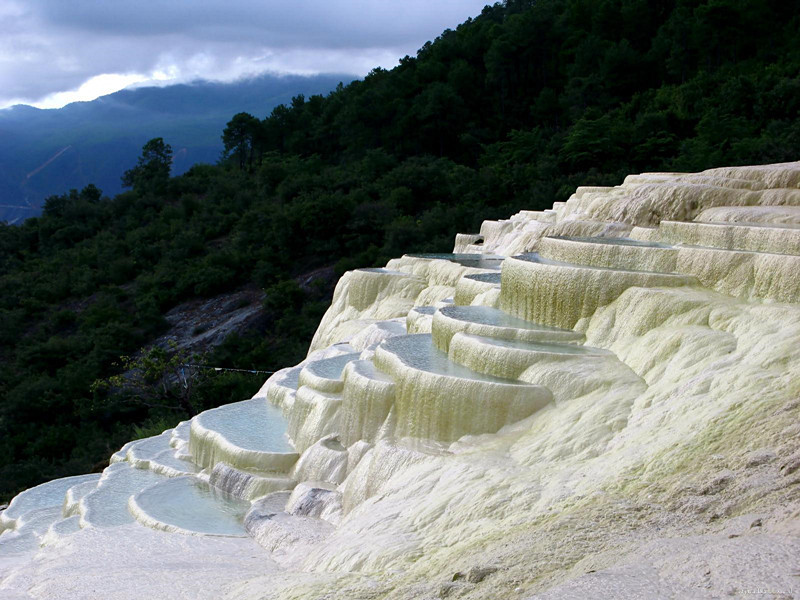
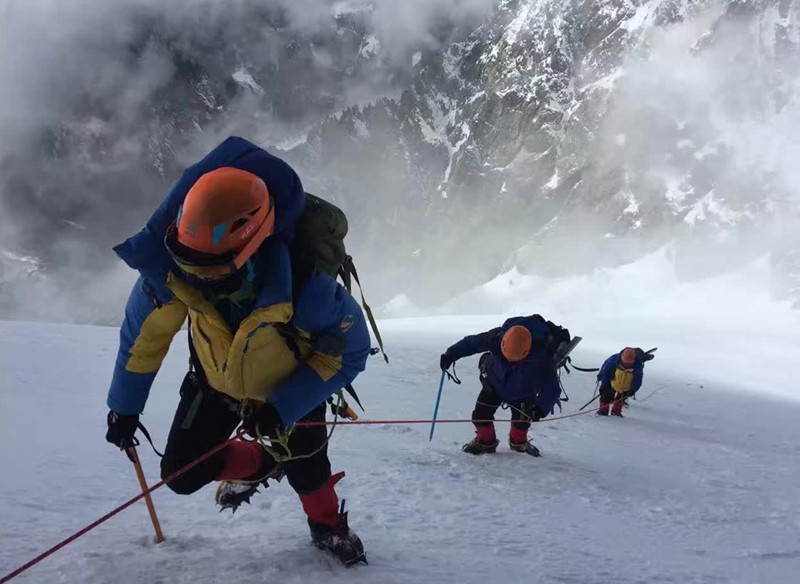
Xuelian Peak (雪莲峰) is one of the high peaks of the Jade Dragon Snow Mountain range north of Lijiang. Commonly reported at approximately 5,300 meters, with 5,321 meters frequently used in contemporary outdoor references, it rises in the northern-to-central section of the mountain chain near the much higher Shanzidou Peak (扇子陡), the 5,596-meter main summit of Jade Dragon Snow Mountain.
The peak became known among Chinese mountaineers through historical climbing expeditions and old outdoor reports. Earlier accounts described approaches from Yak Meadow, forest camps and high scree slopes before reaching the summit ridge. Those descriptions remain useful for understanding the geography and history of the mountain, but they should not be interpreted as a current climbing guide. Old GPS tracks, trip reports and summit records do not establish that a route is legally open today.
For ordinary travelers, Xuelian Peak should currently be experienced from permitted areas within the Jade Dragon Snow Mountain Scenic Area (玉龙雪山景区). Yak Meadow provides one of the best perspectives toward this section of the range, while other developed areas allow visitors to appreciate the extraordinary vertical landscape of Jade Dragon Snow Mountain without entering undeveloped high-altitude terrain.
Xuelian Peak and the Jade Dragon Snow Mountain Range
Jade Dragon Snow Mountain extends north–south above the Lijiang basin and is traditionally described as a chain of thirteen major peaks. Seen from a distance, the continuous white ridge resembles a dragon flying above the landscape, which gave the mountain its famous name.
Xuelian Peak forms part of this larger mountain system rather than an isolated massif. Across the wider range, steep rock towers, alpine ridges, glacial landforms and deeply incised valleys create some of the most dramatic mountain scenery in northwestern Yunnan.
Across Tiger Leaping Gorge lies Haba Snow Mountain (哈巴雪山), creating a remarkable geological relationship between two major mountain systems divided by the deeply cut Jinsha River.
Xuelian itself is a mixed rock-and-snow mountain. Weathering is severe across much of the Jade Dragon range, producing loose scree, unstable rock and sharp ridges. At higher elevations, snow and seasonal ice add another layer of complexity.
These conditions explain why a mountain that may appear relatively accessible from the surrounding scenic area can become extremely serious once a person leaves developed tourist routes.
Elevation and Mountain Landscape
Historical sources give slightly different elevations for Xuelian Peak, with figures around 5,290–5,321 meters appearing in mountaineering records. For general tourism information, approximately 5,300 meters is the most useful description unless referring to a specific surveyed dataset.
The vertical relief is enormous. From the high meadows at around 3,400–3,500 meters to the summit area, the mountain rises by nearly 2,000 vertical meters.
This creates several distinct vegetation and landscape zones. Lower mountain slopes contain conifer forest, followed by rhododendron shrubland and alpine meadow. Higher elevations transition into exposed scree, weathered rock and mixed snow-and-ice terrain.
Remote glacially shaped valleys and small alpine lakes also occur within the wider mountain interior, but these should not be treated as ordinary visitor attractions where they fall outside currently permitted tourist areas.
Climate and Mountain Weather
Xuelian Peak experiences a highly variable alpine climate. Conditions at high elevation can be completely different from those in Lijiang or even at the lower tourist areas of Jade Dragon Snow Mountain.
Strong winds frequently affect exposed ridges during the colder months. The summer monsoon brings cloud, rain, hail and poor visibility, while high elevations can experience snow even when lower areas are comparatively mild.
Temperature differences between day and night can also be substantial. A sunny morning can rapidly change into cloud, strong wind or precipitation, which is one reason why historical climbing accounts frequently mention difficult weather.
Visitors should therefore distinguish between the weather forecast for Lijiang city and actual mountain conditions. Even sightseeing trips to developed high-altitude areas require warm layers and preparation for sudden temperature changes.
A Sacred Mountain in Naxi Culture
Jade Dragon Snow Mountain is much more than a geological landmark. It occupies an important place in the spiritual and cultural world of the Naxi people (纳西族) and is closely associated with traditional Dongba beliefs.
Xuelian Peak forms part of this wider sacred mountain landscape. Visitors should therefore treat the mountain with cultural as well as environmental respect.
Prayer sites, religious objects and traditional places should not be disturbed. Visitors should also avoid treating sacred mountains simply as targets to be "conquered," particularly where local regulations and conservation policies restrict access.
This cultural dimension is one of the reasons a visit to Jade Dragon Snow Mountain can be combined effectively with Naxi villages and other cultural sites around Lijiang.
Natural Highlights of Xuelian Peak
Sharp Northern Ridges
Xuelian Peak forms part of the dramatic high ridge system of Jade Dragon Snow Mountain. From suitable viewpoints, visitors can see a succession of rock and snow summits extending along the range.
Clear mornings can reveal remarkable contrasts between the white upper mountains, dark forest and blue sky. Under suitable conditions, sunrise and sunset can illuminate the highest ridges with warm golden light.
Vertical Forest and Alpine Vegetation
The enormous elevation range creates a remarkably complete mountain ecosystem. Conifer forest dominates lower slopes, while rhododendrons become particularly attractive in late spring and early summer.
Above the vegetation line, the landscape changes rapidly into exposed rock, scree and alpine terrain. This transition can be appreciated from developed scenic areas without entering the remote mountain interior.
Remote Valleys and Alpine Lakes
The backcountry contains deep valleys and small alpine lakes formed by past glacial processes. Some have appeared in outdoor trip reports under informal names.
These remote locations should not be confused with public scenic attractions. Where they lie beyond established visitor areas, travelers should not follow old GPS tracks or social-media directions to reach them independently.
Wildlife and Mountain Ecology
The Jade Dragon mountain environment supports a wide range of plants and wildlife across its different elevation zones. The wider protected landscape provides habitat for mountain mammals and numerous alpine plant species, including rhododendrons and other plants adapted to cold high-altitude environments.
Vegetation becomes increasingly fragile with elevation. Damage caused by trampling, camping or repeated off-trail travel can take many years to recover.
This is particularly important when evaluating older outdoor articles. A route may have been physically walked in the past without being an appropriate recreational trail today.
Can Tourists Climb Xuelian Peak?
Xuelian Peak should not currently be promoted as a commercial climbing destination or an independently accessible trekking mountain.
Historical mountaineering reports document summit attempts and routes on the mountain, but these records do not constitute present-day permission for visitors to repeat them. Travelers should follow the latest restrictions issued by the relevant local authorities, scenic-area management and protected-area authorities.
Undeveloped high-altitude terrain above the public visitor zones is subject to access controls. Outdoor clubs and individual travelers should not assume they can organize summit trips simply because older route descriptions remain available online.
Similarly, there is no current tourist base camp or standard commercial summit infrastructure comparable with established mountaineering destinations.
For international tourism websites, Xuelian Peak is therefore best classified as:
High snow mountain for scenic viewing and mountaineering-history interest — not a standard tourist summit-climbing product.
How Ordinary Visitors Can See Xuelian Peak
The best approach for ordinary travelers is to remain inside officially open areas of Jade Dragon Snow Mountain Scenic Area.
Yak Meadow
Yak Meadow (牦牛坪) is one of the most attractive locations for viewing the northern and central sections of the mountain range. The high alpine meadow combines grassland, forest and snow-mountain scenery and provides a much safer way to appreciate Xuelian Peak than attempting to enter the backcountry.
Visitors can reach the developed visitor area using the scenic-area transportation system and cableway arrangements available on the day of travel.
The meadow is particularly photogenic when the mountains are clear in the morning. Visitors should remain inside the permitted scenic zone and should not continue from the meadow toward undeveloped backcountry trails.
Ganhaizi
Ganhaizi (甘海子) provides broader views of the Jade Dragon range from lower elevation. It is suitable for understanding the overall shape of the mountain system and photographing the snow peaks from a greater distance.
Visibility varies dramatically according to season and weather, so early starts are generally preferable for mountain photography.
Nearby Scenic Areas
A visit to Xuelian Peak viewpoints is normally part of a wider Jade Dragon Snow Mountain journey rather than a stand-alone excursion.
Blue Moon Valley (蓝月谷) provides one of the strongest visual contrasts, with turquoise water below the massive snow-mountain backdrop.
Visitors can also explore other officially open mountain environments and then continue toward the Naxi villages north of Lijiang.
Accommodation is best arranged in Lijiang, Baisha or established hotels around the scenic area. There is no reason for ordinary visitors to camp in undeveloped mountain terrain.
Best Time to See Xuelian Peak
April to June is an attractive period for mountain scenery and spring vegetation. Rhododendrons flower across parts of the higher landscape, while snow may still remain prominent on the upper peaks.
September to November is another excellent period, often combining relatively clear skies with autumn vegetation. This is one of the better windows for mountain photography.
The summer rainy season can bring extensive cloud and mist, frequently hiding the peaks even when lower Lijiang remains suitable for sightseeing.
Winter can produce spectacular snow scenery, but temperatures at higher visitor areas become very low and strong winds can affect exposed locations. Visitors should dress for mountain conditions rather than Lijiang city temperatures.
Historical Mountaineering on Xuelian Peak
Xuelian Peak has an interesting place in the history of recreational mountaineering around Lijiang. Older Chinese outdoor records refer to climbing activity in the early 2000s and describe the peak under names including the "Northeast Peak of Jade Dragon Snow Mountain."
Historical accounts describe an approach from Yak Meadow through forest, pasture, scree and eventually mixed snow-and-rock terrain. A small wooden structure once mentioned in older expedition reports was also used as a landmark or temporary camp area.
These accounts help document how earlier climbers explored the mountain, but the physical existence of an old route does not make it a current tourist trail.
Historical Route Description – Archive Reference Only
Older reports generally described the route in the following geographical sequence:
Yak Meadow → forest and former camp area → high mountain valley → scree slopes → upper ridge → Xuelian Peak
Some historical GPS descriptions identify additional landmarks and approximate elevations along the way. These should be regarded as archival mountaineering information, not navigation instructions.
The historical approach involved a very large elevation gain from the meadow to the summit and passed through increasingly unstable terrain. Climbers moved from forest into low alpine vegetation, followed by extensive scree and exposed upper slopes.
Near the summit, older reports describe steep weathered rock mixed with seasonal snow and ice. Falling rock, slipping on scree, sudden fog and high winds were among the principal hazards.
Historical One-Day and Two-Day Climbing Accounts
Older outdoor reports generally described two styles of ascent.
Some experienced climbers attempted very long single-day ascents, leaving at night and climbing continuously toward the summit before descending the same day. Such trips involved many hours of strenuous movement at high altitude, often with the descent continuing after extreme fatigue had already developed.
Other groups historically used a two-day format, establishing a temporary high camp before attempting the upper mountain early the following morning.
Neither historical format should be interpreted as a recommended contemporary itinerary. Backcountry camping and summit access must follow current mountain-management regulations, and travelers should not recreate old expeditions from archived GPS data.
Why the Historical Route Is Dangerous
The most serious problem is not simply altitude. The mountain combines several hazards that can amplify one another.
Weathered limestone and other fractured rock create loose scree and unstable footing. Upper slopes can contain snow, hard ice and hidden frozen surfaces, while steep terrain leaves little margin for a slip.
Fog is another major problem. Once cloud envelops the mountain, visual landmarks can disappear rapidly, making navigation extremely difficult in terrain where obvious trails may not exist.
Strong ridge winds, hail and sudden snowfall can also produce rapid heat loss. A delayed descent becomes particularly dangerous because exhaustion, darkness and falling temperatures occur simultaneously.
Mobile-phone coverage cannot be relied upon in remote mountain terrain, and rescue is substantially more difficult than in the developed scenic area below.
These characteristics explain why historical descriptions such as "introductory 5,000-meter snow mountain" should not be used to suggest that Xuelian Peak is easy or appropriate for inexperienced climbers.
Xuelian Peak vs. Haba Snow Mountain
Travelers sometimes compare Xuelian Peak with Haba because both exceed 5,000 meters and are located in the greater Lijiang–Shangri-La mountain region. From a tourism perspective, however, they should be treated very differently.
| Category |
Xuelian Peak |
Haba Snow Mountain |
| Elevation |
Approx. 5,300 m |
5,396 m |
| Location |
Jade Dragon Snow Mountain, Lijiang |
Shangri-La |
| Tourist Summit Product |
No standard commercial summit program |
Organized guided climbing is available subject to current requirements |
| Ordinary Visitor Experience |
Scenic viewing from permitted areas |
Village travel, trekking and organized mountaineering |
| Established Climbing Support |
Not a normal tourist climbing destination |
Local climbing support and base-camp system |
| Best Choice for First 5,000m Climb |
No |
Haba is the more appropriate established option |
Travelers whose objective is to experience a genuine 5,000-meter ascent should therefore investigate a professionally organized Haba expedition rather than attempting to reproduce historical Xuelian climbing routes.
Suggested Jade Dragon Snow Mountain Sightseeing Day
A legal and practical Xuelian-focused visit can be incorporated into a normal Jade Dragon Snow Mountain sightseeing day.
Begin early from Lijiang and travel to the scenic area. Visit Ganhaizi for broad views of the mountain range before continuing to Yak Meadow, where the alpine grassland provides one of the best perspectives toward Xuelian Peak and neighboring summits.
Depending on ticket arrangements, weather and scenic-area operations, the journey can then include Blue Moon Valley and other officially open attractions before returning to Lijiang.
This approach provides snow-mountain scenery, alpine vegetation and photography opportunities without entering restricted backcountry terrain.
Xuelian Peak in a Yunnan Hiking & Climbing Guide
| Category |
Xuelian Peak |
| Mountain Range |
Jade Dragon Snow Mountain |
| Location |
Yulong County, Lijiang |
| Elevation |
Approx. 5,300 m; 5,321 m commonly cited |
| Commercial Summit Climbing |
No standard commercial climbing program |
| Public Backcountry Trekking |
Do not treat historical routes as public hiking trails |
| Ordinary Visitor Access |
Officially open areas of Jade Dragon Snow Mountain Scenic Area |
| Best Viewpoint |
Yak Meadow |
| Best Viewing Season |
Apr–Jun, Sep–Nov |
| Historical Route Difficulty |
Very high; remote high-altitude terrain |
| Main Historical Hazards |
Loose rock, steep slopes, snow and ice, fog, strong wind, altitude and poor communications |
| Recommended Alternative for Climbers |
Haba Snow Mountain |
| Tourism Positioning |
Snow-mountain sightseeing, photography, Naxi culture and mountaineering history |
Snow-Mountain Tours with Yaso Trip
Yaso Trip can include Xuelian Peak as part of a customized Jade Dragon Snow Mountain and Lijiang journey focused on snow-mountain scenery, alpine landscapes, photography and Naxi culture, while keeping visitors within currently permitted tourist areas.
For ordinary travelers, the recommended experience is to view the peak from Yak Meadow and other officially open locations, combine the mountain with Blue Moon Valley and nearby Naxi cultural destinations, and return to Lijiang for accommodation.
For travelers specifically interested in mountaineering, Yaso Trip can instead plan an appropriate high-altitude journey around Haba Snow Mountain, subject to current climbing permissions, guide arrangements, weather and safety requirements.
Xuelian Peak remains an important part of Yunnan's mountaineering history and one of the impressive high peaks of the Jade Dragon range. Today, however, the responsible way to experience it is to respect current access restrictions, appreciate the mountain from permitted viewpoints and treat historical climbing tracks as records of past expeditions rather than present-day travel routes.