Chinese Name: 保山市腾冲市固东镇江东社区银杏村
English Name: Yinxing Village of Gudong Town in Tengchong City, Baoshan
Ginkgo Village in Tengchong City is located in the Jiangdong Community of Gudi Town, Tengchong City, in western Yunnan Province, and is home to over 30,000 Ginkgo trees. It is about 35 kilometers from Tengchong City Center and has an annual production of over 10,000 jin (approximately 5,000 kg) of Ginkgo nuts. The village features a contiguous Ginkgo forest of over 10,000 acres, with more than 3,000 ancient Ginkgo trees, and 1,000 acres of young forest, approximately 33,000 trees in total. Among these, there are over ten trees aged 1,000 years or more, over 400 trees aged 500 years or more, over 740 trees aged 400 years or more, over 1,000 trees aged 200 to 300 years, more than 1,800 trees aged 30 years or more, and 4,200 trees aged 20 years or more. The village produces over 550,000 jin (approximately 275,000 kg) of dried Ginkgo nuts annually.
Geographical Location
Ginkgo Village is located in Jiangdong Village, Gudi Town, in the northern part of Tengchong City, Baoshan, Yunnan. It is adjacent to the famous Tengchong National Volcano Geopark and the Columnar Joints scenic area. It is 21 kilometers north of Tengchong City, about a 25-minute drive away, 48 kilometers from Tengchong Airport, approximately 90 kilometers from Myanmar, and 179 kilometers from Mangshi. Named for its ancient Ginkgo forest, Ginkgo Village covers an area of 35.42 square kilometers and borders Myanmar, lying next to the National Volcano Geopark. It is the first comprehensive tourism demonstration area.
Climate Features
The area has a tropical monsoon climate with warm temperatures. The summer and autumn seasons experience a mix of sunshine and rain, while winters are cool with an average temperature of 15°C. The summer temperature averages 25°C, making it suitable for vacations. The area has over 38,000 negative oxygen ions.
Historical Development
In the early Yuan Dynasty, Tengchong established its government, and Gudi Town was once known as Shunjiang Prefecture, historically called "Shunjiang Guzhou." Ginkgo Village is home to three main surnames: Chen, Huang, and Yang, distributed across four villages. Tengchong is described as "a scattered volume of Han history," and Ginkgo Village is one of the most fascinating chapters of the Southern Silk Road. Historical records show that during the Hongwu period of the Ming Dynasty, soldiers from the Central Plains settled here to guard the country, blending Central Plains traditions with local frontier features to create a unique cultural landscape in western Yunnan. Every late autumn and early winter, the entire village turns golden. The village is also a major filming location for the movie "The Warlords," directed by Chen Kaige.
In addition to its ancient Ginkgo forest, Ginkgo Village features the karst landscape of Jiangdong Mountain, the bustling Tiangong Market, the Ginkgo Story Museum showcasing the village's history and culture, and the ancient Shimen Old Trail. It integrates ecological wonders such as "mountains, waters, forests, caves, and gorges" with historical and cultural relics.
Ginkgo village in Tengchong City, Baoshan
Attractions
Ginkgo Forest: The ancient village of Ginkgo, located in western Yunnan with a farming history, has a contiguous Ginkgo forest of over 10,000 acres and more than 30,000 trees. It includes over ten trees aged 1,000 years or more, more than 1,200 trees aged 100 years or more, and the oldest Ginkgo tree, known as the Ginkgo King, is over 1,300 years old.
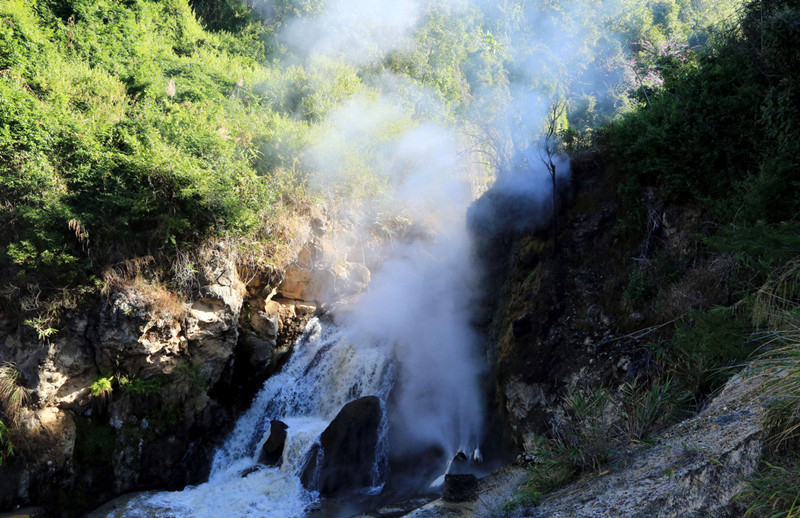
Volcano: Tengchong, known for its volcanic activity, features stunning volcanic landscapes. From the Ginkgo Village volcanic observation platform, you can view both the Ginkgo Village and the volcano.
Canyon Boardwalk: The collision of the Eurasian and Indian Ocean plates has created dramatic volcanic and canyon landscapes in Tengchong. In Ginkgo Village, a legendary volcanic canyon spans two plates, and walking the canyon trail places you at the boundary of these two major geological plates.
Thousand Trees Camp: Located on the east side of the Ginkgo Village Canyon, this 240-acre pine forest campsite offers opportunities for camping, sightseeing, and viewing the canyon and waterfalls.
Ginkgo Story Museum: This museum, covering 30 acres, is the cultural heart of Ginkgo Village. Designed with modern architecture, it incorporates elements of Ginkgo and traditional village architecture to showcase the village's history and culture through pictures, artifacts, VR technology, and interactive experiences.
Colorful Fields: Tengchong enjoys mild winters and cool summers. In Ginkgo Village, over 1,000 acres of colorful fields are cultivated by villagers, ensuring self-sufficiency through spring planting and autumn harvesting.
Shimen Ancient Battlefield: Located on the southeastern hillside of Jiangyun Village, covering over 450 square meters, the Shimen Ancient Battlefield has a long history. Originally flanked by two natural giant rocks forming a narrow pass, it allowed only one person or horse to pass through, hence the name "Shimen." The site has been the location of several historical battles.
Ginkgo village in Tengchong City, Baoshan
Cultural Heritage
Liuji Village Shadow Puppetry: Liuji Village Shadow Puppetry, known as "Lantern Shadows" or "Leather Puppet Theatre," has a history of over 600 years, dating back to the Hongwu period of the Ming Dynasty. The shadow puppet troupe emphasizes local vocal styles and incorporates diverse ethnic folk tunes.
WanYao Pottery: WanYao Pottery has a long history, brought to Tengchong by migrants from the Central Plains during the Hongwu period of the Ming Dynasty. Known locally as "Glue Clay," this natural, pollution-free pottery is common in western Yunnan and northeastern Myanmar and is a source of local pride.
Xingyang Paper Umbrellas: The craft of oil-paper umbrella making was introduced from the Central Plains to Tengchong. Historically, nearly every household in the village made umbrellas. The craftsmanship is detailed and the umbrellas are lightweight and durable, once sold extensively across western Yunnan and even neighboring Myanmar. The production involves over a hundred processes, and the Xingyang flower umbrella is known for its water resistance, temperature endurance, wind resistance, and delicate design.
Ancient Papermaking: Ancient papermaking techniques were brought by artisans from Hunan, utilizing local plant fibers. The villagers' free time led to a flourishing of papermaking traditions.
Recommended Foods
Stir-fried Ginkgo nuts, Jade Stewed Phoenix, Ginkgo Stewed Pork Intestines, Ginkgo Soup, Horse Meat, Clay Pot Dish, Great Rescue, and Dragon Crossing the Sea Soup.
Transportation
By Air: Tengchong is accessible by daily flights from Kunming, all operated by large aircraft.
By Car: The main route is National Highway 320 (Hangzhou to Ruili). Travel from Kunming to Dali to Baoshan to Lujiangba to Tengchong is fully on the highway. Other routes include:
Longling to Tengchong
Ruili to Yingjiang to Lianghe to Tengchong (all paved roads)
Ruili to Dehong to Tengchong (expressways)
From Tengchong to Ginkgo Village is approximately 40 kilometers. You can take a bus to Gudi Town and transfer to a local vehicle. Alternatively, you can visit the Volcano Park first and then take a minivan. If possible, charter a vehicle from the western gate bus station in the county town.
Parking: The parking lot is located in Xingyang, Gudi Town, Tengchong City, Baoshan, Yunnan Province, 1.8 kilometers from the scenic area, situated in the western part of the park.
What Makes It Special
Attraction Highlights
NATURE
Ginkgo Forest Landscape
Jiangdong Ginkgo Village is known for a dense population of ginkgo trees; Baidu Baike reports more than 30,000 trees, including over 1,000 aged more than a century, which turn the village gold in autumn.
SEASON
Golden Autumn Peak Season
The peak viewing window is generally November to early December, when ginkgo leaves in Jiangdong Village turn golden; Ctrip travel guides recommend this period for photography and village walks.
ARCHITECTURE
Courtyard Houses Among Ginkgo
Jiangdong retains rural courtyard houses, with ginkgo trees growing in gardens and narrow lanes; in autumn fallen leaves cover roofs and paths, creating the village's signature golden-village scenery.
CULTURE
Ginkgo Food and Village Life
Local farmhouses serve ginkgo-based dishes such as ginkgo stewed chicken, and rural tourism centers on seasonal leaf viewing, homestays, and farm meals that connect visitors with village life.
EXPERIENCE
Autumn Walks and Farm Stays
Visitors can walk through the village's golden lanes, photograph courtyard trees, and stay in local guesthouses; the area is promoted as a rural autumn destination in Tengchong, Baoshan.
Internal Transport
Visitor-center shuttle bus
During the ginkgo peak season, private cars are often parked at the visitor center and visitors take a shuttle bus to the village entrance.
Village sightseeing carts
Small electric carts link the village entrance with core ginkgo-viewing lanes; fares and operating sections can vary by season.
Walking lanes through the ginkgo groves
Once inside the village, signed footpaths connect the old houses, ginkgo groves, and main photo spots; walking is the main way to explore.
Tips: In late November to early December, traffic controls often require parking at the visitor center and using the shuttle; arrive early and confirm the last return shuttle time.
The 1 Day Tengchong Rehai Hot Spring Tour offers a relaxing and rejuvenating experience in one of Yunnan’s most famous hot spring destinations. Tengchong, located in the western pa...
Discover Tengchong, one of China’s most renowned geothermal destinations, on this relaxing and culturally rich 3-day journey. Begin your adventure at the Rehai Hot Spring Scenic Ar...
Welcome to YasoTrip’s 4-Day Western Yunnan Birdwatching Tour,this is a meticulously crafted nature exploration journey designed specifically for bird enthusiasts. We will take you ...
Lijiang - Shangri-La - Benzilan Town - Feilaisi - Bingzhongluo - Fugong County - Lushui City - Tengchong
12 Days10 Places
This overland tour of the Three Parallel Rivers region in Yunnan promises an unforgettable journey through some of China’s most spectacular landscapes and culturally rich destinati...
This guide will take you to the western border of Yunnan Province to enjoy the beautiful scenery of Baoshan, the volcanic hot springs of Tengchong, the border trade style of Ruili ...
Baoshan - Baihualing - Heshun Ancient Town - Tengchong
5 Days4 Places
Go and give yourself a challenging but beautiful hiking tour in Yunnan, meet "the azaleas King in the world" and find the eight famous flowers in Gaoligongshan. Futhermore, Gaoligo...
Kunming - Anning - Chuxiong - Dali - Yangbi County - Baoshan - Mangshi - Ruili - Yingjiang County - Tengchong
9 Days12 Places
This 9-day self-driving tour takes you through Yunnan’s most historically significant roads: the Stilwell Road (史迪威公路) and the Yunnan-Burma Road (滇缅公路), both vital during China’s W...
Journey with us into deep lush forests, an area so remote that it still remains largely undiscovered by the discerning birder, as we journey into these rich sub-tropical forests an...