Zhongzhai Village (中寨村), widely known as Simola Wa Ethnic Village (司莫拉佤族村), is located in Sanjiacun, Qingshui Town, Tengchong. It is a National AAA-rated Tourist Attraction, a Recognized Traditional Chinese Village, and a National Ethnic Minority Characteristic Village with a history of more than 500 years. "Simola" is a word in the Wa language meaning "a happy place." Nestled among forested hills at an altitude of approximately 1,650 meters, the village is about 15 kilometers from downtown Tengchong, just 3 kilometers from Tengchong Tuofeng Airport, and approximately 9 kilometers from the Rehai (Hot Sea) Scenic Area. Its convenient location makes it one of the most representative destinations for experiencing Wa ethnic culture in Tengchong.
Built along the slopes of the surrounding hills, the village is embraced by bamboo forests, ancient trees, and terraced fields. The Wa people form the main ethnic community, alongside residents from several other ethnic groups, including the Han, Bai, and Jingpo. Traditional Wa-style houses feature distinctive yellow walls and black-tiled roofs, while cultural symbols such as cattle-head totems and wooden drums can be seen throughout the village. Tourism development has been carefully managed to avoid excessive commercialization, allowing Simola to retain its authentic village atmosphere while offering visitors well-developed tourism facilities and services.
Top Attractions and Cultural Highlights
Colorful Rice Terraces
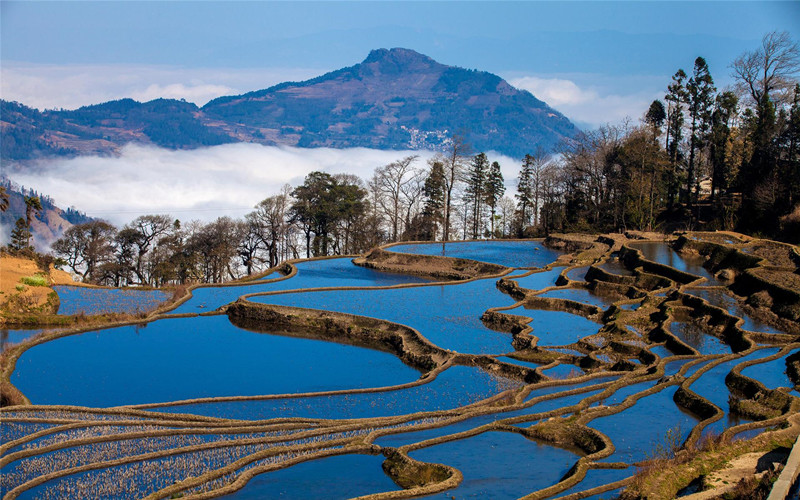
The expansive terraced fields at the village entrance are among Simola's most recognizable landmarks. Different crops are cultivated throughout the year, creating changing seasonal landscapes. In summer and autumn, specially planted varieties of colored rice form large patterns and characters across the fields. In late spring, the terraces are covered with blooming rapeseed flowers, creating a soft, layered landscape of yellow and green. This is one of the best locations for aerial photography and panoramic landscape shots, as well as an important showcase of the village's traditional agricultural culture.
Wa Ethnic Folk Culture Exhibition Hall
The Wa Ethnic Folk Culture Exhibition Hall houses a collection of traditional Wa clothing, bamboo-woven farming tools, ceremonial objects, old spinning wheels, and other historical artifacts. Through its exhibits, visitors can learn about the migration history of the Wa people, traditional festivals, wedding customs, and religious and sacrificial practices. It is one of the most important places in the village for understanding Wa history, traditions, and everyday cultural life.
Wooden Drum Square and the Wa Village Gate
The village gate features traditional Wa totem carvings, while Wooden Drum Square serves as the central gathering place for community activities. The wooden drum is one of the most important cultural symbols of the Wa people and plays a significant role in traditional ceremonies and celebrations. During festivals and scheduled cultural experiences, visitors may have the opportunity to watch wooden drum performances, traditional Wa singing and dancing, and, on certain occasions, evening bonfire celebrations.
Seven-Star Spring and Ancient Banyan Trees
Seven-Star Spring (七星泉) is the traditional water source of the old village. Its clear spring water flows throughout the year and has long supported the local community. Nearby, a cluster of ancient banyan trees is regarded by local residents as sacred trees. With their imposing trunks and extensive branches, these old trees create a peaceful woodland setting. Shaded walking paths make this area an ideal place to enjoy a quiet stroll and experience the village's natural surroundings.
Happiness Lane, Wisteria Corridor, and Traditional Waterwheels
The village's pedestrian pathways connect traditional courtyards, small streams, and old-fashioned water-powered milling equipment. These waterwheels and related facilities preserve elements of the village's traditional agricultural irrigation and processing systems. Along the route, visitors can also discover a wisteria-covered corridor, a reading room, and cozy cafés. Together, these features create a relaxed atmosphere for leisurely exploration and a closer look at rural Wa village life.
Wa King's Mansion and Council Hall
The Wa King's Mansion Council Hall (佤王府议事厅) is a reconstructed version of a traditional Wa community meeting place. Its simple architectural style reflects the character of historic Wa settlements. With accompanying explanations and displays, the site introduces visitors to traditional systems of village governance, community organization, and decision-making among the Wa people.
Travel Guide to Simola Wa Ethnic Village
Best Time to Visit
-
March to April: Rapeseed flowers are in full bloom, creating fresh and colorful rural scenery. Visitor numbers are generally relatively low, making this a pleasant time for photography and leisurely walks.
-
July to September: The rice terraces turn lush green, while the colorful rice patterns gradually take shape across the fields, creating a vibrant summer landscape.
-
Late September to October: The rice fields turn golden as the harvest season approaches. The colorful rice designs are particularly striking during this period, making it one of the best seasons for photography and a popular time to visit.
-
Winter: Mist frequently drifts through the surrounding hills and forests, creating a peaceful atmosphere. This season is especially suitable for cultural exploration and a quieter village experience.
Transportation
Driving is the most convenient way to reach Simola Wa Ethnic Village. The journey from downtown Tengchong takes approximately 30 minutes, with paved roads throughout the route. A parking area is available near the scenic area entrance. Visitors can also arrange a private car or combine the village with the Rehai Hot Springs and Tengchong Volcanic Scenic Area for a full-day itinerary. Public transportation services are relatively limited, so taking a private vehicle is generally recommended.
Accommodation, Dining, and Local Specialties
The village has several dining options, including Happiness Restaurant and small family-run snack shops serving traditional Wa-style food. Local specialties include rice cakes (dami baba), Wa-style chicken rice porridge, wild mountain vegetables, and smoked meat. A dedicated local products street offers a selection of souvenirs and regional specialties, including handmade bamboo crafts, Wa-themed cultural products, Simola mineral water, tea, and locally produced honey.
There are a limited number of guesthouses within the village. Visitors who wish to stay overnight and experience traditional village life are advised to book in advance. However, most travelers choose to visit Simola as a day trip and stay in downtown Tengchong, where accommodation options are more extensive.
Recommended Sightseeing Route
Village Gate → Colorful Rice Terrace Viewing Platform → Wooden Drum Square → Wa Ethnic Folk Culture Exhibition Hall → Happiness Lane and Wisteria Corridor → Traditional Waterwheel Cluster → Seven-Star Spring and Ancient Banyan Trees → Wa King's Mansion Council Hall.
Allow approximately 2 hours for a relaxed visit along this route, with additional time if you wish to explore the exhibitions, enjoy local food, or take photographs.
Practical Travel Tips
-
Respect local Wa customs and traditions. Avoid touching cattle-head totems, ceremonial objects, or items associated with traditional rituals. Always ask for permission before photographing local residents.
-
Wear non-slip footwear. Many village paths are paved with stone slabs and can become slippery after rain, so comfortable shoes with good grip are recommended.
-
Check cultural performance schedules in advance. Bonfire parties and traditional ethnic singing and dancing performances are generally arranged during public holidays or for groups with advance reservations. Individual visitors may not always be able to attend.
-
Combine your visit with Rehai Hot Springs. The two attractions are conveniently located in the same general area and can easily be arranged into a single day's itinerary.
-
Protect the natural environment. Respect the ancient trees and spring water, avoid damaging plants, and do not leave litter behind.