Dali Festivals and Activities are very colorful and Dali is the best place to take a festival tour. There are 13 ethnic groups in Dali Bai Autonomous Prefecture, namely, Han, Bai, Yi, Hui, Lisu, Miao, Naxi, Zhuang, Tibetan, Blang, Lahu, Achang, Dai and other ethnic groups. This part gives a brief introduction of festivals and activities in Dali, and tell travelers what to do when come to Dali.
Festivals in Dali Bai Autonomous Prefecture (大理白族自治州) unfold like a living cultural calendar around Cangshan Mountain and Erhai Lake. Ancient memories of the Nanzhao and Dali kingdoms, Bai village religion, Yi fire worship, Buddhist pilgrimage, mountain song traditions and seasonal farming customs come together in a cycle of celebrations that continues throughout the year.
The prefecture’s best-known events are the Dali March Fair, Raosanling Festival, Bai and Yi Torch Festivals, Shibaoshan Mountain Song Festival and Jizu Mountain pilgrimage season. Beyond these headline events, Dali’s twelve counties and cities host food fairs, flower festivals, village Benzhu ceremonies, harvest gatherings, lantern performances, agricultural exhibitions and contemporary cultural-tourism events.
Festival dates require careful planning. Traditional celebrations generally follow the Chinese lunar calendar, while food festivals, flower festivals, trade fairs and cultural exhibitions are announced separately each year. Village ceremonies may also be adjusted according to farming conditions, weather, religious customs and local government arrangements.
Festival Culture of Dali
Dali’s festival traditions are closely connected with the cultural diversity of the prefecture. The Bai people form the largest ethnic community, while Yi, Hui, Lisu, Miao, Naxi, Tibetan and other groups contribute their own religious ceremonies, music, dance, food and clothing traditions.
Bai festivals often combine Benzhu worship, agricultural prayers, village processions, antiphonal singing and communal dancing. Yi festivals emphasize fire, ancestral memory, mountain worship and group dancing. Hui communities preserve Islamic celebrations and food traditions, while Buddhist pilgrims gather at temples and sacred mountains throughout the year.
Several of Dali’s festival traditions have entered the national intangible cultural heritage system, including the Dali March Fair, Raosanling, and cultural traditions associated with the Shibaoshan Mountain Song Festival. They should be understood as living community practices rather than staged entertainment created solely for visitors.
Festivals in Dali
As the prominent ethnic minority inhabited in Dali Bai Autonomous Prefecture, Bai Ethnic Minority created brilliant culture and customs, among which the unique traditional festivals of Bai people enjoy good fame and attract tourists home and abroad to visit.
Popular Festivals
Festivals by Regions in Dali
Dali City
Weishan County
Nanjian County
Jianchuan County
Eryuan County
Yangbi County
Yunlong County
Activities in Dali
As a popular destination for visitors, Dali offers all kinds of recreational activities. You can always find the activities full of fun, which can kick back and indulge yourself in the happy atmosphere. Come to Dali, and take part in Dali Activities.
Dali Minority Festival Tours
Festivals Through the Four Seasons
🌱 Spring Festivals: Flowers, Pilgrimages and Ancient Fairs
Spring, from approximately February to May, is Dali’s richest festival season. Peach blossoms, pear blossoms, rapeseed fields and village flower displays coincide with temple fairs, singing gatherings and agricultural ceremonies.
Dali March Fair
The Dali March Fair (大理三月街民族节) is held from the fifteenth to the twenty-first day of the third lunar month at the foot of Cangshan Mountain, west of Dali Ancient City.
Known locally through the saying “a thousand-year fair attended for a thousand years,” it originated from a Buddhist temple fair associated with Guanyin worship during the Nanzhao period. Over time, it developed into Dali Prefecture’s largest ethnic, commercial and cultural gathering.
Traditional activities include horse racing, ethnic sports, Bai singing, folk dance, medicinal-herb trading, livestock exchange and the sale of local agricultural products and handicrafts. Contemporary editions may also include cultural exhibitions, regional food markets, tourism promotion, intangible heritage demonstrations and evening performances.
The March Fair is one of Yunnan’s major spring attractions, and the provincial cultural authorities continue to list it among the region’s signature festival events. Yunnan Culture and Tourism activity information
Raosanling Festival
The Raosanling Festival (绕三灵) takes place from the twenty-third to the twenty-fifth day of the fourth lunar month. It is sometimes described as the Bai people’s spring carnival.
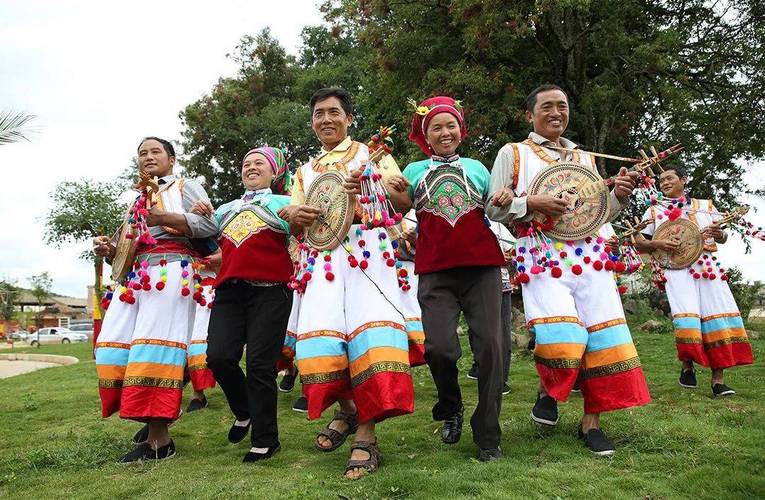
Groups from villages around Erhai Lake dress in ceremonial clothing and travel together for three days, singing and dancing along a traditional route linking temples and sacred sites around Dali, Xizhou and Qingdong. The procession includes the Bawangbian Dance, money drums, flutes and antiphonal Bai songs.
The festival originally expressed prayers for favorable weather, fertile fields, healthy families and social harmony before the busiest farming season. Although visitors are welcome to watch public sections, religious offerings and village rites should be treated respectfully.
Jizu Mountain Pilgrimage Festival
From the first to the fifteenth day of the first lunar month, pilgrims travel to Jizu Mountain (鸡足山) in Binchuan County to worship at its temples, climb toward the Golden Summit and pray for peace in the new year.
Jizu Mountain is one of China’s important Buddhist pilgrimage destinations. Spring Festival remains its busiest period, and temporary traffic management may operate around the mountain road and visitor center. Recent official reports continue to identify it as one of Dali’s most popular Lunar New Year pilgrimage destinations. Dali Prefecture Government
Weishan Snack Festival
The Weishan Snack Festival (巍山小吃节) is a modern cultural-tourism event built around the culinary heritage of Weishan Ancient Town. It is generally staged in spring, although its Gregorian dates are announced separately each year rather than fixed permanently to the eighth day of the second lunar month.
The festival presents braised-meat rice noodles, One Long Noodle, steamed cakes, bean noodles, candied fruits, hotpot dishes and the celebrated Weishan ox-head banquet. Folk songs, ethnic clothing, village performances, heritage workshops and long-table banquets expand the event beyond food.
The 2026 edition was held in March as the thirteenth Dali Weishan Snack Festival. Dali Prefecture Government
Weishan Rapeseed and Pear Blossom Festivals
Weishan County has developed a spring sequence combining the Miaojie Rapeseed Flower Festival, Weishan Snack Festival and Ma’anshan Pear Blossom Festival.
The rapeseed celebration combines rural scenery with village markets, photography, music and agricultural-product exhibitions. The pear blossom festival highlights Yi culture, mountain hiking, folk performances and seasonal foods. These are contemporary tourism events whose dates follow the flowering season rather than a fixed lunar date.
In 2025, Weishan promoted these three activities together as a model of agricultural, cultural and tourism integration. Yunnan Ethnic Affairs authorities
Tianfeng Mountain Song Festival
The Tianfeng Mountain Song Festival (天峰山歌会) is held around Tianfeng Mountain in Pupeng Town, Xiangyun County. It brings together communities from Xiangyun and neighboring areas of Chuxiong Prefecture.
Participants perform mountain songs, Dongjing music, traditional dances and instrumental music. Ritual worship and group singing remain important parts of the gathering. Its Gregorian date is announced annually, generally during spring. The 2025 celebration attracted performers and visitors from several neighboring counties. Yunnan Ethnic Affairs authorities
Mute Festival
The Mute Festival (哑巴节) is a distinctive Yi celebration associated with Qixuan Village (七宣村) in Xiangyun County. It is traditionally held around the eighth day of the first lunar month.
Participants use dance, gesture, masks, body painting and ritual performance to communicate stories without ordinary speech. The celebration is connected with local legends of a heroic figure who protected the community. Public programs may include Yi singing, group dancing, village sports and cultural exhibitions.
Midu Lantern Festival
Midu Lantern Culture (弥渡花灯) is one of the strongest folk-performance traditions in Dali Prefecture. Lantern singing and dancing are especially active around the Lunar New Year and Lantern Festival, with Mizhi (密祉) and other villages serving as important cultural centers.
Performances combine narrative songs, comic dialogue, dance and traditional instruments. Visitors interested in Midu’s musical identity should look for Spring Festival village performances rather than expect a single fixed countywide event every year.
Gegen Fair
The Gegen Fair (葛根会) is traditionally associated with the fifth day of the first lunar month around Dali Ancient City and the Chongsheng Temple Three Pagodas area. Local people gather to eat or purchase kudzu-root products, visit temples and enjoy the early-spring atmosphere.
Modern celebrations are generally smaller than the March Fair and may be integrated into broader Spring Festival activities.
Songhua Fair
The Songhua Fair (松花会) is traditionally observed around the ninth day of the first lunar month. It combines seasonal worship, outings and community gatherings, although its scale and location differ between villages.
Flower Festival
The Flower Festival (花朝节) is held around the fifteenth day of the second lunar month. Bai families display potted flowers and flowering branches, sometimes arranging them into decorative “flower mountains” for neighbors and visitors.
Dali’s long flower-growing tradition gives the event particular cultural meaning, but the most visible displays depend on annual community arrangements.
Butterfly Festival
The Butterfly Festival (蝴蝶会) is associated with the fifteenth day of the fourth lunar month at Butterfly Spring (蝴蝶泉) near Zhoucheng Village.
The gathering combines the natural imagery of butterflies with the Bai love legend of Wen’gu and Xia Lang. Singing, dancing and romantic folklore are more dependable cultural attractions than the appearance of large wild butterfly swarms, which varies with ecology and weather.
☀️ Summer Festivals: Fire, Farming and Village Celebration
Summer brings Dali’s most dramatic visual festival—the Torch Festival. It is also the season of rice planting, agricultural thanksgiving, boat activities and village Benzhu ceremonies.
Bai Torch Festival
The Bai Torch Festival (白族火把节) is generally celebrated on the twenty-fifth day of the sixth lunar month in Bai communities around Dali, Xizhou, Zhoucheng, Eryuan, Jianchuan, Heqing and other areas.
Villagers erect large decorated torches, pray for protection and harvests, sing, dance and gather around the fire. In some communities, fruits, grain, banners and auspicious decorations are attached to the central torch.
The festival is linked with several local legends, including the story of Lady Cishan and the burning of the Songming Tower during the Nanzhao period. Customs differ substantially between villages, making community-based celebrations more culturally meaningful than a single large commercial performance.
Yi Torch Festival
The Yi Torch Festival (彝族火把节) usually takes place on the twenty-fourth day of the sixth lunar month. It is particularly important in Weishan Yi and Hui Autonomous County, Nanjian Yi Autonomous County, Yangbi and Yi mountain communities elsewhere in the prefecture.
Activities may include ancestral worship, village processions, group dancing, wrestling, bull-related cultural displays, song competitions and communal meals. Fire symbolizes light, protection, agricultural fertility and the removal of misfortune.
Open-flame activities depend on local safety regulations. Dali enters a forest and grassland fire-prevention period during the dry season, and unauthorized outdoor fire is prohibited in controlled areas. Visitors must follow the official venue’s rules rather than carrying or lighting private torches.
Torch Festival Venues
Different destinations provide different experiences:
- Dali Ancient City and March Fair area generally host the largest public cultural programs, but private torches may be restricted.
- Xizhou Ancient Town combines Bai village processions, rice-field scenery and Bawangbian performances.
- Zhoucheng Village preserves strong community traditions and is well suited to visitors interested in Bai ritual culture.
- Weishan Ancient Town combines Yi and Bai customs with historic streets and group dancing.
- Nanjian County emphasizes Yi fire culture, Tiaocai performances and mountain-community celebrations.
- Eryuan and Jianchuan offer village-based celebrations with fewer large-scale tourist facilities.
Smearing soot on strangers’ faces should not be presented as a universal Dali tradition. Visitors should participate only in activities recognized by the host community.
Rice-Planting Festival and Tianjiale
The Rice-Planting Festival (栽秧会) and Tianjiale celebrations (田家乐) take place during or immediately after rice transplantation in Bai farming villages around Dali, Eryuan, Yunlong and neighboring areas.
The events combine agricultural worship, working songs, playful performances and communal meals. Their exact dates depend on rainfall, irrigation and the agricultural calendar rather than a fixed festival day.
Flower-Boat Races
The Flower-Boat Festival (赛花船) is traditionally associated with the twenty-fifth day of the sixth lunar month in some eastern Erhai communities. Decorated boats, lakeside performances and prayers for safety reflect Dali’s historical relationship with water.
Modern participation depends on environmental-protection rules, lake-management policy and annual approval.
Nanjian Tiaocai Cultural Events
Nanjian Tiaocai (南涧跳菜)—often translated as the “Dancing Dish” tradition—is performed during banquets, weddings, festivals and tourism events. Servers dance while carrying dishes, transforming the delivery of food into a dramatic ritual.
Rather than belonging to one fixed annual festival, Tiaocai appears throughout Nanjian’s cultural calendar. The county has hundreds of active performance groups and has developed cultural spaces combining Tiaocai banquets, rural tourism and Yi heritage. Yunnan Ethnic Affairs authorities
🌾 Autumn Festivals: Mountain Songs, Trade and Harvest
Autumn celebrations emphasize courtship songs, market exchange, lake worship and gratitude for the harvest.
Shibaoshan Mountain Song Festival
The Shibaoshan Mountain Song Festival (石宝山歌会) takes place in late July according to the lunar calendar at Shibaoshan Mountain in Jianchuan County.
Bai singers from Jianchuan, Eryuan, Lanping, Lijiang and neighboring areas gather among the temples and forests to perform traditional love songs. Young men and women historically used antiphonal singing to make friends and choose partners, leading to its popular description as a Bai “Valentine’s Day.”
The festival is one of the best opportunities to hear authentic Bai musical forms in their traditional mountain setting. Accommodation in Jianchuan and Shaxi should be booked early.
Sea Lantern Festival
The Sea Lantern Festival (海灯会) is traditionally held on the twenty-third day of the seventh lunar month around Cibi Lake (茈碧湖) in Eryuan County.
Participants release lanterns, sing from boats and pray for peace and good fortune. The term “sea” reflects the local Bai use of the word for large lakes. Water activities depend on weather, ecological regulations and annual organization.
Yutan Fair
The Yutan Fair (渔潭会) is held around the middle of the eighth lunar month in Eryuan County. Historically centered on Yutanpo and later associated with Shaba, it became one of western Yunnan’s major autumn commodity and livestock exchanges.
The fair is sometimes called Shaba Street and traditionally attracts traders in medicinal materials, agricultural products, animals, household goods and handicrafts. Its cultural scale is generally considered second only to the Dali March Fair among Dali’s historical trade gatherings.
Erhai Fishing-Season Events
Opening-of-the-fishing-season activities around Erhai Lake may include ceremonies, boat displays, folk songs and ecological education. Their dates and even whether commercial fishing activities are permitted depend on current Erhai conservation policy.
These contemporary activities should not be confused with a fixed traditional festival, and visitors should never independently arrange fishing in protected waters.
Taste-New-Rice and Harvest Celebrations
Bai, Yi and other agricultural villages celebrate the arrival of new grain through household offerings, communal meals and harvest songs. These customs may be called the Taste-New-Rice Festival, harvest festival or village thanksgiving celebration.
They generally take place before or during the autumn harvest and are rarely organized as a prefecture-wide tourist event.
Chongyang Chrysanthemum Fair
On the ninth day of the ninth lunar month, chrysanthemum displays and Double Ninth activities may be held in Dali, Jianchuan and other towns. The day also carries traditions of climbing hills, honoring older people and enjoying autumn scenery.
❄️ Winter Festivals: New Year, Buddhist Worship and Flower Tourism
Winter has fewer large traditional gatherings, but it remains important for Buddhist pilgrimage, Benzhu worship, Lunar New Year preparations and modern flower-viewing festivals.
Spring Festival Cultural Activities
From Lunar New Year’s Eve through the Lantern Festival, Dali’s cities, ancient towns and villages organize dragon dances, lion dances, Bai Bawangbian performances, Yi group dancing, Dongjing music, markets and temple ceremonies.
Activities vary annually across all twelve counties and cities. The Three Pagodas, Dali Ancient City, Weishan Ancient Town, Shaxi, Nuodeng, Xizhou and Jizu Mountain are among the most atmospheric destinations.
Benzhu Festivals
Benzhu worship (本主节) is the spiritual heart of many Bai villages. A Benzhu is the protective deity of a particular village or locality and may be a historical official, military hero, virtuous woman, nature deity or legendary figure.
Each village observes a different birthday, memorial day or procession date. Ceremonies may include welcoming the deity, carrying statues through the village, chanting scriptures, theatrical performances, communal meals and sporting events.
Because hundreds of Bai villages maintain their own calendars, no single table can list every Benzhu celebration. Travelers interested in these ceremonies should confirm local dates with village committees or cultural guides.
Nanjian Wuliang Mountain Cherry Blossom Season
The Wuliang Mountain Cherry Blossom Festival or viewing season (无量山樱花季) generally occurs from late November to December, when winter cherry trees bloom among tea plantations.
This is a modern seasonal tourism event rather than an ancient Yi festival. Photography, hiking, tea experiences and rural markets are commonly organized, but peak flowering dates vary with weather.
Yangbi Walnut Cultural Events
Yangbi Yi Autonomous County is famous for walnuts and periodically organizes walnut-related festivals, harvest events, trade exhibitions and rural tourism activities.
These events are usually held around the autumn harvest or according to commercial exhibition schedules. They should be described as contemporary agricultural and cultural events rather than fixed lunar festivals.
Binchuan Fruit and Agricultural Festivals
Binchuan’s warm, dry valleys produce grapes, citrus fruit and other crops. Seasonal picking festivals, fruit exhibitions and agricultural trade events may be organized during harvest periods.
The schedule changes annually, making official county announcements more reliable than a permanent festival date.
Yongping Bonan and Food-Culture Events
Yongping County draws on the Southern Silk Road, Bonan Ancient Road and the culinary traditions of Qudong Village. Cultural performances, food festivals and holiday exhibitions may be staged at Bonan Cultural Park and Qudong Cultural Tourism Area.
These are modern event series with changing themes and dates. Qudong’s Hui culture should be experienced with respect for Islamic customs and dietary practice.
Heqing Silver-Craft and Village Events
Heqing County is known for the silver craftsmanship of Xinhua Village. Silver-art exhibitions, craft demonstrations, village performances and night cultural activities may be organized during public holidays.
Heqing also holds local pear-blossom, harvest and Bai village celebrations, but their dates depend on flowering conditions and annual planning.
Yunlong Nuodeng Cultural Activities
Nuodeng Ancient Village in Yunlong County stages holiday performances, ham-related food experiences, Bai cultural displays and village events at different times of year.
Nuodeng’s better-known activities are contemporary heritage-tourism programs rather than one fixed ancient festival. Visitors should combine them with the village’s architecture, salt-well history and traditional ham culture.
Festival Highlights by County and City
| County or city |
Representative festivals and events |
| Dali City |
March Fair, Raosanling, Gegen Fair, Flower Festival, Butterfly Festival, Bai Torch Festival, Benzhu festivals and rice-planting ceremonies |
| Yangbi Yi Autonomous County |
Yi Torch Festival, walnut harvest and walnut cultural events, village song-and-dance gatherings |
| Xiangyun County |
Mute Festival, Tianfeng Mountain Song Festival, Spring Festival folk performances and local temple fairs |
| Binchuan County |
Jizu Mountain New Year pilgrimage, Buddhist temple fairs, fruit-picking and agricultural festivals |
| Midu County |
Midu Lantern Festival, folk-song performances, Spring Festival village celebrations and agricultural events |
| Nanjian Yi Autonomous County |
Yi Torch Festival, Tiaocai cultural events, Wuliang Mountain Cherry Blossom Season and rural sports events |
| Weishan Yi and Hui Autonomous County |
Weishan Snack Festival, rapeseed and pear blossom festivals, Yi Torch Festival, ancestral and ancient-town celebrations |
| Yongping County |
Bonan culture events, Qudong Hui food culture, Spring Festival performances and agricultural fairs |
| Yunlong County |
Nuodeng heritage events, Bai Benzhu festivals, rice-planting customs and harvest celebrations |
| Eryuan County |
Yutan Fair, Sea Lantern Festival, Bai Torch Festival, Benzhu worship and lake-related celebrations |
| Jianchuan County |
Shibaoshan Mountain Song Festival, Bai Torch Festival, Benzhu festivals, Dongjing music and Shaxi cultural events |
| Heqing County |
Bai Torch Festival, Benzhu worship, silver-craft exhibitions, village flower festivals and harvest activities |
Festival Travel Guide with Yaso Trip
Choosing the Right Festival
For the largest and most diverse gathering, choose the Dali March Fair. Travelers interested in a continuous traditional procession should prioritize Raosanling, while the Torch Festival offers the strongest nighttime atmosphere.
The Shibaoshan Mountain Song Festival is ideal for traditional music and romantic folklore. The Jizu Mountain pilgrimage suits travelers interested in Buddhism, and the Weishan Snack Festival combines food, ancient-town architecture and Nanzhao culture.
For a quieter village experience, arrange a Benzhu ceremony, rice-planting celebration or local harvest festival through a community contact rather than joining only the prefecture’s largest public events.
Reservations and Transportation
Accommodation around Dali Ancient City, Xizhou, Weishan, Jianchuan and Jizu Mountain can sell out during major celebrations. Booking one or two months ahead is advisable for the March Fair, Torch Festival and Shibaoshan Mountain Song Festival.
Traffic controls are common around Dali Ancient City and major festival venues. Walking, official shuttle buses and public transport are often more efficient than driving directly to the event entrance.
For village festivals, private transport or a locally arranged vehicle is usually more practical. Return transport should be confirmed in advance because rural buses may stop operating before evening performances finish.
Clothing and Equipment
Spring and autumn bring significant differences between daytime and nighttime temperatures, so layered clothing is recommended. Festival grounds, mountain paths and village lanes require comfortable nonslip shoes.
During the Torch Festival, wear old long-sleeved clothing and avoid synthetic materials that melt easily. Remain outside controlled fire zones, avoid the downwind side of burning resin powder and never light a private torch where prohibited.
Winter visitors should bring warm clothing for Jizu Mountain, Jianchuan, Heqing and high-elevation villages. Summer travelers need rain protection because many events coincide with Dali’s wet season.
Festival Etiquette
Ask permission before photographing religious specialists, village elders, children or people wearing ceremonial clothing. Do not touch Benzhu statues, offerings, sacred trees, musical instruments or ritual objects.
Public dance is often open to participation, but processions and worship ceremonies may contain restricted sections. Follow local organizers and do not block routes for photographs.
Drone use may be prohibited over crowds, temples, protected villages and fire-event venues. Obtain permission before flying.
Major Festivals and Events in Dali Bai Autonomous Prefecture
| Festival or event |
Traditional or usual time |
Main location |
Community or theme |
Principal experiences |
Planning notes |
| Spring Festival Cultural Series 春节系列活动 |
1st–15th days of the 1st lunar month |
All twelve counties and cities |
Multiethnic |
Dragon and lion dances, Bai Bawangbian, Yi dancing, temple fairs and markets |
Programs change annually |
| Jizu Mountain Pilgrimage 朝山会 |
1st–15th days of the 1st lunar month |
Jizu Mountain, Binchuan County |
Buddhist |
Temple worship, mountain pilgrimage, sunrise and New Year prayers |
Very busy during Spring Festival |
| Gegen Fair 葛根会 |
5th day of the 1st lunar month |
Dali Ancient City and Three Pagodas area |
Bai/local |
Kudzu-root foods, temple visits and spring outing |
Modern scale varies |
| Mute Festival 哑巴节 |
Around the 8th day of the 1st lunar month |
Qixuan Village, Xiangyun County |
Yi |
Silent ritual performance, gesture, dance and village gathering |
Confirm the annual public program |
| Songhua Fair 松花会 |
Around the 9th day of the 1st lunar month |
Selected Bai communities |
Bai |
Worship, seasonal outing and community activities |
Location varies |
| Lantern Festival and Midu Lantern Performances 花灯会 |
Around the 15th day of the 1st lunar month |
Midu County, especially Mizhi area |
Han, Bai and Yi folk culture |
Lantern singing, narrative dance, instruments and village performances |
Best during Lunar New Year |
| Weishan Snack Festival 巍山小吃节 |
Usually February–March; announced annually |
Weishan Ancient Town |
Food and multiethnic culture |
Local snacks, long-table banquets, heritage demonstrations and performances |
Not permanently fixed to one lunar day |
| Miaojie Rapeseed Flower Festival 庙街油菜花节 |
February–March flowering season |
Miaojie Town, Weishan County |
Rural tourism |
Flower fields, markets, photography and village performances |
Dates depend on flowering |
| Ma’anshan Pear Blossom Festival 马鞍山梨花节 |
Spring flowering season |
Ma’anshan Township, Weishan County |
Yi and rural culture |
Pear blossoms, hiking, Yi food and performances |
Annual dates vary |
| Tianfeng Mountain Song Festival 天峰山歌会 |
Spring; announced annually |
Pupeng Town, Xiangyun County |
Yi and multiethnic |
Mountain songs, Dongjing music, dancing and worship |
Often attracts neighboring counties |
| Flower Festival 花朝节 |
15th day of the 2nd lunar month |
Dali and Bai villages |
Bai flower culture |
Flower displays and community outings |
Scale differs by village |
| Sanyuesan Gatherings 三月三 |
3rd day of the 3rd lunar month |
Bai, Yi and other villages |
Multiethnic |
Singing, outings, worship and village meals |
Local rather than one unified event |
| Small Jizu Mountain Song Gathering 小鸡足歌会 |
Around the 3rd day of the 3rd lunar month |
Local mountain communities in the Dali–Eryuan area |
Bai |
Antiphonal singing and spring outing |
Confirm location locally |
| Dali March Fair 大理三月街民族节 |
15th–21st days of the 3rd lunar month |
March Fair grounds, Dali City |
Bai and multiethnic |
Trade, horse racing, ethnic sports, song, dance and heritage markets |
Dali’s largest traditional festival |
| Butterfly Festival 蝴蝶会 |
15th day of the 4th lunar month |
Butterfly Spring, Dali City |
Bai |
Love legend, songs, dance and spring scenery |
Butterfly numbers depend on ecology |
| Raosanling Festival 绕三灵 |
23rd–25th days of the 4th lunar month |
Dali, Qingdong, Xizhou and surrounding villages |
Bai |
Three-day procession, Bawangbian, singing and worship |
National-level intangible heritage |
| Rice-Planting Festival 栽秧会 |
Rice-transplanting season |
Dali, Eryuan, Yunlong and other farming villages |
Bai and agricultural communities |
Field worship, working songs and communal meals |
Date follows agricultural conditions |
| Tianjiale 田家乐 |
After rice transplantation |
Bai villages around Erhai and western Dali |
Bai |
Celebrating the completion of planting with music and food |
Village-based event |
| Yi Torch Festival 彝族火把节 |
24th day of the 6th lunar month |
Weishan, Nanjian, Yangbi and Yi villages |
Yi |
Fire worship, group dancing, sports and communal meals |
Follow local fire-control rules |
| Bai Torch Festival 白族火把节 |
25th day of the 6th lunar month |
Dali, Xizhou, Zhoucheng, Eryuan, Jianchuan and Heqing |
Bai |
Decorated torches, prayers, Bawangbian and village dancing |
Customs differ by village |
| Flower-Boat Festival 赛花船 |
Around the 25th day of the 6th lunar month |
Eastern Erhai communities |
Bai and water culture |
Decorated boats, songs and prayers for safety |
Subject to lake-management approval |
| Liulang and Qilang Village Ceremonies 六郎七郎节俗 |
6th and 7th lunar months; local dates vary |
Selected Bai and other villages |
Local folk belief |
Offerings, family meals and village worship |
Mostly community-based |
| Sea Lantern Festival 海灯会 |
23rd day of the 7th lunar month |
Cibi Lake, Eryuan County |
Bai water culture |
Lanterns, boat singing and prayers |
Water activities depend on weather |
| Shibaoshan Mountain Song Festival 石宝山歌会 |
Late 7th lunar month |
Shibaoshan Mountain, Jianchuan County |
Bai |
Traditional love songs, mountain gathering and courtship culture |
Book Jianchuan or Shaxi early |
| Yutan Fair 渔潭会 |
Around the middle of the 8th lunar month |
Eryuan County, traditionally Yutanpo/Shaba |
Trade and Bai culture |
Livestock, medicinal herbs, agricultural products and handicrafts |
Major autumn trade fair |
| Harvest and Taste-New-Rice Festivals 尝新节 |
Before or during autumn harvest |
Rural villages throughout Dali Prefecture |
Bai, Yi and farming communities |
New-grain offerings, harvest meals and songs |
Dates depend on crop maturity |
| Yangbi Walnut Cultural Events 漾濞核桃文化活动 |
Autumn harvest season |
Yangbi Yi Autonomous County |
Agriculture and Yi culture |
Walnut markets, food, exhibitions and village activities |
Modern event; dates vary |
| Binchuan Fruit Festivals 宾川水果节庆 |
Different fruit harvest seasons |
Binchuan County |
Agricultural tourism |
Picking, fruit markets and rural experiences |
Products and dates vary |
| Chongyang Chrysanthemum Fair 菊花会 |
9th day of the 9th lunar month |
Dali, Jianchuan and other towns |
Seasonal culture |
Chrysanthemums, hill climbing and activities for older people |
Local scale varies |
| Benzhu Festivals 本主节 |
Different dates throughout the year |
Bai villages across Dali Prefecture |
Bai religious culture |
Deity processions, scripture chanting, theatre and communal meals |
Each village follows its own calendar |
| Nanjian Tiaocai Events 南涧跳菜活动 |
Throughout the year; especially festivals and banquets |
Nanjian Yi Autonomous County |
Yi intangible heritage |
Dancing servers, banquet culture and folk performance |
Arrange through a recognized venue |
| Wuliang Mountain Cherry Blossom Season 无量山樱花季 |
Late November–December |
Wuliang Mountain, Nanjian County |
Seasonal tourism |
Winter cherry blossoms, tea gardens, hiking and photography |
Peak bloom varies annually |
| Yongping Bonan Cultural Events 永平博南文化活动 |
Public holidays and annually announced dates |
Bonan Cultural Park and Qudong, Yongping County |
Southern Silk Road and Hui culture |
Performances, food, heritage exhibitions and markets |
Contemporary event series |
| Nuodeng Heritage and Ham Events 诺邓文化美食活动 |
Public holidays and seasonal dates |
Nuodeng Ancient Village, Yunlong County |
Bai, salt-well and food culture |
Village performances, ham culture and traditional architecture |
No single fixed annual date |
| Heqing Silver-Craft Events 鹤庆银器文化活动 |
Public holidays and announced exhibition dates |
Xinhua Village, Heqing County |
Bai craftsmanship |
Silverwork demonstrations, exhibitions and village performances |
Confirm workshop and event schedules |


 View All Yunnan Tours


 View All Yunnan Theme Tours by Interest


 Home




 1 Days








 Contact Information