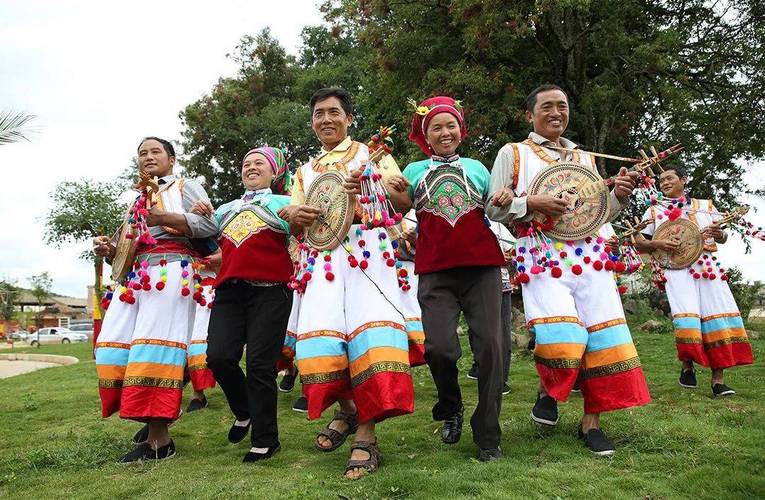
Nanjian Yi Autonomous County (南涧彝族自治县) lies within the favorable climate zone around 25° north latitude and has a forest coverage rate of approximately 67.19%. Recognized as one of China’s natural oxygen-rich destinations, Nanjian combines the mountain scenery of Wuliang Mountain, winter cherry blossoms, tea plantations, river valleys and colorful Yi ethnic traditions.
Nanjian is also the home of Nanjian Tiaocai, or “Dancing Cuisine,” a national intangible cultural heritage tradition. The combination of pristine landscapes, ethnic culture, outdoor sports and wellness resources makes Nanjian an attractive alternative to the busier destinations around Dali.
Overview of Nanjian Tourist Attractions
Nanjian’s tourism resources are commonly described as “Two Mountains, Two Rivers, Three Valleys and Four Parks.”
The Two Mountains are Wuliang Mountain National Nature Reserve and Lingbao Mountain National Forest Park. The Two Rivers refer to the Lancang River and the Red River drainage systems. The Three Valleys are Wuliang Mountain Cherry Valley, Wuliang Mountain Cangcha Tea Valley and Wuliang Medicinal Herb Valley. The Four Parks include Xishan Soil Forest Park, Kongquedu Fishing Park, Fenghuang Mountain Birdwatching Park and Xiaowan Hydropower Park.
Wuliang Mountain Cherry Valley
Wuliang Mountain Cherry Valley (无量山樱花谷) is Nanjian’s most famous attraction. It was officially rated as a national 4A scenic area in January 2025, becoming the county’s first high-level A-rated tourist attraction.
Every winter, pink cherry blossoms bloom among neatly arranged green tea terraces, creating one of Yunnan’s most distinctive seasonal landscapes. Because the flowers appear while much of China is still experiencing winter, the area is often promoted as “the place where spring arrives earliest in China.”
Yi Culture and Nanjian Tiaocai
Nanjian is the birthplace of Nanjian Tiaocai (南涧跳菜), a national intangible cultural heritage performance combining food service, music, dance and ceremonial hospitality. In 2003, the county was recognized as the “Home of Chinese Folk Tiaocai Art.”
During a performance, servers carry dishes while dancing rhythmically between tables, often accompanied by drums, suona music and enthusiastic calls. In 2015, Nanjian Tiaocai was presented during a Chinese state visit to the United Kingdom, bringing this local Yi tradition to an international audience.
Attractions Most Popular with International Travelers
Nanjian has not released a detailed ranking based specifically on international visitor numbers. However, its cultural influence, media exposure and distinctive travel experiences make the following places particularly attractive to overseas travelers.
Wuliang Mountain Cherry Valley
The combination of winter cherry blossoms and green tea plantations gives Wuliang Mountain Cherry Valley a landscape rarely found elsewhere. It is especially popular with photographers, nature lovers and visitors looking for a quieter seasonal destination in Yunnan.
Its designation as a national 4A scenic area has improved visitor facilities and reception capacity. In 2025, Nanjian County received approximately 2.48 million domestic and international tourist visits.
Nanjian Tiaocai Cultural Experience
Nanjian Tiaocai has strong appeal for international travelers because it transforms a traditional banquet into a lively cultural performance. The custom combines Yi music, choreography, hospitality and local cuisine in a highly visual format.
Visitors are most likely to see large-scale performances during the Wuliang Mountain Cherry Blossom Festival, Tiaocai cultural events and other county celebrations. Smaller performances may also be arranged for tour groups with advance reservations.
Kongquedu Fishing Base
Kongquedu Fishing Base (孔雀渡野钓基地) uses the clean waters and dramatic scenery of the Lancang River to provide recreational fishing and lure-fishing experiences. It has been recognized as a provincial-level professional sports base.
The destination is especially suitable for international visitors interested in outdoor sports, wilderness landscapes and slow-paced riverside holidays.
Recommended Ranking of Nanjian Attractions
The following ranking considers scenic value, cultural importance, visitor experience and general recognition. It is a practical travel reference rather than an official tourism ranking.
| Rank |
Attraction |
Main Highlights and Experiences |
| 1 |
Wuliang Mountain Cherry Valley |
A national 4A scenic area known for winter cherry blossoms blooming among tea plantations and its reputation as the place where spring arrives earliest in China. |
| 2 |
Wuliang Mountain Cangcha Tea Valley |
A national 3A scenic area integrating tea plantations, tea-making experiences, rural tourism and tea-themed accommodation. |
| 3 |
Lvmei Nanjian · Tiaocai Village |
A national 3A scenic area and an important center for experiencing Nanjian Tiaocai, Yi banquets and intangible cultural heritage. |
| 4 |
Nanjian Soil Forest |
An unusual eroded-earth landscape often described as a “moving oil painting,” particularly suitable for photography. |
| 5 |
Taiji Peak |
A 3,061-meter mountain historically known as “Little Cangshan,” featuring expansive views and a group of Ming-period buildings near the summit. |
| 6 |
Lingbao Mountain National Forest Park |
A densely forested mountain park containing stone structures associated with the Dali Kingdom period and traces of ancient regional culture. |
| 7 |
Kongquedu Fishing Base |
A professional fishing and lure-fishing destination beside the Lancang River, suitable for outdoor-sports enthusiasts. |
Core A-Rated Scenic Areas
Wuliang Mountain Cherry Valley
Wuliang Mountain Cherry Valley is the county’s signature attraction and the leading destination for a first visit to Nanjian. The valley is composed of tea plantations, cherry trees, mountain slopes and viewpoints overlooking layers of misty countryside.
The primary flowering season normally occurs in late autumn or early winter, but exact dates vary according to weather and elevation. Travelers planning a photography trip should confirm current flowering conditions before departure.
Wuliang Mountain Cangcha Tea Valley
Wuliang Mountain Cangcha Tea Valley (无量山藏茶谷) is a national 3A scenic area centered on tea cultivation and tea culture. “Cangcha” is best retained as a local place-name rather than translated as “Tibetan tea,” as the destination is associated with Nanjian’s mountain tea landscape.
Visitors can walk through tea plantations, learn about tea picking and processing, taste locally produced tea and stay in tea-themed countryside accommodation. Seasonal activities depend on the tea-growing calendar.
Lvmei Nanjian · Tiaocai Village
Lvmei Nanjian · Tiaocai Village (绿美南涧·跳菜村) is a national 3A scenic area dedicated to Nanjian’s signature culinary performance.
The village provides opportunities to watch Tiaocai shows, taste Yi-style banquet dishes and learn how music, dance and food are combined in ceremonial hospitality. Group performances usually require advance arrangements.
Natural Wonders in Nanjian
Nanjian Soil Forest
Nanjian Soil Forest (南涧土林) consists of earth pillars, ridges, gullies and naturally sculpted formations created by long-term erosion. Changing sunlight gives the cliffs and soil columns different colors throughout the day.
The landscape is particularly suitable for geological observation and photography. Early morning and late afternoon usually provide softer light and stronger visual contrast.
Taiji Peak
Taiji Peak (太极顶) rises to approximately 3,061 meters and was historically called “Little Cangshan.” It faces the Weibaoshan area across the mountains and provides extensive views over Nanjian’s valleys and ridgelines.
A group of historic buildings dating from the Ming period survives near the summit, adding religious and architectural interest to the mountain landscape. Road and trail conditions should be checked before visiting.
Lingbao Mountain National Forest Park
Lingbao Mountain National Forest Park (灵宝山国家森林公园) has a forest coverage rate of approximately 96.3%. Dense woodland, mountain air and ancient cultural remains make it one of Nanjian’s most important ecological destinations.
The park preserves stone architectural remains traditionally associated with the Dali Kingdom period. It is suitable for hiking, forest recreation, historical exploration and nature photography.
Wuliang Mountain National Nature Reserve
Wuliang Mountain National Nature Reserve (无量山国家级自然保护区) protects extensive subtropical mountain forests and important wildlife habitats. The reserve is one of the ecological foundations of Nanjian’s reputation as a natural oxygen-rich destination.
Because it is a protected area rather than a conventional tourist park, access to certain zones may be restricted. Travelers should follow reserve regulations and use approved routes.
Fenghuang Mountain Birdwatching Park
Fenghuang Mountain Birdwatching Park (凤凰山观鸟园) uses Nanjian’s forest environment and bird diversity to support birdwatching and ecological education.
Early morning is generally the best time for bird observation. Binoculars, quiet clothing and an experienced local birding guide can significantly improve the experience.
Xishan Soil Forest Park
Xishan Soil Forest Park (西山土林园) presents another section of Nanjian’s eroded-earth landscape. Its unusual formations, dry-valley vegetation and changing light make it suitable for short walks and landscape photography.
Visitors should avoid climbing unstable earth formations and should exercise caution after heavy rain.
Outdoor Sports and Water-Based Attractions
Kongquedu Fishing Base
Kongquedu lies beside the Lancang River and is known for wild fishing, lure fishing and outdoor recreation. Mountain scenery and broad water views make it attractive even for visitors who do not fish.
Fishing regulations, equipment requirements and water conditions should be confirmed in advance. Visitors should use professional operators and wear life jackets when participating in activities near deep water.
Menglongdu Open-Water Swimming Base
Menglongdu Open-Water Swimming Base (猛龙渡) provides a venue for open-water swimming and related sporting events.
Because currents, water temperatures and weather conditions can change, swimming should only take place within designated areas and under professional supervision.
Xiaowan Hydropower Park
Xiaowan Hydropower Park (小湾水电园) presents the large-scale engineering landscape of the Xiaowan hydropower area together with Lancang River scenery.
It is suitable for visitors interested in modern infrastructure, hydropower engineering, reservoirs and the transformation of mountain transportation. Access to operational or restricted areas is subject to local regulations.
Cultural Attractions and Ethnic Villages
Nanjian Tiaocai
Nanjian Tiaocai is more than an entertainment performance. It is part of Yi banquet culture and expresses welcome, celebration and community identity.
Music, dance steps, dish-carrying skills and table arrangements are coordinated with precision. Visitors should view it as an integrated cultural tradition rather than simply a restaurant show.
Huiying Village in Gonglang Town
Huiying Village in Gonglang Town (公郎镇回营村) is a historic Hui ethnic settlement. The village reflects the long-term presence of Muslim communities along trading and transportation routes in western Yunnan.
Its cultural attractions include Hui traditions, mosque culture, halal cuisine and the coexistence of different ethnic groups. Visitors should dress respectfully near religious sites and ask permission before entering mosques or photographing worshippers.
Major Attractions in Nanjian Yi Autonomous County
| English Name |
Chinese Name |
Area |
Category |
Main Experience |
| Wuliang Mountain Cherry Valley |
无量山樱花谷 |
Wuliang Mountain area |
National 4A scenic area |
Winter cherry blossoms, tea terraces and photography |
| Wuliang Mountain Cangcha Tea Valley |
无量山藏茶谷 |
Wuliang Mountain area |
National 3A scenic area |
Tea plantations, tea making and rural accommodation |
| Lvmei Nanjian · Tiaocai Village |
绿美南涧·跳菜村 |
Nanjian County |
National 3A scenic area |
Tiaocai performances, Yi banquets and intangible heritage |
| Wuliang Mountain National Nature Reserve |
无量山国家级自然保护区 |
Eastern and southern Nanjian |
Nature reserve |
Forest ecology, wildlife and scientific exploration |
| Lingbao Mountain National Forest Park |
灵宝山国家森林公园 |
Nanjian County |
National forest park |
Forest hiking, stone architecture and ancient cultural remains |
| Nanjian Soil Forest |
南涧土林 |
Near the county town |
Geological landscape |
Eroded-earth formations and landscape photography |
| Xishan Soil Forest Park |
西山土林园 |
Xishan area |
Geological park |
Soil pillars, gullies and short nature walks |
| Taiji Peak |
太极顶 |
Mountain area |
Mountain and historical site |
Summit scenery and Ming-period architecture |
| Wuliang Medicinal Herb Valley |
无量药谷 |
Wuliang Mountain area |
Wellness and agriculture |
Medicinal plants, ecological education and rural tourism |
| Fenghuang Mountain Birdwatching Park |
凤凰山观鸟园 |
Fenghuang Mountain |
Ecotourism |
Birdwatching, forest ecology and photography |
| Kongquedu Fishing Base |
孔雀渡野钓基地 |
Lancang River area |
Outdoor sports |
Wild fishing, lure fishing and riverside recreation |
| Menglongdu Open-Water Swimming Base |
猛龙渡 |
Reservoir or river area |
Water sports |
Open-water swimming and sporting events |
| Xiaowan Hydropower Park |
小湾水电园 |
Xiaowan area |
Engineering tourism |
Hydropower facilities, reservoir scenery and education |
| Huiying Village |
回营村 |
Gonglang Town |
Hui cultural village |
Mosque culture, halal food and ethnic heritage |
| Nanjian Tiaocai |
南涧跳菜 |
Across Nanjian |
National intangible heritage |
Dancing food service, Yi music and banquet culture |
Planning a Visit to Nanjian
The ideal travel season depends on the visitor’s priorities. Winter is best for the cherry blossoms, spring is suitable for mountain walks and tea experiences, summer offers green forests and cooler highland areas, while autumn is favorable for outdoor activities and rural scenery.
Nanjian’s attractions are distributed across mountain areas, river valleys and different towns. Private transportation, self-driving or a locally arranged vehicle is more practical than relying entirely on public buses. Travelers entering protected areas or remote mountains should arrange local guidance and confirm road conditions.
For international visitors, cultural performances, tea-making activities, fishing services and village visits are best booked in advance. English interpretation is limited in rural areas, so a bilingual guide can greatly improve the experience.
Nanjian Travel Experience
Nanjian’s strongest appeal lies in its natural character and cultural diversity. Visitors can experience the poetry of winter cherry blossoms in Wuliang Mountain, examine the sculpted earth formations of the soil forest, watch the confidence and energy of Yi performers in Tiaocai Village, and enjoy the quiet waters of the Lancang River at Kongquedu.
This mountain county is developing a tourism model built around culture, outdoor sports, ecology and wellness. For travelers seeking a quieter and more immersive alternative to Dali Ancient Town, Nanjian Yi Autonomous County offers an engaging journey through tea-covered mountains, ethnic villages, protected forests and river landscapes.