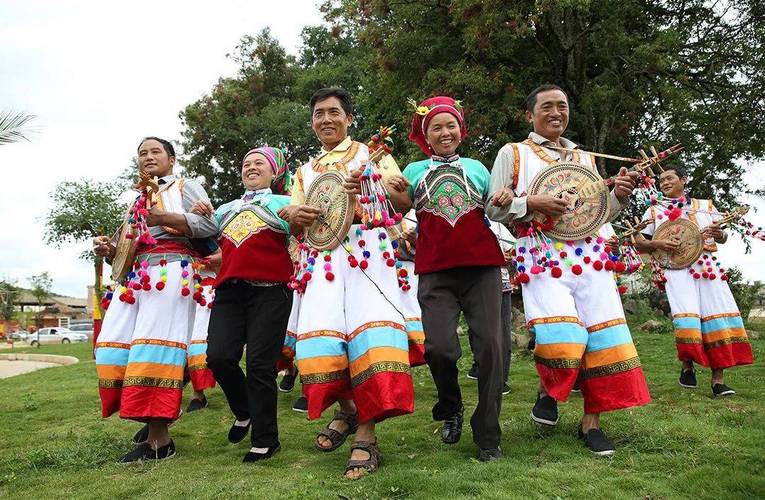
Nanjian Yi Autonomous County (南涧彝族自治县) lies in the longitudinal valley region of the Hengduan Mountains in southern Dali Bai Autonomous Prefecture. The county is crossed by the Wuliang Mountains, influenced by the Ailao Mountains, and deeply divided by the Lancang and Heihui river systems. These geographical conditions create a pronounced vertical climate in which temperatures and rainfall can change considerably over relatively short distances.
Nanjian has a low-latitude subtropical plateau monsoon climate. Its weather is generally mild, sunny and suitable for travel throughout the year, but the county has distinct dry and rainy seasons, large day-to-night temperature differences and noticeable climatic variation between hot river valleys and cool high mountains.
How Geography and Landforms Affect Nanjian’s Climate
Strong Vertical Climate Differences
Nanjian’s highest point is Taiji Peak (太极顶) at approximately 3,061 meters above sea level, while its lowest areas beside the Lancang River are around 994 meters. This elevation difference of more than 2,000 meters creates several vertical climate zones.
Temperatures generally decrease while rainfall and humidity increase with elevation. The lower river valleys are warmer and relatively dry, whereas the Wuliang Mountain highlands are cooler, wetter and frequently covered by mist. Travelers can therefore experience summer-like warmth in a river valley and cool mountain weather on the same day.
Distinct Dry and Rainy Seasons
Nanjian is influenced by the plateau monsoon climate. From approximately November to April, continental air brings mostly dry, sunny weather. From May to October, the southwest monsoon carries warm, humid air into the region, producing the majority of the annual rainfall.
Rain and warmth occur during the same period. Summer vegetation becomes lush and green, but mountain roads, hiking trails and river conditions are more affected by heavy rain.
Uneven Rainfall Across the County
The Wuliang and Ailao mountain systems influence the movement of humid air, creating considerable differences in precipitation. Southern and southeastern mountain areas generally receive more rain, while some northern valleys are warmer and drier.
The southern parts of Wuliangshan Town (无量山镇) and Gonglang Town (公郎镇) are relatively humid. Conditions can change rapidly around high mountain ridges, giving rise to the local description, “one mountain with several climates and different weather only a short distance apart.”
River Valleys and Mountain Basins
The Lancang River and its tributaries have cut deep valleys through the mountains. These lower areas collect heat and often experience higher daytime temperatures, especially from April to June.
Mountain basins and highland tea-growing areas remain cooler. Morning mist, frequent cloud cover and larger differences between daytime and nighttime temperatures help create suitable conditions for tea, medicinal plants and diverse forest ecosystems.
Nanjian Weather and Climate Overview
Nanjian’s climate can be summarized as mild throughout the year, sunny during the dry season, wet during summer and strongly influenced by elevation.
- Average annual temperature: approximately 19°C in the county’s lower and central inhabited areas
- Average annual sunshine: approximately 2,458 hours
- Average annual rainfall: approximately 755 millimeters, with substantial variation by elevation and year
- Rainy season: generally May to October
- Dry season: generally November to April
- Warmest period: usually May and June, before or around the full arrival of the rainy season
- Coolest period: December to February
- Main weather feature: large differences between daytime and nighttime temperatures
Nanjian’s seasons are less clearly divided than in temperate regions. For travel planning, the distinction between the dry season and rainy season is usually more useful than the conventional four-season division.
Monthly Temperature and Climate Table
The following figures represent general conditions in Nanjian County Town and lower basin areas. Temperatures in high-altitude destinations such as Wuliang Mountain can be approximately 3–5°C lower, with greater humidity and more frequent rain or mist.
| Month |
Average Daytime High |
Average Nighttime Low |
General Weather and Travel Conditions |
| January |
20–21°C |
3–5°C |
Dry and mostly sunny with a large day-to-night temperature difference. The final part of the winter cherry-blossom season may still be visible. |
| February |
23–24°C |
4–7°C |
Dry and gradually warmer. Suitable for mountain walking and early spring countryside trips. |
| March |
Around 26°C |
9–10°C |
Sunny and dry with strong ultraviolet radiation. Comfortable for visiting Nanjian Soil Forest. |
| April |
Around 29°C |
13–14°C |
Temperatures rise quickly and occasional rain begins. Higher mountain areas remain pleasantly cool. |
| May |
29–31°C |
16–19°C |
One of the hottest periods of the year. Rain may not yet be consistent, and dry heat can occur in lower valleys. |
| June |
29–30°C |
19–22°C |
The rainy season becomes established. Conditions are warm and humid in lower areas but cooler in the mountains. |
| July |
Around 30°C |
19–20°C |
One of the wettest months, with frequent rain and lush vegetation. High-altitude destinations are suitable for summer escapes when roads remain safe. |
| August |
Around 30°C |
Around 20°C |
The rainy season continues. Temperatures are generally comfortable in mountain areas, but outdoor plans require flexibility. |
| September |
Around 29°C |
Around 19°C |
Still relatively wet, although rainfall gradually decreases. Early autumn scenery begins to appear. |
| October |
Around 27°C |
Around 17°C |
The rainy season retreats. Clearer skies and comfortable temperatures make this a good month for hiking and tea-country travel. |
| November |
24–25°C |
9–11°C |
The dry season begins. Days are sunny and cool, while the winter cherry-blossom season starts toward the end of the month. |
| December |
Around 22°C |
6–7°C |
Dry with large temperature differences. Wuliang Mountain Cherry Valley normally enters its main flowering period. |
Weather figures are approximate long-term references rather than forecasts. Mountain elevations, cold fronts and local topography can produce substantially different conditions on the same day.
Best Time to Visit Nanjian
Nanjian can be visited throughout the year, but the best season depends on the desired experience.
| Travel Period |
Recommended For |
Main Weather Features |
| Late November to mid-December |
Winter cherry blossoms and photography |
Mostly dry, sunny and cool, with cold mornings in the mountains |
| January to March |
Soil Forest, hiking and quiet countryside travel |
Dry, sunny and increasingly warm |
| April to May |
Tea mountains and highland exploration |
Warm to hot in valleys, cooler at elevation |
| June to September |
Summer escapes, forest scenery and Yi festivals |
Rainy, humid and green, with possible road disruptions |
| October to November |
Hiking, tea culture and landscape photography |
Increasingly dry, mild and comfortable |
Best Season for Cherry Blossoms
The main reason many travelers visit Nanjian is the winter bloom at Wuliang Mountain Cherry Valley (无量山樱花谷). The most reliable period is usually from late November to mid-December, although flowering dates change every year with temperature, rainfall and elevation.
Photographers should allow at least one night near the valley so they can capture sunrise, morning mist and changing light over the tea terraces. Current blossom reports should be checked before finalizing the journey.
Best Season for Summer Holidays
From June to September, the high-altitude areas around Wuliang Medicinal Herb Valley (无量药谷), Cherry Valley and the upper tea mountains remain considerably cooler than the river valleys.
This is a good period for extended countryside stays and forest experiences, but it is also the rainy season. Outdoor plans should include alternative activities in case of thunderstorms, landslides or temporary road closures.
Best Season for Ethnic Culture
The Yi Torch Festival (彝族火把节) normally falls in the sixth lunar month, usually between July and August. It is one of the best opportunities to experience Yi music, dancing, ceremonial fires and village hospitality.
The exact date and program vary by community. Visitors should confirm festival arrangements with local organizers rather than relying only on a standard calendar date.
Nanjian Weather and Travel Guide by Season
Spring Travel from March to May
Spring begins dry and sunny, then becomes warmer as the rainy season approaches. March is comfortable for soil-forest photography and village exploration, while April and May can become hot in lower valleys.
Higher areas remain cooler and are suitable for tea-country visits, mountain walking and medicinal-plant experiences. Strong sunshine, dry air and ultraviolet exposure require careful sun protection.
Recommended Spring Routes
- Nanjian County Town – Nanjian Soil Forest – Tiaocai Cultural Experience
- Gonglang Town – Highland Tea Plantations – Wuliang Mountain
- Nanjian – Wuliang Medicinal Herb Valley – Mountain Villages
What to Wear in Spring
Wear lightweight daytime clothing with a thin jacket for mornings and evenings. A sun hat, sunglasses, sunscreen and drinking water are essential. From late April onward, carry compact rain protection.
Summer Travel from June to August
Summer is warm and rainy. The mountains and forests become intensely green, waterfalls gain volume and high-altitude areas provide relief from the heat.
Rain can be heavy and localized. Mountain roads may be affected by fog, rockfalls, landslides or temporary closures, while river conditions can change quickly. Self-drivers should avoid unfamiliar mountain roads after dark or during intense storms.
Recommended Summer Routes
- Nanjian – Wuliang Medicinal Herb Valley – High-Altitude Summer Retreat
- Tiaocai Village – Yi Torch Festival Cultural Experience
- Wuliang Mountain Tea Country – Forest and Rural Wellness Tour
What to Wear in Summer
Wear breathable, quick-drying clothes and shoes with slip-resistant soles. Carry a waterproof jacket or umbrella and a light warm layer for high-altitude evenings. Long sleeves are useful for sun and insect protection.
Autumn Travel from September to November
September remains relatively wet, but conditions improve through October. By November, the dry season has begun and skies are generally clearer.
Autumn is suitable for hiking, tea-country exploration, birdwatching and landscape photography. Toward late November, early winter cherry blossoms begin appearing in Wuliang Mountain.
Recommended Autumn Routes
- Nanjian Soil Forest – Wuliang Mountain Tea Country – Gonglang Town
- Fenghuang Mountain Birdwatching – Forest and Village Tour
- Nanjian – Wuliang Mountain Cherry Valley at the Beginning of Flowering Season
What to Wear in Autumn
Light clothing is suitable during the day, but a windproof jacket or fleece is necessary for mountain mornings and evenings. Rain protection remains useful in September, while warmer layers become more important in November.
Winter Travel from December to February
Winter is Nanjian’s most popular photography season. Days are often sunny and mild, while nights and early mornings become cold, especially at high elevations.
The tea terraces and winter cherry blossoms of Wuliang Mountain provide the county’s most recognizable seasonal scenery. Dry roads and clear skies also favor driving and outdoor exploration, although morning fog may reduce visibility.
Recommended Winter Routes
- Wuliang Mountain Cherry Valley Viewpoints – Sunrise and Morning Mist
- Cherry Valley – Local Guesthouse – Cloud-Sea Photography
- Cherry Valley – Gude Tea Plantation – Ancient Tea Trees
- Nanjian County Town – Soil Forest – Tiaocai Cultural Experience
What to Wear in Winter
Use a layered clothing system. A light shirt may be comfortable in the afternoon, but a down jacket, fleece or thick coat is essential before sunrise and after sunset. Gloves, a warm hat and sturdy shoes are recommended for early-morning photography.
Recommended Climate-Based Travel Routes
Winter Cherry-Blossom Photography Route
Explore the main viewpoints of Wuliang Mountain Cherry Valley, commonly known as Viewpoints No. 1, No. 2 and No. 3. Each offers a different angle across the cherry trees and tea terraces.
Stay overnight near the scenic area to photograph sunrise, morning fog and possible cloud seas. The journey can continue to the Gude Tea Plantation (古德茶场) to see old tea trees, including the locally renowned Dashan Ancient Tea Tree.
Nature and Yi Culture Route
Combine Nanjian Soil Forest (南涧土林) with the cooler landscapes of Wuliang Medicinal Herb Valley and a Nanjian Tiaocai cultural experience.
March–April and October–November offer the most comfortable weather for the Soil Forest. Summer is better for highland wellness and participation in the Torch Festival.
Wuliang Mountain Tea Route
Travel through the highland plantations of Gonglang Town and Wuliangshan Town. From May to October, frequent cloud and mist create the ecological conditions associated with high-mountain tea production.
Visitors can learn about tea cultivation and taste locally produced Wuliang Mountain white tea. Tea-picking and processing experiences depend on the harvest season and should be arranged in advance.
Clothing Guide for Nanjian
The most useful rule is to dress in layers. Nanjian’s elevation differences and large day-to-night temperature range can produce several kinds of weather in a single day.
| Season |
Daytime Clothing |
Extra Items |
| Spring |
T-shirt or light long sleeves |
Thin jacket, sun hat, sunscreen and rain protection |
| Summer |
Breathable, quick-drying clothing |
Waterproof jacket, slip-resistant shoes and insect protection |
| Autumn |
Long sleeves and light trousers |
Windproof jacket or fleece |
| Winter |
Long sleeves and layered clothing |
Down jacket, warm hat and gloves for mountain mornings |
Regardless of season, visitors should carry sunscreen, sunglasses and adequate drinking water. Mountain ultraviolet radiation remains strong even under cloud cover.
Practical Weather and Travel Tips
Transportation and Mountain Roads
Nanjian is connected with the Dali area by expressway and major roads. Depending on the point of departure and traffic, the journey from Dali generally takes around two to two and a half hours.
Roads leading to mountain attractions contain numerous bends and steep slopes. During the rainy season, drivers should check weather and road warnings, maintain a safe speed and avoid nighttime travel on unfamiliar routes.
Cherry-Blossom Season Reservations
Accommodation near Wuliang Mountain Cherry Valley is limited and becomes heavily booked during the main flowering period. Hotels, guesthouses and local transportation should be reserved well in advance.
Morning viewpoints can also become crowded. Staying nearby makes it easier to arrive before sunrise and avoid some of the daytime traffic.
Altitude and Physical Activity
Most frequently visited areas in Nanjian lie between approximately 1,500 and 2,500 meters. Severe altitude sickness is uncommon for most healthy travelers, but the higher mountains may still cause shortness of breath during strenuous exercise.
Walk at a comfortable pace, remain hydrated and avoid intense activity immediately after reaching higher elevations.
Rainy-Season Safety
From May to October, monitor forecasts for thunderstorms, heavy rain and geological hazards. Do not enter closed nature-reserve zones, cross swollen streams or camp below unstable slopes.
Fishing, open-water swimming and riverside activities should only be undertaken in approved areas with professional supervision.
Nanjian Climate and Travel Experience
Nanjian’s climate is inseparable from its geography. Hot river valleys, cool tea-covered mountains, humid forests and high peaks create a vertical landscape where weather and scenery change continually.
For winter cherry blossoms, visit from late November to mid-December. For hiking and photography, choose March–April or October–November. For cool mountain retreats and Yi festivals, travel from June to September while remaining flexible about rainfall.
With layered clothing, suitable transportation and careful seasonal planning, Nanjian Yi Autonomous County offers rewarding travel throughout the year—from sunrise over pink cherry blossoms to misty tea mountains, Yi cultural celebrations and the sculpted landscapes of the Soil Forest.