Mile City (弥勒市) is a county-level city in the northern part of Honghe Hani and Yi Autonomous Prefecture (红河哈尼族彝族自治州), Yunnan Province. Known as the “Back Garden of Central Yunnan,” Mile occupies an important position between Kunming and southern Yunnan.
Following several administrative adjustments, including the conversion of the former Miyang Town into urban subdistricts, Mile currently administers four subdistricts, nine towns and two townships. Its tourism resources are distributed around three principal themes: ecological wellness, ethnic culture, and contemporary art and agriculture.
Administrative Division Overview
Mile covers approximately 4,004 square kilometers and has a registered population of about 552,500. Ethnic minorities account for approximately 45.55 percent of the registered population, including Yi, Miao, Hui, Zhuang and Dai communities.
Mile County was officially reorganized as Mile City in March 2013. In 2021, the former Miyang Town (弥阳镇) was abolished and reorganized into Miyang, Taiping and Fucheng subdistricts. More recent administrative information also recognizes Dongfeng as a formal subdistrict.
Mile’s current township-level administrative structure comprises:
- Four subdistricts: Miyang, Taiping, Fucheng and Dongfeng
- Nine towns: Xinshao, Hongxi, Zhuyuan, Pengpu, Xunjiansi, Xiyi, Xier, Xisan and Dongshan
- Two townships: Wushan and Jiangbian
Geographic Distribution of the Administrative Divisions
The central urban area is mainly formed by Miyang, Taiping and Fucheng subdistricts. These areas contain the municipal government, major commercial districts, hotels, public services and the city’s principal wellness facilities.
Dongfeng Subdistrict lies within Mile’s well-known vineyard and cultural-art district. The northern and western parts of the municipality contain many Yi communities, while the southern areas around Zhuyuan, Pengpu and Jiangbian have warmer valley climates and stronger agricultural traditions.
Mountainous settlements in Xiyi, Xier, Xisan, Dongshan and Wushan preserve distinctive Yi culture, village architecture, festivals and traditional ecological knowledge.
Mile Tourism Resource Overview
Mile has been recognized as a national all-for-one tourism demonstration area. Its tourism development is based on an integrated model combining hot springs, forests, lakes, art, wine, ethnic traditions, agriculture and long-stay wellness travel.
The city has several nationally rated tourism areas, but its appeal extends beyond formal scenic zones. Rural villages, vineyards, local markets, mountain communities and traditional festivals provide additional opportunities for cultural and experiential travel.
Ecological Wellness and Long-Stay Tourism
The central urban area has developed around lakes, wetlands, green spaces and hot-spring resources. The comfortable plateau climate and expanding public services have made Mile popular for retirement travel, seasonal residence and wellness holidays.
The northern and eastern mountain areas offer forest environments and cooler temperatures, while the warmer southern valleys support tropical and subtropical agriculture. This elevation difference allows Mile to develop varied wellness and countryside experiences throughout the year.
Yi Ethnic Culture
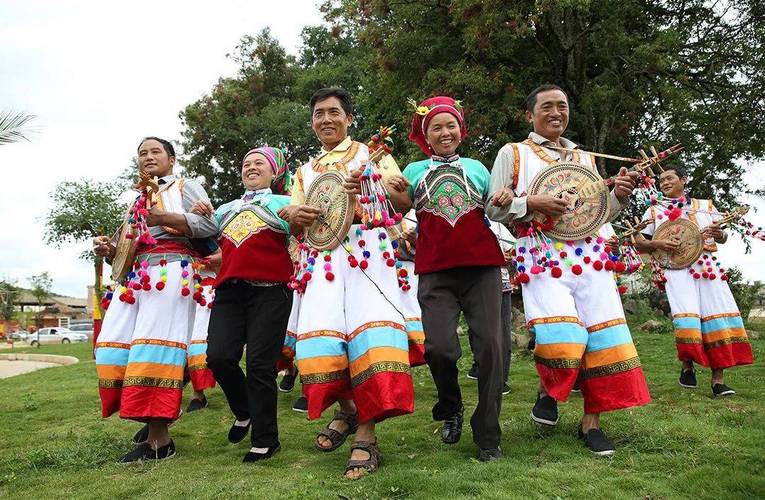
Yi culture is strongest in the western mountain towns and townships. The Axi and Azhe branches of the Yi people preserve distinctive languages, costumes, music, dance, festivals and village customs.
Axi Tiaoyue (阿细跳月) and Axi Xianji (阿细先基) are nationally recognized forms of intangible cultural heritage associated with the Axi people. Traditional villages in Xisan and Xiyi provide some of the best settings for understanding these cultural traditions.
Art, Wine and Agricultural Tourism
Dongfeng developed from the former state-owned Dongfeng Farm into a cultural, artistic and agricultural tourism district. Its red-brick architecture, vineyards and creative spaces have become central to Mile’s contemporary destination image.
Wine production is closely connected with Mile’s identity as a highland grape-growing region. Agricultural tourism activities may include vineyard visits, seasonal grape picking, introductions to wine production and countryside dining.
Tourism Resources by Administrative Area
Miyang Subdistrict
Miyang Subdistrict (弥阳街道) is Mile’s traditional urban center and the seat of the municipal government. It contains established residential neighborhoods, commercial streets, public institutions, restaurants and transport services.
The area is suitable for urban sightseeing, shopping, local food and cultural walks. It is also a practical accommodation base for visitors who want convenient access to different parts of Mile.
Taiping Subdistrict
Taiping Subdistrict (太平街道) is one of Mile’s most important ecological tourism areas. Its principal resources include forest landscapes, lakes, flower displays, wetland environments and recreational facilities.
The subdistrict supports forest wellness, family travel, outdoor photography and long-stay tourism. Seasonal flowers and landscaped natural areas are among its most recognizable features.
Fucheng Subdistrict
Fucheng Subdistrict (福城街道) forms part of Mile’s expanding modern urban area. It combines residential communities, public services, commercial facilities and developing tourism infrastructure.
The subdistrict is important to Mile’s urban tourism and residential-travel economy. It provides convenient access to hotels, restaurants, shopping areas and public transportation.
Dongfeng Subdistrict
Dongfeng Subdistrict (东风街道) is Mile’s leading art, wine and creative-tourism district. It developed from the former Dongfeng Farm and retains strong connections with agricultural production and vineyard culture.
Its distinctive red-brick architecture has become a symbol of contemporary Mile. The area also supports art exhibitions, cultural performances, photography, vineyard experiences and wine-related tourism.
Xinshao Town
Xinshao Town (新哨镇) is an important agricultural area known for irrigated farmland, fruit, vegetables and rural landscapes. Its proximity to the central urban area makes it suitable for short countryside excursions.
Agricultural sightseeing, seasonal fruit picking, farming experiences and rural food are the town’s principal tourism possibilities.
Hongxi Town
Hongxi Town (虹溪镇) has a long-established market-town culture and a rich architectural and commercial history. It is also associated with Wang Chi (王炽), the influential late-Qing merchant known as the “King of Money.”
Historic neighborhoods, traditional residences, local markets and regional food give Hongxi potential for cultural, commercial-history and small-town tourism.
Zhuyuan Town
Zhuyuan Town (竹园镇) lies in the warmer southern part of Mile and is an important agricultural and commercial center. Its climate supports sugarcane, fruit, vegetables and other subtropical crops.
The town has Hui communities and mosque culture, making it relevant to Muslim-friendly tourism in Mile. Local markets, halal food and agricultural landscapes are its principal visitor resources.
Pengpu Town
Pengpu Town (朋普镇) is another warm-climate agricultural town in southern Mile. It combines river-valley scenery, farmland, village settlements and local market culture.
Its tourism potential lies in countryside experiences, agricultural products, rural cuisine and travel along the southern corridor connecting Mile with Kaiyuan and other parts of Honghe Prefecture.
Xunjiansi Town
Xunjiansi Town (巡检司镇) is known for railway heritage, industrial history and rural landscapes. Historical transportation routes contributed to its development as a regional settlement.
Xiagaodian Village (下高甸村) preserves traditional village elements and provides opportunities to explore rural architecture, community history and local cultural life.
Xiyi Town
Xiyi Town (西一镇) is one of the principal cultural areas of the Yi Axi people. It is strongly associated with Axi music, dance, traditional festivals and village customs.
Hongwan Village (红万村) is known for the Axi Fire Festival (阿细祭火节), a provincially recognized intangible cultural heritage tradition. Lanniqing Village (烂泥箐村) also preserves Yi cultural elements, village landscapes and traditional lifestyles.
Xiyi is particularly suitable for ethnic-culture tours, festival photography, anthropology programs and international student study tours.
Xier Town
Xier Town (西二镇) is a mountainous Yi cultural area with farming villages, forest landscapes and traditional community life. Its relative distance from the urban center has helped preserve rural customs and local ecological knowledge.
The town is suitable for village visits, hiking, agricultural experiences and cultural research. Organized travel is preferable because public transportation and foreign-language services may be limited.
Xisan Town
Xisan Town (西三镇) is one of Mile’s most important ethnic-tourism areas. It is home to Axi communities and nationally recognized intangible cultural traditions.
Keyi Yi Ethnic Village (可邑彝族村) is the town’s best-known cultural destination. Visitors can learn about Axi Tiaoyue, traditional houses, embroidery, food and community customs. Nihei Village (腻黑村) is another culturally distinctive settlement associated with stone architecture and Yi village traditions.
Dongshan Town
Dongshan Town (东山镇) occupies a high, mountainous area in eastern Mile. Jinding Mountain, the municipality’s highest point, rises within this region.
Cooler temperatures, forests, mountain agriculture and Miao and Yi villages characterize the area. Dongshan is suitable for ecological travel, hiking, rural studies and ethnic-cultural experiences, although travel conditions require advance planning.
Wushan Township
Wushan Township (五山乡) is a mountainous ethnic area where Yi culture, farming traditions and natural landscapes remain closely connected. The township offers potential for village visits, traditional festivals, ecological observation and rural tourism.
Road travel is the most practical way to reach its scattered communities. International visitors should travel with local coordination when entering remote villages.
Jiangbian Township
Jiangbian Township (江边乡) lies in a low-elevation river valley and contains some of Mile’s warmest landscapes. Its climate differs significantly from the higher western and eastern mountains.
Agriculture, river-valley scenery and warm-climate village life form its principal tourism resources. The area is suitable for geographic, agricultural and ecological study tours focusing on Mile’s vertical climate.
Traditional Ethnic Villages in Mile
Several villages are particularly valuable for ethnic-cultural tourism, traditional architecture and community-based experiences.
Lanniqing Village |
烂泥箐村 |
Xiyi Town |
Yi culture, mountain settlement and traditional community life |
Hongwan Village |
红万村 |
Xiyi Town |
Axi Fire Festival and Yi Axi traditions |
Nihei Village |
腻黑村 |
Xisan Town |
Stone architecture and Yi village culture |
Xiagaodian Village |
下高甸村 |
Xunjiansi Town |
Traditional village landscape and rural heritage |
Keyi Yi Ethnic Village |
可邑彝族村 |
Xisan Town |
Axi Tiaoyue, Axi Xianji and community-based ethnic tourism |
|
Village access, performances and handicraft workshops may not operate every day. Cultural activities should be arranged in advance through local communities or qualified tour operators.
Mile City Administrative Divisions Table
Miyang Subdistrict |
弥阳街道 |
Subdistrict |
Traditional city center |
Urban culture, shopping, food and public services |
Taiping Subdistrict |
太平街道 |
Subdistrict |
Forest and lake area |
Ecological tourism, flowers, wetlands and forest wellness |
Fucheng Subdistrict |
福城街道 |
Subdistrict |
Modern urban expansion area |
Accommodation, commerce and residential tourism |
Dongfeng Subdistrict |
东风街道 |
Subdistrict |
Vineyard and former farm district |
Red-brick art, wine culture, vineyards and creative tourism |
Xinshao Town |
新哨镇 |
Town |
Agricultural plain near the city |
Fruit, vegetables, farming and countryside experiences |
Hongxi Town |
虹溪镇 |
Town |
Historic market town |
Wang Chi heritage, old streets, commerce and traditional food |
Zhuyuan Town |
竹园镇 |
Town |
Warm southern agricultural area |
Markets, halal food, mosque culture and subtropical agriculture |
Pengpu Town |
朋普镇 |
Town |
Southern river-valley area |
Rural scenery, agriculture, markets and local cuisine |
Xunjiansi Town |
巡检司镇 |
Town |
Railway and rural corridor |
Railway history, Xiagaodian Village and rural heritage |
Xiyi Town |
西一镇 |
Town |
Western Yi mountain area |
Hongwan Village, Lanniqing Village and the Axi Fire Festival |
Xier Town |
西二镇 |
Town |
Mountainous Yi area |
Village culture, farming, forests and hiking |
Xisan Town |
西三镇 |
Town |
Major Axi cultural area |
Keyi Yi Ethnic Village, Nihei Village and Axi intangible heritage |
Dongshan Town |
东山镇 |
Town |
High eastern mountain area |
Jinding Mountain, forests, Miao and Yi culture |
Wushan Township |
五山乡 |
Township |
Remote mountain area |
Yi villages, ecological landscapes and traditional agriculture |
Jiangbian Township |
江边乡 |
Township |
Low-elevation river valley |
Warm-climate agriculture, river scenery and geographic studies |
|
Mile City Administrative Profile
Full Name |
Mile City |
Chinese Name |
弥勒市 |
Administrative Affiliation |
Honghe Hani and Yi Autonomous Prefecture, Yunnan Province |
Administrative Level |
County-level city |
Establishment |
March 2013, following the abolition of Mile County |
Municipal Government Seat |
Miyang Subdistrict |
Total Area |
Approximately 4,004 square kilometers |
Registered Population |
Approximately 552,500 |
Ethnic-Minority Share |
Approximately 45.55 percent |
Subdistricts |
Miyang, Taiping, Fucheng and Dongfeng |
Towns |
Xinshao, Hongxi, Zhuyuan, Pengpu, Xunjiansi, Xiyi, Xier, Xisan and Dongshan |
Townships |
Wushan and Jiangbian |
Regional Position |
Northern gateway of Honghe Prefecture |
Tourism Identity |
Ecological wellness, Yi culture, art, wine and long-stay travel |
|
Administrative divisions can change as urban development continues. Travelers, researchers and tour operators should confirm the latest township-level information before preparing official maps, contracts or study programs.
Tourism Development Across Mile
Mile’s administrative structure reflects the diversity of its tourism resources. The central subdistricts support hot-spring holidays, urban leisure and long-stay residence; Dongfeng combines art with vineyard culture; the western mountain towns preserve Axi heritage; and the southern towns offer warm-climate agriculture, halal dining and market traditions.
For first-time visitors, the central city, Dongfeng and Xisan provide the most accessible introduction to Mile. Travelers with more time can extend into Hongxi for commercial history, Xiyi for festival culture, Zhuyuan for Hui traditions or the eastern and southern townships for mountain and river-valley landscapes.
This distribution allows Mile to function as more than a single-attraction destination. It is a citywide tourism region where ecology, community life, ethnic traditions, agriculture and contemporary creativity are spread across all four subdistricts, nine towns and two townships.