Shiping County (石屏县) is a historically important county in the northwestern part of Honghe Hani and Yi Autonomous Prefecture (红河哈尼族彝族自治州), Yunnan Province. Celebrated as a “Land of Culture,” Shiping is best known for its scholarly traditions, old residential architecture, tofu culture, Yilong Lake and the living heritage of the Yi and other ethnic communities.
The county’s tourism identity can be expressed through three themes: the millennium-old town of Shiping, its century-old tofu tradition and the beautiful landscape of Yilong Lake. These resources are distributed across seven towns and two townships, from the historic county seat and lakeside wetlands to Huayao Yi villages and remote mountain communities.
Administrative Division Overview
Shiping covers approximately 3,042 square kilometers and has a population of about 320,000. Its county government is located in Yilong Town (异龙镇).
The county administers seven towns and two townships:
- Seven towns: Yilong, Baoxiu, Baxin, Longpeng, Longwu, Shaochong and Niujie
- Two townships: Xincheng and Daqiao
This administrative structure has remained relatively stable in recent years. Shiping was reorganized from Shiping Prefecture into Shiping County in 1913 and became part of Honghe Prefecture in 1963.
Geographic Distribution
Yilong, Baoxiu and Baxin form Shiping’s principal historic, lakeside and agricultural tourism corridor. Yilong contains the county seat and historic town, while Baoxiu is associated with architectural heritage, traditional villages and the historic meter-gauge railway. Baxin occupies an important position beside Yilong Lake and supports wetland, lotus-viewing and rural tourism.
Longpeng, Longwu, Shaochong and Niujie lie within mountainous areas where Yi culture, village traditions and agricultural landscapes remain prominent. Xincheng and Daqiao townships add further ecological, rural and community-based tourism possibilities.
The varying elevations create significant differences in climate and landscape. The central basin around Yilong Lake is relatively mild and suitable for agriculture and settlement, while the higher mountain areas are cooler and more heavily forested.
Shiping Tourism Resources
Historic Town Culture
Shiping Ancient Town (石屏古城) is the cultural center of the county. Its network of 29 streets and lanes is traditionally compared to cracks on a tortoise shell. Buildings from the Ming, Qing and Republican periods account for a substantial proportion of its surviving urban fabric.
Approximately 192 historic residences and mansions remain in comparatively complete condition. These structures have given the old town its reputation as a museum of Ming- and Qing-era residential architecture in southern Yunnan.
The town’s cultural resources are closely connected with Confucian education, imperial examinations and prominent scholars such as Yuan Jiagu (袁嘉谷). Traditional craft workshops also introduce visitors to Yi embroidery, metalwork and decorative arts.
Shiping Tofu Culture
Traditional Shiping Tofu (石屏豆腐) is one of the county’s defining cultural and economic products. It is made using local techniques associated with naturally fermented sour water rather than conventional commercial coagulants.
Small tofu workshops, restaurants and market stalls continue to integrate production with daily life. This creates opportunities for culinary tourism, food workshops and visits to family-run businesses.
Yilong Lake and Wetland Tourism
Yilong Lake (异龙湖) is one of Yunnan’s major plateau lakes and an important ecological resource. Wetlands, lakeside villages, lotus fields and bird habitats surround the lake.
Walking paths and cycling routes support outdoor recreation, while communities such as Daruicheng and Xiaoruicheng are developing homestays, photography, rural dining and bicycle services.
Environmental protection remains a priority. Visitors should stay on designated routes, avoid disturbing birds and wetlands, and follow restrictions introduced for lake restoration.
Huayao Yi Culture
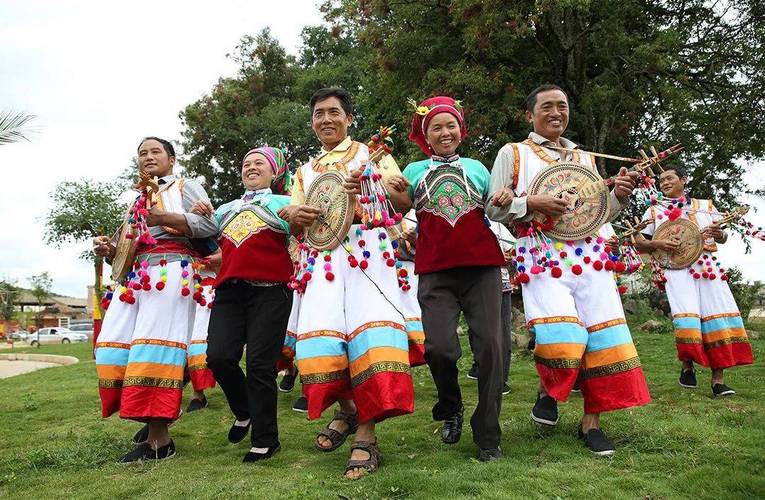
Shiping is one of the principal homes of the Huayao Yi people (花腰彝族). Their culture is particularly visible in Shaochong, Longwu, Longpeng and surrounding mountain villages.
Elaborately embroidered clothing, women’s dragon dancing, Haicai Tune, Cigarette-Case Dance and traditional festivals distinguish local cultural life. The Torch Festival (火把节) and Depeihau Dragon-Worship Festival (德培好祭龙节) are among the most important community celebrations.
Intangible Cultural Heritage
Shiping is closely associated with nationally recognized traditions including Haicai Tune (海菜腔), Cigarette-Case Dance (烟盒舞) and Wutong Silver-Inlay Craft (乌铜走银).
Yi embroidery, Huayao women’s dragon dancing, food production and other practices add further depth to cultural tourism. Craft workshops and performances should be arranged with local practitioners so that tourism supports rather than simplifies community traditions.
Tourism Resources by Town and Township
Yilong Town
Yilong is the political, commercial and cultural center of Shiping. Its principal resources include the ancient town, scholarly heritage, traditional residences, tofu workshops and the northern and western shores of Yilong Lake.
The town is the most convenient base for accommodation, dining, shopping and onward transportation. Lakeside villages support cycling, photography, lotus viewing and rural tourism.
Baoxiu Town
Baoxiu Town (宝秀镇) is known for traditional architecture, historic villages, ancestral halls and agricultural landscapes. It is also connected with the heritage of the meter-gauge railway.
Baoxiu’s villages preserve courtyard houses, temples, family history and craft traditions. The town is suitable for architectural studies, railway tourism, village walks and rural food experiences.
Baxin Town
Baxin Town (坝心镇) occupies an important position along Yilong Lake. Wetland scenery, lotus fields, birdlife, farmland and lakeside villages form the core of its tourism resources.
Baxin is especially suitable for cycling, ecological observation, photography and village-based recreation. Its lakeside setting also makes it an important part of Shiping’s “one lake, three towns” tourism development.
Longpeng Town
Longpeng Town (龙朋镇) is a mountain town with forest scenery, agricultural land and Yi villages. Traditional music, dance, clothing and village customs remain important elements of local life.
The area is suitable for ethnic-cultural experiences, mountain agriculture, rural markets and ecological travel. Private transportation is more practical than relying on limited public services.
Longwu Town
Longwu Town (龙武镇) is associated with Huayao Yi culture, mountain settlements and traditional agriculture. Cultural activities may include embroidery, song, dance and festival customs.
Its rural character makes it valuable for anthropology, photography and student study tours, although visits should be coordinated with local communities.
Shaochong Town
Shaochong Town (哨冲镇) is one of the principal centers of Huayao Yi culture. Traditional clothing, Haicai Tune, Cigarette-Case Dance, women’s dragon dancing and ritual festivals remain highly visible.
Villages such as Mocedian, Longhei, Quzuo and Samazha provide important settings for understanding Huayao Yi community life. Festival travel should be planned according to the lunar calendar and local arrangements.
Niujie Town
Niujie Town (牛街镇) contains mountain landscapes, Yi villages and agricultural resources. Communities such as Yiheiji, Tala and Diemulong preserve traditional settlement patterns and ethnic customs.
Tourism remains less developed than in Yilong or Baoxiu, making Niujie more suitable for organized cultural research, rural exploration and small-group travel.
Xincheng Township
Xincheng Township (新城乡) is characterized by mountain agriculture, rural villages and forest environments. Its tourism potential lies in countryside travel, ecological study and community experiences.
Road conditions and travel times should be checked before departure, particularly during the rainy season.
Daqiao Township
Daqiao Township (大桥乡) contains deep valleys, rivers, mountain settlements and warm-climate agricultural areas. Its landscapes differ substantially from the central Yilong Lake basin.
The township is suitable for geographic studies, rural tourism and agricultural experiences. International visitors should travel with a local driver or guide because services are limited.
Traditional Ethnic Villages by Administrative Area
The following communities are representative villages associated with traditional settlement patterns, ethnic culture or rural tourism. They do not necessarily all hold the same level of official heritage designation.
Yilong Town Villages
Yilong contains a combination of lakeside settlements, farming villages and culturally significant communities.
| English Name |
Chinese Name |
Main Cultural or Tourism Character |
| Dashui Village |
大水村 |
Rural settlement and agricultural landscape |
| Maohe Village |
冒合村 |
Lakeside and village culture |
| Songcun Village |
松村 |
Traditional community life |
| Taiyue Village |
太岳村 |
Rural architecture and farming traditions |
| Lijiazhai Village |
李家寨村 |
Village heritage and ethnic culture |
| Doudiwan Village |
豆地湾村 |
Agricultural and community experiences |
| Yuejiawan Village |
岳家湾村 |
Lakeside rural scenery |
| Xiaoruicheng Village |
小瑞城村 |
Yilong Lake, wetlands and rural tourism |
| Luosewan Village |
罗色湾村 |
Village landscape and local customs |
| Fujiaying Village |
符家营村 |
Traditional settlement and agriculture |
Baoxiu Town Villages
Baoxiu’s communities are noted for historic buildings, ancestral culture and traditional village layouts.
| English Name |
Chinese Name |
Main Cultural or Tourism Character |
| Baoxiu Village |
宝秀村 |
Historic-town heritage and traditional architecture |
| Zhangbenzhai Village |
张本寨村 |
Village culture and rural landscape |
| Wuying Village |
吴营村 |
Traditional residences and community history |
| Xiaochong Village |
小冲村 |
Rural architecture and agricultural scenery |
| Zhengying Village |
郑营村 |
Historic residences, ancestral culture and village heritage |
Baxin Town Villages
The communities of Baxin combine lakeside ecology, agriculture and rural life.
| English Name |
Chinese Name |
Main Cultural or Tourism Character |
| Xinjie Village |
新街村 |
Market-town and lakeside culture |
| Xiaogaotian Village |
小高田村 |
Rural landscape and farming |
| Sujiazhai Village |
苏家寨村 |
Village culture and agricultural traditions |
| Longgang Village |
龙港村 |
Yilong Lake ecology and rural scenery |
| Guanshang Village |
关上村 |
Wetland environment and community life |
Longpeng Town Villages
| English Name |
Chinese Name |
Main Cultural or Tourism Character |
| Taoyuan Village |
桃园村 |
Mountain farming and ethnic traditions |
| Dazhai Village |
大寨村 |
Yi village culture |
| Longpeng Village |
龙朋村 |
Town culture, market life and surrounding countryside |
Longwu Town Village
| English Name |
Chinese Name |
Main Cultural or Tourism Character |
| Potoudian Village |
坡头甸村 |
Huayao Yi culture, traditional clothing and rural life |
Shaochong Town Villages
Shaochong contains one of Shiping’s most concentrated areas of Huayao Yi cultural heritage.
| English Name |
Chinese Name |
Main Cultural or Tourism Character |
| Mocedian Village |
莫测甸村 |
Huayao Yi costume, music and dance |
| Longhei Village |
龙黑村 |
Traditional village culture and festivals |
| Shaochong Village |
哨冲村 |
Township culture and Huayao Yi traditions |
| Quzuo Village |
曲左村 |
Ethnic customs and rural landscapes |
| Samazha Village |
撒妈鲊村 |
Huayao Yi community life and traditional culture |
| Shuiguachong Village |
水瓜冲村 |
Mountain village and agricultural traditions |
| Mushan Village |
慕善村 |
Rural heritage and Yi customs |
Niujie Town Villages
| English Name |
Chinese Name |
Main Cultural or Tourism Character |
| Yiheiji Village |
邑黑吉村 |
Yi village culture and mountain scenery |
| Tala Village |
他腊村 |
Traditional settlement and agriculture |
| Diemulong Village |
迭亩龙村 |
Ethnic customs and rural landscape |
Complete Shiping County Administrative Divisions Table
| Administrative Division |
Chinese Name |
Type |
Geographic Character |
Principal Tourism Resources |
| Yilong Town |
异龙镇 |
Town and county seat |
Central basin and Yilong Lake area |
Shiping Ancient Town, scholarly culture, tofu traditions, wetlands and lakeside villages |
| Baoxiu Town |
宝秀镇 |
Town |
Historic and agricultural area |
Traditional architecture, ancestral halls, heritage villages and meter-gauge railway culture |
| Baxin Town |
坝心镇 |
Town |
Yilong Lake shoreline |
Wetlands, lotus fields, birdwatching, cycling and lakeside communities |
| Longpeng Town |
龙朋镇 |
Town |
Northern mountain area |
Yi culture, mountain agriculture, village traditions and forest landscapes |
| Longwu Town |
龙武镇 |
Town |
Mountainous ethnic area |
Huayao Yi culture, embroidery, festivals and rural settlements |
| Shaochong Town |
哨冲镇 |
Town |
Huayao Yi cultural area |
Haicai Tune, Cigarette-Case Dance, women’s dragon dance and traditional villages |
| Niujie Town |
牛街镇 |
Town |
Remote mountain area |
Yi villages, traditional agriculture and rural cultural exploration |
| Xincheng Township |
新城乡 |
Township |
Mountain farming area |
Forest ecology, rural settlements and agricultural experiences |
| Daqiao Township |
大桥乡 |
Township |
River valley and mountain area |
Valley landscapes, warm-climate agriculture and community tourism |
Shiping County Administrative Profile
| Item |
Details |
| Full Name |
Shiping County |
| Chinese Name |
石屏县 |
| Administrative Affiliation |
Honghe Hani and Yi Autonomous Prefecture, Yunnan Province |
| Administrative Level |
County |
| County Government Seat |
Yilong Town |
| Total Area |
Approximately 3,042 square kilometers |
| Population |
Approximately 320,000 |
| Towns |
Yilong, Baoxiu, Baxin, Longpeng, Longwu, Shaochong and Niujie |
| Townships |
Xincheng and Daqiao |
| Regional Position |
Northwestern Honghe Prefecture |
| Main Tourism Themes |
Historic town, tofu culture, Yilong Lake, Huayao Yi heritage and traditional villages |
| Approximate Distance from Kunming |
213 kilometers |
| Approximate Distance from Mengzi |
120 kilometers |
Tourism Development Across Shiping County
Shiping’s tourism resources are distributed in distinct layers. Yilong presents the county’s scholarly history, architectural heritage and tofu culture; Baoxiu adds traditional villages and railway history; Baxin anchors ecological travel around Yilong Lake; and the mountain areas of Shaochong, Longwu and Longpeng preserve Huayao Yi traditions.
For first-time visitors, the most accessible route connects Yilong, Yilong Lake, Baxin and Baoxiu. Travelers interested in ethnic culture can extend into Shaochong and Longwu, while researchers and experienced rural travelers can explore Niujie, Xincheng and Daqiao.
Together, the county’s seven towns and two townships form a coherent cultural landscape where historic scholarship, food traditions, plateau wetlands, mountain agriculture and Yi heritage remain closely connected.