Luoping County in eastern Yunnan lies close to the borders of Yunnan, Guizhou and Guangxi, making it one of the important areas of multi-ethnic interaction in southeastern Yunnan. The county is home to many ethnic groups, including the Han, Yi, Buyi, Miao and Hui peoples, while the Yi, Buyi, Miao and Hui are among the long-established minority communities in the region. Ethnic communities are distributed across river valleys, karst mountains, agricultural areas and border settlements, creating a diverse cultural landscape in which farming traditions, village architecture, music, festivals, clothing, handicrafts and local belief systems have developed together.
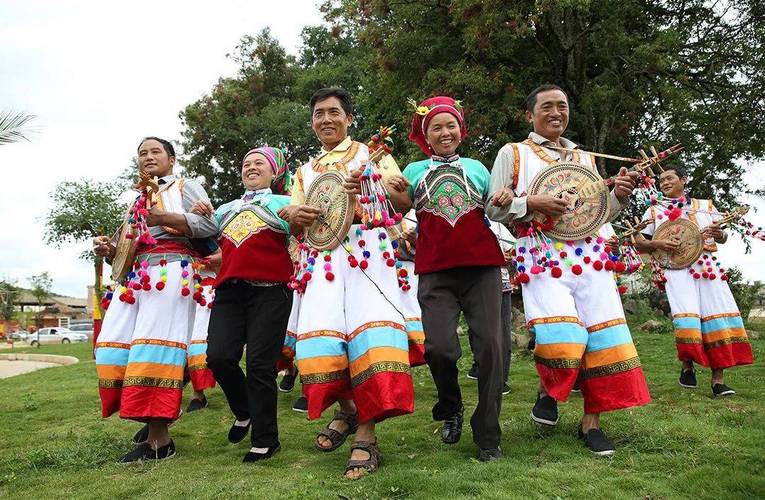
The Buyi people are particularly important to Luoping's cultural identity. Communities along the Duoyi River and Nanpan River valleys have preserved traditions associated with rice cultivation, water resources, traditional houses, folk music, embroidery, food and seasonal celebrations. The Yi people are strongly associated with the mountainous areas, where traditional festivals, wrestling, embroidery, ritual dance and historical traditions remain important. Miao communities are also found in the mountain areas, where reed-pipe music, embroidery, clothing, silver ornaments and traditional festivals form distinctive cultural expressions.
For international visitors, Luoping is especially suitable for ethnic minority culture tours, anthropology fieldwork, traditional village studies, intangible cultural heritage research, ethnic music studies, rural architecture research and cultural photography. Rather than presenting ethnic culture only as a performance, a well-designed cultural tour can connect villages, living traditions, historic sites, artisans and the surrounding landscape.
Ethnic Groups and Ethnic Townships in Luoping
The Main Ethnic Minority Communities
The Buyi people are one of the most important ethnic communities in Luoping and are particularly concentrated in the southern and southwestern river valleys. Their cultural traditions are closely connected with rice cultivation, river environments and village life. Traditional dry-column and stilt-style houses, Buyi music, embroidery, colorful glutinous rice, folk songs and agricultural customs are among the most recognizable elements of Buyi culture.
The Yi people have a long history in the mountainous areas of Luoping. Communities in areas such as Majie, Jiuwuji, Laochang and Zhongshan preserve traditions associated with Yi festivals, wrestling, embroidery, ritual dance and local historical memory. Yi cultural research in Luoping can also be connected with historical settlements and the study of traditional mountain communities.
The Miao people are mainly found in mountainous areas including Dashuijing and Jiuwuji. Miao cultural traditions include reed-pipe music, embroidery, traditional clothing, silver ornaments, wedding customs and flower-mountain festivals. These traditions provide valuable material for visitors interested in ethnic costume, traditional music, craft production and mountain-community culture.
The Hui and other ethnic groups also form part of Luoping's multi-ethnic social landscape. Together with the Han and other communities, they contribute to the cultural exchanges, agricultural traditions, foodways and commercial networks that have developed across the region.
Ethnic Townships
Luoping has three particularly important ethnic townships: Lubuge Buyi and Miao Ethnic Township, Jiuwuji Yi Ethnic Township, and Changdi Buyi Ethnic Township. These areas form the core of Luoping's ethnic cultural landscape.
Lubuge Buyi and Miao Ethnic Township is one of the most important Buyi cultural areas in the county. Located near the Yunnan–Guizhou–Guangxi border, it combines Buyi villages, karst landscapes, river valleys and traditional cultural resources. Lazhe Village, Duoyi River and the surrounding villages provide a strong basis for Buyi cultural research and cultural tourism. Official sources also identify Lubuge as a key historical and cultural resource-rich area of Luoping.
Jiuwuji Yi Ethnic Township represents the Yi cultural landscape of Luoping. Mountain villages, traditional festivals, ethnic crafts and community traditions make the township valuable for visitors studying Yi culture and the relationship between mountain environments and ethnic settlement.
Changdi Buyi Ethnic Township lies along the Jiulong River and is another important Buyi cultural area. Buyi music, dance, agricultural traditions and village culture can be studied together with the surrounding river and karst landscape. Government sources have also identified Changdi and Jiuwuji as important areas for Luoping's ethnic work and cultural development.
Ethnic Minority Villages and Traditional Villages
Lazhe Village: A Core Buyi Cultural Village
Lazhe Village is one of the most important traditional Buyi villages in Luoping. It belongs to Lubuge Buyi and Miao Ethnic Township and lies in the karst river-valley landscape near the Yunnan–Guizhou–Guangxi border. The village is predominantly Buyi and retains traditional stilt-style houses and a distinctive village environment.
Lazhe Village was included in the First Batch of China Traditional Villages in 2012. Its traditional earthen and timber architecture is closely associated with Buyi village life, while its cultural landscape includes traditional residences, community spaces, food traditions, handicrafts, music and festivals. Current local reporting describes the village as having 123 households and 561 residents, all Buyi, while its traditional architectural complex is protected as a provincial-level cultural heritage site.
For cultural tourism, Lazhe is particularly valuable because it is not simply a historic architectural site. It remains a living community where visitors can explore the relationship between traditional architecture, agricultural life, language, music, food and ethnic identity.
Fule Village and the Historic Market Culture
Fule Village in Fule Town represents a different cultural landscape. Rather than being primarily a Buyi village, it developed as a historic commercial settlement where different communities interacted through trade, agriculture and transportation. Traditional buildings and historic streets reflect the commercial importance of the area during the Ming and Qing periods.
Fule Village was included in the China Traditional Villages List, and its cultural significance is connected with historic commercial networks, traditional architecture and the interaction between Han and minority communities. It can therefore be incorporated into a broader study of multi-ethnic exchange and regional trade culture rather than treated only as an ethnic village.
Bai Gu Village
Bai Gu Village in Zhongshan Township is another traditional village with strong historic and architectural value. The village contains several traditional courtyard compounds and stone-built features, reflecting the historical settlement pattern of the mountainous area. It was included in the Fifth Batch of China Traditional Villages in 2018.
Bai Gu is particularly suitable for visitors interested in traditional rural architecture, family settlement patterns, historical migration and the relationship between mountain villages and regional trade routes.
Anle Village
Anle Village in Banqiao Town was included in the Sixth Batch of China Traditional Villages. The village is situated within a karst landscape and preserves traditional rural settlement characteristics.
Luoping's current territorial spatial planning identifies Lazhe Village and Anle Village as traditional villages requiring dedicated protection planning, demonstrating their continuing importance within the county's cultural heritage protection system.
Ethnic Minority Characteristic Villages
Luoping also has several villages recognized for their ethnic cultural characteristics. Government sources have identified Tangli'ao Village in Dashuijing Township, Zhongzhai Village in Lubuge Township and Dabudong Village and Xiaozhai Village in Jiuwuji Township among Luoping's ethnic minority characteristic villages. Zhongzhai Village was also recognized as a China Ethnic Minority Characteristic Village.
These villages provide different perspectives on Buyi, Miao and Yi settlement traditions. For international cultural tours, they can be used as fieldwork locations for studying traditional housing, village organization, clothing, agriculture, festivals and craft production.
Luoping Intangible Cultural Heritage
Luoping has a substantial intangible cultural heritage system. Current county planning documents identify 109 intangible cultural heritage projects, including 9 provincial-level, 32 municipal-level and 68 county-level projects. The county is also planning stronger documentation and digital preservation of these traditions.
Buyi Eight-Tone Sitting Music
Buyi Eight-Tone Sitting Music is one of the most distinctive musical traditions associated with Luoping's Buyi communities. It is traditionally performed using several ethnic musical instruments and combines instrumental music, singing and community performance.
The tradition provides an excellent subject for international visitors studying ethnic music, oral tradition, traditional instruments and community performance. Instead of simply watching a performance, a cultural tour can introduce the history of the instruments, their construction, musical roles and the social occasions in which the music is performed.
One contemporary cultural inheritor, Liu Yong, has been documented as an important practitioner and innovator of Buyi Eight-Tone Sitting Music in Lubuge. His work includes the making and performance of traditional Buyi instruments and the transmission of the music to younger generations.
Buyi Traditional Clothing and Embroidery
Buyi traditional clothing and embroidery are important parts of the county's ethnic cultural heritage. Patterns, colors, textile techniques and clothing structures can reveal information about community identity and local aesthetics.
Embroidery is also closely connected with women's traditional skills and contemporary rural cultural industries. Luoping has organized embroidery training involving women from Lubuge, Changdi, Jiuwuji, Dashuijing and other areas, showing that traditional embroidery continues to be connected with community livelihoods and cultural transmission.
Buyi Five-Color Glutinous Rice
Buyi five-color glutinous rice combines food culture, agricultural knowledge and festival traditions. Different natural plant materials can be used to create distinctive colors, turning rice preparation into both a culinary and cultural practice.
For international visitors, this is particularly suitable for hands-on food heritage experiences, especially when the activity is led by local community members who can explain the relationship between food, farming seasons, festivals and family traditions.
Buyi Bashi Dance
Buyi Bashi Dance, traditionally associated with martial and ritual performance elements, provides another perspective on Buyi folk culture. It can be studied together with traditional music, festivals, community gatherings and the historical role of performance in local society.
Buyi Ancestor and Elder-House Rituals
The Buyi Elder-House Ritual is an important traditional belief practice associated with ancestor memory and family/community identity. The Elder House is more than a physical structure: it represents a cultural space where ideas about ancestry, family continuity and community relationships are expressed.
Because some ritual practices have specific cultural restrictions, international visitors should observe them through community-approved cultural interpretation rather than treating sacred activities as ordinary tourist performances.
Miao Cultural Heritage
Important Miao-related traditions in Luoping include Miao Flower Mountain Festival, Miao reed-pipe dance and music, Miao embroidery and traditional wedding customs. These traditions can be studied through clothing, music, dance, marriage practices, community gatherings and seasonal festivals.
Miao musician and craft practitioner Chen Ziqing has been documented as a practitioner of Miao reed-pipe and suona traditions and has also preserved the production and performance techniques of the Buyi sister flute in Luoping. This illustrates the cultural interaction that can occur between ethnic communities living in the same region.
Yi Cultural Heritage
Yi cultural resources in Luoping include Yi wrestling, Yi embroidery, ritual dance, traditional funerary customs and other mountain-community traditions. These traditions provide opportunities to study physical culture, textile art, oral history, religious concepts and community organization.
Yi wrestling is particularly suitable for cultural interpretation because it connects sport, community identity, festivals and social interaction. Yi embroidery provides another research direction through its patterns, colors, production methods and relationship with clothing.
Representative Intangible Cultural Heritage Bearers
Luoping's ethnic cultural heritage is transmitted through community practitioners, musicians, craftspeople, ritual specialists and traditional artists. Names appearing in local research and cultural materials include Liu Yong, associated with Buyi Eight-Tone Sitting Music; Chen Ziqing, associated with Miao musical traditions and traditional instrument making; He Jiade, associated with Buyi Elder-House traditions; Tan Liangju, associated with Buyi music; Wang Jiming, associated with Buyi Bashi Dance; Xiong Zizhong, associated with Miao wedding customs; Wang Lijiang, associated with Miao reed-pipe dance; Yang Congfen, associated with Yi embroidery; and Zhang Yanyun, associated with Yi wrestling.
Among these names, Liu Yong's current cultural work is documented by Yunnan cultural sources, which describe his long-term involvement in the inheritance and innovation of Buyi Eight-Tone Sitting Music.
For a professional international study tour, Yaso Trip should treat this list as a potential cultural resource directory rather than a guaranteed current booking list. Representative-inheritor status, availability, contact information and the ability to receive overseas groups should be confirmed with the relevant cultural institutions or local communities before a tour is confirmed.
Ethnic Festivals and Seasonal Cultural Traditions
Rapeseed Flower Cultural Tourism and Ethnic Singing Activities
Luoping's famous spring landscape is not only a natural attraction. The rapeseed-growing season has historically provided an important setting for local ethnic gatherings, singing, dancing and social activities. Along the Jiulong River and surrounding areas, Buyi and other ethnic communities have maintained traditions involving folk songs, dances and community gatherings.
For cultural tourists, spring can therefore combine agricultural landscape, ethnic music, rural life and seasonal traditions rather than focusing only on flower photography.
Shuya Festival
The Shuya Festival is associated with Buyi traditional culture and the traditional “Taste of the New” celebration. The term “Shuya” comes from the Buyi language and is connected with women and women's cultural roles.
The festival can be introduced through the themes of new-season food, agricultural cycles, women, community relationships and Buyi identity. Because festival dates and activities may follow traditional calendars, visitors should confirm local arrangements before traveling.
March 3 and Other Buyi Celebrations
Traditional Buyi celebrations around March 3 can include singing, dancing, water-related activities and courtship traditions. These events are particularly useful for visitors studying how festivals create social spaces for young people and how music and performance function within community life.
Other seasonal traditions may include agricultural ceremonies, new-crop celebrations and local village gatherings. Their exact form can differ between communities, so cultural interpretation should always be connected to the specific village rather than presenting all Buyi communities as culturally identical.
Miao Flower Mountain Festival
The Miao Flower Mountain Festival is an important Miao cultural tradition associated with music, clothing, dancing and community gathering. For cultural tourism, the festival provides an opportunity to study the symbolic meaning of traditional dress, silver ornaments, reed-pipe music and courtship customs.
Yi Traditional Festivals
Yi communities in Luoping preserve seasonal celebrations and cultural activities involving traditional dance, wrestling, music and ritual practices. These traditions can be interpreted together with the mountain environment and agricultural cycle of Yi villages.
Historical and Cultural Heritage Sites
Shulong Mountain Tusi Site
The Shulong Mountain Tusi Site in the Changdi area represents an important historical dimension of Luoping's mountain culture. The site is associated with the history of local Tusi administration and preserves remnants such as walls, gates and other defensive or residential structures.
For international visitors, the site can be used to explore Tusi institutions, ethnic regional governance, mountain settlements and the relationship between political power and local communities. It also connects Luoping's ethnic culture with the broader history of southwestern China's frontier regions.
Lazhe Traditional Residential Architecture
The traditional houses of Lazhe provide an important architectural record of Buyi community life. Stilt-style houses, timber structures, village lanes and communal spaces reflect how local architecture adapted to the mountainous river-valley environment.
The village's traditional architectural complex is protected as a provincial cultural heritage resource, making it one of the most important places in Luoping for studying the relationship between ethnic architecture, landscape and living heritage.
Niujie Paleolithic Site
The Niujie Paleolithic Site represents a much earlier period of Luoping's human history. It can be incorporated into a broader cultural research theme that connects ancient human settlement, karst landscapes and later ethnic communities.
Although it is not itself an ethnic minority heritage site, it helps place Luoping's present-day cultural landscape within a much longer history of human settlement.
Revolutionary Heritage
Sites associated with the Luopan Prefectural Committee Command Headquarters and the Yunnan-Guizhou-Guangxi Border Column form another layer of Luoping's cultural heritage. These sites illustrate the participation of local communities in the revolutionary history of southwestern China.
For educational groups, revolutionary heritage can be studied alongside ethnic history to understand how different communities interacted during major political and social changes in the twentieth century.
Yongyuan Fenggai Stele
The Yongyuan Fenggai Stele in the Lubuge area represents another historical layer associated with local governance and ethnic relations during the Qing period. Historic inscriptions such as this can provide valuable material for research into administrative history, ethnic interaction and border-region governance.
Luoping's Ethnic Cultural Tourism Areas
Lubuge: The Core Buyi Cultural Area
Lubuge is the strongest starting point for a Buyi cultural tour in Luoping. The area combines ethnic villages, traditional architecture, river landscapes, music, handicrafts and festivals.
The most important cultural focus is Lazhe Village, where visitors can explore traditional houses, Buyi village organization, local food, clothing, music and handicrafts. The Lubuge area is also recognized by government planning as one of Luoping's historical and cultural resource-rich areas.
Changdi: Buyi River-Valley Culture
Changdi provides another perspective on Buyi culture, particularly through the relationship between settlement and the Jiulong River landscape. Cultural exploration can focus on agriculture, water resources, folk music, traditional dance, food and village life.
This area is useful for visitors who want to understand Buyi culture beyond the better-known tourist attractions and examine how the river environment influenced settlement and agricultural traditions.
Jiuwuji: Yi Mountain Culture
Jiuwuji is an important destination for exploring Yi culture and mountain communities. Visitors can focus on traditional clothing, embroidery, wrestling, festivals, ritual traditions and village architecture.
The area can also be combined with historical research into mountain settlement and the development of local ethnic communities.
Dashuijing: Miao Mountain Culture
Dashuijing is particularly suitable for visitors interested in Miao culture, mountain villages and ethnic handicrafts. Tangli'ao Village has been recognized as an ethnic minority characteristic village, and government sources identify it as one of Luoping's representative ethnic villages.
A cultural tour here can focus on Miao clothing, embroidery, reed-pipe music, festivals, wedding traditions and the relationship between mountain environments and village life.
Fule: Multi-Ethnic Commercial Culture
Fule is valuable because its historical significance is not limited to one ethnic group. Its historic commercial environment reflects the movement of people, goods and cultural practices through eastern Yunnan.
A visit can therefore focus on traditional architecture, commercial history, caravan routes, food exchange and multi-ethnic interaction.
Nature and Ethnic Culture Together
Luoping's ethnic culture cannot be separated completely from its karst environment. Many ethnic villages developed around rivers, valleys, terraces and mountain slopes, and local traditions are closely connected with agriculture and natural resources.
Important natural areas such as Duoyi River, Jiulong Waterfall Group, Lubuge Three Gorges, Golden Rooster Peak Cluster, Screw Field and the Luoping Biota National Geopark can therefore complement an ethnic culture tour.
The purpose should not be to treat natural scenery as a separate sightseeing activity. Instead, these landscapes can help explain why different ethnic communities settled where they did, how farming systems developed, how water was managed, and how local architecture adapted to the terrain.
Luoping Ethnic Minority Culture Tour Research Themes
Buyi Culture and Rice-Farming Civilization
This theme focuses on the relationship between the Buyi people and river-valley agriculture. Key subjects include traditional houses, rice cultivation, water resources, food traditions, folk songs, musical instruments, embroidery and seasonal festivals.
Lazhe, Lubuge and Changdi are particularly suitable for this research direction.
Miao Music, Clothing and Mountain Culture
This theme focuses on Miao identity through reed-pipe music, embroidery, traditional dress, silver ornaments, weddings and festivals. Dashuijing and other Miao communities provide opportunities to understand how cultural identity is maintained in mountain environments.
Yi Mountain Communities and Traditional Culture
This theme examines Yi village life through traditional clothing, embroidery, wrestling, ritual dance, oral traditions and historic settlements. It can also include the study of Tusi history and the political organization of southwestern mountain communities.
Traditional Villages and Rural Architecture
Lazhe, Fule, Bai Gu and Anle can be studied as different examples of traditional settlement. The research can compare Buyi stilt houses, courtyard residences, stone construction, village organization and historical commercial architecture.
Multi-Ethnic Cultural Interaction
One of Luoping's strongest academic themes is the interaction between Buyi, Yi, Miao, Han and other communities. Instead of studying each group separately, visitors can examine how language, food, trade, clothing, festivals and agricultural practices have influenced one another.
The location near three provincial-level administrative boundaries makes this particularly valuable for international anthropology and cultural geography research.
Practical Guide to Ethnic Minority Cultural Tourism in Luoping
Luoping's ethnic cultural attractions are widely distributed rather than concentrated in a single tourist district. River-valley Buyi communities, mountain Yi communities and Miao villages can be separated by considerable distances and changes in elevation. For international groups, private chartered transportation is therefore more practical than relying entirely on public transportation.
Visits involving schools, cultural centers, village performances, traditional craftsmen or intangible cultural heritage bearers should be arranged in advance. This is especially important when visitors want to conduct interviews, photography, workshops or field research.
Cultural etiquette is equally important. Visitors should ask permission before photographing people, traditional houses, family spaces, religious objects or ceremonies. Sacred and family rituals should not automatically be treated as tourist performances. A professional cultural tour should prioritize community consent, respectful interpretation and genuine cultural exchange.
Spring is especially suitable for combining ethnic culture with Luoping's famous agricultural landscape. Summer and autumn can provide more opportunities for village activities and ethnic festivals, while quieter periods can be useful for heritage research, interviews and architectural observation.
Recommended Cultural Resources for International Visitors
| Cultural Theme |
Representative Areas |
Main Study Content |
| Buyi culture |
Lubuge, Lazhe, Changdi |
Traditional houses, music, agriculture, food, embroidery, festivals |
| Yi culture |
Jiuwuji, Majie, Zhongshan |
Wrestling, embroidery, ritual dance, village culture, Tusi history |
| Miao culture |
Dashuijing, Tangli'ao |
Reed-pipe music, embroidery, clothing, weddings, Flower Mountain Festival |
| Traditional villages |
Lazhe, Fule, Bai Gu, Anle |
Architecture, settlement history, traditional lifestyles |
| Intangible heritage |
Lubuge, Changdi and surrounding villages |
Music, dance, food, embroidery, crafts and oral traditions |
| Historical heritage |
Shulong Mountain, Lazhe, historic steles |
Tusi history, ethnic governance, architecture and local history |
| Multi-ethnic interaction |
Border areas, Fule, Lubuge |
Trade, migration, language, food and cultural exchange |
| Nature and culture |
Duoyi River, Jiulong River, karst areas |
Agriculture, water culture, settlement and ecological adaptation |
Ethnic Minority Culture Tours with Yaso Trip
Ethnic Minority Culture Tour with Yaso Trip is designed around Luoping's living cultural resources rather than a simple sightseeing checklist. International visitors can meet local cultural practitioners, explore traditional villages, learn about intangible cultural heritage, study ethnic architecture and understand how agriculture and the karst landscape shaped local communities.
For academic and student groups, Yaso Trip can develop anthropology fieldwork, ethnic music research, traditional village studies, intangible cultural heritage workshops, ethnic costume and embroidery research, rural architecture studies and multi-ethnic cultural exchange programs. Depending on the group, activities can include community-approved interviews, village observation, traditional craft demonstrations, food heritage experiences, music appreciation and historical-site interpretation.
The greatest value of Luoping's ethnic culture is its diversity within a relatively compact regional landscape. Buyi river-valley culture, Yi mountain culture, Miao village traditions and multi-ethnic commercial communities coexist with traditional villages, historic sites and karst landscapes. This makes Luoping an excellent destination for international visitors who want to move beyond conventional sightseeing and understand the living cultural landscape of southwest China.





 View All Yunnan Tours


 View All Yunnan Theme Tours by Interest




 Home









 Contact Information




