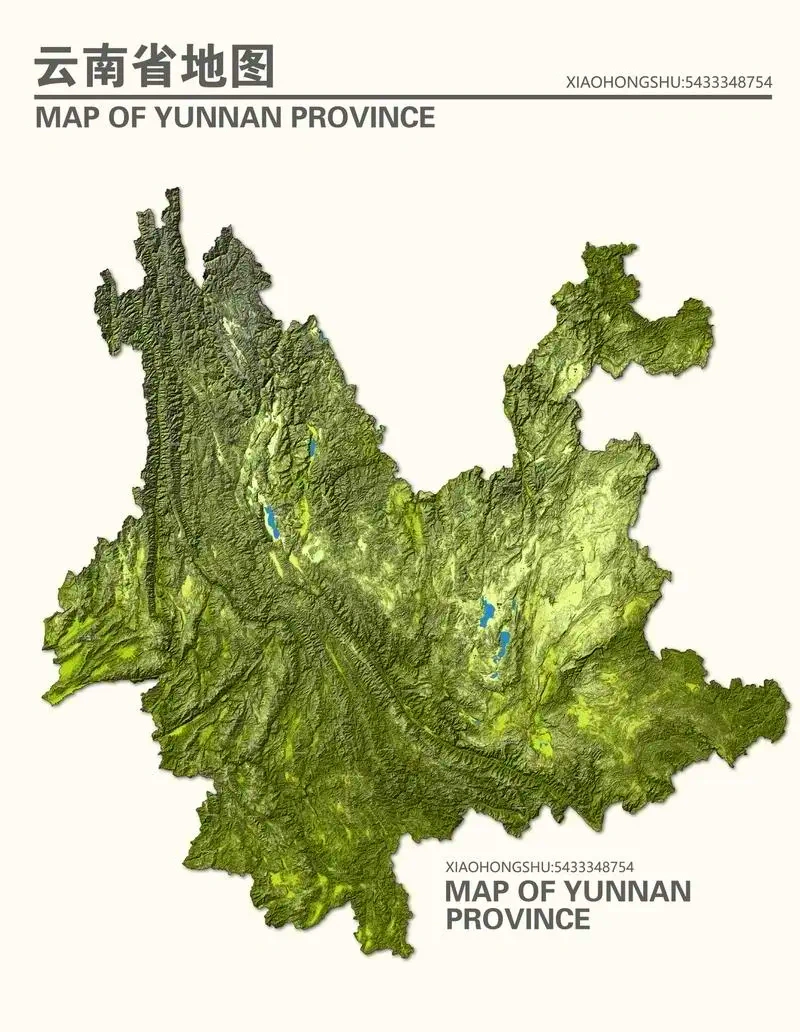
Shizong County (师宗县) is located in Qujing, Yunnan Province (云南省曲靖市), on the eastern side of the Yunnan-Guizhou Plateau. Known as the “Home of Chinese Couplets” and a hidden destination of the Zhuang people, the county is characterized by dramatic karst landscapes, alpine forests, traditional villages and diverse ethnic cultures.
The county has a particularly rich combination of natural and cultural attractions. Its landscapes include giant karst caves and sinkholes, alpine rhododendron forests, mountain meadows, river valleys along the Nanpan River, waterfalls and unusual rock formations. Traditional villages, Zhuang and Yi customs, historic residences and revolutionary heritage sites add cultural depth to the destination.
Compared with some of Yunnan's more established tourist destinations, Shizong County remains relatively low-key and less commercialized. This makes it especially appealing to travelers looking for quiet landscapes, traditional communities and less crowded attractions.
For international visitors, the county is best suited to nature photography, hiking, karst exploration, traditional village visits, ethnic culture and cultural heritage travel.
The Most Popular Shizong County Attractions for International Visitors
There is no official ranking specifically based on foreign visitor numbers. The following selection is instead organized according to the attractions' landscape value, cultural significance, visitor appeal, accessibility and potential interest to international travelers.
Fenghuang Valley Life Culture Park
Fenghuang Valley Life Culture Park (凤凰谷生命文化主题公园) is one of the best-known natural attractions in Shizong County and one of the area's most spectacular karst landscapes.
Its most distinctive feature is the enormous natural cave entrance known as the “Gate of Life.” The vertical height of the cave entrance is about 218 meters, creating an imposing geological formation surrounded by steep canyon walls.
Inside the scenic area, visitors can encounter underground river scenery, caves and other karst formations. The surrounding landscape combines cliffs, valleys and limestone formations, providing excellent opportunities for landscape photography and geological observation.
The attraction also has connections with local Zhuang culture, making it possible to combine natural sightseeing with an introduction to regional ethnic traditions.
For travelers interested in karst geology, caves, dramatic landscapes and nature photography, Fenghuang Valley is one of the key places to visit in Shizong.
Junzi Mountain Scenic Area
Junzi Mountain (菌子山), also known as Yingwu Mountain, is one of the most important high-mountain destinations in the county.
The mountain is known for its extensive ancient rhododendron forests, alpine meadows and distinctive karst rock formations. During the spring flowering season, the mountain becomes especially attractive as rhododendrons cover large areas of the highland landscape.
The open terrain also provides opportunities for hiking, outdoor photography and stargazing. Its combination of forests, meadows and unusual limestone formations gives the area a character very different from the river valleys farther south.
Junzi Mountain is particularly suitable for travelers interested in hiking, wildflowers, mountain scenery, ecological observation and outdoor photography.
Wulong Zhuang Water Ecological Town
Wulong Zhuang Water Ecological Town (五龙壮乡水生态小镇), also known as Wulong Scenic Area, is located in the subtropical Nanpan River valley.
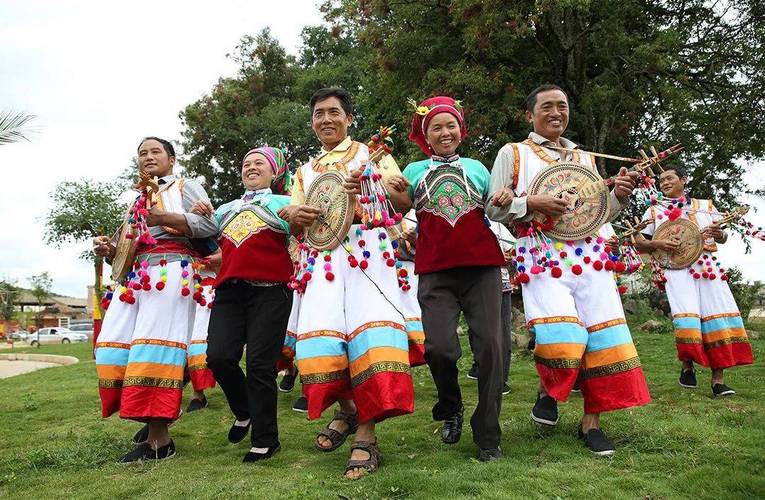
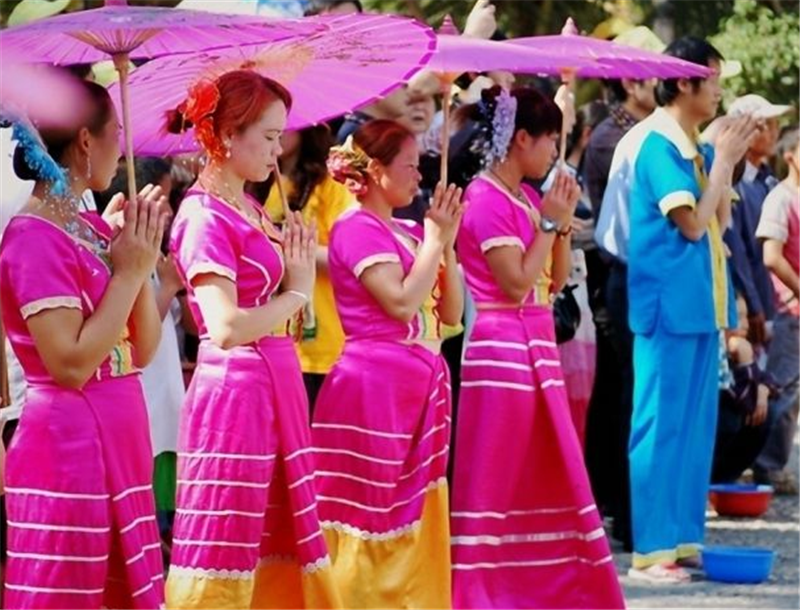
The area is closely associated with Zhuang communities and provides one of the best opportunities in Shizong to experience local Zhuang culture. The surrounding landscape includes river valleys, waterfalls and lush subtropical vegetation.
Traditional Zhuang handicrafts are represented by activities such as brocade weaving, while local cultural celebrations may include long-table banquets and bamboo pole dancing.
The Third Day of the Third Lunar Month is particularly significant in Zhuang communities and can provide visitors with an opportunity to experience traditional celebrations when local events are taking place.
For overseas travelers interested in ethnic culture, traditional handicrafts, festivals and river-valley landscapes, Wulong is an important stop.
Shuji Ancient Village
Shuji Ancient Village (淑基古村) in Zhuji Town is a historic traditional village recognized for its traditional architecture and cultural heritage.
The village is associated with Dou Xu (窦垿), a historical figure connected with Chinese couplet culture and the author of the famous long couplet at Yueyang Tower.
Historic residences and traditional buildings from the Ming and Qing periods provide an insight into the architectural character of rural eastern Yunnan. The village is also an important place for understanding the tradition of Chinese couplets and family culture.
For visitors interested in Chinese history, traditional architecture, literature and rural heritage, Shuji Ancient Village offers a very different experience from Shizong's natural attractions.
Shidong Red Culture Tourist Area
Shidong Red Culture Tourist Area (石洞红色文化旅游区) is associated with the former Shidong meeting site of the Yunnan-Guizhou-Guangxi Border Column.
The site reflects the revolutionary history of southwest China and forms part of the county's modern historical heritage.
Its importance is primarily historical rather than scenic, making it more suitable for visitors interested in twentieth-century Chinese history, revolutionary heritage and regional historical research.
Duza Yi Village
Duza Yi Village (雄壁堵杂彝村) is a traditional Yi community known for its distinctive folk customs.
The village is particularly associated with the traditional Yi practice known as “Binding the Divine Monkey,” a form of folk ritual and cultural heritage that has been preserved within the community.
Because this is a living village rather than a conventional theme park, visitors should approach respectfully. Photography of residents, ceremonies and private spaces should be undertaken only after receiving permission.
For travelers with an interest in Yi culture, anthropology and traditional rural communities, Duza offers a distinctive cultural experience.
Shizong County Attractions by Category
The attractions of Shizong County can be divided into several major tourism categories.
Karst Geological and Natural Attractions
The county's most distinctive natural attractions include Fenghuang Valley, Junzi Mountain, Nandan Mountain, Tongxuan Cave and Heier Waterfall.
Together, these sites showcase caves, sinkholes, limestone formations, alpine meadows, forests, river valleys and waterfalls.
This category is particularly suitable for travelers interested in geology, hiking, landscape photography and outdoor exploration.
Zhuang Culture and Traditional Folk Heritage
The Wulong Zhuang Water Ecological Town and Dachong Zhuang Traditional Village (大冲壮族传统村落) represent the Zhuang cultural heritage of the area.
Visitors can learn about traditional Zhuang handicrafts, including brocade weaving, as well as local festival customs associated with the Third Day of the Third Lunar Month.
Yi Culture and Traditional Villages
Duza Yi Village represents the Yi cultural heritage of Shizong and is particularly notable for the traditional “Binding the Divine Monkey” custom.
The village is of interest to travelers who want to observe traditional customs within a real community rather than through a commercialized cultural performance.
Traditional Villages, Architecture and Chinese Couplet Culture
Shuji Ancient Village is the county's principal attraction for visitors interested in traditional village architecture and Chinese couplet culture.
The historic buildings and connection with Dou Xu make it an important cultural heritage site in the county.
Revolutionary and Modern Historical Heritage
The Shidong Red Culture Tourist Area preserves an important historical site associated with the Yunnan-Guizhou-Guangxi Border Column.
It can be included in a historical itinerary through eastern Yunnan for visitors interested in modern Chinese history.
Urban Leisure Attractions
Wenbi Park (文笔公园) is located in the county seat and provides a convenient urban sightseeing option.
The park is associated with Wenbi Pagoda and is suitable for a relaxed walk or a short stop between excursions to the surrounding countryside.
Major Shizong County Attractions: English and Chinese Names
| Chinese Name |
English Name |
Location |
Attraction Type |
| 凤凰谷生命文化主题公园 |
Fenghuang Valley Life Culture Park |
Wulong Zhuang Ethnic Township |
Karst cave, sinkhole and canyon landscape |
| 菌子山风景区 |
Junzi Mountain (Yingwu Mountain) Scenic Area |
Border of Datong, Longqing and Wulong |
Alpine rhododendron forest, meadows and karst scenery |
| 五龙壮乡水生态小镇 |
Wulong Zhuang Water Ecological Town |
Wulong Zhuang Ethnic Township |
Nanpan River valley, Zhuang culture and waterfalls |
| 竹基淑基古村 |
Shuji Ancient Village |
Zhuji Town |
Traditional village, historic architecture and couplet culture |
| 石洞红色文化旅游区 |
Shidong Red Culture Tourist Area |
Caiyun Town |
Revolutionary history and heritage |
| 雄壁堵杂彝村 |
Duza Yi Village |
Xiongbiy Town |
Yi culture and traditional folk customs |
| 黑尔瀑布 |
Heier Waterfall |
Longqing Township |
River valley, waterfall and subtropical scenery |
| 南丹山风景区 |
Nandan Mountain Scenic Area |
Wulong Zhuang Ethnic Township |
Karst mountain scenery and forest hiking |
| 通玄洞 |
Tongxuan Cave |
Danfeng Subdistrict |
Underground karst cave and stalactite formations |
| 文笔公园 |
Wenbi Park |
Danfeng Subdistrict |
Urban park and Wenbi Pagoda |
Shizong County Attractions Ranking for Travelers
The following ranking is designed as a practical guide for overseas visitors, taking into account scenery, cultural value, uniqueness and the type of experience available.
| Rank |
Attraction |
Best For |
| 1 |
Fenghuang Valley Life Culture Park |
Karst geology, caves and dramatic landscapes |
| 2 |
Junzi Mountain Scenic Area |
Rhododendrons, hiking and alpine scenery |
| 3 |
Wulong Zhuang Water Ecological Town |
Zhuang culture and river-valley scenery |
| 4 |
Shuji Ancient Village |
Traditional architecture and Chinese couplet culture |
| 5 |
Shidong Red Culture Tourist Area |
Revolutionary history |
| 6 |
Duza Yi Village |
Yi culture and traditional customs |
| 7 |
Heier Waterfall |
Waterfalls and subtropical landscapes |
| 8 |
Nandan Mountain Scenic Area |
Forest hiking and karst scenery |
| 9 |
Tongxuan Cave |
Cave exploration and geological formations |
| 10 |
Wenbi Park |
Urban leisure and local sightseeing |
This is a traveler-oriented ranking, rather than an official government tourism ranking.
Other Places of Interest in Shizong County
In addition to the main attractions above, several other places can be considered when planning a wider exploration of the county.
Dachong Village of Zhuji Town (曲靖市师宗县竹基镇大冲村) is associated with local Zhuang traditions and traditional village culture.
Shuji Village of Zhuji Town (曲靖市师宗县竹基镇淑基村) is an important historic village connected with traditional architecture and couplet culture.
Feilaisi Temple (飞来寺) is another local cultural site that can be considered by visitors interested in religious and historical landmarks.
The Former Residence of Dou Xu can be combined with a visit to Shuji Ancient Village for travelers interested in the history of Chinese couplets and traditional rural culture.
Best Times to Visit Shizong County Attractions
Different seasons offer different reasons to visit Shizong.
March and April
Spring is an excellent period for visiting Junzi Mountain, particularly for travelers interested in rhododendron flowers, alpine landscapes and nature photography.
The Third Day of the Third Lunar Month
The traditional Zhuang festival period is one of the most interesting times to explore the cultural heritage of Wulong and surrounding Zhuang communities.
Festival activities can vary from year to year, so visitors should check local arrangements before planning a trip specifically around the celebrations.
July and August
The rainy season brings more water to waterfalls and creates lush vegetation across the mountains and river valleys.
This period is also associated with Yunnan's seasonal wild mushroom culture.
September to November
Autumn generally provides comfortable conditions for hiking, traditional village visits and outdoor exploration.
The season is particularly suitable for visitors planning a combination of geological sightseeing, mountain walks and cultural heritage exploration.