Located around the headwaters of the Pearl River, Zhanyi District (沾益区) brings together highland ecology, Yi and Miao traditions, rural customs, intangible cultural heritage, local food, and community performances. Its annual cultural calendar ranges from traditional ethnic celebrations to harvest gatherings, culinary events, public performances, and Chinese New Year activities.
The district is particularly suitable for international student study tours, folk-culture research, festival photography, heritage workshops, and cross-cultural exchanges. Many activities still take place within villages and local communities rather than in large commercial tourism venues, giving visitors an opportunity to observe how traditions continue to function in everyday life.
Festival dates and programmes may change according to the lunar calendar, weather, village customs, and annual government arrangements. International groups should confirm the final dates, venues, access conditions, and participation rules before booking flights or designing a fixed itinerary.
Festival Culture Across Zhanyi
The district’s cultural events can be divided into four broad groups: traditional ethnic festivals, community celebrations, cultural and tourism events, and seasonal leisure activities. The busiest periods are spring, when Miao communities celebrate Huashan traditions, and summer, when Yi villages hold Torch Festival gatherings.
Different parts of Zhanyi have their own festival character. Yanfang Township (炎方乡) and Dapo Township (大坡乡) are associated with Miao and Yi village traditions. Deze Township (德泽乡) and Baishui Town (白水镇) are known for Yi festivities, folk dancing, and cool highland summer activities.
The urban communities of Xiping Subdistrict (西平街道) and Longhua Subdistrict (龙华街道) provide easier access to public cultural performances, heritage exhibitions, food events, and community stages. Bole Township (播乐乡) and Panjiang Town (盘江镇) add rural ceremonies, revolutionary heritage, agricultural traditions, and temple-fair culture to the district’s annual calendar.
Spring Festivals from March to May
Spring brings milder weather, flowering mountain landscapes, and the opening of Zhanyi’s ethnic festival season. It is a rewarding period for studying Miao clothing, Lusheng music, courtship songs, village ceremonies, and community gatherings.
Pearl River Source Miao Huashan Festival
The Pearl River Source Miao Huashan Festival (珠江源苗族花山节) is one of Zhanyi’s most representative ethnic celebrations. Activities are usually held around the Qingming period in early April, with venues associated with the Pearl River headwaters and Miao communities near Fasa Village (法洒苗族村寨).
At the centre of the celebration is the flower pole, which serves as both a ceremonial symbol and a gathering point. Festival programmes may include rituals honouring the flower pole, Lusheng music, group dancing, antiphonal singing, climbing competitions, traditional clothing displays, sporting contests, and village markets.
Young men and women traditionally gather around the flower pole in festival dress, using music, dance, songs, and friendly competition as forms of social interaction. Contemporary celebrations may also include staged performances and visitor activities, but their cultural meaning remains rooted in Miao community life.
For overseas students, the festival provides a valuable setting for studying Miao clothing, musical instruments, festival etiquette, social customs, oral traditions, and community identity. Participation should be arranged with local hosts so that students understand which rituals may be observed, photographed, or joined.
Spring Community Stage Performances
Spring cultural performances are held in public squares and community venues across the urban area. The Community Stage Cultural Programme (百姓大舞台文旅展演) brings together local music, ethnic dance, traditional opera, folk arts, and selected intangible cultural heritage presentations.
These performances are accessible to international groups with limited previous knowledge of Yunnan’s ethnic culture. A bilingual introduction before the programme can help students recognise differences between Yi, Miao, Han, and other performance traditions.
Dates are normally announced locally and may not follow a permanent weekly schedule. Groups should check the current cultural calendar before arrival.
Summer Festivals from June to August
Summer is the liveliest festival season in Zhanyi. The cool highland climate, school holiday period, village gatherings, outdoor performances, and evening bonfires create favourable conditions for cultural exchange and group activities.
The season is centred on the Yi Torch Festival, with additional food, wellness, hiking, camping, and heritage programmes. Because June to September is also the rainy season, outdoor events may be adjusted at short notice.
Yi Torch Festival
The Yi Torch Festival (彝族火把节) is the most important summer ethnic celebration in the district. Events are generally held in late July or August according to the lunar calendar and annual local arrangements.
Festival venues may include Dushui Village (毒水寨), Jiulong Community (九龙社区), Dade Yi Village (大德彝族村), and other Yi communities in Deze and Dapo. The scale, programme, and duration vary between locations.
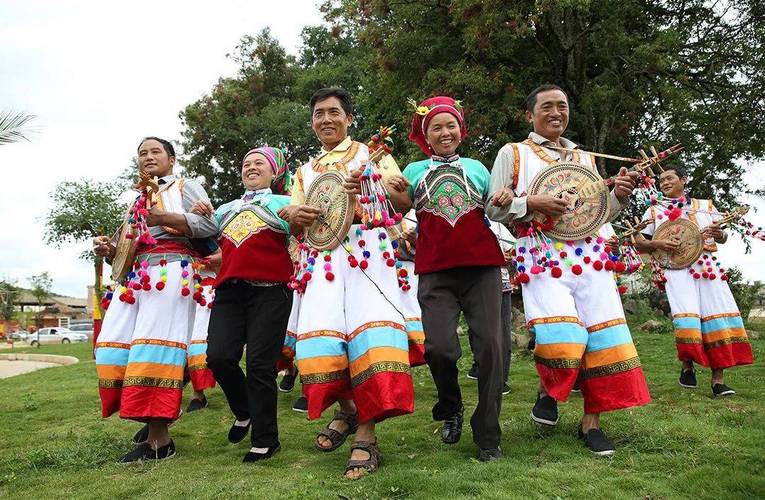
Traditional activities may include fire-worship ceremonies, torch processions, bonfire gatherings, village markets, ethnic performances, and communal dancing. The Yi Left-Foot Dance (彝族左脚舞) and Qiebi Dance (确比舞) are often presented as lively expressions of group identity and social participation.
Some village celebrations incorporate recognition of model households, activities promoting ethnic unity, local agricultural exhibitions, and cultural performances. In highland communities, the festival may also be combined with summer-retreat tourism, outdoor recreation, and rural hospitality.
For international participants, the Torch Festival offers direct insight into Yi fire beliefs, ceremonial practice, collective dance, music, clothing, community organisation, and contemporary ethnic identity. It is particularly suitable for students of anthropology, dance, music, sociology, religious studies, and visual culture.
Visitors should follow local instructions around ceremonial fires and bonfire areas. Closed shoes, weather-resistant clothing, and careful crowd management are advisable for student groups.
Zhanyi Spicy Chicken Food Culture Festival
The Zhanyi Spicy Chicken Food Culture Festival (沾益辣子鸡美食文化节) is usually associated with the urban food and commercial district around Xihe Park Food Street (西河公园美食街).
Activities may include demonstrations of traditional spicy-chicken preparation, cooking competitions, agricultural product displays, regional food exhibitions, and practical culinary workshops. The event presents food not simply as a meal but as part of local memory, trade, family life, and hospitality.
The preparation of Zhanyi Spicy Chicken (沾益辣子鸡) is recognised as an important local culinary heritage practice. International students can examine ingredient selection, chilli processing, cooking methods, flavour balance, food presentation, and the adaptation of traditional recipes within modern restaurants.
Food-allergy information, dietary restrictions, and halal requirements should be communicated in advance. Culinary workshops should also include hygiene guidance and safe handling of hot oil, knives, and cooking equipment.
Cool Summer Wellness and Cultural Activities
The Cool Zhanyi Summer Cultural and Wellness Programme (清凉益夏康养文旅活动) combines the district’s mild summer climate with walking, ecological observation, folk performances, and outdoor leisure.
Activities may be organised in Deze and around the Pearl River Source Scenic Area (珠江源景区). Depending on the annual programme, visitors may encounter guided hikes, canyon ecology activities, outdoor performances, countryside visits, and supervised camping.
This type of programme works well for multidisciplinary study groups because it connects watershed ecology, highland climate, rural culture, ethnic traditions, and wellness travel. Outdoor plans must remain flexible during periods of heavy rain, thunderstorms, fog, or rising water levels.
Autumn Festivals from September to November
Autumn usually brings cooler, more stable weather after the main rainy season. The pace of local activities becomes gentler, making this period well suited to field research, interviews, agricultural observation, and longer heritage workshops.
Rather than a single large festival, autumn is characterised by community performances, harvest activities, produce markets, and village-based celebrations. Dates frequently depend on the agricultural calendar and local arrangements.
Community Cultural Performances
Community stages in the urban area may host evening programmes between late summer and autumn. The content can include Dongjing Music (洞经音乐), local opera, folk painting displays, instrumental music, and Yi or Miao dance.
These performances give students repeated opportunities to observe local cultural expression in a public setting. Researchers can compare staged presentation with village-based practice and explore how traditional art forms are adapted for contemporary audiences.
Published performance schedules should be treated as seasonal rather than permanently fixed. Yaso Trip can confirm current programmes with local organisers when preparing an international group visit.
Rural Harvest Celebrations
Rural harvest activities may be organised in Panjiang, Baishui, Dapo, and other agricultural areas. Programmes can feature farming demonstrations, produce exhibitions, local markets, folk performances, and community meals.
Some villages retain rituals or customs expressing gratitude for the harvest, respect for nature, and hopes for the coming agricultural year. The format varies greatly between communities, and not every activity is held as a public festival each year.
For study groups, the main value lies in understanding the relationship between seasonal farming, food systems, village cooperation, local markets, ritual practice, and rural economic life. Visits are best coordinated with village representatives rather than treated as unscheduled sightseeing.
Winter Festivals from December to February
Winter activities centre on Chinese New Year and community traditions. Although large outdoor festivals are less frequent, this period offers close contact with family foodways, New Year etiquette, village visits, dragon and lion dances, and seasonal handicrafts.
The dates of Spring Festival activities follow the Chinese lunar calendar. Many traditions take place within families or village communities, so advance invitation and respectful coordination are essential.
Miao New Year Customs
Miao New Year activities may be observed in Tuqiao Miao Village (土桥苗族村寨) and neighbouring communities during the Spring Festival period. Customs can include family reunion meals, Lusheng music, New Year greetings, festive clothing, and community visits.
Small Huashan-style gatherings may also be arranged after the first days of the lunar year, depending on village decisions. These winter activities are usually more intimate than the large spring festival.
International students can study how Miao families combine their own traditions with the wider Chinese New Year calendar. Photography inside homes, recording of songs, and participation in family ceremonies should always be agreed upon beforehand.
Spring Festival Temple Fairs and Folk Performances
New Year activities in Panjiang and the Xiping urban area may include temple fairs, festive markets, processions, dragon dancing, and lion dancing.
The local Fangcheng Dragon Dance (方城舞龙) represents the collective energy of the New Year season. Performers coordinate the movement of the dragon through streets or public spaces, accompanied by percussion, crowds, and festive decorations.
These activities reveal how Han traditions, local customs, and minority cultural influences have interacted in eastern Yunnan. They are suitable for research into festival symbolism, performance, community participation, and interethnic cultural exchange.
Xiaobaba New Year Food Workshop
The Zhanyi Xiaobaba (沾益小粑粑) is a traditional local pastry associated with everyday snacks, gifts, and festive food culture. Heritage workshops may offer visitors an opportunity to prepare, shape, bake, and taste the pastries.
A practical workshop can introduce ingredients, pastry-making techniques, oven use, flavour variations, packaging, and the role of small baked foods during family visits and seasonal celebrations.
This is a manageable activity for international student groups because it combines hands-on learning with local history and food culture. Workshop availability should be reserved in advance, particularly during the Spring Festival holiday.
Annual Zhanyi Festival Calendar
| Season |
Festival or event |
Main area |
Usual period |
Principal activities |
Study-tour value |
| Spring |
Pearl River Source Miao Huashan Festival |
Pearl River headwaters and Fasa Village |
Around Qingming Festival, usually early April |
Flower-pole rituals, Lusheng dance, antiphonal singing, competitions, clothing displays and village markets |
Miao festival customs, music, clothing and community studies |
| Spring |
Community Stage Cultural Programme |
Public squares in the Xiping and Longhua urban areas |
Selected dates in spring |
Ethnic dance, folk arts, local opera and heritage performances |
Introductory observation of local performing arts |
| Summer |
Yi Torch Festival |
Dushui Village, Jiulong Community, Dade Yi Village, Deze and Dapo |
Usually late July or August |
Fire rituals, torches, bonfires, Yi dancing, performances and rural markets |
Yi fire culture, ceremonial practice and collective dance |
| Summer |
Zhanyi Spicy Chicken Food Culture Festival |
Xihe Park Food Street and related urban venues |
Usually during the summer festival period |
Cooking demonstrations, food competitions, produce displays and workshops |
Culinary heritage, agricultural products and practical cooking |
| Summer |
Cool Zhanyi Summer Cultural and Wellness Programme |
Deze and the Pearl River headwaters |
Summer holiday period |
Hiking, ecological observation, performances, camping and wellness activities |
Integrated ecology, climate and ethnic-culture studies |
| Autumn |
Community Cultural Performances |
Urban public squares and community venues |
Mainly late summer to autumn |
Dongjing music, folk art, ethnic dance and local opera |
Observation of living heritage and public cultural presentation |
| Autumn |
Rural Harvest Celebrations |
Panjiang, Baishui, Dapo and other farming areas |
Harvest season; dates vary |
Farming displays, produce markets, community performances and seasonal customs |
Agricultural heritage, rural economy and village life |
| Winter |
Miao New Year Customs |
Tuqiao Miao Village and nearby communities |
Lunar New Year period |
Reunion meals, Lusheng greetings, festive clothing and community interaction |
Miao New Year etiquette and family traditions |
| Winter |
Spring Festival Temple Fairs and Folk Performances |
Panjiang and the Xiping urban area |
First lunar month |
Dragon and lion dances, festive processions, markets and folk performances |
Chinese New Year customs and cultural exchange |
| Winter |
Xiaobaba New Year Food Workshop |
Urban heritage workshops and selected study centres |
Spring Festival period |
Pastry preparation, baking and food-culture interpretation |
Hands-on culinary heritage experience |
Best Festival Seasons for International Study Tours
Spring is best for groups focusing on Miao culture, ethnic clothing, Lusheng music, folk songs, and village festival rituals. The Huashan Festival offers a concentrated introduction to Miao social and performance traditions.
Summer provides the strongest atmosphere for immersive group travel. The Torch Festival, culinary activities, outdoor programmes, and evening performances create opportunities for dance, food, photography, environmental study, and cross-cultural interaction.
Autumn is better suited to quieter fieldwork, agricultural research, interviews, and systematic heritage observation. Winter offers smaller-scale experiences centred on New Year etiquette, family food, village interaction, and traditional performance.
Festival Etiquette and Photography
Visitors should ask permission before photographing ceremonies, elderly residents, children, private homes, religious objects, or close-up details of traditional clothing. A public performance does not automatically mean that every ritual or participant may be filmed without consent.
International groups should avoid interrupting processions, entering ceremonial spaces without invitation, or treating ritual objects as photographic props. Drones may be restricted near crowds, protected areas, transport infrastructure, and village ceremonies.
Modest clothing, punctual arrival, and a brief introduction from the local host help establish trust. Students conducting interviews should explain their research purpose and obtain consent before recording audio or video.
Festival Travel Planning
Festival accommodation and transport should be booked early, especially during the Torch Festival and national holiday periods. Village roads may be narrow, parking may be limited, and temporary traffic controls are common around major events.
Outdoor programmes require rain protection during summer and warm layers for evening bonfires or highland camping. Comfortable footwear is necessary for village lanes, grassland activities, and uneven performance grounds.
All festival dates should be reconfirmed before departure. Lunar-calendar observances, village decisions, weather, fire-safety requirements, ecological protection, and public-event approvals can affect the final programme.
Festival Tours with Yaso Trip
Yaso Trip can design seasonal Zhanyi festival study tours combining community celebrations, intangible cultural heritage, village visits, ecological learning, culinary workshops, photography, and school exchanges.
Programmes can be adapted for international schools, universities, cultural institutions, photographers, researchers, and specialist travel groups. Depending on the season, a tour may focus on Miao festival culture, Yi fire traditions, rural harvest customs, local food heritage, or Spring Festival practices.
Services can include private transport, bilingual assistance, festival-date confirmation, village coordination, cultural interpretation, workshop reservations, dietary arrangements, safety planning, and support for school or community exchanges. The aim is to help overseas visitors move beyond watching a performance and understand how living heritage, ethnic identity, community life, and seasonal traditions remain connected in Zhanyi.