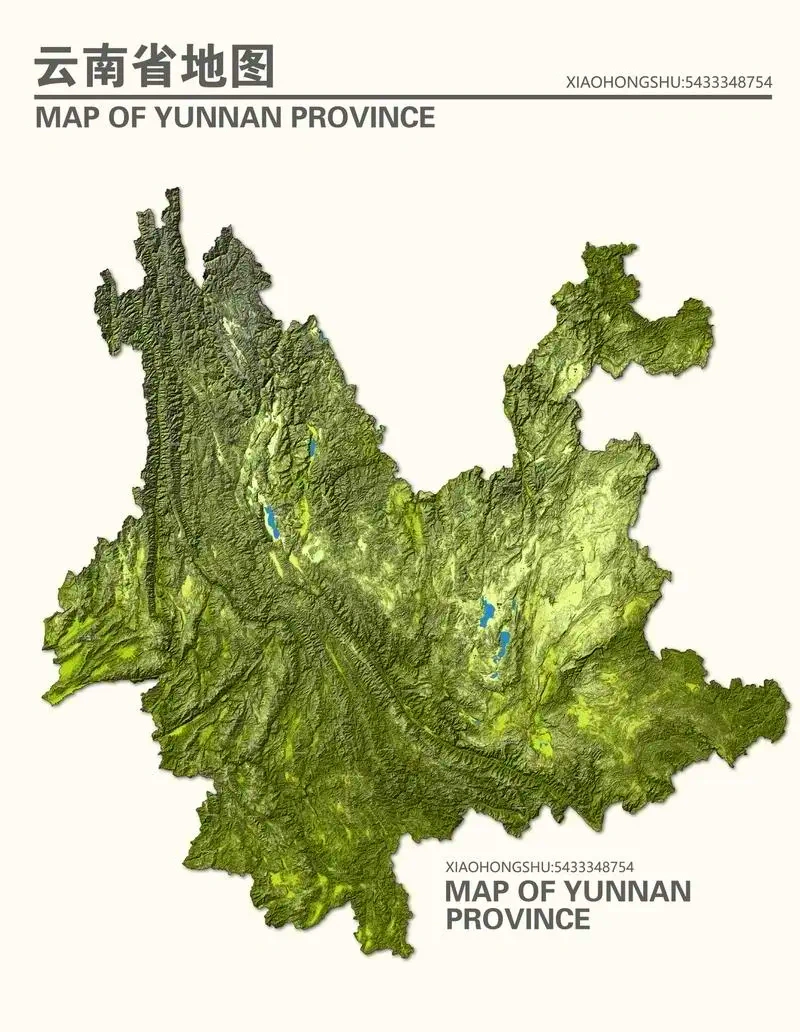
Yuxi is one of the most accessible destinations in central Yunnan, located close to Kunming and connected by a growing network of high-speed railways, expressways and regional roads. For visitors exploring the city and its surrounding counties, transportation conditions vary considerably. The Fuxian Lake area around Chengjiang is relatively easy to explore, while Hongta District and Tonghai are connected by smooth roads across broad valley plains. By contrast, Ailao Mountain, Xinping, Yuanjiang and the Hani terrace areas involve winding mountain roads, longer travel times and greater seasonal driving considerations.
For international visitors, choosing the right form of transport is particularly important. Public transportation works well for major towns and popular destinations, while a private vehicle, chartered car or self-drive journey is much more convenient for visiting ethnic villages, intangible cultural heritage sites and remote mountain landscapes. Yaso Trip can combine high-speed rail, private transfers, chartered vehicles, cycling and motorcycle travel according to the route and interests of each group.
Yuxi Transportation Overview
Yuxi's main transportation network is built around the G8511 Kunming–Mohan Expressway, S45 Yongjin Expressway, S46 Dage Expressway and G323 National Highway. These roads connect the central urban area with Chengjiang, Eshan, Xinping and Yuanjiang and make it possible to create multi-county travel routes without returning to Kunming.
The opening and improvement of the Yongjin Expressway have significantly improved transportation between Xinping and Yuanjiang. Travelers can now combine the flower-waisted Dai villages around Mosha and Gasa with the Hani terraces and valley landscapes of Yuanjiang more efficiently than before. The Dage Expressway has also improved access to Gasa and the Ailao Mountain area of Xinping.
Transportation conditions differ from one part of Yuxi to another. Hongta District has the most complete urban transport network, including buses and ride-hailing services. Chengjiang and Fuxian Lake have good paved roads and dedicated cycling routes around the lake. Tonghai is mainly flat and easy to drive. Eshan has convenient expressway access but mountain roads leading to ethnic villages. Xinping and Yuanjiang contain some of the most spectacular landscapes in Yuxi, but they also require more careful driving because of steep slopes, sharp bends, fog and occasional geological hazards.
Transportation Conditions by Area
In Hongta District, roads within the urban area are well developed, making buses, taxis, ride-hailing services, walking and electric scooters convenient for city sightseeing.
Around Fuxian Lake in Chengjiang, the main lakeside roads are paved and generally comfortable for cars and bicycles. The lake circuit is especially attractive for cycling, although some smaller roads close to the water are narrower.
Tonghai has relatively flat terrain, particularly around the main basin and Xingmeng Mongolian Township. Most major roads are suitable for ordinary passenger cars.
In Eshan Yi Autonomous County, the Kunming–Mohan Expressway provides convenient access to the county, while roads leading to Fuliangpeng and other Yi villages become more mountainous and winding.
Xinping Yi and Dai Autonomous County combines expressway travel with difficult mountain roads. The route from Gasa toward Ailao Mountain uses the Enshui mountain road, where steep slopes, sharp bends and deep valleys require careful driving. Roads around Mosha and the flower-waisted Dai villages are generally easier.
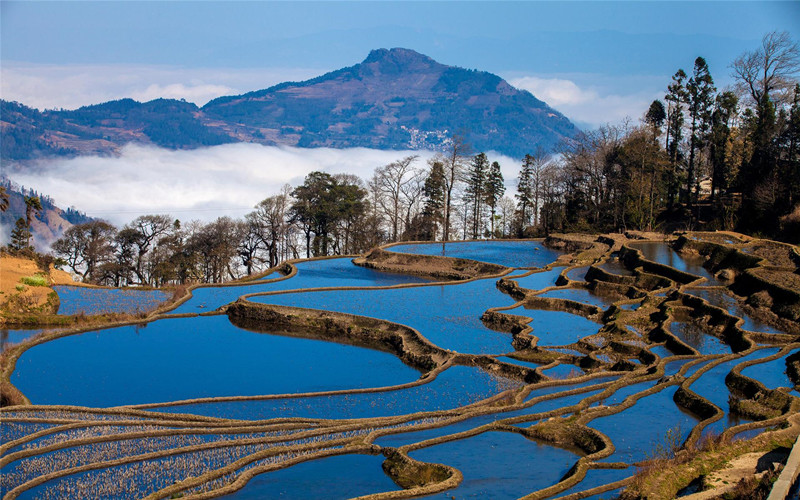
In Yuanjiang Hani, Yi and Dai Autonomous County, the county town lies in a warm river valley, while destinations such as Nanu and Yangjie require climbing into mountainous areas. The altitude changes significantly, and mountain roads contain many bends.
Yimen and Huaning also have mountainous rural roads. Travelers visiting ethnic villages and traditional craft communities should expect narrower county and township roads rather than the wider expressways found around the major urban areas.
Seasonal Road Conditions in Yuxi
The relatively dry period from November to April is generally the most comfortable season for road travel. Mountain roads are usually more stable, although early-morning fog can occur in Ailao Mountain and the Nanu terrace area. Drivers should reduce speed whenever visibility falls.
From May to October, rainfall increases across Yuxi. Mountain roads around Ailao Mountain and Yuanjiang may experience falling rocks, small landslides or temporary traffic restrictions. Heavy rain can make some rural roads slippery, and travelers should avoid entering remote mountain areas at night whenever possible.
Fuel stations are available in county towns and major townships, but they become much less frequent in remote mountain areas. Drivers heading toward Ailao Mountain or Nanu should refuel before leaving the main towns. Some mountain villages also have weak mobile-phone coverage, so downloading offline maps before departure is recommended.
Drivers should also pay attention to long downhill sections on major mountain routes, including the Dafengyao section of the Kunming–Mohan Expressway. Controlling speed and avoiding excessive braking helps prevent brake overheating.
How to Get to Yuxi
By High-Speed Train
High-speed rail is one of the easiest ways to reach Yuxi from Kunming. Trains from Kunming South Railway Station to Yuxi Railway Station take roughly 30–40 minutes, with frequent services throughout the day. Yuxi Railway Station is located in Hongta District, making it convenient for visitors staying in the city center.
High-speed rail services also make Chengjiang and the Fuxian Lake area increasingly accessible. For visitors who want to combine Yuxi with Kunming, rail travel is generally faster and more comfortable than conventional long-distance buses.
For international travelers arriving by air, taking a train from Kunming South is also a practical option when the final destination is Yuxi city or another major transport hub.
Train transportation in Yuxi is very convenient. Yuxi Railway Station provides trains to Kunming, Beijing, Zhenzhou, Hekou, Mengzi and Dali. People can take trains from Kunming to Yuxi. It’s the best choice for you to take high-speed rail to Yuxi which only takes 30 minutes.
By Air
Yuxi does not have a regular civil passenger airport. International and domestic visitors normally fly to Kunming Changshui International Airport and then continue to Yuxi by road or rail.
From Kunming airport, travelers can use an airport transfer, travel by airport transport toward Kunming South Railway Station and then take a high-speed train, or arrange a direct private transfer to Yuxi. For families, small groups and travelers carrying substantial luggage, a pre-arranged private vehicle is often the most convenient option.
By Long-Distance Bus
Long-distance buses connect Kunming with Yuxi, and Yuxi's main passenger transport facilities provide services toward Chengjiang, Tonghai, Eshan, Xinping, Yuanjiang, Yimen and Huaning.
Public buses are useful for reaching county towns, but services become less frequent once travelers continue toward remote villages. Many ethnic villages and mountain communities do not have frequent scheduled buses, and some rural passenger services operate on a reservation or demand-response basis.
For travelers interested in several ethnic villages or heritage sites in one journey, relying entirely on public transportation can therefore be inefficient.
Highways in Yuxi area go to all directions. The total mileage of highways and roads have reached 15113 kilometers, of which 232.7 kilometers are highways and the annual transport capacity of passengers and freight reached 10.316 million and 20.568 million respectively. There are some superhighways and highways for people to go out and around. The Yuxi Central Bus Station offers long-distance buses to Dali, Mengzi, Kaiyuan, Gejiu, Wenshan, Hekou and Kunming, etc, but schedules change frequently. It also offers bus schedules to Yuanjiang County.
Read More:
By Private Car or Self-Drive
Self-driving is particularly useful when traveling between several counties. From Kunming to Hongta District, the Kunming–Mohan Expressway provides a straightforward route and usually takes around one hour under normal conditions. The drive from Kunming toward Fuxian Lake is also relatively convenient.
Travelers heading from Hongta District toward Gasa in Xinping can use the Kunming–Mohan Expressway and connect with the Dage Expressway. From Gasa to Yuanjiang, the Yongjin Expressway has greatly shortened travel time.
For remote attractions, however, the final section of the journey may leave the expressway and enter mountain roads. The Ailao Mountain Enshui road and the mountain road toward Nanu are examples where driving time depends heavily on road conditions, weather and traffic.
By Chartered Car or Private Transfer
A private chartered vehicle is one of the best choices for travelers interested in ethnic villages, traditional communities and intangible cultural heritage. It allows visitors to stop at viewpoints, villages and craft workshops that are difficult to reach by scheduled bus.
Private transportation is also useful for international student groups, photographers, families and small groups carrying luggage. An experienced local driver can help with mountain roads and adjust the route according to weather and local road conditions.
Yaso Trip can arrange private vehicles and multi-day transportation for routes combining Hongta, Fuxian Lake, Tonghai, Eshan, Xinping and Yuanjiang.
Local Transportation in Yuxi
Transportation in Hongta District
Hongta District is the easiest part of Yuxi to explore without a private vehicle. City buses, taxis and ride-hailing services cover the main urban areas, while many central attractions can be reached on foot or by shared electric scooter.
Nie'er Park, Qinghua Street and the urban cultural areas around Hongta can be combined into a relaxed walking and short-distance cycling itinerary. Shared electric scooters are convenient within the city but should not be used for long-distance mountain travel.
Transportation Around Fuxian Lake
Fuxian Lake has relatively mature tourist transportation, including local buses and tourism routes. Visitors can also rent electric bicycles or other small vehicles around the lake and explore the lakeside roads at a slower pace.
The Fuxian Lake Ring Road is particularly suitable for self-driving and cycling. The main roads are generally smooth, while smaller lakeside roads can become narrow in places. Visitors should use designated parking areas and avoid driving onto environmentally sensitive lakeshore areas.
County and Township Transportation
Regular buses connect county towns with many surrounding townships, but the frequency decreases substantially in remote areas. Reaching an ethnic village may require changing from a county bus to a township service or arranging a local vehicle.
This is especially important for destinations such as Ailao Mountain, Nanu Hani terraces, flower-waisted Dai villages and remote Yi communities. For a cultural itinerary involving several villages, private transport is usually more practical than public transportation.
Transportation Inside Scenic Areas
Some scenic areas provide sightseeing vehicles or shuttle services. Ailao Mountain is more suitable for private vehicles, while places such as forest parks and major lake attractions may have local sightseeing transport.
In traditional villages such as Nanu and some flower-waisted Dai communities, vehicles may be required to stop at designated parking areas. The final exploration inside the village is normally done on foot, which also gives visitors a more respectful way to experience local architecture, daily life and cultural spaces.
Transportation to Major Attractions and Ethnic Villages
| Destination |
Area |
Public Transportation |
Driving and Road Conditions |
| Fuxian Lake, including Luchong and lakeside areas |
Chengjiang |
Bus and tourist routes to Chengjiang and the lake area; taxis available locally |
Main lakeside roads are paved and suitable for cars and bicycles; some smaller lakeside roads are narrow |
| Xingmeng Mongolian Township |
Tonghai |
Bus from Yuxi to Tonghai, followed by local transport |
Mostly flat roads and comfortable driving; village exploration is best done on foot |
| Damuzi and Nanhao flower-waisted Dai villages |
Mosha, Xinping |
Bus toward Xinping and Mosha, followed by local transport |
Good valley roads; park at village entrances and explore traditional areas on foot |
| Ailao Mountain Scenic Area |
Gasa, Xinping |
Bus to Gasa, followed by private or chartered vehicle |
Enshui mountain road has steep slopes and frequent bends; fog and rain require extra caution |
| Nanu and Yangjie Hani Terraces |
Yuanjiang |
Bus to Yuanjiang, followed by local rural transport |
Long mountain climb with continuous bends; morning fog is common; terrace viewpoints require walking |
| Zhega flower-waisted Dai Village |
Yuanjiang |
Local bus from Yuanjiang town |
Short valley-road journey; relatively easy access and village parking |
| Fuliangpeng and Tadian Yi villages |
Eshan |
Bus to Eshan followed by local transport |
Mountain roads with changing gradients; advance arrangements are recommended for cultural visits |
| Pubei Yi Township and pottery workshops |
Yimen |
Bus to Yimen and local transport to Pubei |
Roads are generally manageable, combining valley and low-mountain terrain |
Yuxi Self-Drive Travel Guide
For travelers interested in ethnic culture, self-driving is one of the most flexible ways to explore Yuxi. The distances between counties can be considerable, and many traditional villages, craft workshops and mountain viewpoints are not directly connected by frequent public transportation.
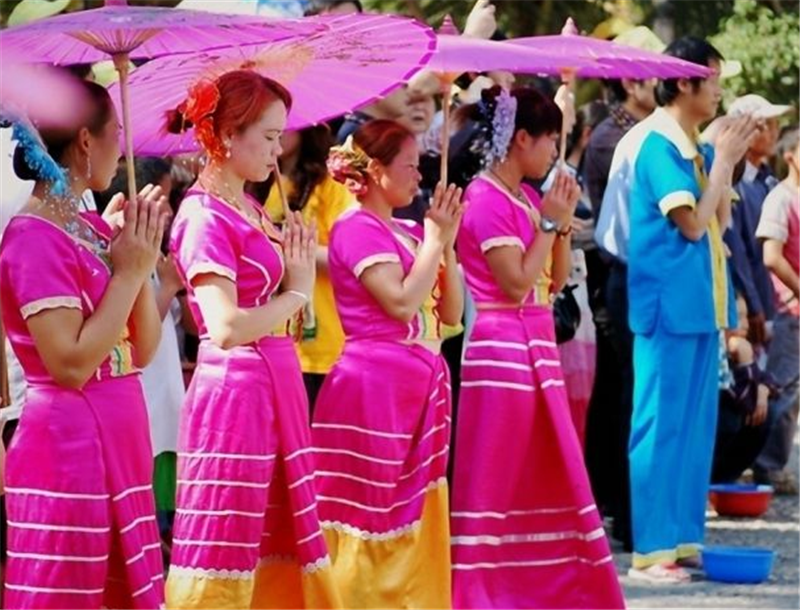
A strong cultural route can begin in Hongta District, continue to Yi villages in Eshan, then head south toward Gasa and Ailao Mountain in Xinping, followed by the flower-waisted Dai villages around Mosha and finally the Hani terrace communities of Yuanjiang. This route combines several ethnic cultures with mountain, valley and agricultural landscapes.
For a more relaxed journey, travelers can concentrate on Fuxian Lake and the surrounding basin, while another easier cultural route can connect Hongta, Tonghai and Xingmeng Mongolian Township without requiring long periods of mountain driving.
Self-Drive Safety
Mountain roads around Ailao Mountain and Nanu contain frequent bends, steep slopes and occasional large vehicles. Drivers should slow down before blind corners, use the horn appropriately and allow sufficient space for oncoming traffic.
During the rainy season, avoid entering remote mountain roads at night. Before departure, check weather and geological-disaster information, particularly after heavy rainfall.
At traditional villages and religious or ceremonial sites, vehicles should remain in designated parking areas. Do not drive into sacred forest areas, village ritual spaces or narrow residential lanes simply to get closer to an attraction.
Motorcycle Touring in Yuxi
Yuxi is also attractive for motorcycle touring, particularly during the dry season. Motorcycles are flexible on narrow rural roads and provide a closer experience of the changing landscapes around Fuxian Lake, Tonghai, Ailao Mountain and Yuanjiang.
Popular motorcycle routes include the Fuxian Lake circuit, the Hongta–Tonghai–Xingmeng route and the Gasa–Ailao Mountain loop in Xinping. These routes offer a combination of lake scenery, mountain landscapes and ethnic villages.
Mountain motorcycle travel requires greater caution than ordinary sightseeing by car. Long descents, sharp bends, wet pavement and fog can appear suddenly. Riders should wear a full helmet and appropriate protective equipment, carry offline navigation and refuel before entering remote mountain areas.
During heavy rain or dense fog, it is better to postpone mountain riding. Less experienced riders should avoid attempting a long-distance crossing of the entire Ailao Mountain area in one journey.
Cycling in Yuxi
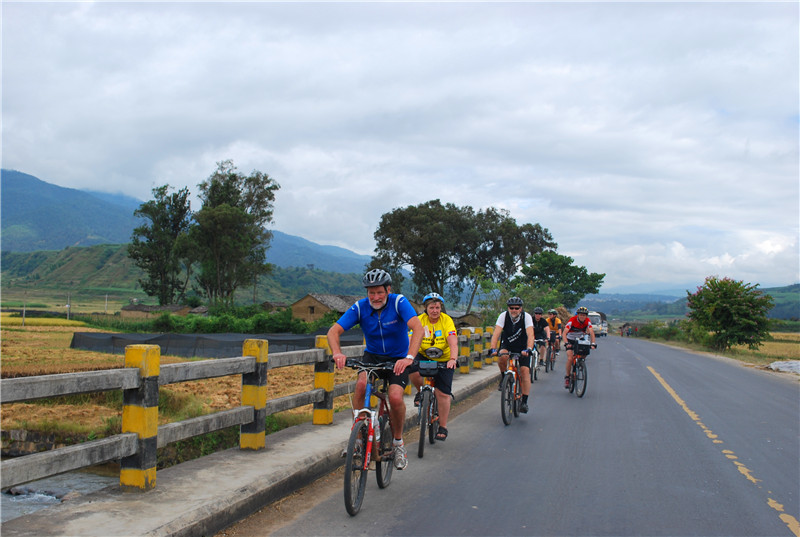
Fuxian Lake cycling is one of the most attractive bicycle experiences in Yuxi. The lakeside road network and cycling facilities make the area suitable for both recreational riders and experienced cyclists. The complete lake circuit is roughly 100 km, making it possible to plan anything from a short lakeside ride to a full-day cycling challenge.
Xingyun Lake provides another option for relatively relaxed cycling. Its surrounding terrain is generally less demanding than the mountain roads farther south.
Long-distance cycling across Ailao Mountain or toward the Nanu terraces is much more demanding. These routes contain repeated climbs and descents, large elevation changes, sharp bends and sections with limited roadside services. They are better suited to experienced cyclists traveling in the dry season rather than casual visitors.
Four Cultural Transportation Routes Across Yuxi
Flower-Waisted Dai and Ailao Mountain Cultural Route
The route from Hongta toward Gasa provides convenient expressway access before climbing into the Ailao Mountain area. Travelers can visit Ailao Mountain cultural and natural attractions before continuing toward Mosha and the traditional flower-waisted Dai villages around Damuzi and Nanhao.
The route can then continue toward Yuanjiang using the Yongjin Expressway. Because the mountain section contains many bends, travelers should allow additional time and avoid rushing between destinations.
Yuanjiang Hani Terrace and Palm-Fan Dance Route
From Yuanjiang town, the road climbs toward Nanu and Yangjie. The journey passes from the warm valley into higher mountain landscapes and traditional agricultural communities.
Early morning is often a good time for terrace photography because clouds and changing light can create striking scenery. However, morning fog can also reduce visibility, so drivers should slow down rather than prioritizing viewpoints over road safety.
Eshan Yi and Tonghai Ethnic Culture Route
This is one of the easier cultural routes. Visitors can travel from Hongta to Eshan to experience Yi village culture and then continue toward Tonghai and Xingmeng Mongolian Township.
The route mainly combines expressways and relatively gentle basin roads, making it suitable for travelers who want ethnic-cultural experiences without spending long hours on difficult mountain roads.
Fuxian Lake Leisure Route
The Fuxian Lake area is ideal for travelers who prefer a more relaxed transportation experience. A self-drive or cycling circuit can be combined with lakeside villages and selected cultural sites without requiring long mountain journeys.
This is also one of the best options for families, first-time visitors and travelers who want to combine sightseeing with outdoor recreation.
Best Seasons for Road Travel in Yuxi
From November to April, the dry season generally provides the most comfortable conditions for road trips, cycling and motorcycle touring. Mountain landscapes are often clearer, and the Hani terraces can offer attractive combinations of morning clouds, sunlight and agricultural scenery.
Festival periods can increase traffic around ethnic villages and popular scenic areas, so travelers should leave earlier in the day and reserve accommodation and private transportation in advance.
From May to October, the landscape becomes much greener, and the season is attractive for forest and ecological travel. However, rainfall increases the risk of falling rocks, landslides and temporary road restrictions in mountainous areas. Travelers should avoid unnecessary afternoon mountain transfers and check local road conditions before departure.
Practical Transportation Tips for Travelers
Mountain roads can cause motion sickness, so travelers who are sensitive to winding roads should prepare appropriate medication and avoid reading or using phones while traveling.
Temperatures can change considerably between the valley towns and mountain areas. A light jacket is useful even during warmer months, particularly when traveling toward Ailao Mountain or higher Hani terrace communities.
When entering ethnic villages, park only in designated areas and respect local customs. Visitors should ask permission before photographing residents, traditional ceremonies, private homes or intangible cultural heritage practitioners.
Mobile-phone coverage can be weak in some remote mountain sections. Download offline maps before departure, keep fuel levels high and avoid relying entirely on online navigation.
For international travelers, a bilingual guide and experienced local driver are especially useful when the itinerary includes several counties, remote villages and mountain roads. This allows transportation to be coordinated with cultural visits, local appointments and weather conditions.
Students, Cycling Groups and Special-Interest Travel
Yuxi is suitable for more than conventional sightseeing. International student groups can combine school exchanges with Fuxian Lake ecology, Chengjiang paleontology, ethnic villages and intangible cultural heritage, while cycling groups can focus on the lake districts and quieter basin roads.
Motorcycle travelers can build a dedicated Yuxi route around Fuxian Lake, Tonghai, Xinping and Yuanjiang, while photographers and cultural travelers may prefer a private vehicle that allows flexible stops at traditional villages, terraces and mountain viewpoints.
For these specialized journeys, transportation should be planned together with the cultural itinerary rather than treated as a separate part of the trip.
How to Get Around Yuxi City
Taxi and City Buses
There are 15 bus lines operated in Yuxi City. Buses run through the main street, it will not take you much time on the bus, because the urban area is relatively small. It is highly recommended to take No 2 Bus to enjoy the beautiful city scenery. Taxi is easy to found in Yuxi City, with the starting price of 8 yuan at daytime and 9.5 yuan at night. However, people would like to take buses or motorbike in the urban area rather than taxi.
Minibus
Minibus is the mostly chosen way for local people to travel at a short distance. Passengers may wait for a minibus on the roadside or just call the driver. Usually, the minibus will take you to anywhere you want to within the city area, and the price is not costly.
By Bike
Rent a bike for around 10 RMB per day. It is an ideal choice to travel around and enjoy the charming landscape.
By Suburban Bus
If want to tour around the towns and counties of Yuxi, you can take the suburban buses at Yuxi Central Bus Station and Yuxi West Bus Station, bus schedules to the counties are offered at those two stations. You can also travel to the countriside by taking buses at the following county bus stations.
Read More: