Ludian County (鲁甸县) is administered by Zhaotong City in northeastern Yunnan Province. Located in the Wumeng Mountains and around the Niulan River, the county covers approximately 1,484 square kilometers. Its current administrative structure consists of 2 subdistricts, 9 towns and 2 Hui ethnic townships, making a total of 13 township-level administrative divisions.
The two urban subdistricts are Wenping Subdistrict (文屏街道) and Yanchi Subdistrict (砚池街道). The nine towns are Longtoushan Town (龙头山镇), Shuimo Town (水磨镇), Xiaozhai Town (小寨镇), Jiangdi Town (江底镇), Longshu Town (龙树镇), Xinjie Town (新街镇), Huodehong Town (火德红镇), Lehong Town (乐红镇) and Suoshan Town (梭山镇). The two ethnic townships are Taoyuan Hui Ethnic Township (桃源回族乡) and Ciyuan Hui Ethnic Township (茨院回族乡).
Ludian has a diverse mountainous landscape. The central part contains the relatively open Ludian Basin, an important agricultural and settlement area in northeastern Yunnan. The terrain gradually rises toward the western, northern and southern parts of the county. The Niulan River cuts deeply through the southern part, creating dramatic river valleys, cliffs and mountain landscapes, while the northwestern areas contain higher and colder mountain terrain, forests and alpine grasslands.
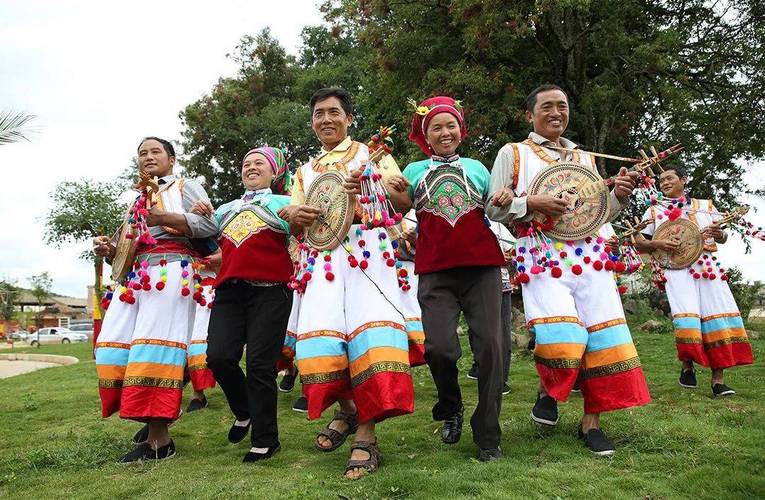
Historically, Ludian was known as Zhiti and was closely associated with the production and smelting of Zhiti silver, giving the area a distinctive mining heritage and the historical reputation of the “Millennium Silver Capital.” The county is also home to several ethnic groups, including Han, Hui and Yi communities, with the two Hui ethnic townships providing particularly visible examples of Hui village culture, Islamic architecture, food traditions and rural life.
From a tourism perspective, Ludian can be understood through several major geographical and cultural zones. Wenping and Yanchi form the county's principal urban tourism and service center, with historical sites, parks, urban leisure facilities, hotels, restaurants and transportation services. Xiaozhai Town is associated with cherry orchards and seasonal agricultural tourism. Longtoushan Town highlights Zhiti silver heritage and mountain villages. Shuimo and Xinjie provide access to higher mountain landscapes, forests and alpine grasslands. Jiangdi, Huodehong, Lehong and Suoshan form an important southern mountain and Niulan River valley tourism zone. Taoyuan and Ciyuan Hui Ethnic Townships offer opportunities to experience Hui village culture, local food, rural landscapes and agricultural traditions.
Overall, Ludian's tourism resources can be organized into four broad themes: urban and historical culture with agricultural landscapes; alpine grasslands and mountain ecology; Niulan River valleys and mountain scenery; and Hui ethnic culture and rural life.
Wenping Subdistrict: Ludian's Urban Tourism and Service Center
Wenping Subdistrict (文屏街道) is the seat of Ludian County and the main urban service center for visitors. It contains communities including Shiqiao, Wenchang Palace, Minfu, Baojian, Taiyanghu, Wolong, Chongwen and Xiaochong, together with villages such as Yanchi Mountain, Yandong, Malugou and Ange.
The area provides the county's strongest concentration of accommodation, restaurants, shopping, banking, medical services and local transportation. Visitors exploring different parts of Ludian can use Wenping as their principal accommodation base.
Tourism resources include Taiyang Lake Park, the historic urban area and nearby cultural sites. The Yeshi Mountain Neolithic Site provides an important archaeological perspective on early human activity in the region. The surrounding countryside also offers opportunities for short urban-to-rural excursions.
For tourism planning, Wenping is best understood as the gateway and service center of Ludian County, rather than simply another sightseeing destination.
Yanchi Subdistrict: New Urban Areas and Suburban Leisure
Yanchi Subdistrict (砚池街道) is one of Ludian's two urban subdistricts and includes communities such as Jingxin, Yangguang, Maojiawan, Chunxi, Yulu, Heshu and Fuze, together with villages including Puzhilu and Lianhe.
The subdistrict is closely associated with Ludian's newer urban development. Maojiawan (卯家湾) is particularly notable for its large-scale relocation and new-community development.
The area is more suitable for urban leisure, suburban countryside, community culture and short-distance rural excursions than for a long sightseeing stay. Its location also makes it part of the wider urban tourism network connecting Ludian's county center with surrounding agricultural and mountain areas.
Taoyuan Hui Ethnic Township: Hui Culture and Rural Landscapes
Taoyuan Hui Ethnic Township (桃源回族乡) is one of Ludian's two Hui ethnic townships and an important area for experiencing local Hui culture.
The township includes communities such as Taoyuan and Yazitang, together with villages including Qingmen, Tuogu, Tiejiawan, Dashuitang and Chachong.
One of the area's best-known cultural resources is Tuogu Mosque, together with the surrounding Hui communities. Visitors can learn about local Islamic architecture, Hui food traditions, village life and agricultural landscapes.
Tourism here is best developed around Hui cultural experiences, village photography, traditional food, agricultural landscapes and rural leisure. Visitors should respect the religious character of mosques and surrounding communities and should ask before photographing people, religious activities or private spaces.
Ciyuan Hui Ethnic Township: Hui Villages and Agricultural Landscapes
Ciyuan Hui Ethnic Township (茨院回族乡) is the second Hui ethnic township in Ludian. It is located in the central basin area and combines Hui village culture with agricultural landscapes.
The township includes Ciyuan Community and Heping Community, together with villages such as Hulu Kou, Yanzha, Banbanfang and Tianhe.
The landscape consists largely of agricultural fields, villages, roads and relatively open basin terrain. This creates a different atmosphere from the steep mountain areas in southern Ludian.
The tourism focus is suitable for Hui village culture, local food, agricultural scenery, rural photography and countryside experiences. Together with Taoyuan Hui Ethnic Township, Ciyuan provides an important cultural tourism zone for understanding the Hui communities of Ludian.
Xiaozhai Town: Cherry Orchards and Flower-Fruit Tourism
Xiaozhai Town (小寨镇) is located in central Ludian and is one of the county's best-known agricultural tourism areas.
The town includes Daping Community and villages such as Xiaozhai, Liyuan and Zhaojiahai. Its most distinctive tourism resource is its cherry-growing landscape.
During the cherry season, orchards, hillsides, villages and farmland create a colorful rural landscape. Visitors can combine cherry picking, countryside photography, agricultural experiences and rural leisure.
Xiaozhai Cherry Valley is an important local rural tourism brand and can be incorporated into short trips from Ludian's urban center, particularly during the cherry season.
Longtoushan Town: Zhiti Silver Heritage and Mountain Villages
Longtoushan Town (龙头山镇) is an important mountain area in Ludian. It includes Longquan Community and Luomakou Community, together with villages such as Yanhe, Shaba, Guangming, Yingpan, Babao, Longjing, Cuiping, Xinmin, Yinping and Xiping.
The town's major cultural theme is the history of Zhiti silver mining and metallurgy. The ancient silver industry played an important role in the history of the Ludian area and provides a distinctive historical theme for cultural tourism.
Longtoushan's mountainous terrain also creates opportunities for village photography, mountain walking, historical exploration and rural tourism. Visitors interested in industrial heritage can combine the silver-history theme with surrounding mountain villages.
Shuimo Town: Alpine Grasslands and Mountain Ecology
Shuimo Town (水磨镇) is located in the northwestern mountainous part of Ludian and is one of the county's important highland ecological tourism areas.
The town includes Tiezhuang Community and villages such as Shuimo, Xinpeng, Heilü, Tuoma, Yantou, Yingdi, Songping, Huangnizhai and Dishui.
Its major tourism attractions are associated with high mountains, forests, alpine grasslands, mountain pastures and rural settlements. The elevation creates cooler conditions than the central basin, making the area suitable for summer mountain recreation.
Shuimo can be combined with Xinjie Town to create a northwestern Ludian mountain tourism zone focused on nature photography, light hiking, rural scenery and summer escapes.
Xinjie Town: Alpine Pastures and Highland Countryside
Xinjie Town (新街镇) lies in the higher mountain region of northwestern Ludian. It includes Xinjie Community and villages such as Jiufang, Shanqiao, Pingdiying and Zhuanshanbao.
The town is characterized by highland grasslands, mountain agriculture, forests and rural landscapes.
Visitors interested in hiking, photography and mountain scenery can combine Xinjie with nearby Shuimo. Because mountain destinations can be separated by winding roads, additional travel time should be allowed when creating a route.
Longshu Town: Basin Agriculture and Rural Culture
Longshu Town (龙树镇) is located in the central part of Ludian and contains Longshu Community, Longxiang Community, Guzhai Community and Jintang Community, together with Xingle, Zhaobi and Tangfang villages.
The landscape consists of small basins, farmland, villages and wooded hills. Tourism here is more closely connected with agricultural landscapes, rural villages, local customs and countryside leisure.
Longshu is particularly suitable for inclusion in broader rural tourism routes connecting Ludian's urban center with Xiaozhai and other agricultural areas.
Jiangdi Town: Niulan River Gorge and Karst Landscapes
Jiangdi Town (江底镇) is located in southern Ludian and is one of the county's most distinctive river-valley tourism areas.
The town includes Jiangdi Community and villages such as Dashuijing, Xianrendong, Pojao, Qingjiao, Xiyangtang and Shuitang.
The Niulan River cuts deeply through this region, creating dramatic valleys, steep mountain slopes and river landscapes. Xianren Cave provides additional karst and cave scenery.
The area is suitable for river-valley sightseeing, landscape photography, mountain driving and outdoor exploration. During the rainy season, visitors should pay close attention to weather conditions, road safety and possible mountain-water hazards.
Huodehong Town: Niulan River Valleys and Mountain Villages
Huodehong Town (火德红镇) is located in southern Ludian along the Niulan River valley. It includes Huodehong Community and villages such as Quehui, Lijiashan, Yinchang and Nankuang.
The town's tourism resources center on river valleys, mountain villages, rock landscapes and agricultural scenery. Areas associated with silver mining can also be interpreted alongside the wider Zhiti silver heritage of Ludian.
Huodehong is particularly suitable for combining with Jiangdi, Lehong and Suoshan to create a southern Ludian Niulan River mountain and valley tourism corridor.
Lehong Town: Mountain Landscapes and Ethnic Villages
Lehong Town (乐红镇) is located on the mountainous western side of the southern Ludian region. It includes Guanzhai Community and villages such as Hongbu, Liwai, Guanliu, Xinlin, Lehong, Shichu and Duozhu.
The town has a strong mountain-rural character, with villages distributed among hillsides and valleys.
Tourism can focus on mountain villages, agricultural and forest landscapes, ethnic culture, countryside photography and Niulan River scenery. Visitors traveling between southern towns should allow sufficient time for mountain roads.
Suoshan Town: Deep Valleys and Vertical Mountain Landscapes
Suoshan Town (梭山镇) is one of the important southern mountain towns of Ludian. It includes Suoshan Community and Xintian Community, together with villages such as Heishi, Chala, Misu, Washui, Hezhai, Gengdi, Tuole and Gantian.
The terrain features strong vertical changes between high mountains and deeply incised valleys, with cliffs, steep slopes, streams and agricultural settlements forming distinctive landscapes.
Suoshan is particularly suitable for mountain photography, outdoor exploration, self-driving and light hiking. Because many destinations are located in mountainous terrain, visitors should avoid scheduling too many separate attractions in a single day.
Tourism Structure of Ludian County
Ludian's administrative divisions correspond closely with its geographical and tourism characteristics. From a travel-planning perspective, the county can be organized into five major tourism zones.
Wenping–Yanchi Urban Tourism Zone serves as the county's main accommodation, transportation, dining, shopping and visitor-service center. It is the most convenient base for exploring the rest of Ludian.
Xiaozhai–Longshu Agricultural and Rural Tourism Zone focuses on cherries, farmland, village landscapes, agricultural experiences and countryside photography.
Longtoushan–Shuimo–Xinjie Mountain Tourism Zone combines Zhiti silver heritage with alpine forests, grasslands, mountain villages and highland landscapes.
Jiangdi–Huodehong–Lehong–Suoshan Niulan River Tourism Zone is characterized by deep river valleys, cliffs, karst landscapes, mountain roads and rural settlements.
Taoyuan–Ciyuan Hui Cultural Tourism Zone provides opportunities to explore Hui village culture, mosques, local food, agricultural landscapes and rural life.
This structure makes it easier to plan trips according to interests. Short visits can concentrate on Wenping, Yanchi, Xiaozhai and the Hui ethnic townships, while nature-focused travelers can extend toward Shuimo and Xinjie. Visitors interested in historical culture can include Longtoushan, while travelers seeking dramatic mountain and river landscapes can continue toward Jiangdi, Huodehong, Lehong and Suoshan.
Ludian County Township-Level Administrative Division Table
Ludian County currently consists of 2 subdistricts, 9 towns and 2 Hui ethnic townships.
| Administrative Type |
Chinese Name |
English Name |
Main Tourism Character |
| Subdistrict |
文屏街道 |
Wenping Subdistrict |
County center, history, urban leisure and tourism services |
| Subdistrict |
砚池街道 |
Yanchi Subdistrict |
New urban areas, suburban leisure and community development |
| Town |
龙头山镇 |
Longtoushan Town |
Zhiti silver heritage and mountain villages |
| Town |
水磨镇 |
Shuimo Town |
Alpine forests, grasslands and mountain ecology |
| Town |
小寨镇 |
Xiaozhai Town |
Cherry orchards and agricultural tourism |
| Town |
江底镇 |
Jiangdi Town |
Niulan River gorge and karst landscapes |
| Town |
龙树镇 |
Longshu Town |
Agricultural landscapes and rural villages |
| Town |
新街镇 |
Xinjie Town |
Highland grasslands and mountain countryside |
| Town |
火德红镇 |
Huodehong Town |
Niulan River valleys and mountain villages |
| Town |
乐红镇 |
Lehong Town |
Mountain landscapes and ethnic villages |
| Town |
梭山镇 |
Suoshan Town |
Deep valleys, cliffs and mountain scenery |
| Hui Ethnic Township |
桃源回族乡 |
Taoyuan Hui Ethnic Township |
Hui culture, mosque heritage and rural landscapes |
| Hui Ethnic Township |
茨院回族乡 |
Ciyuan Hui Ethnic Township |
Hui villages, agriculture and rural culture |
Detailed Administrative Divisions, Villages and Tourism Resources
Note: The first column below focuses on communities and administrative villages used in the current administrative framework. The second column provides representative villages and natural settlements with tourism, cultural or geographical significance. Ludian contains many more natural settlements than can reasonably be listed on a tourism webpage, so the second column should be understood as a representative tourism-oriented selection rather than a complete inventory of every natural village.
| Township / Subdistrict |
Main Communities and Administrative Villages |
Representative Villages / Natural Settlements |
Main Tourism Resources |
| Wenping Subdistrict (文屏街道) |
Shiqiao Community, Wenchang Palace Community, Minfu Community, Baojian Community, Taiyanghu Community, Wolong Community, Chongwen Community, Xiaochong Community; Yanchi Mountain Village, Yandong Village, Malugou Village, Ange Village |
Yanchi Mountain, Yandong, Malugou, Ange and the old urban area |
Taiyang Lake Park, Ludian old town, Yeshi Mountain Neolithic Site, suburban countryside |
| Yanchi Subdistrict (砚池街道) |
Jingxin Community, Yangguang Community, Maojiawan Community, Chunxi Community, Yulu Community, Heshu Community, Fuze Community; Puzhilu Village, Lianhe Village |
Puzhilu, Lianhe, Maojiawan |
Maojiawan new community, Yanchi Mountain suburban recreation, urban and rural leisure |
| Taoyuan Hui Ethnic Township (桃源回族乡) |
Yazitang Community, Taoyuan Community; Qingmen Village, Tuogu Village, Tiejiawan Village, Dashuitang Village, Chachong Village |
Tuogu, Tiejiawan, Dashuitang, Qingmen, Chachong |
Tuogu Mosque, Hui villages, Hui food culture, agricultural landscapes |
| Ciyuan Hui Ethnic Township (茨院回族乡) |
Ciyuan Community, Heping Community; Hulu Kou Village, Yanzha Village, Banbanfang Village, Tianhe Village |
Hulu Kou, Yanzha, Banbanfang, Tianhe |
Hui village culture, basin agriculture, rural scenery and local food |
| Xiaozhai Town (小寨镇) |
Daping Community; Xiaozhai Village, Liyuan Village, Zhaojiahai Village |
Daping, Xiaozhai, Liyuan, Zhaojiahai |
Xiaozhai Cherry Valley, cherry culture, fruit orchards and countryside tourism |
| Longtoushan Town (龙头山镇) |
Longquan Community, Luomakou Community; Yanhe Village, Shaba Village, Guangming Village, Yingpan Village, Babao Village, Longjing Village, Cuiping Village, Xinmin Village, Yinping Village, Xiping Village |
Babao, Yinchanggou, Dashuijing, Yanjiao, Longquan |
Zhiti silver heritage, mountain villages, historical landscapes and rural hiking |
| Shuimo Town (水磨镇) |
Tiezhuang Community; Shuimo Village, Xinpeng Village, Heilü Village, Tuoma Village, Yantou Village, Yingdi Village, Songping Village, Huangnizhai Village, Dishui Village |
Dishuiyan, Daqing, Zhuanshan, Haizi, Laoyingpan |
Alpine grasslands, forests, mountain pastures, highland villages |
| Xinjie Town (新街镇) |
Xinjie Community; Jiufang Village, Shanqiao Village, Pingdiying Village, Zhuanshanbao Village |
Shanqiao, Dapingzi, Lijiaping, Laoyanjiao, Haizibian |
Highland grasslands, mountain wetlands, rural photography and hiking |
| Longshu Town (龙树镇) |
Longshu Community, Longxiang Community, Guzhai Community, Jintang Community; Xingle Village, Zhaobi Village, Tangfang Village |
Longshu Haizi, Hongyan, Luojiagou, Dazhaizi, Pingzishang |
Basin agriculture, village landscapes, forests and rural culture |
| Jiangdi Town (江底镇) |
Jiangdi Community; Dashuijing Village, Xianrendong Village, Pojao Village, Qingjiao Village, Xiyangtang Village, Shuitang Village |
Panzhai, Laofangzi, Hongyan, Daqing, Banpo |
Niulan River gorge, Xianren Cave, karst landscapes and river-valley scenery |
| Huodehong Town (火德红镇) |
Huodehong Community; Quehui Village, Lijiashan Village, Yinchang Village, Nankuang Village, Jiche Village |
Yinchanggou, Yanwan, Daping, Chahe, Hetaoping |
Niulan River valleys, karst mountain landscapes, riverside villages and silver heritage |
| Lehong Town (乐红镇) |
Guanzhai Community; Hongbu Village, Liwai Village, Guanliu Village, Xinlin Village, Lehong Village, Shichu Village, Duozhu Village |
Guanliu, Hongyanjiao, Dapingzi, Wafang, Laolin |
Mountain agriculture and forests, ethnic villages, Niulan River landscapes |
| Suoshan Town (梭山镇) |
Suoshan Community, Xintian Community; Heishi Village, Chala Village, Misu Village, Washui Village, Hezhai Village, Gengdi Village, Tuole Village, Gantian Village |
Suoshanping, Yantou, Dagou, Hebian, Huangjiaping |
Deep river valleys, cliffs, highland–valley landscapes and outdoor hiking |
How the Administrative Divisions Can Be Used for Tourism Planning
The administrative structure of Ludian is particularly useful when planning a county-wide journey because the tourism resources are geographically concentrated into recognizable clusters.
For history and urban culture, start with Wenping Subdistrict and Yanchi Subdistrict. These areas provide the best visitor services and can serve as the logistical base for the rest of the trip.
For spring countryside tourism, focus on Xiaozhai Town, especially the cherry-growing areas. This can be combined with nearby agricultural villages and Ludian's urban attractions.
For ethnic and food culture, travel toward Taoyuan Hui Ethnic Township and Ciyuan Hui Ethnic Township. These areas provide opportunities to see Hui village landscapes and experience local halal food traditions.
For mountain ecology, extend the journey toward Shuimo Town and Xinjie Town, where higher elevations create forests, grasslands and cooler mountain scenery.
For river valleys and dramatic landscapes, the southern route through Jiangdi, Huodehong, Lehong and Suoshan offers a very different experience from the central basin. Mountain roads and travel times should be considered carefully when combining several southern destinations.
The administrative divisions therefore provide a practical framework for understanding Ludian as a tourism destination: the central urban area provides services, the basin provides agriculture and cultural experiences, the northwest provides alpine ecology, the south provides river valleys and mountain landscapes, and the Hui ethnic townships provide distinctive ethnic and rural culture.
For Yaso Trip, this structure can also be used as the geographic foundation for separate pages covering Ludian attractions, tour planning, transportation, hotels, climate, ethnic minority culture, festivals, food culture, travel packages, travel maps and travel photo galleries.