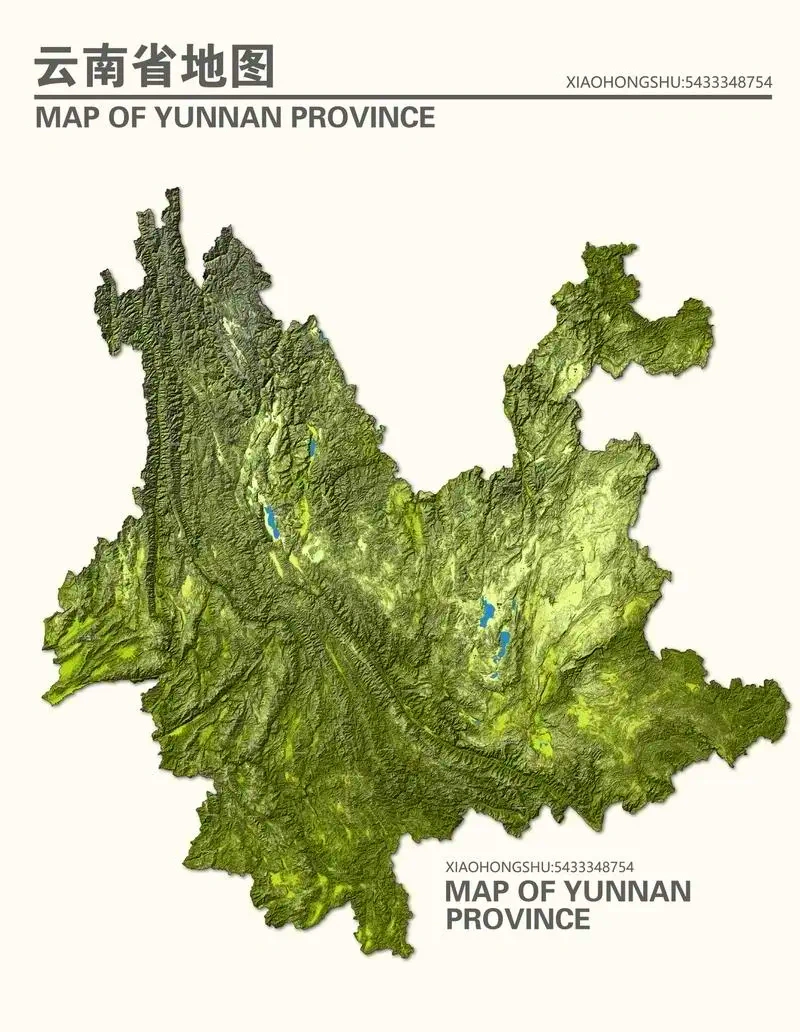
Ludian County(鲁甸县) is located at the junction of the Wulian Peak Mountains(五莲峰山脉) and Wumeng Mountains(乌蒙山) in northeastern Yunnan. The county features a complex mountainous landscape with a significant elevation difference, ranging from the highest point of around 3,356 meters to the lowest Niulan River Valley(牛栏江河谷) at about 568 meters. The main landform types include the Zhaolu Plateau Basin(昭鲁高原坝区), high and middle mountain areas, and the deeply cut river valleys along the Niulan River. This creates a typical low-latitude plateau monsoon climate with strong vertical climate differences, where “one mountain can experience four seasons, and different places can have different weather at the same time.”
Zhaolu Basin Climate Area
The Zhaolu Basin(昭鲁坝区), including Wenping Subdistrict(文屏街道), Taoyuan Hui Ethnic Township(桃源回族乡), and Ciyin Hui Ethnic Township(茨院回族乡), is located at an altitude of about 1,850–2,000 meters. As a plateau basin, this area has open terrain and large temperature differences between day and night. Cold air can accumulate during winter and early spring, causing slower warming in spring. Summers are cool and comfortable, while winter and spring often experience stronger winds.
Middle and High Mountain Climate Area
The middle and high mountain areas, including Shuimo Town(水磨镇), Longshu Town(龙树镇), and Xinjie Town(新街镇), are generally located between 2,100 and 2,900 meters above sea level. As elevation increases, temperatures decrease, frost-free periods become shorter, and cloudy or foggy weather becomes more frequent. Spring and autumn frost can occur, while summer temperatures remain cool, making these areas suitable for summer retreats.
Niulan River Valley Climate Area
The deeply cut valley area along the Niulan River(牛栏江), including Suoshan Town(梭山镇), Lehong Town(乐红镇), and Huodehong Town(火德红镇), has a lower elevation and a warming effect caused by valley terrain. Compared with the plateau basin and mountain areas, this region has warmer winters and hotter summers. The valley climate is relatively dry and warm, especially during spring and summer.
Ludian County has clear wet and dry seasons. May to October is the rainy season, with concentrated rainfall and possible short-term heavy rain, landslides, and falling rocks in mountainous areas. November to April is the dry season, with more sunshine and lower humidity. Strong ultraviolet radiation is common throughout the year because of the plateau environment.
Weather and Climate Overview of Ludian County
Taking the county town area, with an altitude of about 1,900 meters, as the reference point, Ludian County(鲁甸县) has an annual average temperature of about 12.1℃ and annual precipitation of approximately 923 millimeters. July is usually the warmest month, with an average temperature of around 20.3℃, while January is the coldest month, with an average temperature of around 2.7℃.
Due to the county’s vertical landscape structure, different regions have obvious temperature differences. High mountain areas such as Shuimo and Xinjie are generally 5–8℃ colder than the county town, while the Niulan River valley can be 4–7℃ warmer than the basin area. The county therefore combines cool plateau summers, cold mountain winters, and warm river valley conditions.
Ludian County 12-Month Climate Table
| Month |
Average Temperature (℃) |
Rainfall Condition |
Climate Features |
| January |
2.7 |
Dry with little rainfall |
Basin areas are cold and cloudy; occasional snow; mountain areas may have snow accumulation; river valleys remain warmer |
| February |
5.1 |
Dry |
Temperature slowly rises; morning frost is common; strong winds may occur |
| March |
9.4 |
Light spring rain |
Temperature increases quickly; large day-night differences; mountain areas may still experience frost |
| April |
13.6 |
Increasing rainfall |
Spring scenery appears; flowers bloom in basin areas; high mountains remain cold |
| May |
16.8 |
Rainy season begins |
Vegetation becomes lush; afternoon thunderstorms may occur |
| June |
18.7 |
More rainfall and cloudy weather |
Cool summer conditions; mountain areas often have fog |
| July |
20.3 |
Highest rainfall period |
Best summer retreat period; mountains are rainy and foggy; valleys are warmer |
| August |
19.4 |
Frequent showers |
Comfortable temperatures; occasional continuous rainy periods |
| September |
15.9 |
Rainfall decreases gradually |
Autumn begins; temperature differences increase |
| October |
12.0 |
Autumn rain changes to dry season |
Temperatures drop quickly; mountain frost begins |
| November |
7.3 |
Dry season |
Clear skies; mountains may experience freezing; mornings and evenings become cold |
| December |
3.5 |
Dry and cold |
Winter conditions; mountain areas may experience snow and ice |
Due to the large elevation differences, travelers may experience completely different weather conditions within one day when moving between basin areas, mountains, and river valleys. Layered clothing is strongly recommended.
Spring, Summer, Autumn and Winter Scenery Differences
Spring Landscape and Travel Features
March to May is the season when Ludian gradually enters spring. Flowers bloom across the Zhaolu Basin, while rural areas around Xiaozhai become green and lively. High mountain areas such as Shuimo and Xinjie warm up more slowly and may still experience late frost.
Spring is suitable for countryside sightseeing, flower viewing, and village exploration. Weather changes quickly, so visitors should prepare both light clothing and windproof outer layers.
Summer Landscape and Travel Features
June to August is the summer season in Ludian. The basin area remains pleasantly cool, while the high mountain grasslands around Shuimo and Xinjie become green with fresh vegetation and wildflowers. The Niulan River valley becomes warmer and more humid.
Summer is suitable for mountain sightseeing, rural exploration, and visiting ethnic villages. However, it is also the rainy season, with frequent fog, heavy rain, and sudden weather changes in mountainous areas.
Autumn Landscape and Travel Features
September to November is one of the most beautiful seasons in Ludian. Apples, walnuts, and other agricultural products mature, creating colorful rural landscapes. Mountain vegetation gradually changes color, and clear autumn days provide excellent conditions for photography and cultural exploration.
Autumn is suitable for visiting countryside areas, exploring local villages, and experiencing agricultural landscapes. Temperatures drop quickly in high-altitude areas after October.
Winter Landscape and Travel Features
December to February brings colder conditions to Ludian. Basin areas are often cloudy and cool, while high mountain regions may experience snow, frost, and icy roads. The Niulan River valley remains relatively warm compared with other areas.
Winter is suitable for cultural sightseeing, village visits, and lower-altitude travel. Travelers should be cautious when driving to high mountain areas because roads may become slippery.
Best Seasons and Travel Strategies Throughout the Year
Best Travel Seasons in Ludian County
For basin countryside landscapes and Hui cultural villages, the recommended periods are April to June and September to November. Spring offers flowers and rural scenery, while autumn provides harvest landscapes and comfortable weather. Visitors can explore Taoyuan Hui Ethnic Township(桃源回族乡), local villages, and rural areas around Xiaozhai.
For highland summer travel, July to August is suitable for visiting Shuimo and Xinjie mountain areas. The weather is cool, but visitors should prepare for rain, fog, and changing mountain conditions.
For Niulan River valley exploration, November to April is recommended because temperatures are milder and the valley avoids the hottest summer period.
Periods requiring extra caution include early spring, when mountain frost may occur; the rainy season from July to August, when mountain roads may experience landslides; and winter, when high-altitude roads may freeze.
Seasonal Clothing and Route Suggestions
Spring Travel Guide (March–May)
Clothing: Wear layered clothing, including long-sleeve shirts, thin sweaters, and windproof jackets. Extra warm clothing is recommended for Shuimo and Xinjie mountain areas. Valley areas require lighter clothing. Sunscreen and hats are useful because of strong plateau sunlight.
Suggested route: County town → Taoyuan Hui Ethnic Township(桃源回族乡) cultural villages → Xiaozhai rural landscape → Shuimo mountain villages.
Visitors should pay attention to late frost in mountain areas and avoid driving remote mountain roads at night.
Summer Travel Guide (June–August)
Clothing: Short sleeves are suitable in basin areas, but travelers heading to high mountains should carry waterproof jackets or thin down jackets. Rain protection and sun protection are necessary. River valley areas require heat protection.
Suggested route: County town → Hui cultural villages → rural landscapes → Shuimo and Xinjie mountain areas.
During the rainy season, travelers should check mountain road conditions, avoid heavy rain periods, and preferably visit mountain areas in the morning before afternoon fog becomes heavier.
Autumn Travel Guide (September–November)
Clothing: Long sleeves, sweaters, and medium-weight jackets are recommended. Warm coats are needed for mountain areas in November.
Suggested route: Rural agricultural landscapes → local cultural villages → historical sites → mountain countryside areas.
Autumn is ideal for combining cultural sightseeing with rural photography because of stable weather and beautiful scenery.
Winter Travel Guide (December–February)
Clothing: Thick jackets, down coats, warm trousers, scarves, gloves, and other winter equipment are recommended. High mountain areas require stronger cold protection, while river valleys need lighter clothing.
Suggested route: County town cultural areas → Hui villages → warm river valley routes.
Travelers should avoid nighttime mountain driving, check road conditions before entering high-altitude areas, and prepare anti-slip equipment if necessary.
Overall Travel Tips for Different Climate Areas
Ludian County has a strong vertical climate pattern, combining plateau basin, high mountains, and river valley environments. Regardless of the season, travelers visiting Shuimo, Xinjie, or other high-altitude areas should always carry windproof and warm clothing.
During the rainy season from May to October, raincoats are more practical than umbrellas in mountain areas. Strong ultraviolet radiation exists throughout the year, so sunscreen and sun protection equipment are recommended.
When visiting Hui and Miao communities, travelers should respect local traditions, religious customs, and dietary practices. Before driving to western high mountain areas in winter, always check road conditions and possible freezing warnings.
Ludian County is located in northeastern Yunnan and the northwest area of the Yunnan-Guizhou Plateau. Its landscape is shaped by the Wumeng Mountains(乌蒙山), Wulian Peak Mountains(五莲峰山脉), the Niulan River(牛栏江), and several mountain rivers and plateau basins. The terrain slopes downward from the surrounding mountains toward the central basin, creating a complex landform system.
The county has a typical low-latitude plateau hilly monsoon climate, with an annual average precipitation of about 923.5 millimeters and an annual average temperature of around 12.1℃. Seasonal temperature differences are moderate, with cool summers and relatively mild winters, but vertical climate differences are very obvious because of the large elevation range.
Best Time to Visit
March to May is one of the best periods to visit Ludian County. Visitors can enjoy spring flowers, cherry harvest landscapes, rural scenery, local cuisine, and ethnic cultural experiences. Autumn from September to November is also suitable for countryside sightseeing and photography because of comfortable temperatures and colorful agricultural landscapes.