Yunnan is widely known as China’s “Kingdom of Wild Mushrooms.” According to the source material, the province has more than 800 varieties of edible wild mushrooms, representing a substantial share of the mushroom species found in China and around the world. Thanks to Yunnan’s varied elevations, humid forests and long summer rainy season, wild mushrooms have become an important part of local food culture and seasonal travel.
For local people, wild mushrooms are more than a delicacy. Every summer, families, farmers and professional collectors enter the forests to search for fresh mushrooms, while restaurants, markets and food festivals across the province celebrate the annual harvest.
Why Yunnan Wild Mushrooms Are Popular
Distinctive Flavour
Wild mushrooms are prized for their rich, fresh and savoury flavour. When cooked with chicken, vegetables, rice or soup, they enhance the overall taste of the dish without overwhelming the other ingredients. This natural umami quality is one of the main reasons mushroom dishes are so popular throughout Yunnan.
Nutritional Value
The source describes wild mushrooms as containing proteins, vitamins, minerals, fibre and different forms of natural carbohydrates. Some varieties also contain polysaccharides and vitamin D. Because mushrooms are generally low in calories and contain dietary fibre, they are often regarded as a nutritious seasonal food.
Natural Growing Environment
Many wild edible mushrooms grow naturally in mountain forests, beside bushes, along forest paths and near lakes or streams. Unlike cultivated mushrooms, they are collected from their natural environment and are closely associated with Yunnan’s forests, climate and rural lifestyle.
Best Season to Eat Yunnan Wild Mushrooms
Yunnan normally enters its rainy season after May. As rainfall increases, wild mushrooms begin to appear in forests across the province. Summer is therefore the main season for mushroom picking, market visits and mushroom-focused food tours.
The best general period is from June to September, although the exact growing season varies according to altitude, temperature and rainfall. Morels may appear from early April to late May and may emerge again after rain in August and September.
Visitors travelling during the rainy summer season will usually find the greatest range of fresh mushrooms in local markets and restaurants. However, availability and prices change daily according to the weather and harvest.
Major Wild Mushroom Varieties in Yunnan
Matsutake
Matsutake is often called the “king of mushrooms.” It requires a clean, high-altitude forest environment and grows very slowly, making it one of the rarest and most expensive mushrooms in Yunnan.
Matsutake is especially valued for its strong aroma and firm texture. It may be used in chicken soup or other simple dishes that allow its natural fragrance to remain prominent. The source also notes that some people serve thin slices with soy sauce and wasabi.
Jizong Mushroom
Jizong mushroom, also known as Termitomyces, has a long, slender shape and a tender, slightly chewy texture. It is appreciated for its naturally sweet flavour and is widely regarded as one of Yunnan’s finest edible mushrooms.
It is commonly cooked in soup, braised with seasonings or preserved in oil for later use. Preserved jizong may be added to noodles, cold dishes and other local foods during seasons when fresh mushrooms are unavailable.
Ganba Mushroom
Ganba mushroom, commonly called ganbajun, is a rare wild mushroom closely associated with Yunnan. It is usually found beneath or around pine trees in the forests of central and western Yunnan.
Its surface is generally greyish black, and it develops a rich aroma that is sometimes compared with dried beef. Ganbajun is commonly stir-fried and is especially popular when cooked with green chillies.
Boletus Mushroom
Boletus is one of the most widely collected mushroom groups in Yunnan. These mushrooms commonly grow in shaded forest environments and are known for their rich, nutty or woody flavour.
Yunnan has several locally recognised types, including white, yellow, black and red boletes. They may be eaten fresh, sliced and dried, stir-fried, boiled or used in soups.
Some boletus varieties require particularly careful preparation. They should never be eaten without professional identification and thorough cooking.
Green-Headed Mushroom
Green-headed mushrooms generally grow in clean forest and grassland environments from June to September. They have a delicate texture and a noticeable natural fragrance.
They may be stir-fried, steamed, stewed, fried or slowly cooked in soup. Fresh mushrooms can also be dried for later use.
Popular Yunnan Wild Mushroom Dishes
Stir-Fried Matsutake with Green Peppers
Fresh matsutake is sliced and briefly stir-fried before being combined with garlic, green peppers and red peppers. The dish is lightly seasoned so that the mushroom’s natural aroma remains the main flavour.
Braised Jizong Mushroom
Braised jizong is a well-known Kunming mushroom dish. The mushrooms are cut into smaller pieces and cooked with garlic, green peppers, mushroom stock and savoury seasoning.
The finished dish is fresh, tender and aromatic, with a flavour often compared with chicken.
Stir-Fried Ganba Mushroom
Ganba mushrooms require careful cleaning because soil and pine needles can become trapped in their irregular surfaces. They are traditionally torn into small pieces by hand rather than cut with a knife.
The mushroom is then slowly stir-fried, often with dried or fresh peppers. The resulting dish has a strong aroma, firm texture and long-lasting savoury flavour.
Yunnan Wild Mushroom Hotpot
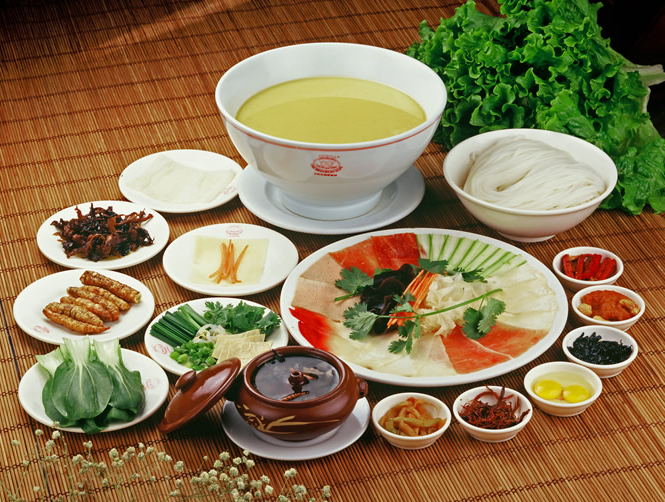
Wild mushroom hotpot is one of Yunnan’s most representative seasonal dishes. A soup base is prepared with several kinds of dried or fresh mushrooms and may be combined with chicken, vegetables and other ingredients.
The mushrooms are added according to their required cooking times and must be thoroughly boiled before eating. Mushroom hotpot is especially popular in Kunming and other cities during the summer harvest season.
Essential Wild Mushroom Safety
Yunnan has many edible wild mushrooms, but it also has poisonous species that may look similar to safe varieties. Incorrect identification or preparation can cause serious poisoning. Visitors should therefore treat mushroom safety as the most important part of any mushroom experience.
Choose Professional Restaurants
Eat wild mushrooms only at established restaurants that specialise in mushroom dishes. Professional kitchens are more likely to understand identification, separation and required cooking times.
Ask Before Buying
When purchasing mushrooms from a market, ask the seller to identify the variety and explain the correct preparation method. Different mushrooms may require different cooking times and techniques.
Cook Thoroughly
Wild mushrooms should not be served raw or as a cold salad unless the species is professionally confirmed as suitable for that preparation. Most varieties should be fried, boiled or simmered thoroughly before consumption.
Avoid Alcohol
The source advises avoiding alcohol while eating wild mushrooms because alcohol may contribute to adverse reactions with certain varieties.
Recognise Poisoning Symptoms
Possible mushroom-poisoning symptoms may include dizziness, nausea, vomiting, abdominal pain, diarrhoea, restlessness, confusion or hallucinations. Symptoms may develop soon after eating or several hours later.
Anyone experiencing these symptoms should seek medical treatment immediately. Remaining mushrooms and food samples should be kept when possible to help medical staff identify the cause.
Yunnan Wild Mushroom Festivals
Wild mushroom festivals are held in several parts of Yunnan during the summer harvest season. These events commonly include mushroom markets, cooking competitions, local food exhibitions and cultural performances.
The source highlights two representative events:
| Festival |
Location |
Main Experience |
| Wild Mushroom Festival |
Shiping County |
Seasonal mushroom food, markets and local cultural activities |
| Wild Mushroom Gourmet Festival |
Nanhua County |
Wild mushroom trade, food tasting and mushroom-themed tourism |
Festival dates may change annually according to local arrangements and mushroom-growing conditions.
Recommended Wild Mushroom Travel Experiences
Visitors can combine mushroom food culture with market visits, festivals and countryside exploration. The source recommends two representative mushroom-themed tour products:
1 Day Yimen Wild Mushroom Festival and Trade Fair Tour
This short tour focuses on Yimen’s seasonal mushroom festival and trading activities. Visitors can explore the local mushroom market, observe different mushroom varieties and experience regional food culture.
2 Days Nanhua Wild Mushroom Festival and Trade Fair Tour
This two-day experience provides more time to explore Nanhua’s mushroom market, food festival and local mushroom industry. It is suitable for travellers who want a deeper introduction to Yunnan’s wild mushroom trade and culinary traditions.
Travel Tips
Plan a Yunnan mushroom trip between June and September, with July and August normally offering the widest selection. Visit produce markets in the morning, when newly collected mushrooms are usually freshest.
Mushroom-picking activities should always be arranged with local guides. Never enter unfamiliar forests alone or eat mushrooms collected without professional inspection.
Because mushroom varieties, prices and festival dates depend on rainfall and seasonal supply, travellers should confirm current conditions before departure.