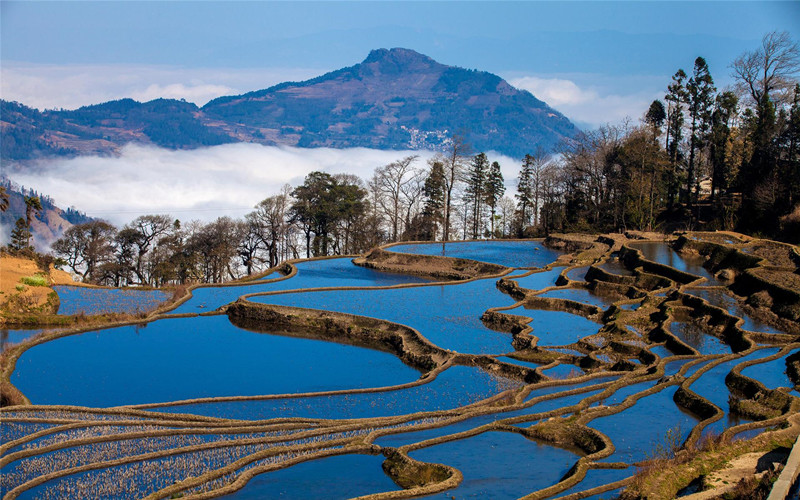
Diqing Tibetan Autonomous Prefecture (迪庆藏族自治州) is one of the most culturally diverse areas of northwest Yunnan. The name Diqing is traditionally associated with the Tibetan meaning of a “place of good fortune.” Its location at the meeting point of Yunnan, Sichuan, and Tibet has shaped a distinctive cultural landscape in which Tibetan, Lisu, Naxi, Han Chinese, and other communities have lived alongside one another for generations.
Tibetan culture forms one of the most important cultural foundations of Diqing, particularly in the areas around Shangri-La and Deqin. Lisu culture is strongly represented in Weixi and the surrounding mountain communities, while Naxi culture is particularly prominent in Sanba and other communities of Shangri-La. Han Chinese culture has also become deeply integrated into the region through migration, trade, education, and long-term cultural exchange.
Rather than existing as isolated ethnic traditions, these cultures have developed through continuous interaction. Local architecture, religious practices, festivals, music, food, handicrafts, and village traditions therefore provide an especially rich expression of multi-ethnic heritage in Diqing.
Religious Heritage and Cultural Coexistence
Religion has played a central role in shaping the history and cultural identity of Diqing. Tibetan Buddhism remains one of the most influential religious traditions, with monasteries, sacred mountains, religious ceremonies, prayer flags, mani stones, and pilgrimage practices forming an important part of everyday cultural life.
Among the best-known Buddhist institutions are Ganden Sumtseling Monastery (噶丹·松赞林寺), often called the “Little Potala,” and Dongzhulin Monastery (东竹林寺). Monastic culture is closely connected with local art, architecture, religious music, festivals, and traditional education.
Diqing is also notable for its history of religious coexistence. Cizhong Church (茨中教堂) represents the historical development of Catholicism in the region and illustrates the interaction between Christianity and local Tibetan society. Alongside Tibetan Buddhism and Christianity, older Bön traditions and indigenous beliefs have also influenced local attitudes toward sacred mountains, rivers, forests, animals, and village landscapes.
This combination of religious traditions has created a cultural environment in which sacred places are not simply tourist attractions but continue to have meaning for local communities.
Living Performing Arts
Traditional performing arts remain among the most visible expressions of Diqing's ethnic culture. They combine music, dance, storytelling, religious traditions, community celebrations, and social gatherings.
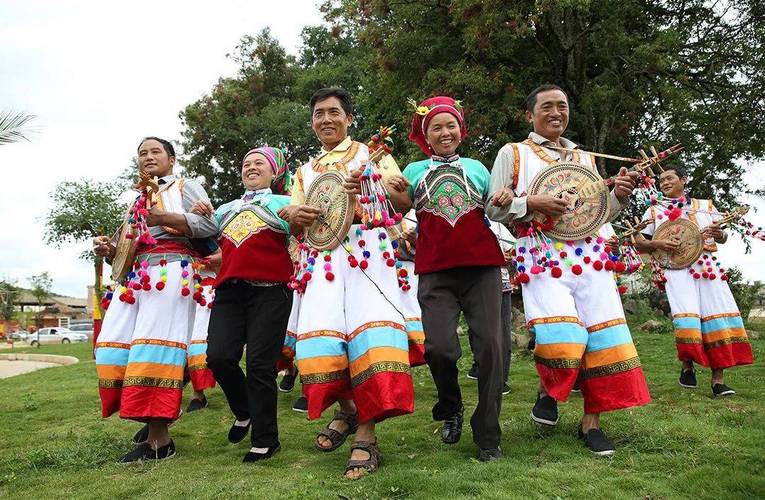
Guozhuang Dance (锅庄舞) is one of the most recognizable forms of Tibetan folk dance in Diqing. Usually performed collectively in a circle, it is associated with festivals, celebrations, village gatherings, and cultural events. Different communities have developed their own styles, rhythms, costumes, and performance traditions.
Reba Art (热巴艺术) is another important traditional performing art associated particularly with Tibetan communities. It combines dance, music, singing, and acrobatic elements and has traditionally been performed during religious and community celebrations.
Among the Lisu people, Achimugua (阿尺木刮) is an important traditional dance and musical expression. Closely connected with Lisu community life, it reflects relationships between people, nature, work, celebration, and traditional beliefs. Its distinctive movements and rhythms make it an important cultural heritage resource for cultural tourism and community-based experiences.
Festivals and Seasonal Cultural Life
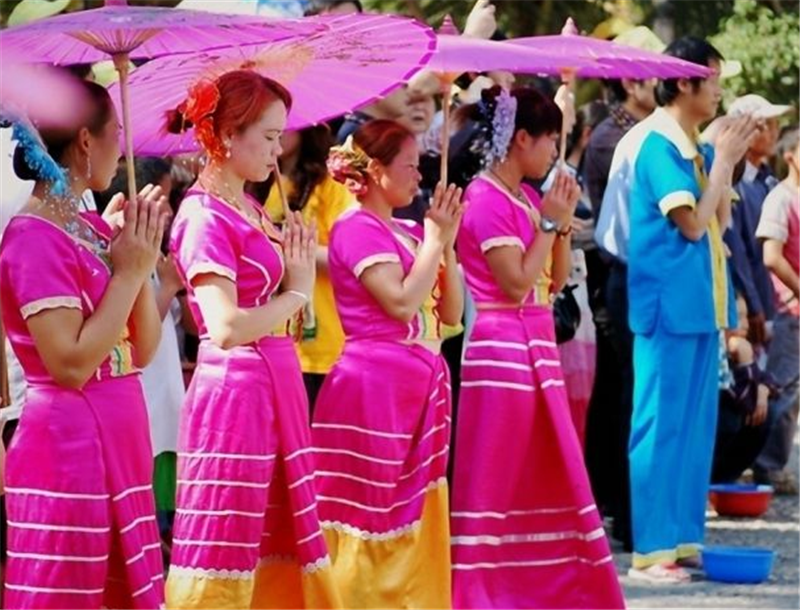
Festivals provide an important opportunity to experience Diqing's living cultural traditions. Tibetan, Lisu, Naxi, and multi-ethnic celebrations take place throughout the year, bringing together traditional dress, music, dance, food, religious practices, sporting activities, and community gatherings.
Losar, the Tibetan New Year, is one of the most important Tibetan celebrations. It normally falls in February or March according to the Tibetan calendar and is marked by family gatherings, religious ceremonies, traditional food, singing, dancing, and festive activities.
Kuoshi Festival is an important Lisu New Year celebration and provides an opportunity to experience Lisu traditional customs, music, dance, food, and community activities.
The Shangri-La Horse Festival reflects the region's long relationship with horses, pastoral life, trade, and highland culture. Horse-related competitions and cultural performances bring together different ethnic communities and demonstrate how traditional pastoral culture continues to influence contemporary cultural events.
| Festival |
Main Cultural Association |
Cultural Significance |
| Losar |
Tibetan |
Tibetan New Year, religious ceremonies, family traditions, music and dance |
| Kuoshi Festival |
Lisu |
Lisu New Year and traditional community celebrations |
| Shangri-La Horse Festival |
Multi-ethnic |
Horse culture, traditional sports, pastoral heritage and cultural performances |
Traditional Architecture and Material Culture
The built environment of Diqing reflects its high-altitude geography, climate, ethnic traditions, and historical connections with the Tea Horse Road.
Traditional Tibetan houses commonly combine stone and timber construction and are adapted to the cold plateau environment. Thick walls, wooden structures, traditional decorative elements, prayer flags, and religious symbols contribute to the distinctive appearance of Tibetan settlements.
Material culture is equally important. Thangka painting, traditional metalwork, silver crafts, Tibetan knives, religious objects, textiles, woodwork, and other handicrafts preserve skills that have been transmitted through generations.
For cultural travelers, these crafts offer an opportunity to understand Diqing beyond its landscapes. Visiting traditional craft workshops, village households, cultural centers, and community-based handicraft programs can provide a more direct connection with local cultural practices.
Traditional Food Culture
Food in Diqing reflects both the natural environment and the cultural diversity of the prefecture. Tibetan communities traditionally rely on foods suited to the highland environment, including butter tea, tsampa, yak meat, dairy products, and other locally adapted foods.
Lisu cuisine has its own distinctive character, with traditional foods and drinks associated with mountain life and community gatherings. Bamboo-tube wine and fire-roasted pork are examples of foods and preparation methods associated with Lisu cultural traditions.
Naxi, Tibetan, Lisu, Han Chinese, and other culinary traditions have also influenced one another over time. As a result, food in Diqing provides another way to explore the region's broader history of cultural exchange.
Linguistic Diversity
The cultural diversity of Diqing is also reflected in its languages. Tibetan, Lisu, and Naxi languages are important components of local cultural identity.
Tibetan dialects are widely associated with Tibetan communities, while Lisu communities maintain their own language traditions. Naxi culture is particularly notable for the historical use of Dongba pictographic writing, one of the most distinctive elements of Naxi cultural heritage.
For international visitors, language is an important part of cultural interpretation. Local bilingual education, cultural interpreters, museums, heritage centers, and trained guides can help visitors understand the meaning behind religious symbols, traditional stories, rituals, and community customs.
UNESCO and Intangible Cultural Heritage
Diqing's cultural significance is closely connected with the broader heritage value of the Three Parallel Rivers (三江并流) region, which was inscribed on the UNESCO World Heritage List in 2003. The area's exceptional natural environment has also influenced the traditional lifestyles, beliefs, settlement patterns, and cultural practices of the communities living in the mountains and river valleys.
Intangible cultural heritage is another important part of Diqing's cultural identity. Traditional dance, music, storytelling, religious practices, handicrafts, food traditions, festivals, and village customs continue to be transmitted through communities and heritage programs.
For cultural tourism, this means that Diqing should be understood as a destination of living heritage, rather than simply a place containing historical monuments.
Culture and Contemporary Tourism
The development of tourism in Diqing increasingly emphasizes the relationship between cultural preservation, ecological protection, and community participation. Traditional villages, ethnic handicrafts, cultural performances, family-run guesthouses, local food, and community-based tourism can provide visitors with opportunities to experience local culture while supporting the continuation of traditional practices.
Government-supported cultural preservation programs and artisan initiatives also play an important role in maintaining traditional skills. At the same time, bilingual education and cultural education help younger generations maintain connections with their ethnic languages and traditions while participating in contemporary society.
For international visitors, the most meaningful cultural experiences often come from engaging with local communities respectfully rather than simply viewing cultural performances. Village visits, traditional craft demonstrations, food experiences, festival participation, monastery visits with appropriate guidance, and conversations with local cultural practitioners can reveal how Diqing's traditions continue to evolve.
Cultural Tourism in Diqing
A Diqing culture tour can combine Tibetan Buddhist heritage, Tea Horse Road history, ethnic villages, traditional performing arts, handicrafts, religious architecture, festivals, and local cuisine. The cultural experience varies considerably between Shangri-La, Deqin, and Weixi, making the prefecture particularly suitable for travelers interested in ethnic culture, anthropology, heritage, photography, educational travel, and immersive community experiences.
For international travelers, the key attraction is not a single ethnic tradition but the interaction between different cultures. Tibetan, Lisu, Naxi, and other local traditions coexist within a highland landscape shaped by religion, trade, migration, agriculture, pastoralism, and the natural environment. This cultural diversity makes Diqing one of the most distinctive destinations in southwest China for exploring living ethnic heritage and the continuing evolution of traditional mountain cultures.
History and Culture Tour with Yaso Trip can therefore focus on cultural interpretation, community encounters, traditional arts, ethnic villages, heritage conservation, religious culture, local cuisine, and responsible cultural tourism, creating a deeper understanding of Diqing beyond its well-known natural scenery.