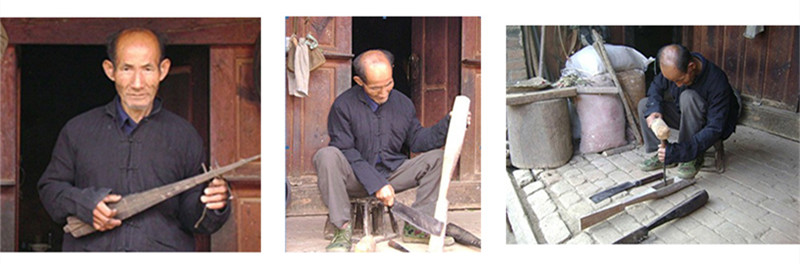
Tao Yinggui - Bulang "Niutuiqin" Musical Instrument Maker in Shuangjiang County, Lincang

Tao Yinggui - Bulang

Profile at a Glance

Item Information
Name Tao Yinggui (陶应贵)
Ethnicity Blang (布朗族)
Birth August 1949
Birthplace Danan’ai Village (大南矮村), Danan’ai Hamlet (大南矮寨), Dawen Township (大文乡), Shuangjiang Lahu, Wa, Blang and Dai Autonomous County (双江拉祜族佤族布朗族傣族自治县), Lincang City (临沧市), Yunnan Province (云南省)
Heritage Skill Crafting and playing the Blang Niutuiqin (牛腿琴, “Ox-Leg Lute”)
Recognition Provincial-level Representative Inheritor (3rd batch of Intangible Cultural Heritage Inheritors of Yunnan)

? The Niutuiqin: Craftsmanship and Musicality

Origins and Form

The Niutuiqin (牛腿琴), literally “Ox-Leg Lute,” takes its name from its shape. Measuring about 45–60 cm in length, the instrument has no rigid standard in design. Tao Yinggui carves the body from a single block of yellow mulberry wood. The lower section is hollowed out and covered with a thin bamboo plate to form a resonating chamber, and three metal strings are then mounted.

Playing Technique

During performance, the instrument rests horizontally across the chest. The left hand slides along the neck to press the strings, while the right hand plucks with a plectrum made from ox horn or a goose feather quill. The sound is warm and distinctive—perfect for accompanying Blang love songs. For generations, the Niutuiqin has been a vital channel for expressing emotions in Blang culture.

? Transmission and Modern Revival

From Tradition to Classroom

According to custom, one must first master Niutuiqin playing before being accepted as an apprentice in instrument making. With this demanding learning process, the craft once faced the danger of fading away. Today, however, inheritors like Tao Yinggui—together with local communities and the government—are ensuring its survival.

  • “Intangible Heritage into Schools”: In Dawen Township (大文乡), programs bring Niutuiqin into classrooms. Through exhibitions, live demonstrations, and hands-on student activities, children gain direct exposure to this unique heritage.

Cultural Economy

The Niutuiqin is also finding new life in the marketplace:

  • At cultural events such as the Iceland Tea Fair (冰岛茶会), live-streaming showcases the instrument’s charm to broader audiences.

  • Custom-made Niutuiqin are now in demand, priced between 500–900 RMB depending on specifications—transforming “cultural resources” into “cultural wealth.”

Generational Continuity

Beyond Tao Yinggui, other inheritors such as veteran Party member Han Xueming (罕学明) are actively involved in teaching at schools and forming local bands. Their efforts aim to build a “three-generation bridge” of inheritance—elders, adults, and youth—ensuring continuity of the craft.

? Conclusion

Tao Yinggui is more than a skilled artisan—he is a living guardian of Blang culture. His journey reflects the essence of “living heritage transmission”: staying true to tradition while embracing education, innovation, and integration with modern industries. Thanks to his dedication, the Niutuiqin continues to resonate—not only as a musical instrument but as a symbol of cultural vitality in contemporary society.

ENQUERY

Have a question before booking? Message us to learn more.
Click to change

Related Categories