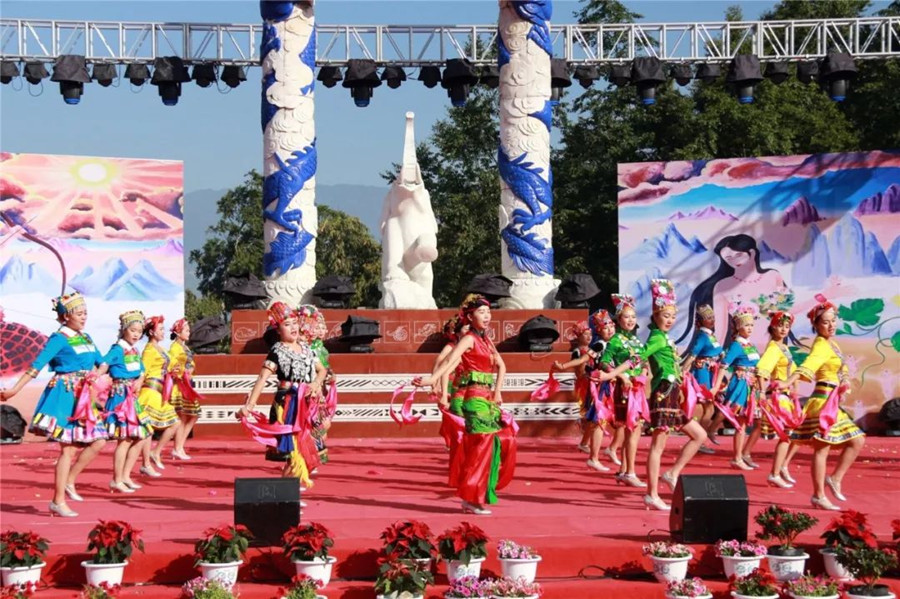
Achang Ethnic Minority

Achang ethnic minority is one of the seven small-population ethnic groups unique to Yunnan. Their native language, Achang, belongs to the Tibeto-Burman branch of the Sino-Tibetan language family. In addition to their native language, most Achang people are also fluent in Chinese and the language of the Dai minority. Their written language is Chinese.
The Achang people are primarily distributed in Longchuan County and Lianghe County of Dehong Prefecture, with smaller populations located in Baoshan. Due to the influence of various cultures, the Achang have developed a diverse religious landscape. They practice a mix of natural worship, ghost worship, ancestor worship, Theravada Buddhism, Chinese Buddhism, and Taoism.
According to the sixth national census in 2010, the Achang population in China totaled 39,555.

History of the Achang Ethnic Minority
Early History and Migration
The ancestors of the Achang people originally inhabited the valleys of the Jinsha, Lancang, and Nu rivers in northwest Yunnan. Over time, some of them migrated westward across the Nujiang River, gradually transitioning from a hunting lifestyle to farming.

Tang and Song Dynasties (618-1279)
During the Tang (618-907) and Song (960-1279) dynasties, the Achang people were under the control of the Nanzhao and Dali kingdoms in Yunnan. These kingdoms played a significant role in shaping the culture and political structure of the Achang people.

Ming and Qing Dynasties (1368-1911)
In the Ming (1368-1644) and Qing (1644-1911) dynasties, the Achang were governed by hereditary chiefs appointed by the imperial court. These chiefs were directly responsible to the central government. During this period, most of the landowners were Han Chinese, though a few Achang individuals were landholders. The Achang people were also subject to a feudal system, with Dai chiefs acting as the feudal lords.

Feudal System and Dai Chiefs
Before 1949, the Achang people lived under a feudal economic system, where Dai chiefs were the primary lords. Most landlords were Han, while only a small number of Achang individuals held land.

Liberation and Social Reform
In early 1950, the Achang people were liberated from feudal rule. Two years later, Achang autonomous districts were established. Starting in the autumn of 1955, the Achang region underwent a series of land reforms that abolished feudal land ownership. Feudal privileges, taxes, and usury were also dismantled during this time.

Achang Ethnic Townships
Husa Achang Ethnic Town of Longchuan County
Nangsong Achang Ethnic Town of Lianghe County
Jiubao Achang Ethnic Town of Lianghe County

Handicrafts and Folk Arts of Achang Ethnic Minority
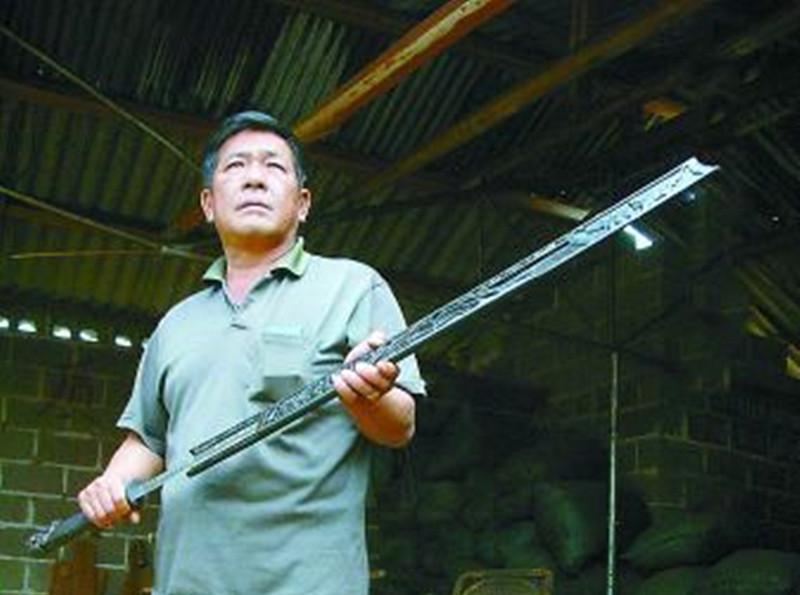
Ironwares like Husa knife(户撒刀) made by Achang people are very prestigious.

Hulusi ( Cucurbit Flute)
Dengwoluo- Folk Dance of Achang
Folk Songs of Achang Ethnic Minority
Husa Knife Forging Techniques
The Famous Husa Knife
Simple and Beautiful Costumes
Inheritors
Lou Zongpei
Li Jiazhong
Zhang Liwang
Lai Youhong
Xiang Laozhai
Cao Mingkuan
Festivals of Achang Ethnic Minority
Ancestor Worship Festival
Guoxinnian(New Year) Festival
Huanhuangdan Festival
Torch Festival
Shaobaichai Festival
Chuwa(Kaimen/Opening Door) Festival
Jinwa(Guanmen/Closing Door) Festival
Water Splashing Festival
Ganbai Festival
Aluwoluo Festival
Huijie Festival
Keep Reading
Xinzhai and Hejie Villages Achang Ethnic Culture Protection Area
Achang Ethnic Minority is A Nationality Adept at Knife-making
Achang Ethnic Minority: A Music Instrument of Love- Gourd-shaped Flute
Achang Ethnic Minority: Best Men Accompanying the Groom with Umbrellas to Meet the Bride
Achang Ethnic Minority: Playing Green Dragon and White Elephant

ENQUERY

Have a question before booking? Message us to learn more.
Click to change
  • POST
  • Geographical Distribution of Achang Ethnic Minority in Yunnan

    Geographical Distribution of Achang Ethnic Minority in Yunnan

    The Achang people are a minority group belonging to the Yi ethnicity, primarily found in the Dehong Dai and Jingpo Auton...
    Achang Ethnic Minority

    Achang Ethnic Minority

    Overview The Achang (阿昌族) is one of the seven small-population ethnic minorities unique to Yunnan Province. Their langua...
    Simple and Beautiful Costumes of Achang Ethnic Minority

    Simple and Beautiful Costumes of Achang Ethnic Minority

    An Achang ManAchangs' costumes are simple, austere, and beautiful. Most Achang men tend to wear blue, white or black jac...
    Lou Zongpei - Representative Inheritor of Achang Husa Sword-making Craft Project in Longchuan County, Dehong 

    Lou Zongpei - Representative Inheritor of Achang Husa Sword-making Craft Project in Longchuan County, Dehong 

    Lou Zongpei, born in 1955 in Xiangjie Village (项姐寨), Husa Township (户撒乡), Longchuan County (陇川县), Dehong Prefecture (德宏州...
    Li Jiazhong - Representative Inheritor of  Achang 

    Li Jiazhong - Representative Inheritor of  Achang "Dengwoluo" Folk Dance Project in Longling County, Baoshan 

    Li Jiazhong (1965 – ) is a county-level representative inheritor of the Achang Dengwolu Dance (阿昌族蹬窝罗), a cultural herit...
    Zhang Liwang - Inheritor of Achang Ethnic Culture in Lianghe County, Dehong 

    Zhang Liwang - Inheritor of Achang Ethnic Culture in Lianghe County, Dehong 

    Zhang Liwang - Inheritor of Achang Ethnic Culture in Lianghe County, Dehong  德宏州梁河县九宝乡阿昌族民族文化传承人 - 张立旺 http://www.ynich....
    Lai Youhong - Wood Carving Craftsman in Longchuan County, Dehong 

    Lai Youhong - Wood Carving Craftsman in Longchuan County, Dehong 

    Lai Youhong (赖有洪) is one of Yunnan Province’s first batch of provincial-level intangible cultural heritage (ICH) represe...
    Xiang Laozhai - Inheritor of Achang Iron Handicrafts in Longchuan County, Dehong 

    Xiang Laozhai - Inheritor of Achang Iron Handicrafts in Longchuan County, Dehong 

    Profile Xiang Laosai(项老赛,1961-), male, Achang nationality, born in 1961, is a Xinzhai village(新寨村) in Mangbing Village(芒...
    Cao Mingkuan - Presider of  Sacrificial Activities of Achang Ethnic Minority in Lianghe County, Dehong 

    Cao Mingkuan - Presider of  Sacrificial Activities of Achang Ethnic Minority in Lianghe County, Dehong 

    Profile Cao Mingkuan(曹明宽,1943-),male, Achang nationality(阿昌族), born in 1943, is the presider of Sacrificial Activities o...
    Hulusi ( Cucurbit Flute) of Lianghe County, Dehong

    Hulusi ( Cucurbit Flute) of Lianghe County, Dehong

    Hulusi ( Cucurbit Flute) of Lianghe County, Dehong    梁河县葫芦丝 http://www.ynich.cn/view-ml-11111-1205.html
    Xinzhai and Hejie Villages Achang Ethnic Culture Protection Area in Longchuan County, Dehong

    Xinzhai and Hejie Villages Achang Ethnic Culture Protection Area in Longchuan County, Dehong

    Xinzhai Village and Hejie Village Achang Ethnic Culture Protection Area in Longchuan County, Dehong   陇川县户撒乡新寨村、贺姐村阿昌族传统...

    "Dengwoluo" - Folk Dance of Achang Ethnic Minority in Lianghe County, Dehong

    Achang (阿昌族) dance is a traditional folk dance system from Dehong (德宏) and Baoshan (保山) in Yunnan (云南), encompassing rep...
    Folk Songs of Achang Ethnic Minority in Lianghe County

    Folk Songs of Achang Ethnic Minority in Lianghe County

    Achang (阿昌族) folk songs are a beloved song-and-dance form among the Achang people in Longchuan County (陇川) and Luxi (潞西)...
    Husa Knife Forging Techniques of Achang Ethnic Minority in Longchuan County

    Husa Knife Forging Techniques of Achang Ethnic Minority in Longchuan County

    Husa Knife Forging Techniques A Husa knife(户撒), also sometimes called Achang knife, which is traditional forged weapon o...
    Ancestor Worship Festival of Achang Ethnic Minority in Yunlong County, Dali

    Ancestor Worship Festival of Achang Ethnic Minority in Yunlong County, Dali

    Basic Introduction of the Festival Chinese Name: 大理云龙县阿昌族祭祖 English Name: Ancestor Worship Festival of Achang Ethnic Min...
    Guoxinnian (New Year) Festival of Achang Ethnic Minority

    Guoxinnian (New Year) Festival of Achang Ethnic Minority

    Introduction of the Festival Chinese Name:阿昌族过新年 English Name:  Guoxinnian (New Year) Festival of Achang Ethnic Minority...