
 7 Days GolfingTour
 8 Days Group Tour
 8 Days Yunnan Tour
 7 Days Shangri La Hiking
 11 Days Yunnan Tour
 6 Days Yuanyang Terraces
 11 Days Yunnan Tour
 8 Days South Yunnan
 7 Days Tea Tour
 8 Days Muslim Tour
 12 Days Self-Driving
 4 Days Haba Climbing
 Tiger Leaping Gorge
 Stone Forest
 Yunnan-Tibet
 Hani Rice Terraces
 Kunming
 Lijiang
 Shangri-la
 Dali
Dali
 XishuangBanna
 Honghe
 Kunming
 Lijiang
 Shangri-la
 Yuanyang Rice Terraces
 Nujiang
 XishuangBanna
 Spring City Golf
 Snow Mountain Golf
 Stone Mountain Golf



8 Days Yunnan Small Group Tour to Kunming, Dali, Lijiang, Shangri-La

Tour Overview
Are you planing a cheap Yunnan Tour? Choose this Yunnan group tour including the cities: Kunming, Dali, Lijiang and Shangri-La. In these cities, you will visit Kunming Stone Forest,...
Length of Travel: 8 Day
Destinations of Tour: Kunming-Dali-Lijiang-Shangrila
Departure City: Kunming
Price of Tour: Request
Type of Tour:
Features of Tour: Nature Culture History Minorities
Are you planing a cheap Yunnan Tour? Choose this Yunnan group tour including the cities: Kunming, Dali, Lijiang and Shangri-La. In these cities, you will visit Kunming Stone Forest, Dali Old Town, Lijiang Old Town, Lijiang Jade Dragon Snow Mountain, Tiger Leaping Gorge, and Shangri-La Songzanlin Monastery. All of them are famous attractions in Yunnan. You can also experience the culture of Yis, Naxis, Bais, and Tibetan minorities. If you want to visit highlights of Yunnan, and you are a budget traveller, why not join other tourists? 8 Days Best Yunnan Small Group Tour is suitable for you.
Highlights:
- Visit the famous attractions of Yunnan: Stone Forest, Dali Old Town, Lijiang Old Town, Lijiang Jade Dragon Snow Mountain, Tiger Leaping Gorge, and Shangri-La Songzanlin Monastery.
- Discover the ethnic culture of Yis, Bais, Naxis and Tibetan.
- Be shocked by the ruggedness and magnificence view of Yunnan.

Brief Itinerary
- Day 1: Kunming Arrival
- Day 2: Kunming – Dali
- Day 3: Dali
- Day 4: Dali – Lijiang
- Day 5: Lijiang
- Day 6: Lijiang – Shangri-La
- Day 7: Shangri-La
- Day 8: Shangri-La Departure
Google Map
Detailed Itinerary
Day 1 Arrive in Kunming
Sightseeing and Activities: Arrive in Kunming
Accommodation: Kunming
Meals: Breakfast, Lunch
Arrive in Kunming, transfer to your hotel in Kunming on your own arrangement. Check in hotel via your name. (Remark : the airport pick-up is excluded in the tour, no guide and driver service be offered today)
Day 2 Kunming
Sightseeing and Activities: the Stone Forest, Birds and Flowers Market, Green Lake
Accommodation: Kunming
Meals: Lunch
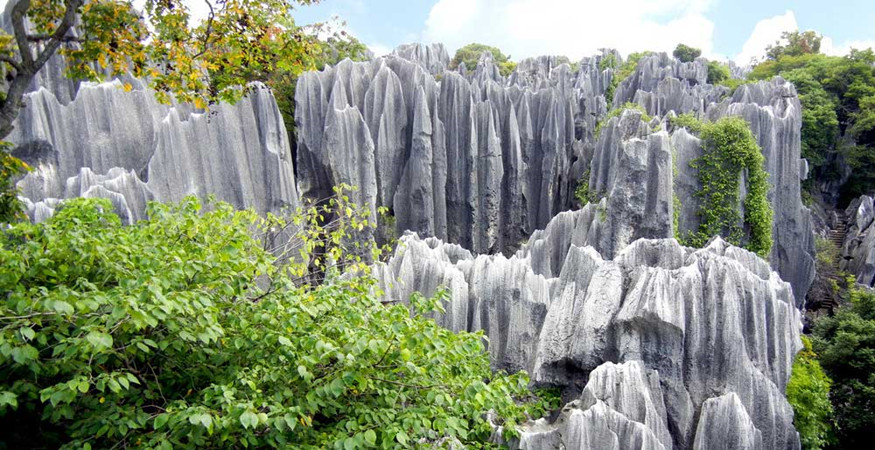
At 09:00 am, meet your tour guide & driver at Jinma Biji Archway and then drive about 85km to the visit the Stone Forest. There is a local saying says that “It will be a waste without visiting the Stone Forest when you visit Kunming”, you can see that Stone Forest is trully loved by local people.
In the afternoon, drive back to Kunming and visit Birds and Flowers Market. Then, stroll around the Green Lake to enjoy the leisure lives of local people.
Day 3 Kunming-Dali
Sightseeing and Activities: Xizhou Morning Market, Zhoucheng Village, Erhai Lake, Three Pagodas
Accommodation:Taiheju Hotel or similar
Meals: Breakfast,Lunch
In the morning, take the high speed train to Dali (2 hours) to visit Xizhou Town Xizhou Town to fully appreciate Bai-style traditional architectural courtyards, taste their fragrant Three-Course Tea and explore their distinctive culture.Transfer to visit Zhoucheng Village Zhoucheng Village and the Bai people’s Tie-dying cloth workshop where you can take some special souvenir with the Bai ethnic style.
In the afternoon, take a cruise to Jinsuo Islet in Erhai Lake. There are 200 Bai ethnic families around 1000 people in Jinsuo Island.In Erhai Lake cruise, you will enjoy the green Cangshan Mountain and the Three Pagodas from a far as well as lots of birds and seagulls flying over the lake. Then continue the tour to Three Pagodas of Chongsheng Monastery which has a history of over 1,800 years located at the foot of Cangshan Mountain facing to the Erhai Lake. Three Pagodas are made of three ancient independent pagodas forming a symmetrical triangle.Drive back to your hotel. Service ends.
Day 4 Dali – Lijiang
Sightseeing and Activities: Dali Old Town, Black Dragon Pool, Lijiang Old Town, Baisha Old Town
Accommodation: Baisha Holiday Resort or similar
Meals: Breakfast,Lunch
In the morning, explore Dali Old Town, you can stroll around Dali Old Town to visit Foreigner’s Street, the Ancient City Wall and the Gate Tower.
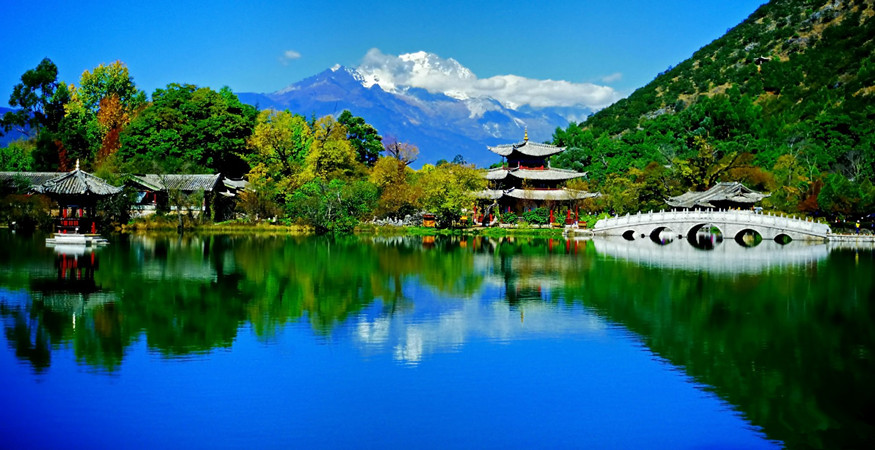
Then, drive 2 hours to Lijiang to visit Lijiang Old Town which is being reported as one of China Historical Cultural Cities in the whole world’s cultural heritages. Also pay a visit to Black Dragon Pool, the main headwater of the Yushui River which goes through the Old Town. In the late afternoon, transfer to visit Baisha Old Town, which is an enchanting traditional Naxi style old town.
Day 5 Lijiang
Sightseeing and Activities: Baisha Murals, Yuhu Village, Former Residence of Joseph Rock, Mufu Palace, Wangu Tower
Accommodation:Baisha Holiday Resort or similar
Meals: Breakfast,Lunch
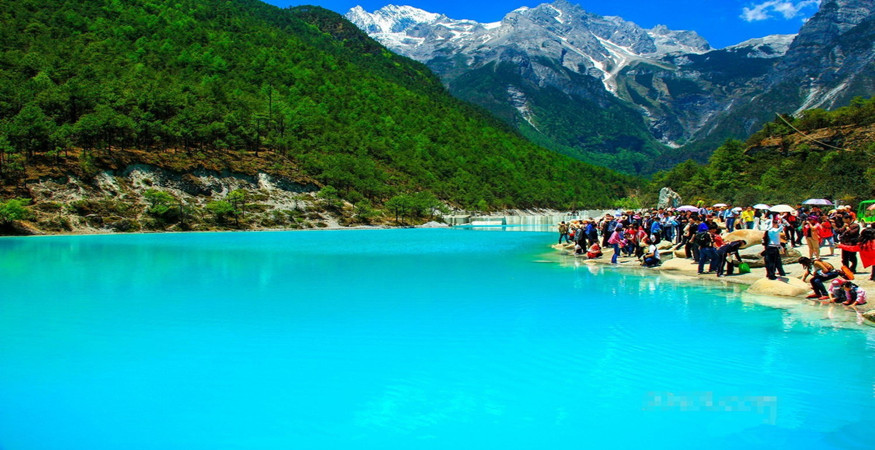
This morning, walk to visit the Baisha Mural about 600 years old, which is a part of the World Cultural Heritage by the UNESCO 1997. Then, drive to Yuhu Village which is located at the foot of Jade Dragon Snow Mountain. When walking into this authentic Naxi Village, you’ll see unique stone houses, Naxi ladies dressing in traditional clothes, kids playing, a tranquil Yuhu Lake…Explore leisurely around the village and then get to the Former Residence of Joseph Rock, who was an Austrian-American Botanist came to Lijiang and stayed in Yuhu Village for 27 years and made huge research work on Naxi minority.
In the afternoon, take a leisure walk up the Lion Hill and climb up the 33-meter-tall Wanggu Tower – the landmark building of Lijiang to enjoy a panoramic view of the whole old town and countryside scenery, as well as overlook the magnificent Jade Dragon Snow Mountain in the distance. Later, follow a trip to Ming-dynasty style Mufu Palace, the “Forbidden City” of Lijiang to know Tusi’s ruling history and appreciate Naxi people’s brilliant culture and fine arts.
Option: If you don’t want to choose our Lijiang city tour, you also can take our option of 1 Day Jade Dragon Snow Mountain Group Tour (Price: USD 150/Person extra).
Day 6 Lijiang-100KM-Tiger Leaping Gorge-100KM-Shangri-La
Sightseeing and Activities: the First Bend of Yangtze River, Iron Chain Bridge, Red Army’s Long March Memorial Monument, Tiger Leaping Gorge, Dukezong Ancient Town, Guishan Hill
Accommodation: Shangri-La
Meals: Breakfast and Lunch
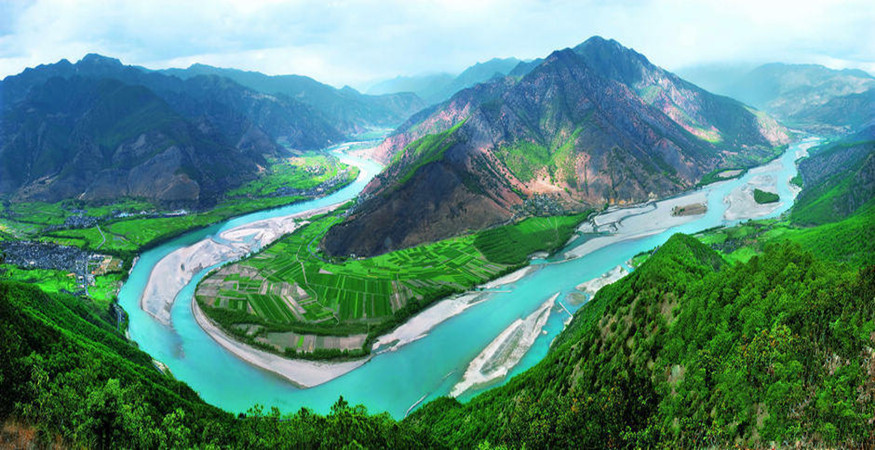
From Lijiang, you’ll drive about 60KM to the First Bend of the Yangtze River with imposing gorge scenery, visit the Iron Chain Bridge ,the Red Army’s Long March Memorial Monument in the Shigu Old Town. The town of Stone Drum got its name from a large, cylindrical, marble tablet shaped like a drum. The scenery is magnificent as the road running through the Lijiang valley which is filled with wheat fields and drying haystacks.
Visit the Tiger Leaping Gorge, the deepest gorge in the world. With 34 rapids of the Yangtze River, it is called the Jinsha in this area because you can find gold in the river.
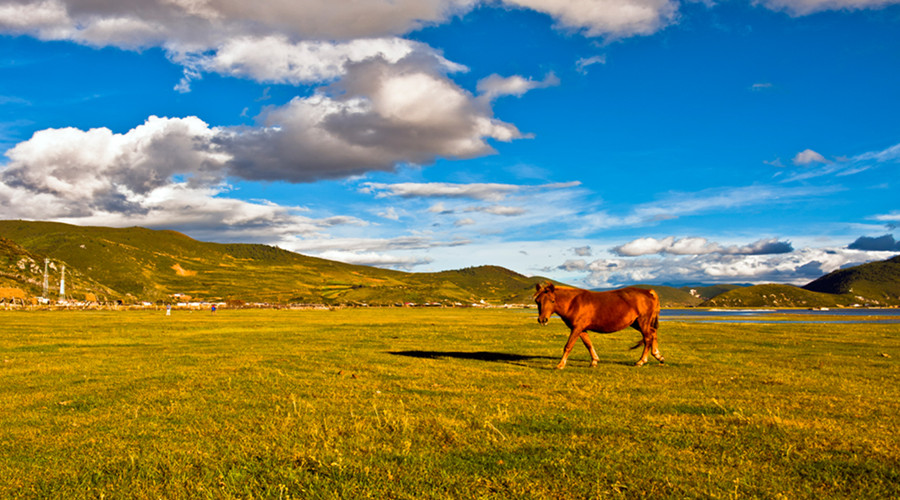
Then you will enter the Tibetan cultural area and a landscape of barley fields and yaks scattered in the valleys. Walk around Dukezong Ancient Town, an important town of the Ancient Tea-horse Trade Caravan from Yunnan to Tibet and India. Walk up to the top of Guishan Hill or Tortoise Hill, you will see the largest Prayer Wheel of the world and have a panoramic view of shangrila county and Dukezong Ancient Town.
Day 7 Shangri-La
Sightseeing and Activities:Songzanlin Monastery,Tibetan Family, Shudu Lake in Pudacuo National Park
Accommodation: Shangri-La
Meals: Breakfast and Lunch
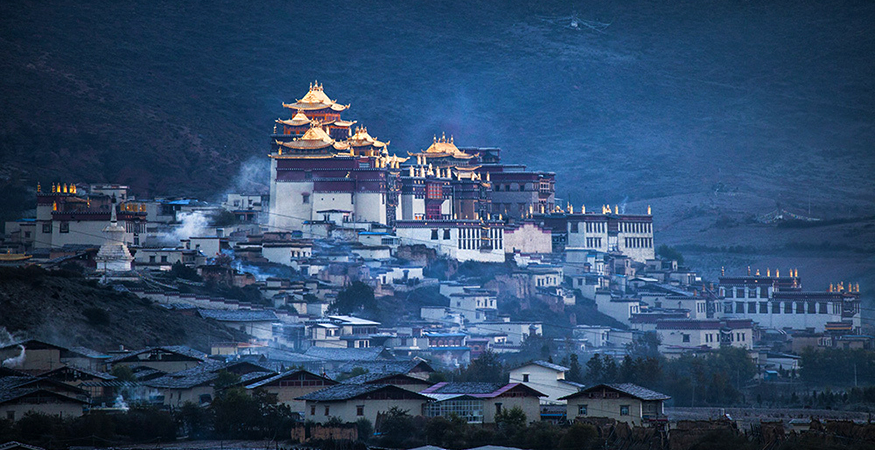
Today, visit the Songzanlin Monastery, the largest Tibetan monastery in Yunnan. Songzanlin Monastery has another alias – ‘the little Potala Palace ‘, so named because the whole monastery is in the traditional style with mysterious atmosphere.
After that, pay a visit to a Tibetan Family and have Yak Butter lunch in the family.
And afterwards you’ll visit the tranquil Shudu Lake in Pudacuo National Park. Pudacuo National Park is located in one of the most biologically-diverse regions of the world. While the region comprises only 0.7 percent of China’s land area, it contains more than 20 percent of the country’s plant species, about one-third of its mammal and bird species and almost 100 endangered species.
Day 8 Shangri-La Departure
Sightseeing and Activities:
Accommodation: None
Meals: Breakfast
Departure from Shangrila. Service ends.
Recommended Hotels
| Destination | 5 Star | 4 Star | 3 Star | Hostel |
|---|---|---|---|---|
| Kunming | Softel Hotel | Wenhui Hotel | Jinhua Hotel | T&T Story Hotel |
| Dali | Hilton Dali Resort & Spa | Shouyi Boutique Hotel | Dali Taihe Boutique Inn | Dali Fengxue Gucheng |
| Lijiang | Pullman Hotel | Wangfu Hotel | Liwang Hotel | Baisha Holiday Resort |
| Shangri-La | Shangri-La Hotel | Shangri-La Old Town Hotel | Moon City Hotel | Wu Fu South Yunnan Boutique Inn |
Service Included:
- Admission fees for all of the sightseeing spots listed in the itinerary;
- Meals as listed in the itinerary;
- Hotels as listed in the itinerary;
- Sharing English-speaking tour guide;
- Sharing vehicle for transfers & sightseeing with skilled driver;
- Service charge & government taxes;
- Luggage transfers between airports and hotels;
- High speed trian tickets from Kunming to Dali (2nd class seats).
Service Excluded:
- Any arrival and departure international airfares or train tickets;
- Chinese visa fees;
- Excess baggage charged by Airlines;
- Single room supplement;
- Tips to guides and drivers;
- Personal expenses and gratuities to service staff;
- Personal travel accident insurance;
- All optional programs.


First, the catering needs to be marked out, what can be tasted, a trip catering is very important to travel, especially for foreign guests, not used to eating means hungry, can provide some extra western food restaurants. For example, the first day’s itinerary does not include food and beverage, but I need to make recommendations in the itinerary. And the approximate time to get to each location, and the approximate time to gather each day to go to the attraction
Secondly, I need to be reminded in the itinerary what the weather is like and what clothes to wear. Besides, the altitude of Lijiang Shangri-La also needs to be reminded of the physical condition of tourists
Third, are there any uninformed self-payment items in the itinerary that I should bear by myself?
Fourthly, the hotel of the tour group can introduce the star rating and the number of volts of the hotel socket. Do it need to prepare other conversion sockets
Fifth: the introduction of the stone forest is not in place, if only one sentence summary of the stone forest, I will probably think that this scenic spot is not worth it
Sixth: The introduction of many scenic spots in the itinerary is basically not clear, such as the scenic spot is urban or natural scenery. More pictures can be provided.
The tour route is not quite clear at a glance, can be simplified to a route line with several arrows, e.g. From 09:00 am to xx am, Jinma Biji Archway→the Stone Forest(by car). Then at the bottom of everyday’s route, the feartures and the things we can really experience or muck in can be added. BTW, how am I supposed to know if there’s any special local holiday on my trip route? If so, give some intro, plz. Thus we can know at first sight how many attractions we will visit today and be aware of their unique features.
This 8 Days Best Yunnan Small Group Tour provided reliable and comfortable transportation through well-maintained vehicles. The cars were spacious, offering ample legroom and storage space for our luggage. The drivers were professional and experienced, ensuring our safety and providing a smooth and comfortable journey between destinations. The vehicles were equipped with modern amenities such as air conditioning, allowing us to travel in comfort, especially during long drives. The drivers were punctual, adhering to the itinerary and ensuring we arrived at each location on time. We appreciated their courteous and helpful nature, making the travel experience even more enjoyable.
I recently participated in a travel agency’s 8-day tour program and I am thrilled to provide an excellent review of the itinerary. The hotel accommodations were top-notch, offering comfort and impeccable service throughout my stay. The transportation provided was reliable and comfortable, ensuring a smooth and hassle-free journey. The scenic spots we visited were breathtaking, allowing us to truly appreciate the beauty of the destination. The tour guide was knowledgeable, friendly, and went above and beyond to make the experience engaging and informative. The dining experiences were delightful, offering a variety of delicious local cuisine. The sales staff and travel consultant were extremely helpful and responsive, ensuring all our queries were addressed promptly. Furthermore, the website provided comprehensive and detailed information about the trip, helping me make informed decisions. Overall, the tour program was outstanding, offering a memorable and enriching travel experience.
In addition to the excellent aspects mentioned earlier, I would like to highlight a few more aspects of the travel agency’s services.
Firstly, the itinerary was thoughtfully designed, allowing us to explore the city’s rich cultural heritage and iconic landmarks. We had the opportunity to visit renowned museums, ancient temples, and historic sites, which provided valuable insights into the local history and traditions.
Secondly, the local guides employed by the travel agency were not only knowledgeable but also passionate about sharing their insights and stories. They made the sightseeing experiences engaging and captivating, making us feel connected to the local culture and way of life.
Thirdly, the meals provided during the trip were not only delicious but also representative of the region’s culinary delights. We had the chance to savor authentic local dishes, experiencing the diverse flavors and unique ingredients of the destination.
Lastly, the sales staff and travel consultants were professional and attentive. They promptly addressed any concerns or inquiries we had, ensuring a smooth booking process and overall excellent customer service experience.
So I would like to commend the travel agency’s website for its user-friendly interface and wealth of information. It provided detailed descriptions of the itinerary, accommodations, and attractions, helping me plan and make informed decisions about the trip.
Overall, I highly recommend this travel agency’s services to fellow travelers. The excellent hotels, transportation, scenic spots, knowledgeable guides, delightful dining experiences, attentive sales staff, and informative website all contributed to an unforgettable and enjoyable travel experience.
My boyfriend and I just finished the 8-day tour and we wish we could stay longer! It was really an amazing experience for us.
We met a professional and experienced tour guide who introduced us the Chinese culture, Buddhism and local history well and clearly.
What’s more, the landscapes we visited are stunning and fascinating. We love them all.
BTW, both of us are vegetarians, but we never worried about the food we ate here cause everything was well organized by the travel agency.
In a word, if we have a chance to visit China again, we surely will choose to contact Yunnan Exploration again.
This is undoubtedly an unforgettable 8-day trip, and I can’t help but write a favorable comment. To be honest, the route arrangement of the scenic spots during this trip was reasonable. I was able to enjoy the beautiful scenery and have ample rest. Right! It is worth mentioning that the hotel environment was very good, surrounded by green trees, sunshine, and flowers, which made me feel relaxed. Besides, the tour guides are patient and considerate. They introduce me to the cultural traditions of different ethnic groups in Yunnan, take me to experience unique ethnic activities, and taste rich and delicious food. The warm stories between me and my friends have added vitality and color to my originally plain life. I ended this journey with pleasure. I love Yunnan, a charming place, and in fact, I believe it is the paradise “Shangri La” in James Hilton’s “The Lost Horizon”, which makes me feel my soul is comfortably placed. I think in the future, I will come to Yunnan with friends to deeply experience the unique natural, cultural, and historical diversity of Yunnan.
I had the pleasure of exploring Dali and Lijiang, two enchanting destinations in Yunnan, China. Dali’s serene Erhai Lake and its ancient town’s architecture left me in awe. The Bai culture was a delightful discovery, and the local cuisine, especially the famous Dali marble-like potatoes, was a culinary delight. We stayed at a charming boutique hotel in Dali that was a true hidden gem. The hotel’s traditional Bai architecture and tranquil courtyard provided a peaceful escape from the bustling city. The rooms were tastefully decorated and offered modern amenities while preserving the local charm.
Lijiang’s Old Town, with its labyrinthine cobblestone streets and traditional Naxi architecture, transported me to a bygone era. The breathtaking scenery of Jade Dragon Snow Mountain and the fascinating cultural performances were the highlights of my trip. The warmth and hospitality of the local people made me feel at home.
Both cities offered a unique blend of culture, history, and natural beauty that left me with lasting memories. I can’t wait to return and explore more of this captivating region.
First,I like this travel. These lines are very clear and I can quickly know where I will go. Second, I think these activities are so clear, and we can experience different sightseeing. It also helps me to have a complete idea for this trip. Third, Hotel is very outstanding. I can look up it’s information on the website in advance. The service of hotel is very specific. Finally, these photos are so beautiful that make me have a good impression for Yunnan. I think I can have a good time.
Please advise me on the tour pricing for code of the tour – YET 237 (8 days kunming-Dali-Lijiang-Shangri-la). Pax of 2
Hello there, this is Grace. I just finished the trip of Kunming, Dali, Lijiang and Shangri-La, the whole trip was impressed to me. The guide was professional, patient. I discovered the colorful culture of the local minorities, the local people are pure and enthusiastic, they treat us as their own family. Besides, the coffee was amazing, I wouldn’t forget its taste forever. Anyway, I couldn’t tell how brilliant about the tour, I will come back again if there’s another chance.
my families are satisfied with this travel.The tour organized by the travel agency was indeed memorable. The itinerary was diverse, taking us to various scenic locations, each with its own unique charm. The travel experience was hassle-free, with smooth transportation and comfortable accommodations. The guides were not only knowledgeable but also engaging, ensuring we had a deep understanding of each place’s history and culture. The food was also a highlight, with delicious local cuisine at every stop. Overall, this tour exceeded my expectations and provided a comprehensive and enriching experience. I highly recommend this travel agency and their exceptional tour packages.
I’m satisfied with the 8 days Kunming,Dali, Lijiang, Shangri-La tour. The tour arranged by the travel service was excellent.I’ve learned the interesting culture of the ethnic minority of Yi, Bai, Naxi and Tibetan. The tour guide was friendly and knowledgeable. The dishes and hotels arranged was good. Overall, it’s a enjoyable trip.