7 Days GolfingTour
 8 Days Group Tour
 8 Days Yunnan Tour
 7 Days Shangri La Hiking
 11 Days Yunnan Tour
 6 Days Yuanyang Terraces
 11 Days Yunnan Tour
 8 Days South Yunnan
 7 Days Tea Tour
 8 Days Muslim Tour
 12 Days Self-Driving
 4 Days Haba Climbing
 Tiger Leaping Gorge
 Stone Forest
 Yunnan-Tibet
 Hani Rice Terraces
 Kunming
 Lijiang
 Shangri-la
 Dali
Dali
 XishuangBanna
 Honghe
 Kunming
 Lijiang
 Shangri-la
 Yuanyang Rice Terraces
 Nujiang
 XishuangBanna
 Spring City Golf
 Snow Mountain Golf
 Stone Mountain Golf











 What Our Customers Say?
 alt="Puer Surrounding Counties and Towns: Weekly & Special Local Markets Travel Guide"
/>
alt="Puer Surrounding Counties and Towns: Weekly & Special Local Markets Travel Guide"
/>
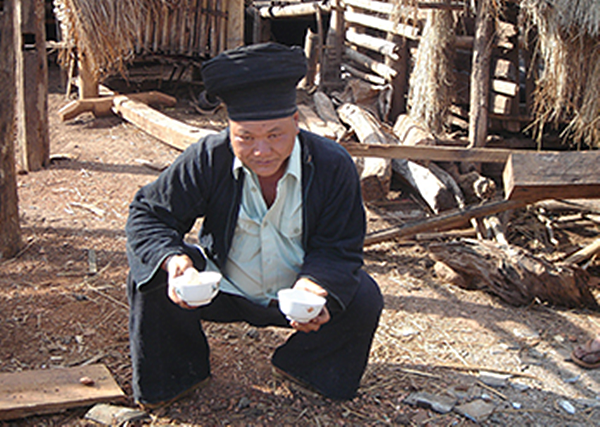
Li Pa – Presider of Sacrificial Activities of Hani Ethnic Minority (Aini People) in Menglian County, Puer
Li Pa is a presider of sacrificial Activities of Hani ethnic minority(哈尼族) (Aini people,爱伲人) in Menglian County(孟连县), Puer(普洱). The activities hosted by Li Pa include the village clean, funerals, weddings and naming the children. He also hosts Aini people’s festivals, including the Festival of Planting Seeds(下种节), Swing Festival(秋千节), Seniors’ Day(老人节), Spring Festival(春节) and other traditional festivals. Li Pa can recite the genealogy of the 66 generations of ancestors of this family and its branches, which is of great reference value for studying the migration of Hani people and the history of the formation of each branch. In addition, he can sing a variety of Aini folk songs, play traditional musical instruments and use herbs to heal people. Therefore, Li Pa is believed to be the Aini cultural inheritor with extensive local influence.
Translated by Dianna Zhou/周晓畋