Dage Dance of Yi Ethnic Minority

Dage Dance of Yi Ethnic Minority

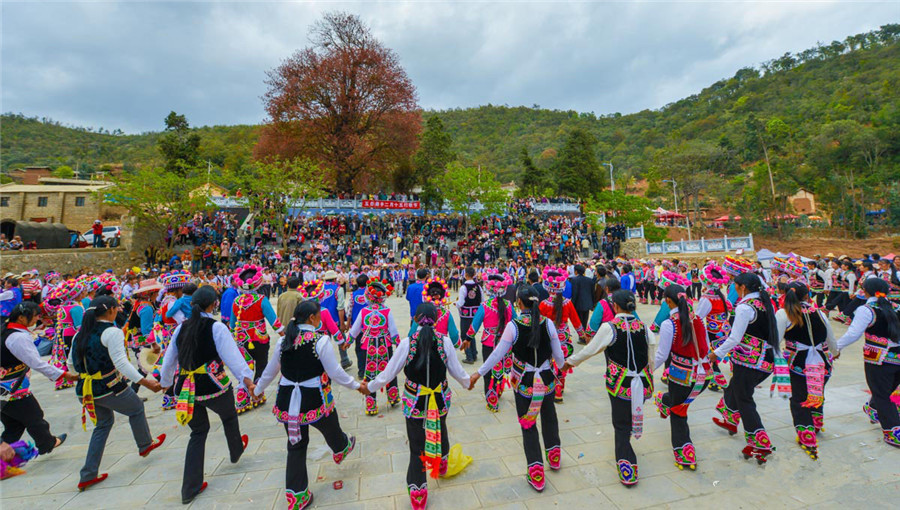
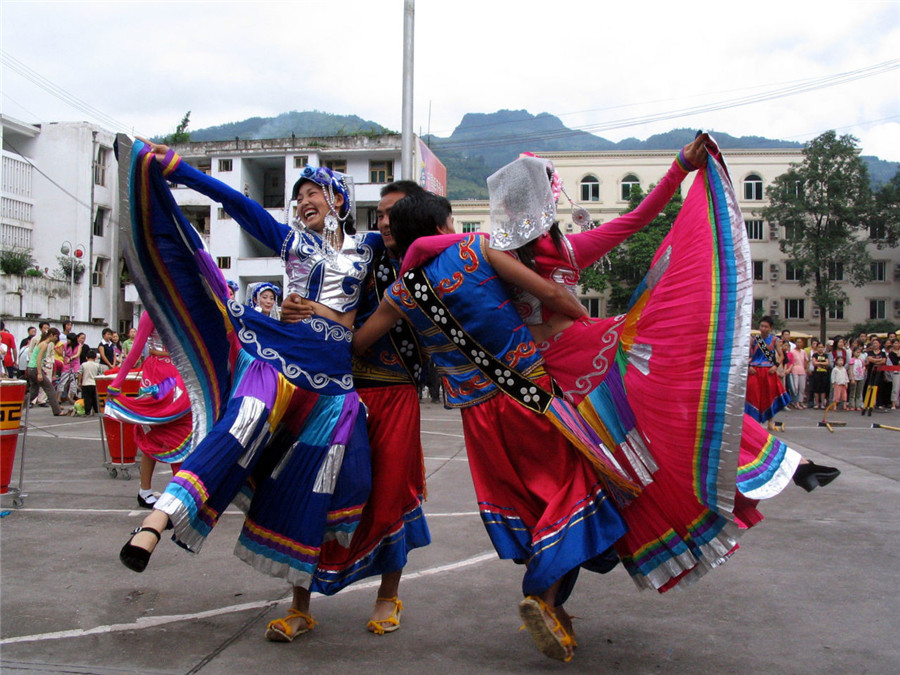
Yi Ethnic Dance Dage (彝族打歌) is a traditional dance from Weishan Yi and Hui Autonomous County (巍山彝族回族自治县), Yunnan Province (云南省), and one of China’s National Intangible Cultural Heritages.
Also known as “Tiao Shange” (跳山歌), “Tiaoge” (跳歌), or “Tiaosheng” (跳笙), this dance has been recorded as early as the Qing Dynasty (清代) Jiaqing period in Records of Jingdong Zhili Ting (《景东直隶厅志》).
Dage is usually performed during Spring Festival (春节), the Lantern Festival (小年/农历正月十五), the Torch Festival (火把节), as well as at weddings and gatherings. Traditionally, villagers dance all night around a bonfire.

On June 7, 2008, Yi Ethnic Dance Dage was approved by the State Council of the People’s Republic of China (中华人民共和国国务院) to be inscribed into the second batch of the National Intangible Cultural Heritage List, with the project code Ⅲ-70.

Historical Origins

The tradition of “Tage” (踏歌) dates back to the Qin and Han Dynasties (秦汉时期). Besides the lusheng (芦笙), flutes and sanxian (三弦) were also used for accompaniment. Lyrics became an important component, shaping Dage into a comprehensive art form that integrated singing, dancing, and music.

During the Sui and Tang Dynasties (隋唐), especially the Tang period, “Tage” flourished. From the Yuan Dynasty (元代) onward, it gradually disappeared in Central China, but survived and developed among ethnic groups in Southwest China, especially in Yunnan.

In the Ming Dynasty (明代), Han migration to Yunnan influenced the Yi language, leading to borrowing of Chinese words. By the Qing Dynasty, the term “Dage” (打歌) began to be widely used.

After the founding of the People’s Republic of China, Yi Ethnic Dance Dage experienced a revival, though it suffered setbacks during the Cultural Revolution. Following the Third Plenary Session of the 11th Central Committee of the Communist Party of China, it was revitalized and regained popularity, appearing both in folk celebrations and formal cultural events.

Dance Features

Performance Forms

According to music, singing style, dance steps, and customs, Dage in Weishan can be divided into five main types:

  1. Lusheng- and flute-based, without broadswords, found in Weibao Mountain Township (巍宝山乡), Wuyin Township (五印乡), Niujie Township (牛街乡), and Qinghua Township (青华乡).
  2. Fast-tempo lusheng and flute, with broadsword movements, represented by Qingyun Village (青云村) of Ma’anshan Township (马鞍山乡) and also seen in Zijin Township (紫金乡).
  3. Lusheng with broadsword dances, minimal flute, found in Xiaosanjia Village (小三家) of Dacang Town (大仓镇) and Huiming Pasture (惠明草场).
  4. Mixed styles from Wuyin, Ma’anshan, and Dacang, with rapid rhythm and varied steps, represented by A Duo Village (阿朵村) in Yunhe Village Committee (云鹤村委会).
  5. Performed with sanxian accompaniment instead of lusheng or flute, lyrics sung in Chinese rather than Yi language, found in Zhongyao Village (中窑村) of Qingyun Township.

Musical and Dance Characteristics

The singing includes tunes for weddings, festivals, mourning, and temple fairs, structured in four-, six-, eight-, ten-, or twelve-line stanzas, often with metaphorical language. Dance movements vary regionally, with Ma’anshan styles emphasizing gestures such as “sixteen-step swing,” “three turns,” “foot hooks,” etc.

Dance steps include forms such as “Straight Song” (直歌), “Through Flowers” (穿花), “Amei Dance” (阿妹跳), “Inverted Song” (倒置歌), “Three Hand Waves” (三摆手), “Foot Jump” (脚跳), “Feeding Pigs Song” (喂猪歌), and “Four Hand Waves” (四摆手).

Thematic Content

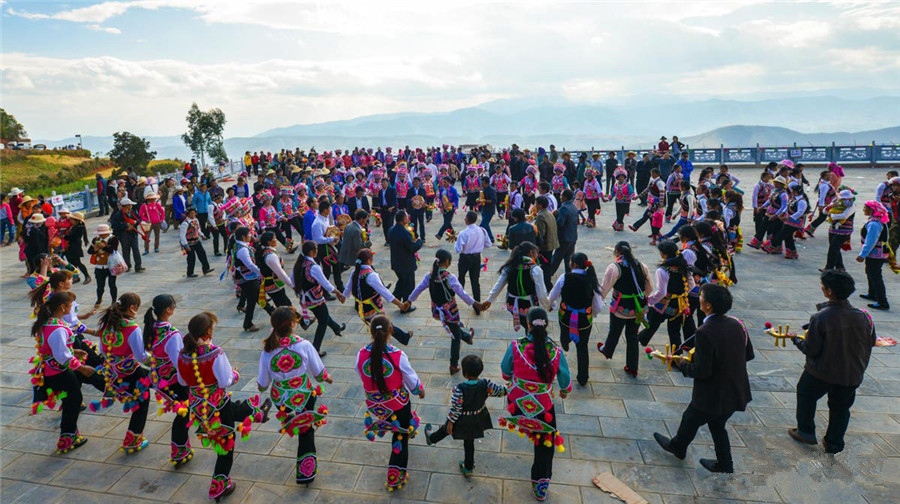
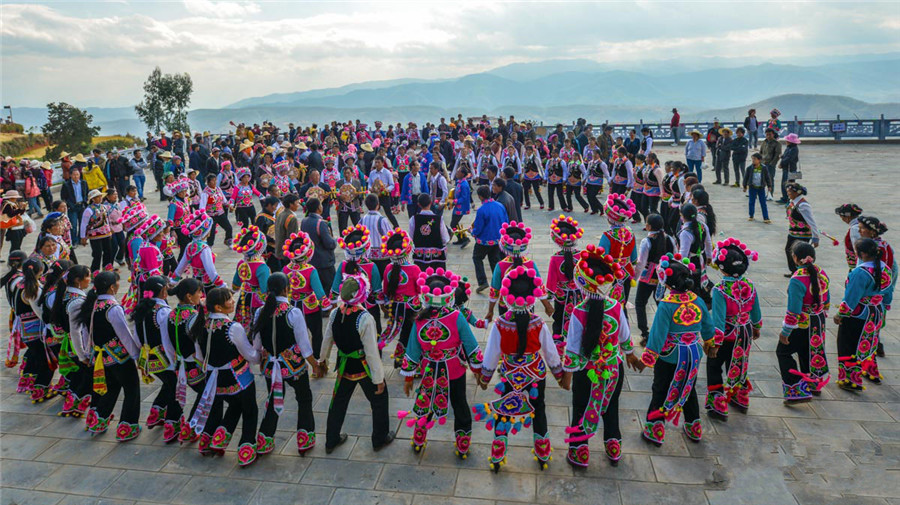
Performances usually feature men and women in semicircles or teams of hundreds, led by a “song leader” (歌头) playing lusheng to call dancers together. Participants sing, dance, and gradually form circles around the fire, with elders leading first, followed by youths. As the dance intensifies, lyrics often shift from daily life to love themes.

Inheritance and Protection

Cultural Value

Yi Ethnic Dance Dage plays an essential role in Weishan’s social life, being indispensable in festivals, weddings, funerals, and ancestral rituals. It embodies the Yi people’s cultural traditions and has significant research value for sociology and folklore studies.

Current Status

Under modern cultural influences, Dage faces risks of decline and requires protection.

Representative Inheritors

  • Cha Chunmei (茶春梅, 1962– ): Third batch of national-level representative inheritors.
  • Zi Sheng (字升, 1939– ): Provincial-level representative inheritor from Weishan Yi and Hui Autonomous County.

Protection Measures

  • In 2019, the Weishan County Cultural Center (巍山彝族回族自治县文化馆) was designated as the protection unit.
  • In 2020, cultural transmission activities were carried out in schools, with representative inheritors teaching children.
  • In 2023, the protection unit passed national evaluation.

Social Influence

Major Events

  • In March 1957, the Qingyun Dage Team from Weishan performed at the 2nd National Folk Music and Dance Showcase in Beijing.
  • In September 1987, a 12-member Weishan Yi farmers’ amateur Dage troupe was invited by the Japan Foundation to perform in Japan.

Honors and Recognition

  • In 1986, the International Organization of Folk Art listed Yi Ethnic Dance Dage among the “Top Ten Global Folk Dances.”
  • In October 2006, during the Chinese Folk Song and Dance Festival in Beijing, Dage was praised as “the most difficult dance steps to learn.”

Related Categories