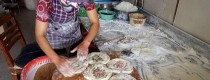
Jiang Shimai: A Guardian of Lahu Ethnic Costume and Inheritor of Lancang’s Cultural Heritage
Basic Background and Learning Journey
Jiang Shimai (蒋石妹), a Lahu ethnic woman (拉祜族女性) born in 1943 (1943年) in Mengbin Village, Donglang Township, Lancang County, Pu’er City, Yunnan Province (云南省普洱市澜沧县东朗乡勐滨村), is a second batch of provincial-level intangible cultural heritage representative inheritor (第二批省级非物质文化遗产代表性传承人) (recognized in 2002) for Lahu ethnic costume craftsmanship (拉祜族服饰制作技艺). A lifelong tailor, she has mastered the art of designing, cutting, embroidery, and decorating traditional Lahu garments since age 12, when she began learning from her mother. For over six decades, she has single-handedly crafted outfits for 305 people across 35 households in her village—each garment’s every step, from design to finishing, bearing her personal touch. Her work, celebrated for preserving Lahu identity through fabric and thread, has earned her the title "Living Fossil of Lahu Costume."
Learning Journey: A Legacy Woven in Thread
Jiang’s connection to Lahu costume is rooted in family and community:
- Childhood (童年时期): Born into a Lahu stronghold, she absorbed the tribe’s cultural ethos and textile traditions from birth, surrounded by the hum of looms and the rustle of indigo-dyed cloth.
- Adolescence (青少年时期): At 12, her mother formally initiated her into the craft, transmitting skills passed down through generations of Lahu women—a tradition of "mothers teaching daughters"that safeguards the art’s purity.
- Adulthood (成年时期): Over decades, she honed her craft amid life’s demands, perfecting techniques while serving her community. Her dedication transformed her into a local legend, revered for her ability to fuse tradition with unwavering precision.
Artistic Characteristics and Representative Works
Technical Mastery: From Design to Decoration
Jiang’s craft is defined by meticulous attention to detail and reverence for tradition:
- Material Selection: She sources premium local cotton and linen, treating fibers through soaking, pounding, and combing to ensure softness and durability. Natural dyes—extracted from indigo, madder, and other plants—are used to create vibrant, long-lasting hues.
- Full Craftsmanship: Proficient in every stage, from pattern drafting to final stitching, she employs techniques like:
- Embroidery: Mastering tiaohua(挑花, cross-stitch) and tiehua(贴花, appliqué) to create intricate geometric and floral motifs.
- Weaving: Using a traditional loom setup with wooden stakes and a "comb-like" frame, she hand-weaves tight, durable fabric by coordinating hand, eye, and rhythm.
- Decoration: Inlaying silver bubbles (yinpaopao) and plates (yinpai) along collars and front plackets, and adding colorful silk trims to cuffs and hems.
- Stylistic Fusion: Blending traditional Lahu aesthetics with subtle modern touches, her designs balance heritage and contemporary appeal.
Representative Works: Garments of Identity
Jiang’s creations are both functional and culturally symbolic:
| Work Type |
Examples |
Features |
Significance |
| Women’s Garments |
Lahu Na (Black Lahu) Long Gowns, Lahu Xi (Yellow Lahu) Short Skirts |
Black-dyed cotton base with red/white trims; silver bubbles adorning collars; right-side slits for mobility |
Daily wear for Lahu women; embody tribal identity and practicality |
| Headwear |
Lahu Na Headscarves, Lahu Xi Headbands |
Scarves draped with triangular tails (Lahu Na) or simple bands (Lahu Xi); woven with symbolic patterns |
Distinguish Lahu subgroups; preserve cultural markers |
| Accessories |
Silver Bubbles, Earrings, Bracelets |
Handcrafted silver pieces sewn onto garments or worn as jewelry |
Enhance attire’s grandeur; symbolize wealth and status |
| Brocades & Ribbons |
Lahu Brocade, Colored Belts |
Intricate patterns woven with natural dyes; used for sashes and decorative trim |
Artistic pinnacle of Lahu textiles; highly collectible |
Cultural Contributions to Lancang and Pu’er
Safeguarding a 600-Year Legacy
As a provincial inheritor, Jiang has preserved Lahu costume—a craft with roots in ancient migrations and 600 years of weaving history. Her studio, a living archive, hosts workshops where she teaches fiber processing, weaving, and embroidery, ensuring the art’s survival.
Weaving Identity and Economy
- Cultural Pride: Her garments, worn during festivals and daily life, reinforce Lahu identity. Villagers note, "Her dresses make us feel connected to our ancestors."
- Livelihood Support: Her work provides steady income for her family and inspires younger women to take up the craft, boosting local employment.
Educating the Next Generation
Jiang actively engages youth:
- Family Workshops: She teaches nieces and village girls at home, emphasizing, "Every stitch carries our history."
- School Programs: Partnering with local schools, she integrates Lahu costume into "intangible heritage" curricula, fostering cultural pride.
Cultural Context of Lahu Costume in Lancang
Roots in Migration and Adaptation
Lahu costume reflects the tribe’s journey:
- History: Originating from northern nomadic traditions, Lahu attire evolved through interactions with Han and Dai cultures, retaining unique elements like black-dyed cotton and silver decor.
- Status: Recognized as a Yunnan Provincial Intangible Heritage (2008), Lahu costume is a cornerstone of Lancang’s cultural identity.
More Than Cloth
Lahu garment is cultural glue:
- Identity: Black, the tribe’s favored color, symbolizes dignity; silver bubbles represent prosperity.
- History: Motifs like "curved lines" (for mountain dwellings) and "triangles" (for fields) narrate daily life and values.
- Economy: Once purely utilitarian, it now drives tourism and creative industries.
Current Challenges and Preservation
Challenges
- Aging Artisans: Few young people master the craft’s complexity.
- Market Pressures: Machine-made textiles undercut handmade quality.
Protective Efforts
- Policy Support: Jiang is a provincial inheritor; her work is in Pu’er’s Intangible Heritage Catalog.
- Tourism Integration: "Non-heritage + tourism" initiatives (e.g., festival exhibitions) boost visibility.
- E-Commerce: Platforms like Taobao sell her pieces, connecting Lahu culture to global audiences.
Conclusion
Jiang Shimai is more than a tailor—she is a guardian of Lahu soul (拉祜族文化的精神守护者). Her hands, calloused by six decades of stitching, have woven history, identity, and art into every garment. As a provincial inheritor, she proves tradition thrives when shared—ensuring Lahu costume’s legacy will endure for generations.To learn more, contact the Lancang County Culture and Tourism Bureau (澜沧县文化和旅游局) or visit Mengbin Village to witness Jiang’s craft and the living heritage of Lahu costume.