Yunnan Guide
  • Yunnan Guide
  • Travel Tips
  • Tour Planing
  • Ethnic Culture
  • Yunnan Climate
  • Golf Courses
  • Travel Articles
  • Li Nake - Representative Inheritor of Lahu "Baiwu" Dance in Lancang County, Puer 

    04/06/2019Brittany Tian6145 wordsAbout 21 minutes

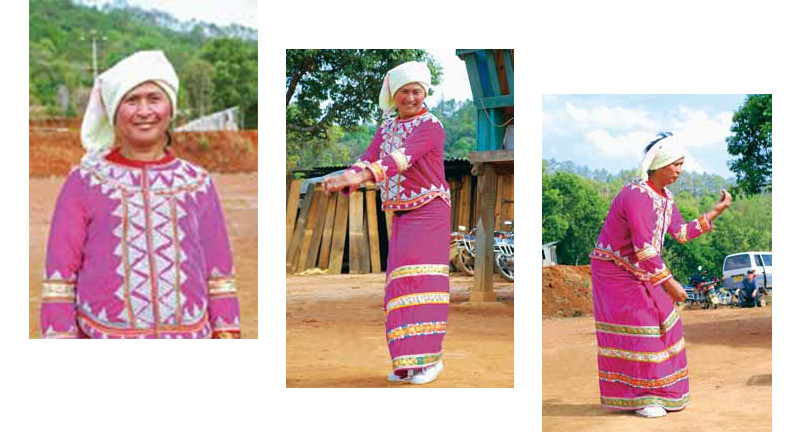
    Li Naluo (born 1976) from Laodabao Village Group (老达保村民小组), Menggen Village (勐根村), Jiujing Township (酒井乡), Lancang Lahu Autonomous County (澜沧拉祜族自治县), Pu’er City (普洱市), is the representative inheritor of the municipal-level Intangible Cultural Heritage project: Lahu Bai Dance (拉祜族摆舞).

    Her career spans the crucial transition of this traditional dance — from spontaneous rural entertainment to systematic cultural protection. As a living embodiment of the Lahu saying “If you can talk, you can sing; if you can walk, you can dance”, Li Naluo has spent over five decades innovating and preserving Bai Dance, bringing it from village fields to the stage of CCTV’s Spring Festival Gala. She is celebrated as the “Nightingale of the Lahu Mountains.”


    Cultural Awakening and Artistic Training

    Born into a Lahu musical family, Li Naluo was immersed in Bai Dance (摆舞) traditions from childhood. At 13, she mastered guitar singing; at 16, she began composing songs; and at 20, she apprenticed under master folk artist Zhang Zhasi (张扎思), where she systematically studied the dance’s signature “plowing-arm swing” and “three steps with a foot stomp.”

    Her performance style conveys both the grace and resilience of Lahu women, using fluid hip movements and shoulder waves. She blends the solemnity of Kuota Festival (扩塔节, a ritual celebration) with the joyous harvest atmosphere of Zhalete (扎勒特), creating a rustic yet elegant artistic expression. Particularly skilled in dialogue between elephant-foot drums (象脚鼓) and lusheng (芦笙), she emphasizes the storytelling nature of Bai Dance.

    In 2005, she joined the Yae Art Troupe (雅厄艺术团), leading over 100 villagers out of the mountains and onto professional stages.


    Core Skills and Cultural Innovation

    1. Guardian of Traditional Dance

    • Authenticity of Movements: She preserves 12 agricultural dance gestures such as “sowing,” “weeding,” and “harvesting.” Her innovative “deer hoof triple step” and “dust-sweeping tail kick” have been recorded in the Compendium of Chinese Ethnic Dances: Yunnan Volume (《中国民族舞蹈集成·云南卷》).

    • Integrity of Rituals: She strictly maintains nine ritual steps — from “inviting the gods” to “farewell ceremony” — especially during Kuota Festival (扩塔节), ensuring the spiritual essence of Bai Dance remains intact.

    2. Innovator of Modern Expression

    Breaking geographical limits, Li choreographed new works like “Songs of Border Trade” (边贸欢歌) and “A New Era of Happiness” (幸福新时代). For instance, in “Songs of Border Trade,” she fused modern tap steps with traditional Bai Dance, blending electronic music and lusheng rhythms to portray the prosperity of frontier trade. This work won Third Prize for Choreography at the 2019 Yunnan Ethnic Dance Festival.

    She also pioneered the “separation of dance and music” technique, where dancers focus on movement narratives while musicians play independently, enriching performance layers.


    A Three-Dimensional Transmission System

    • Family Transmission: Her daughter, Zhang Mali (张麻利), graduated from Yunnan Arts University (云南艺术学院) and now represents the fourth generation of Bai Dance inheritors.

    • School Programs: At Menggen Primary School (勐根村完小), she introduced Bai Dance into the curriculum, even adapting “The Story of the Bees” into student exercises. Over 500 youths have been trained.

    • Community Teaching: At Laodabao Village (老达保), she established the “Li Naluo Bai Dance Training Center” (李娜倮摆舞传习所), using traditional “firepit teaching” to mentor 41 disciples. Her lead apprentice, Bao Natuo (鲍娜妥), can now independently perform core works such as “Rejoicing in Unity.”


    Cultural Promotion and Modern Innovation

    1. A Cultural Ambassador on National Platforms

    • Recognition: In 2025, Li was honored as one of China’s “Most Beautiful Women Strivers” (最美巾帼奋斗者). Her performances have been featured on CCTV’s Homeland China (《乡土中国》), and her Douyin (抖音) teaching videos have exceeded 2 million views.

    • Awards: In 2019, she led her troupe to win the Silver “Caiyun Award” (彩云奖) with “By the Nanting River” (南汀河畔). In 2022, she performed “Dance into Spring” (摆出一个春天) at CCTV’s Spring Festival Gala, introducing Bai Dance to a nationwide audience.

    2. Innovator of Cultural Tourism

    • Scenic Integration: At Laodabao Scenic Area (老达保景区), she designed an immersive Bai Dance experience where visitors try traditional costumes, learn dance steps, and rehearse short performances. Over 20,000 tourists participate annually, boosting local incomes by an average of ¥1,500 per household.

    • Festival Revitalization: Each year during the Lahu Torch Festival (拉祜族火把节), she organizes the Laodabao Bai Dance Cultural Festival (老达保摆舞文化节), creating cross-cultural performances such as “Harmony of Yi and Han” (彝汉同辉), which attracts over 800,000 online viewers.


    Heritage Protection and Policy Practice

    1. Systematic Safeguarding

    • Digital Archiving: In partnership with Yunnan Minzu University (云南民族大学), Li created 3D motion archives of 20 key movements.

    • Repertoire Revival: She re-staged endangered plays like “The White Elephant’s Rescue” (白象救主) and “The Stag’s Gratitude” (马鹿报恩), enhanced with modern stage lighting.

    2. Policy and Social Collaboration

    • Funding: Provincial heritage funds supported the training center, recording equipment, and stipends for apprentices.

    • Advocacy Troupe: She founded the Nanting River Bai Dance Troupe (南汀河摆舞宣讲团), integrating cultural policy into performances. Their documentary series “National Unity as One Family” (民族团结一家亲) was recognized by Yunnan’s Department of Culture.


    Challenges and Breakthroughs

    Despite her success, Li faces two major challenges:

    • Generational Gap: Bai Dance requires 10–15 years of training and patience. Most disciples are around 45 years old, with only three under 30.

    • Market Limitations: Sacred rituals have a limited audience, and while cultural products sell, profits remain low.

    Her solutions:

    • Technology: Partnering with Huawei’s “Digital Heritage” project, she developed Bai Dance VR lessons, attracting over 3 million views on Learning Power (学习强国).

    • Cross-Genre Fusion: She released the album “New Rhythms of the Nanting River” (南汀河新韵), where the single “Firepit Conversations” (火塘夜话) gained over 6 million plays on Douyin.

    • Youth Training: At the Lancang Youth Center (澜沧县青少年活动中心), she runs weekend workshops combining games and role-play, training over 120 young students.


    Cultural Value and Contemporary Significance

    Li Naluo’s lifelong practice carries threefold value:

    • Historical Research: Preserved drum scriptures and rituals serve as primary evidence for studying Lahu migration and religion.

    • Social Cohesion: In multi-ethnic Lancang (澜沧县), Bai Dance strengthens bonds among Lahu, Han, and Wa communities. Her troupe was recognized as a “Yunnan Demonstration Team for Ethnic Unity.”

    • Educational Innovation: Her model of “traditional skills + modern education” has been promoted by Yunnan’s Department of Culture across all 16 prefectures.

    As Li Naluo says:

    “Bai Dance is not just body movement — it is the cultural code engraved in the bones of the Lahu people.”

    Balancing tradition with innovation, she has carried Bai Dance from remote villages to the international stage, making it a vivid expression of the diversity and unity of Chinese civilization.

    Li Nake - Representative Inheritor of Lahu "Baiwu" Dance in Lancang County, Puer 

    ENQUIRY

    Have a question before booking? Message us to learn more.
    Click to change

    Related Categories