Yongxing Dai Ethnic Town in Yongren County, Chuxiong

Yongxing Dai Ethnic Town in Yongren County, Chuxiong

Yongxing Dai Ethnic Town (永兴傣族乡) is located in the Yongren County (永仁县), in the northern part of Chuxiong Yi Autonomous Prefecture (楚雄彝族自治州), Yunnan Province (云南省). It lies on the southern bank of the Jinqie River (金切江) and shares borders with Renhe District (仁和区) of Panzhihua City (攀枝花市) to the east, Zhonghe Town (中和镇) and Weidi Township (维的乡) to the south, Dayao County (大姚县) to the west, and is separated from Huaping County (华坪县) of Lijiang City (丽江市) by the Jinsha River (金沙江) to the northwest. With an area of 533.96 square kilometers, Yongxing is home to a population of 11,874 (as of 2019).

Basic Information

Geographic Location

Yongxing Dai Ethnic Town is situated in the northern part of Yongren County (永仁县), bordered by Panzhihua City (攀枝花市) in the east and Dayao County (大姚县) to the west. The area has a strategic location with proximity to various neighboring regions, including Lijiang (丽江) and Panzhihua (攀枝花).

Administrative Changes

Historically, the region was known as Ma Cheng (马称者车马) during the Yuan and Ming Dynasties (元明时期). It became part of Yongren County (永仁县) during the Republic of China era (民国), and after several administrative changes, it was officially named Yongxing Dai Ethnic Town in 1987.

The region underwent further reorganization in 2005, when Wanma Dai Ethnic Town (万马傣族乡) was dissolved, and four villages—Yizi (迤资), Xibing (昔丙), Lagu (拉姑), and Yujue (鱼爵)—were incorporated into Yongxing Dai Ethnic Town.

Population

As of 2019, the registered population of Yongxing Dai Ethnic Town is 11,874. The population is primarily composed of Dai (傣族), Yi (彝族), and Hui (回族) ethnic groups, with the Dai people making up the majority.

Geography and Climate

Terrain and Elevation

The terrain of Yongxing Dai Ethnic Town is characterized by high mountains and deep valleys. The region has a significant elevation difference, with the highest point at Tea Mountain (茶尖石山) reaching an altitude of 2,796 meters, and the lowest point at the Jinsha River (金沙江) in the Baima River area at 1,010 meters.

Climate

The climate in Yongxing is distinctly seasonal, with clear seasons marked by warm and rainy summers, and cool, dry winters. The region experiences ample sunlight and has an annual average temperature of 17.8°C, with annual rainfall averaging 800mm. The high-altitude areas enjoy a cool climate, while the river valley areas tend to be warmer and drier.

Hydrology

Yongxing Dai Ethnic Town has three main rivers: Wanma River (万马河), Yongxing River (永兴河), and Baima River (白马河), which collectively span 71.6 km. The Wanma River is the largest and flows through several villages, including Yizi (迤资) and Xibing (昔丙), with a total length of 17 km. The rivers play a vital role in the local economy and culture.

History and Culture

Historical Background

The name Yongxing (永兴) originated from the Dai language (傣语), and the region was initially called Aikuai (挨块). In 1934, it became a trading center and was renamed Yongxing, symbolizing "eternal prosperity." Over the centuries, the region has undergone multiple administrative transitions, from the Yuan and Ming Dynasties (元明时期) through the Qing Dynasty (清朝) and into modern times.

Ethnic Culture

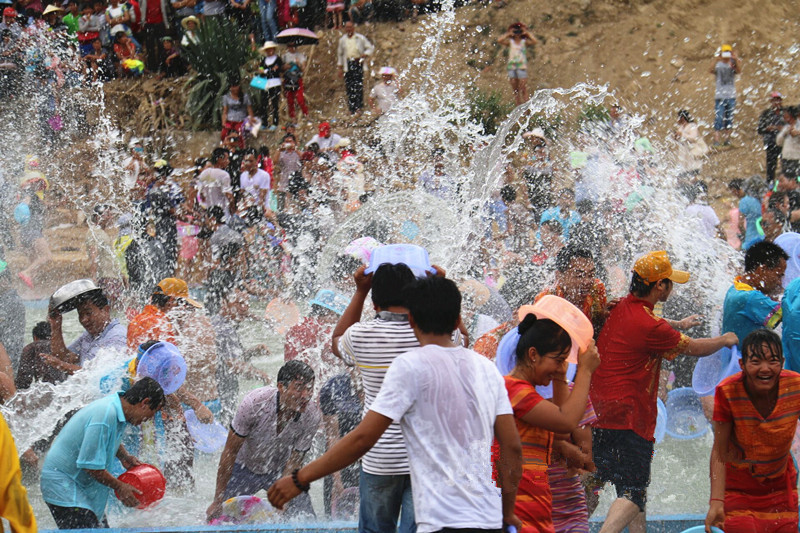
The town is predominantly inhabited by the Dai (傣族), with smaller populations of Yi (彝族), Hui (回族), and other ethnic minorities. The Dai culture is celebrated through traditional festivals, dance, music, and art, including Dai New Year (傣族新年) and the Water Splashing Festival (泼水节). The region is renowned for its Bai Mahe Rice (白马河大米) and rich Dai architecture.

Economy and Industry

Agriculture

The primary agricultural products in Yongxing Dai Ethnic Town are rice, corn, wheat, and various vegetables. Additionally, tobacco and silk production play a significant role in the local economy. The area has irrigated rice fields, which are crucial for the region's food production.

Industry

In terms of industry, Yongxing Dai Ethnic Town is home to several mining operations, notably the Tuan Mountain Copper Mine (团山铜矿) and Yongxing Coal Mine (永兴煤矿), as well as hydroelectric power plants. These industries contribute to the local economy alongside agriculture.

Livestock Farming

Yongxing also has a strong livestock sector, with significant numbers of pigs, cattle, sheep, and poultry being raised. The livestock industry produces a substantial amount of meat for local consumption and market sales.

Key Tourist Attractions

Scenic Areas

  • Yongxing Village (永兴村): The heart of the Dai community, offering visitors the chance to explore traditional Dai culture and architecture.

  • Tea Mountain (茶尖石山): A beautiful and tranquil area ideal for hiking and scenic views.

  • Wanma River (万马河): A river running through the region, offering opportunities for boat trips and fishing.

Festivals and Cultural Events

  • Dai New Year (傣族新年): The biggest celebration in the Dai community, featuring traditional dances, music, and the famous water-splashing ritual.

  • Water Splashing Festival (泼水节): A vibrant celebration held during the Dai New Year, where people splash water on each other to celebrate the arrival of the New Year and to wash away bad luck.

Practical Information

Transportation

  • Yongxing Dai Ethnic Town is accessible by road from Chuxiong (楚雄) and Panzhihua (攀枝花). The region is served by several local roads and highways, providing connectivity to major cities.

  • Public transportation is available from Yongxing to surrounding areas, with bus services running regularly.

Accommodation

Visitors can stay in Yongxing Village or nearby Chuxiong (楚雄), where accommodations range from traditional guesthouses to more modern hotels. For a more immersive cultural experience, staying with a local Dai family is also an option.

Related Categories