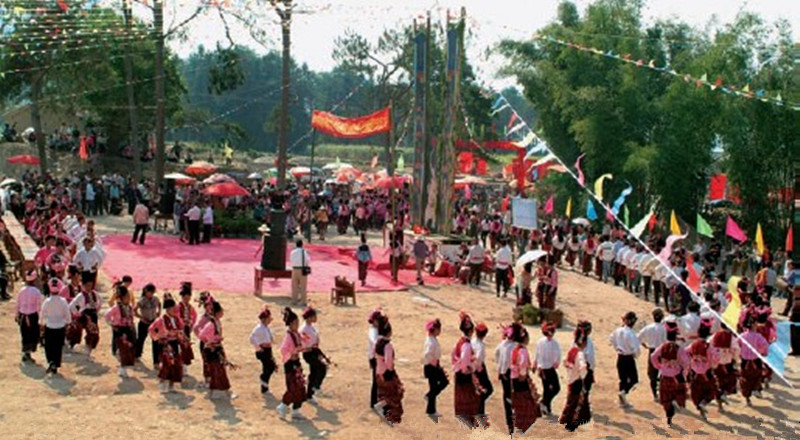
Achang (阿昌族) dance is a traditional folk dance system from Dehong (德宏) and Baoshan (保山) in Yunnan (云南), encompassing representative forms such as Deng Wolu (蹬窝罗) and Green Dragon and White Elephant Dance (青龙白象舞). Deng Wolu, the oldest comprehensive dance form, was listed as a provincial intangible cultural heritage in 2006. Its movements combine “free step” and “sparrow step” body languages and are often performed around the Alu Wolu (阿露窝罗) symbol during festivals and rituals. Green Dragon and White Elephant Dance is performed during the Huijie Festival (会街节), where male youths play elephant-foot drums and circle the Green Dragon and White Elephant, while female dancers follow the drum rhythm, creating a lively and festive atmosphere. Contemporary adaptations include fitness exercises incorporating traditional dance elements.
Heritage Level: Provincial Intangible Cultural Heritage (2006)
Origin: Creation Myth Era
Regions: Dehong (德宏), Baoshan (保山), Yunnan (云南)
Festival Associations: Huijie Festival (会街节), Wolu Festival (窝罗节)
Originating from the Achang creation myth, Deng Wolu was created to honor Heaven Deity Zhe Pama (遮帕麻) and Earth Mother Zhe Mima (遮咪麻). Its performance sequence includes:
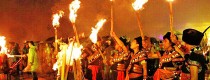
Performances typically occur around fire pits or totem poles, featuring vigorous, rustic movements, including signature steps like “Tiger Descends the Mountain Step (猛虎下山步)”. As of 2024, the full performance sequence of Deng Wolu is preserved in Lianghe County (梁河县) and Longling County (龙陵县).
Performed during the Huijie Festival, this group dance features male dancers forming a circle with elephant-foot drums, while female dancers move around to the drum beats, creating an interactive “men drum, women circle” format. The rhythm is moderate, fostering a lively and festive atmosphere.
Fitness Adaptation: In 2017, the Lianghe County Cultural Center (梁河县文化馆) adapted the “Deng Jump” movements from Deng Wolu into elderly fitness exercises, retaining core elements like arm swings and squats, integrated with modern fitness rhythms.
Cultural Space: The Wolu Ground (窝罗场) serves as a fixed performance venue. During festivals, it becomes a central area for people wearing ethnic costumes and performing dragon and lion dances.
Trinity Integration: Combines poetry, singing, and dancing, often accompanied by epic creation chants.
Props: Elephant-foot drums, Green Dragon and White Elephant models.
Costumes: During festivals, Achang people gather at Wolu Grounds in traditional festive attire.
Achang dance (阿昌族舞蹈) embodies the cultural heritage, mythological traditions, and communal spirit of the Achang people in Yunnan (云南). With both historical continuity and modern adaptations, such as fitness exercises, it remains a vibrant expression of ethnic identity, central to festival celebrations and community life in regions like Dehong (德宏) and Baoshan (保山).