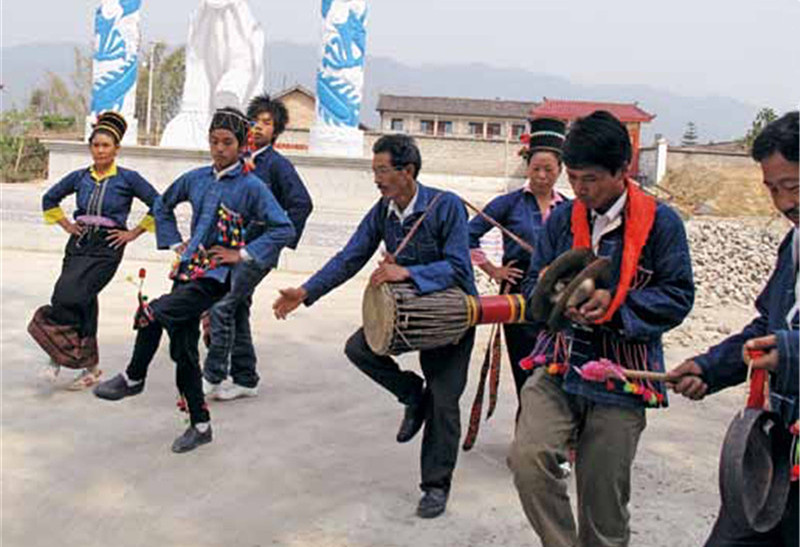
Li Jiazhong (1965 – ) is a county-level representative inheritor of the Achang Dengwolu Dance (阿昌族蹬窝罗), a cultural heritage of Henglu Village, Longshan Town (龙山镇横路村), Longling County (龙陵县), Baoshan City (保山市), Yunnan Province (云南省). His artistic career spans the critical period when this traditional western Yunnan dance evolved from folk entertainment to systematic cultural preservation. As the 14th-generation inheritor of Achang Dengwolu (阿昌族蹬窝罗), Li has devoted over half a century to preserving and innovating this ancient art, bringing it from mountain villages to national cultural stages, earning the title “Guardian of the Dance Fire by the Longjiang River.”
Born into an Achang family in Henglu Village, Li was immersed in Dengwolu culture from childhood.
At age 15, he apprenticed under local Achang Dengwolu master Zhao Jiacui (赵加翠) for three years, mastering the Nine-Board, Thirteen-Tune singing system (九板十三腔) and Han-Yi dialect performance (汉语彝腔).
His style blends Achang “jumping song” traditions (跳歌) with structured Han opera techniques, forming a robust, natural, and expressive style, especially skilled in metaphorical storytelling (比兴) and ensemble singing (帮腔) to heighten dramatic tension.
In 1985, representing Longling County at the Baoshan City Arts Festival, he won Second Prize with Hunting Dance (《狩猎舞》), marking the start of his professional career.
Ritual Procedures: Strictly follows ancient rituals such as Lighting Ceremony, Garment Offering, Welcoming the Saint, Sending-off Ceremony (团灯、卦衣、迎圣、送灯), presiding over solemn springtime sacrifices.
Example: During funerals, he leads 12 ceremonial processes including Ancestor Worship, Death Tune Performance, and Mingjia Tune Execution, with melodies like Daguoshan (大过山) and Xiaoguoshan (小过山) believed to guide souls to the afterlife.
Dance Characteristics: Incorporates martial arts-inspired routines such as “Four-Gate Duels” (四门斗) and “Plum Blossom Formation” (梅花阵), using techniques like “Horseback Step” (alternating feet with subtle body tremors) and “Blade Flower Technique” (刀花技法) to vividly depict historical battles.
Expanded traditional Dengwolu storytelling, creating new works such as Celebrating the Harvest (《庆丰收》) and Wedding Dance (《迎亲舞》).
In Border Trade Song (《边贸欢歌》), combined Achang “jumping song” with modern disco steps, using tongue clicks and shoulder shakes to depict border trade prosperity. This piece won the Caiyun Silver Award (彩云奖) at the 2019 Yunnan Ethnic Folk Arts Festival.
Innovated “Dengwolu Strike-and-Sing Separation” technique, striking the reed with bamboo sticks in the left hand while plucking the string with the right, enriching melodic layers.
Family Transmission: His son Li Zhengguo (李正国) trained under him from childhood and is now a key member of the Longling Achang Arts Troupe, skilled in Dengwolu instrumental performance.
School Outreach: Long-term Dengwolu courses at Longshan Town Central Primary School, adapting traditional works like The Wolf is Coming (《狼来了》) into “Dengwolu Rhythm Exercises”, cultivating over 200 young inheritors.
Community Teaching: Established the Li Jiazhong Dengwolu Workshop (李家忠蹬窝罗传习所) in Henglu Village, using hearth-side teaching, training over 50 apprentices, including the 15th-generation inheritor Luo Chaofu, who can independently perform core works such as Battle of Tongguan (《战潼关》).
Official Recognition: In 2017, selected as a Baoshan City-level representative inheritor; performances featured on CCTV’s Xiangtu program (《乡土》), TikTok teaching videos exceeded 1 million views.
Awards: Led a team in the 2019 Yunnan Ethnic Folk Arts Festival; performance Beacon Fire at Baicaoling (《百草岭烽火》) won the Caiyun Silver Award, and he received Best Performance Award.
Scenic Application: Designed Dengwolu Immersive Experience Center at Longjiang Grand Bridge Scenic Area (龙江特大桥景区), offering mask painting, costume trials, and simple performances for over 30,000 visitors annually, increasing local income by 1,000 RMB per capita.
Festival Empowerment: Organizes Longling Dengwolu Cultural Festival (龙陵蹬窝罗文化节) during the annual Achang Alu Wolu Festival (阿露窝罗节), creating cross-genre plays like Yi-Han Harmony (《彝汉同辉》), attracting over 500,000 online viewers.
Digital Archiving: Partnered with Yunnan Minzu University to create a 3D scanned digital archive of 20 core Dengwolu melodies, developing a VR teaching system on Study Xi (学习强国).
Play Revivals: Led restoration of endangered pieces, enhancing stage lighting and set design for modern performances.
Funding: Secured provincial heritage protection funds for workshop construction, equipment purchase, and monthly stipends (500 RMB) for apprentices.
Mechanism Innovation: Established Huashan Dengwolu Propaganda Team, integrating Party policies into Dengwolu performance; produced Carrying the National Emblem into Yi Villages (《背着国徽进彝寨》), recognized by the Yunnan Provincial Department of Culture.
Challenges:
Talent gap: learning cycle 8–10 years; average apprentice age 45, only 2 under 30.
Market limitations: high-end ceremonial plays limited by ritual constraints; cultural products popular but low-profit.
Innovative Responses:
Technology Empowerment: Collaborated with Huawei’s Digital Intangible Heritage project, developing VR teaching systems with over 2 million views.
Cross-Genre Integration: Combined Dengwolu modes with modern music, releasing New Rhythms of Dengwolu (《蹬窝罗新韵》); the single Night Tales by the Hearth (《火塘夜话》) exceeded 5 million TikTok views.
School Engagement: Weekend Dengwolu workshops at youth centers using fun games + scenario acting, training over 80 students.
Historical Research: Preserved traditional percussion scores and rituals provide evidence for Ming-era Yiyang Opera (弋阳腔) transmission in Southwest China.
Cultural Cohesion: In multi-ethnic Longling County, Dengwolu Dance fosters unity among Achang, Han, Yi communities, earning Yunnan Model Team for Ethnic Unity and Progress recognition.
Educational Innovation: His “traditional skills + modern education” model has been promoted in 16 prefectures by the Yunnan Provincial Department of Culture and Tourism.
As Li Jiazhong says:
“Dengwolu is not just the sound of bamboo—it is the cultural DNA engraved in the bones of the Achang people.”
Through balancing tradition and innovation, he has spent half a century bringing Achang Dengwolu Dance from mountain valleys to the international stage, exemplifying the diverse unity of Chinese civilization.