
 7 Days GolfingTour
 8 Days Group Tour
 8 Days Yunnan Tour
 7 Days Shangri La Hiking
 11 Days Yunnan Tour
 6 Days Yuanyang Terraces
 11 Days Yunnan Tour
 8 Days South Yunnan
 7 Days Tea Tour
 8 Days Muslim Tour
 12 Days Self-Driving
 4 Days Haba Climbing
 Tiger Leaping Gorge
 Stone Forest
 Yunnan-Tibet
 Hani Rice Terraces
 Kunming
 Lijiang
 Shangri-la
 Dali
Dali
 XishuangBanna
 Honghe
 Kunming
 Lijiang
 Shangri-la
 Yuanyang Rice Terraces
 Nujiang
 XishuangBanna
 Spring City Golf
 Snow Mountain Golf
 Stone Mountain Golf





 What Our Customers Say?
 alt="Dali Erhai Lake Ecological Corridor from Xiaguan to Taoyuan"
/>
alt="Dali Erhai Lake Ecological Corridor from Xiaguan to Taoyuan"
/>
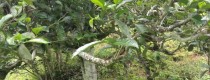
Common Alstonia Leaf (Alstonia Scholaris/Dengtaiye)
The Common Alstonia Leaf灯台叶 (Alstonia scholaris) is the dried leaf of the Alstonia tree, which belongs to the Apocynaceae family and the Alstonia genus. The branches are arranged in whorls, contain latex, and are hairless. The leaves are also arranged in whorls, and they can be obovate, lanceolate, spoon-shaped, or occasionally oval to elongated oval. The leaves are hairless, with a rounded, blunt, or slightly notched apex, occasionally acute or gradually pointed, and a wedge-shaped base. The flowering period of Common Alstonia Leaf is from June to November, and the fruiting period is from October to April of the following year. The Alstonia tree is commonly referred to as the lampstand tree, and its leaves are used medicinally, hence the name “lampstand leaf.”
Common Alstonia Leaf is distributed in southern and western Guangxi and southern Yunnan in China, as well as in Cambodia, Malaysia, India, Indonesia, subtropical regions of Australia, and the Philippines. It grows in low hilly areas with sparse forests and prefers moist, fertile soils. The propagation methods for Common Alstonia Leaf include seed propagation and tissue culture for rapid multiplication.
Scientific Classification:
- Family: Apocynaceae (Dogbane family)
- Genus: Alstonia
- Species: Alstonia scholaris (also known as Alstonia)
Botanical Description:
- Leaves: Opposite, lanceolate to elliptic, or spoon-shaped, sometimes ovate or long-ovate. The leaves are glabrous, with a rounded or slightly notched apex, and a wedge-shaped base.
- Flowers: Bloom from June to November.
- Fruits: Mature from October to April of the following year.
- Tree: Often referred to as the “lampstand tree” due to its medicinal leaves.
Distribution:
- Regions: Southern and western Guangxi, southern Yunnan in China, as well as in Cambodia, Malaysia, India, Indonesia, Australia (subtropical regions), and the Philippines.
- Habitat: Prefers moist, fertile soils in low hills and sparse forests.
Reproduction:
- Methods: Propagated by seeds and tissue culture (fast propagation).
Uses:
- Medicinal Value:
- Applications: Commonly used in formulations to treat bronchitis. It has good anti-inflammatory, expectorant, and cough-suppressing properties.
- Benefits: Economical and widely applicable medicinal herb.
- Ornamental Value:
- Appearance: The tree is valued for its attractive shape, elegant leaves, and white flowers. Post-flowering, the green leaves contrast with the red fruits, creating a visually appealing combination.
- Uses: Suitable for parks, gardens, streets, scenic areas, and landscaping due to its aesthetic appeal.
- Industrial Use:
- Wood: The tree trunk provides high-quality timber.
- Latex: The white latex can be processed into gum base for chewing gum.
Summary: Lampstand leaf (Alstonia scholaris) is a versatile plant known for its medicinal properties, ornamental appeal, and industrial uses. It thrives in subtropical regions and is valued both for its practical applications in medicine and its aesthetic qualities in landscaping.

