7 Days GolfingTour
 8 Days Group Tour
 8 Days Yunnan Tour
 7 Days Shangri La Hiking
 11 Days Yunnan Tour
 6 Days Yuanyang Terraces
 11 Days Yunnan Tour
 8 Days South Yunnan
 7 Days Tea Tour
 8 Days Muslim Tour
 12 Days Self-Driving
 4 Days Haba Climbing
 Tiger Leaping Gorge
 Stone Forest
 Yunnan-Tibet
 Hani Rice Terraces
 Kunming
 Lijiang
 Shangri-la
 Dali
Dali
 XishuangBanna
 Honghe
 Kunming
 Lijiang
 Shangri-la
 Yuanyang Rice Terraces
 Nujiang
 XishuangBanna
 Spring City Golf
 Snow Mountain Golf
 Stone Mountain Golf
Ghost Festival in Weishan County, Dali
Overview
- Chinese Name:大理巍山彝族七月半/鬼节
- English Name: Ghost Festival in Weishan County, Dali
- Location: Weishan County, Dali
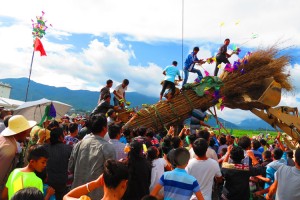
The Daoist classics refer to the fifteenth day of the lunar calendar as the Shangyuan (Upper Yuan), the fifteenth day of July as the Zhongyuan (Middle Yuan), and the fifteenth day of October as the Xiayuan (Lower Yuan). Therefore, the fifteenth day of July is known as the Zhongyuan Festival. It is said that from the first to the fifteenth day of July, the gates of the underworld are widely opened, allowing the souls of ancestors and wandering spirits to emerge. To seek blessings for the living from their ancestors, rituals are performed. In Weishan, the custom starts on the first day of the month, where offerings of three meals a day are made in front of the ancestral tablet at home, along with the burning of paper money. On the fourteenth day, the offerings become the most lavish, and after dinner, paper clothes and gold and silver paper money are burned. On the fifteenth day, men, women, and children from various villages and towns in Weishan gather at the San Guandi temple by the Yangguajiang River in the western part of the city to pray for blessings, forgiveness of sins, and alleviation of misfortunes from the deities of heaven, earth, and water. They pack the burned paper clothes and money and send them away to the river. On the day of the West River Bridge celebration, the area is filled with crowds, creating a lively atmosphere.
The Ghost Festival, known as the Zhongyuan Festival, is an important event celebrated in Weishan County, Dali Prefecture, Yunnan Province, China. This festival typically occurs on the fifteenth day of the seventh lunar month and is a time for honoring ancestors and performing rituals to appease wandering spirits. The activities during the Ghost Festival in Weishan County are rich in cultural significance and engage the local community in various ways.
Key Activities of the Ghost Festival in Weishan County
- Ancestral Offerings: Families prepare offerings for their ancestors, including food, fruits, and other items that the deceased enjoyed in life. These offerings are placed at home altars and graves to honor and appease the spirits.
- Burning Paper Money: A central ritual during the Ghost Festival involves burning joss paper, representing money, clothing, and other goods that are believed to be sent to the deceased. This act is performed as a way to provide for the spirits in the afterlife.
- Feasting: The festival is also a time for communal feasting. Following ancestral offerings, families and communities gather to share meals, celebrating together and enjoying traditional dishes made from freshly harvested ingredients.
- Temple Ceremonies: Local temples often hold rituals led by priests who conduct ceremonial offerings and prayers to honor deities and spirits. These ceremonies may include chanting, the playing of traditional instruments, and other ritualistic acts.
- Cleansing Rituals: Some families engage in cleansing rituals to purify themselves and their surroundings, enhancing their spiritual well-being and ensuring a safe environment for the festival.
- Community Gatherings: Villagers and families come together to share stories, reminisce about departed loved ones, and strengthen community ties. This aspect of the festival fosters a sense of unity and shared cultural heritage.
- Processions and Parades: In some areas, processions may take place, where participants carry lanterns, incense, and offerings to designated sites like rivers or temples, signifying the connection between the living and the dead.
- Cultural Performances: The festival often features cultural performances, including traditional music, regional dances, and theatrical presentations that tell stories related to ghosts, ancestors, and local folklore.
- Releasing Lanterns: Many people release floating lanterns on rivers or bodies of water during the festival. This act symbolizes sending off spirits and wishes for peace in the afterlife.
- Respectful Remembrance: Overall, the Ghost Festival is characterized by a spirit of respectful remembrance. People reflect on their ancestors’ contributions to the family and community, and there are often discussions about maintaining the traditions and values passed down through generations.