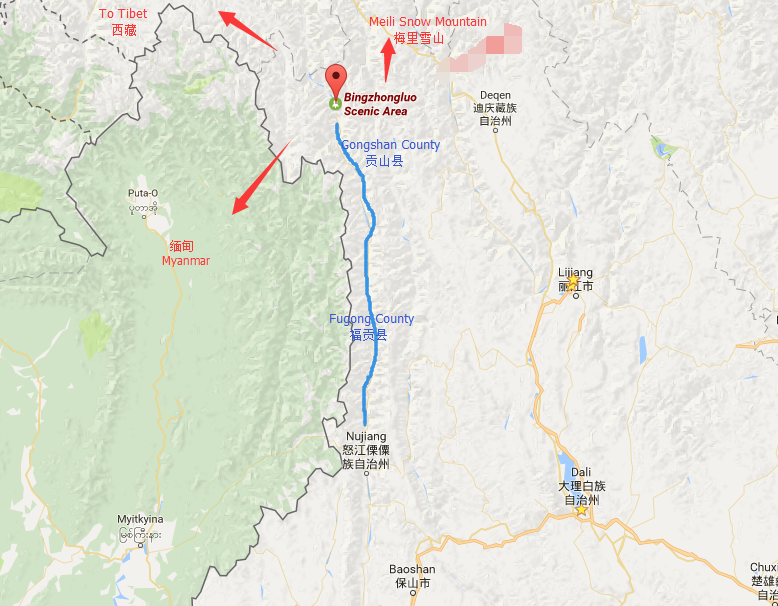
This guide provides a detailed transportation plan for the journey from Chawalong (察瓦龙) in Tibet to Bingzhongluo (丙中洛) in Gongshan (贡山县), Yunnan Province. The route follows the Bingcha (丙察察) Road, a remote and challenging road that covers a distance of approximately 87 kilometers and takes about 3 to 4 hours to travel. Due to its rugged conditions, proper preparation is essential for a safe and smooth journey.
Overview of the Route
Starting Point: Chawalong (察瓦龙), Tibet
Chawalong (察瓦龙) is located in the Tibet Autonomous Region, nestled within the eastern Himalayas. This area is sparsely populated, offering an adventurous, remote setting.
Destination: Bingzhongluo (丙中洛), Gongshan (贡山县), Yunnan
Bingzhongluo (丙中洛) is a scenic town in Gongshan (贡山县), Yunnan Province, located along the Nujiang River (怒江). This area is known for its breathtaking landscapes, including the First Bend of the Nujiang River (怒江第一湾).
The road to Bingzhongluo is part of the Bingcha Road (丙察察线), which connects Tibet to Yunnan and is known for its rugged terrain and stunning natural beauty. The route requires driving through remote, mountainous terrain with challenging road conditions.
Detailed Journey and Road Conditions
1. Chawalong to Daliusha (大流沙) – 20 kilometers
Road Conditions:
-
The road is mostly narrow, winding, and carved into cliff faces. It is prone to landslides, rockfalls, and unstable terrain. Extreme caution is required.
-
Daliusha is the most dangerous section, with the risk of falling rocks. Drivers should pass through quickly and always wear a helmet for protection.
Key Landmarks:
2. Daliusha to V-shaped Gorge (V字峡谷) – 30 kilometers
Road Conditions:
Key Landmarks:
-
V-shaped Gorge: This is a narrow part of the road, where passing vehicles must take extra care to avoid collisions. The beauty of the gorge, however, makes it a scenic highlight.
3. V-shaped Gorge to Bingzhongluo (丙中洛) – 37 kilometers
Road Conditions:
Key Landmarks:
-
Jizhuagu Tunnel (鸡爪骨隧道): A well-known tunnel that adds to the dramatic scenery of the journey.
-
Laohu Zui (老虎嘴): Another important landmark on the way to Bingzhongluo. The view from this spot is spectacular.
Vehicle and Equipment Recommendations
Recommended Vehicles
4x4 Off-Road Vehicles are a must for this journey due to the difficult terrain. Vehicles like the Toyota Prado, Tank 300, or other off-road SUVs with AT (All-Terrain) or MT (Mud-Terrain) tires are highly recommended for optimal performance.
Essential Gear
Spare Tire: Always carry a spare tire in case of damage from rocks or debris.
Recovery Equipment:
Refueling
Fuel stations are available at Chawalong (察瓦龙) and Bingzhongluo (丙中洛), but it is recommended to fill up your tank in Chawalong before starting the journey.
Safety Tips and Best Time to Travel
Best Travel Period
The most favorable months to travel this route are from October to May, as the road conditions are safer, and the risk of landslides is lower.
Avoid the rainy season (June to September), when the road conditions are particularly hazardous due to frequent landslides.
Driving Tips
Speed: Keep a moderate speed, especially in the narrow and winding sections of the road.
Night Driving: Avoid driving at night. The road conditions, combined with the lack of streetlights and rough terrain, make nighttime travel dangerous.
Communication and Navigation
Mobile Signal: Mobile signal can be patchy along the entire route, so consider carrying a satellite communication device for emergency use.
Navigation: The route is remote, and GPS signals can be unreliable, so having offline maps is essential.
Notable Landmarks and Cultural Highlights
1. First Bend of the Nujiang River (怒江第一湾)
A famous landmark near Bingzhongluo (丙中洛). The Nujiang River (怒江) forms a dramatic Ω-shaped bend, providing a stunning visual spectacle.
2. Ethnic Villages and Culture
Along the journey, you will pass through villages inhabited by ethnic minorities, such as the Tibetan and Nu peoples. These communities offer unique cultural experiences and a chance to learn about traditional lifestyles.
3. Tea-Horse Road Relics (茶马古道)
The route also follows parts of the Ancient Tea-Horse Road, a historical trade route that was once vital for transporting tea and other goods between Tibet and China. This historical route is rich in cultural significance and provides a fascinating glimpse into the region's past.
Additional Travel Notes
Scenic Views
The journey through the Nujiang Gorge (怒江峡谷) offers incredible vistas of the Biluo Snow Mountain (碧罗雪山) and the Gaoligong Mountains (高黎贡山), making it one of the most scenic road trips in China.
Cultural Heritage
The route passes through parts of the Tea-Horse Road, a vital trade route connecting Yunnan with Tibet, which has been historically significant for centuries. Travelers can explore old temples, village markets, and traditional homes along the way.
Traveling from Chawalong (察瓦龙) to Bingzhongluo (丙中洛) is a thrilling and adventurous journey that combines challenging terrain with breathtaking views of Nujiang (怒江) and Tibet (西藏). It is essential to properly prepare for the road conditions, have the right equipment, and travel during the best months of the year. For those interested in experiencing both the natural beauty and rich cultural heritage of Tibet and Yunnan, this journey offers a unique and unforgettable experience.