Yunnan Guide
  • Yunnan Guide
  • Travel Tips
  • Tour Planing
  • Ethnic Culture
  • Yunnan Climate
  • Golf Courses
  • Travel Articles
  • Yonglao Village Wa Ethnic Culture Protection Area in Ximeng County, Puer

    22/05/2019Crazy Jone4943 wordsAbout 17 minutes

    Yuesong Village (岳宋村) is an administrative village under Yuesong Township (岳宋乡), Ximeng Wa Autonomous County (西盟佤族自治县), Pu’er City (普洱市), Yunnan Province (云南省). Located 3 km west of the township government and 55 km from the county seat, the village enjoys convenient road access via gravel-paved routes. With a land area of 32.93 km², the village borders Myanmar’s Shan State Special Region No. 2 (缅甸掸邦第二特区) to the south and west, making it a frontier settlement with both cultural and economic importance.

    The area has an average elevation of 1,220 meters, an annual mean temperature of 18.6℃, and an average annual rainfall of 2,411 mm, giving it fertile land suitable for agriculture. As of 2010, Yuesong Village governed 10 villager groups, with a registered population of 2,497, of which more than 96% are Wa people (佤族).

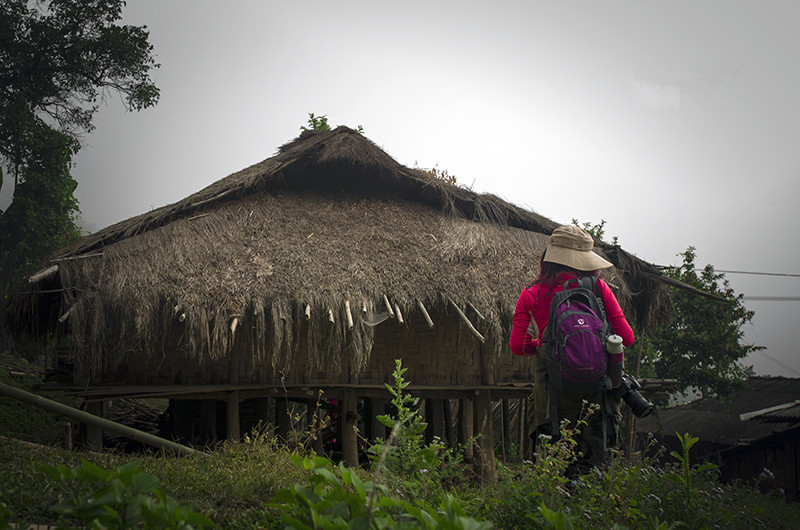
    The village retains intact Wa traditional lifestyles. The Yonglaozhai (永老寨) hamlet was listed in 2009 as one of Yunnan’s first intangible cultural heritage protection sites. Yuesong was also included in the second batch of China’s Traditional Villages List in 2013, and in 2021 was selected as a Beautiful Village at the prefectural and county level in Yunnan. Its cross-border trade channel, Yuesong 183 Passage (岳宋183通道), saw more than 112,500 border crossings in 2018, highlighting its significance as a cultural and trade hub.Yonglao Village Wa Ethnic Culture Protection Area in Ximeng County, Puer

    Natural Resources

    By 2010, Yuesong Village had:

    • Cultivated land: 2,918 mu (1.25 mu per capita), including 1,427 mu of paddy fields and 1,491 mu of dry land.
    • Forest land: 25,855 mu, of which 17,696 mu are economic orchards (mainly rubber and tea plantations).
    • Water area: 161 mu, with 7 mu used for aquaculture.
    • Unused land: 21,099 mu of barren hills and 1,000 mu for other purposes.

    These resources have supported the development of staple food crops such as rice and corn, alongside profitable economic crops like rubber and tea, which remain the backbone of the village’s long-term development strategy.

    Yonglao Village Wa Ethnic Culture Protection Area in Ximeng County, Puer

    Infrastructure

    By 2009, the village had achieved the “Five Connections” (water, electricity, roads, TV, and telephone).

    • Housing: Most households live in brick-wood dwellings, with 582 such houses recorded.
    • Energy use: 36 households had biogas facilities, and 3 used solar energy.
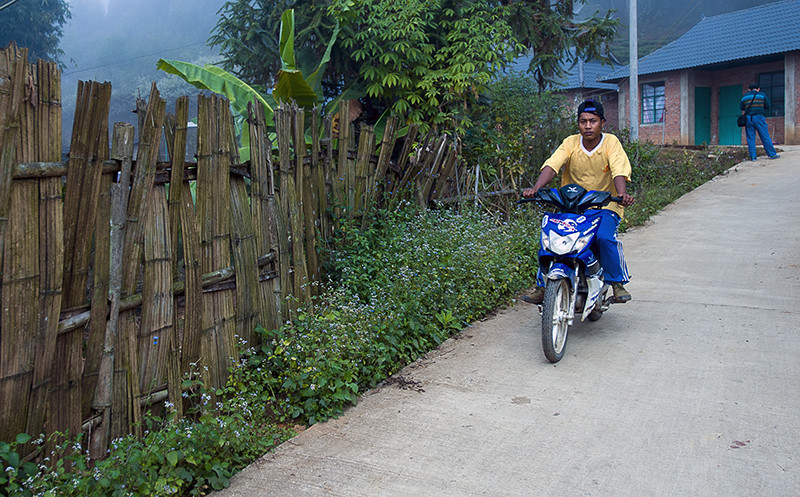
    • Transport: Nearest bus stop 3 km away, nearest market 15 km away. The village had 9 motorcycles.
    • Facilities: 36 households completed the “One Pool, Three Reforms” project (kitchen, toilet, and livestock pen upgrades).

    Yonglao Village Wa Ethnic Culture Protection Area in Ximeng County, Puer

    Rural Economy

    In 2009, Yuesong Village reported a total rural economic income of 2.69 million yuan, broken down as follows:

    • Planting: 1.75 million yuan (65%).
    • Animal husbandry: 880,000 yuan (32.7%) – including 263 pigs and 210 cattle.
    • Fisheries: 99,000 yuan (3.7%).
    • Forestry: 290,000 yuan (10.8%).
    • Secondary & tertiary industries: 480,000 yuan (17.8%).
    • Wages: 210,000 yuan.

    The per capita net income was 1,185 yuan, with agriculture remaining the mainstay. A few laborers (21 people, 1.4% of the workforce) worked outside the village, both inside and outside Yunnan.

    Yonglao Village Wa Ethnic Culture Protection Area in Ximeng County, Puer

    Population and Healthcare

    By 2009, Yuesong Village had:

    • 713 households with 2,490 residents (1,333 male, 1,156 female).
    • Wa people (佤族) made up 2,403 of the population, while 85 were Han Chinese.
    • 1,524 laborers, of which most were engaged in farming.

    Healthcare was limited:

    • Village clinic with 2 doctors and 40 m² of space.
    • Yuesong Township Health Center located 3 km away.
    • Sanitation: 5 public toilets, but no centralized garbage disposal or drainage system.

    Education and Culture

    • Education: One primary school with 4 teachers and 126 students. By 2009, the village had 245 students enrolled in compulsory education (88 in primary, 157 in middle school). However, the nearest middle school is 54 km away.
    • Cultural facilities: 4 cultural activity rooms and 1 library.
    • Yonglaozhai (永老寨): A hamlet that preserves traditional Wa cultural practices, earning recognition as one of the most authentic Wa cultural communities in Yunnan.

    Governance and Public Affairs

    • Land contracts: 539 contracts covering 5,085 mu.
    • Public welfare: Operates under the “One Matter, One Discussion” system.
    • Grassroots organizations: 5 Party branches with 53 Party members (41 men, 12 women), 1 Youth League branch with 117 members.
    • Village governance: Democratic financial committees ensure transparency in rural finance and public affairs.

    Development Focus

    Challenges

    • Lack of sewage and waste treatment facilities.
    • Low agricultural modernization and limited use of technology.
    • Poor infrastructure and cultural facilities.

    Strategies

    • Promote animal husbandry and expand rubber and tea cultivation.
    • Strengthen agricultural construction and technology adoption.
    • Improve residents’ material and cultural well-being through targeted projects.

    Honors and Recognition

    • 2009: Yonglaozhai (永老寨) listed as one of Yunnan’s first intangible cultural heritage protection sites.
    • 2013: Included in the second batch of China’s Traditional Villages.
    • 2021: Named a Beautiful Village in Yunnan Province (prefectural/county-level).

    Yuesong Village (岳宋村) is more than a borderland settlement—it is a living museum of Wa (佤族) culture, combining traditional lifestyles, cross-border exchanges, and ecological resources. Its geographic location makes it a strategic node for trade with Myanmar, while its cultural richness, especially at Yonglaozhai, preserves a unique heritage in danger of fading elsewhere.

    Despite facing challenges such as underdeveloped infrastructure and limited modernization, Yuesong is actively transforming through rural revitalization initiatives, ecological preservation, and cultural tourism development. With investments in rubber, tea, and cross-border trade, Yuesong is poised to become both a model of ethnic cultural preservation and a sustainable frontier economy in southwest China.

    ENQUIRY

    Have a question before booking? Message us to learn more.
    Click to change