Bao Lekuang - Craftsman of Bamboo Weaving and Wood Carving in Longchuan County, Dehong 

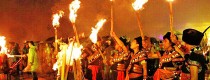
Bao Lekuang (鲍勒况), born in 1957, is a second-generation provincial-level inheritor of intangible cultural heritage in Yunnan, China. He is from Sading Nanguan Village, Longchuan County, Dehong Prefecture (德宏州陇川县撒定南关村) and belongs to the Jingpo ethnic group. Bao Lekuang is a multi-talented artist: a master of ethnic arts and crafts, an inheritor of the Jingpo Munao Zongge (目瑙纵歌) intangible cultural heritage, former leader of the Jingpo Song and Dance Troupe, and ex-director of Longchuan County Cultural Center.

He excels in weaving, carving, and traditional Jingpo musical instrument making and performance, especially bamboo carving. His artistic works have been recognized both nationally and internationally, including exhibitions in the United States.


Early Life and Artistic Training

Childhood

  • Bao Lekuang developed a love for music from an early age, often observing and imitating local elders playing traditional instruments.

  • At age 10, he performed the bamboo flute at a Dehong Prefecture Folk Arts Festival, receiving high praise.

Adolescence

  • Influenced by his father, he began learning weaving and carving, using bamboo and tree roots to practice artistic designs.

  • Participated in local celebrations as a designer and artisan.

Professional Learning

  • Studied music in Beijing, where he spent three months mastering basic tones, emphasizing the importance of foundation.

  • Learned the philosophy that “mastery of the simplest tones requires the hardest practice.”

Artistic Maturity

  • Served as the band leader of Dehong Jingpo Song and Dance Troupe, while continuing to practice carving and weaving in his spare time.

  • Became a versatile artist, skilled in weaving, carving, instrument making, and performance.

Heritage and Recognition

  • In 2002, awarded titles including “Yunnan Provincial Folk Art Master” and “Jingpo Folk Art Creator”.

  • Dedicated to training young artists in Jingpo villages, ensuring the continuation of traditional culture.


Artistic Skills and Style

Bamboo Carving

  • Carves traditional Jingpo patterns, including Munao symbols and animal motifs.

  • Combines tradition with innovation, preserving the rustic Jingpo style while incorporating modern aesthetics.

  • Works are highly detailed, often described as capturing the “spirit of mountains and the soul of objects.”

Weaving

  • Master of traditional Jingpo textiles, producing intricate patterns.

  • Skilled in all stages: material selection, dyeing, and weaving.

  • Textiles feature bright colors and rich cultural symbolism.

Musical Instruments and Performance

  • Expert in making and playing Dongba and Lerong, traditional Jingpo instruments.

    • Dongba: Central to the Munao Zongge festival; joyful yet steady tunes.

    • Lerong: Bamboo instrument producing soulful, melancholic sounds.

  • Music captures the emotions and daily life of the Jingpo people.


Representative Works

Type Name / Content Occasion / Year Honors / Impact
Carving Bamboo Wine Tubes 1997 Exhibited in the USA, showcasing Jingpo carving skills
Carving Various bamboo carvings County exhibitions Multiple awards
Music Composition Welcome March, Pounding New Rice, Oh Ran Munao Zong Folk cultural events Popular and widely performed
Music Composition Benyang – Jingpo Folk Music Original work Depicts Jingpo life and emotions
Music Performance Welcome to the Land of Munao Zongge Ruili online exhibition Highlights unique Jingpo music
Music Composition The Land of Munao Zongge is My Home Folk cultural performances Lyrics/music by Bao Lekuang, performed by Kong Huiying

Contributions to Cultural Heritage

Training and Mentorship

  • Bao Lekuang has trained multiple generations of artists using oral teaching combined with hands-on practice.

  • Focuses on weaving, carving, instrument making, and music, emphasizing both technical skills and cultural understanding.

  • Notable students include young “cultural tourism ambassadors” dedicated to preserving Jingpo music and instruments.

Cultural Preservation

  • Collects, documents, and rescues traditional music, instruments, dances, and costumes.

  • Elevates the status of Jingpo culture at the provincial and national level.

Cultural Innovation

  • Combines traditional carving with modern designs.

  • Creates new musical works reflecting contemporary Jingpo life while maintaining traditional roots.


Jingpo Weaving and Carving: Historical and Cultural Background

Origins and Cultural Significance

  • Jingpo people originated from the Di-Qiang tribes of the Qinghai-Tibet Plateau.

  • Weaving and carving are integral to daily life, religious rituals, and artistic expression.

  • These crafts carry ethnic identity, religious beliefs, and aesthetic values, and have absorbed influences from neighboring cultures, forming a unique artistic style.

Artistic Features

Carving:

  • Materials: bamboo and wood; styles range from simple to intricate.

  • Motifs: sun, moon, mountains, rivers, animals, and daily life.

  • Style: highly detailed, combining realism and spiritual expression.

Weaving:

  • Techniques: hand-loom weaving with cotton, hemp, or wool, incorporating dyed patterns.

  • Tools: waist-loom; intricate multi-step processes.

  • Symbolism: motifs such as tiger footprints, leaves, and insects carry historical and cultural meaning.


Current Challenges and Protection Measures

Challenges

  • Aging inheritors and limited interest among youth.

  • Modern lifestyle reducing the practical demand for traditional crafts.

  • Long and complex production cycles discourage young learners.

Protection Measures

  • Government-supported heritage listings and documentation.

  • Training workshops and hands-on learning programs.

  • Exhibitions and performances to raise awareness.

  • Encouragement of innovation to adapt traditions to modern contexts.

  • Integration of traditional crafts with tourism to enhance economic and social value.


Conclusion

Bao Lekuang’s lifelong dedication has protected, preserved, and revitalized Jingpo traditional culture. His mastery of bamboo carving, weaving, and traditional musical instruments showcases the richness of Jingpo folk art. By combining heritage preservation with innovation, Bao Lekuang ensures that Jingpo culture continues to thrive in the modern era, inspiring future generations of artists and cultural enthusiasts.

Note: Detailed information on his latest works, students, and activities may be obtained from the Dehong Longchuan County Cultural and Tourism Bureau or local intangible cultural heritage centers.

Related Categories