Qinggangling Hui and Yi Ethnic Town in Zhaoyang District, Zhaotong

Qinggangling Hui and Yi Ethnic Town in Zhaoyang District, Zhaotong

Chinese Name:昭阳区青岗岭回族彝族乡
English Name: Qinggangling Hui and Yi Ethnic Town in Zhaoyang District, Zhaotong
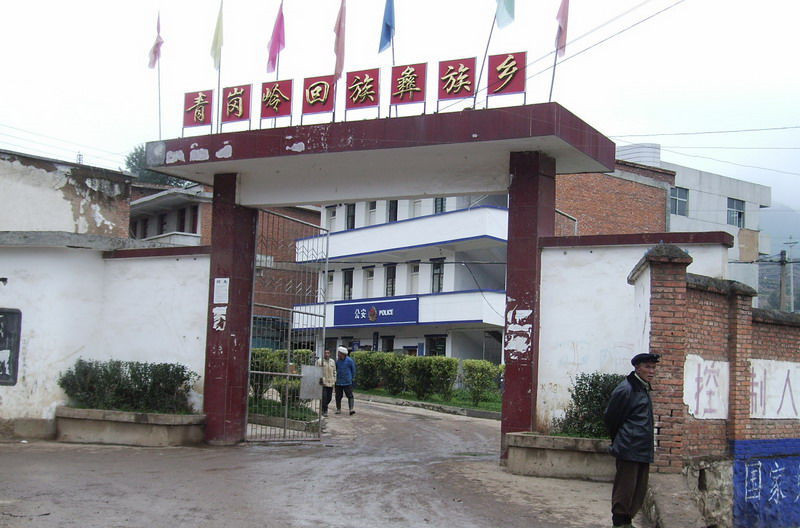
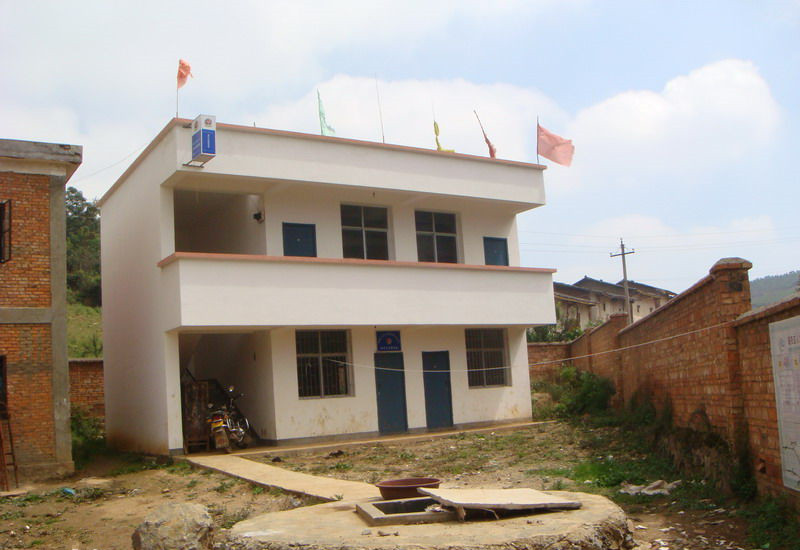
Qinggangling Hui and Yi Ethnic Township (青岗岭回族彝族乡), located in the northern part of Zhaoyang District (昭阳区), Zhaotong City (昭通市), Yunnan Province (云南省), is a region rich in both ethnic diversity and cultural heritage. It is bordered by Beizha Subdistrict (北闸街道) and Jiupu Town (旧圃镇) to the southeast, Sa Yu Town (洒渔镇) to the west, and Jingan Town (靖安镇) to the north. The township covers an area of 110.15 square kilometers and has a registered population of 30,203 (as of 2019).

In 1988, six administrative villages were separated from Jingan District (靖安区) and combined with Le De Gu Administrative Village (乐德古行政村) from the former Sa Yu District (洒渔区) to form the Qinggangling Hui and Yi Ethnic Township (青岗岭回族彝族乡). As of 2020, it governs 7 administrative villages.

Administrative Structure

  • Number of Villages: 7 administrative villages

  • Governing Village: Qinggangling Natural Village (青岗岭自然村)


Historical Development

  • 1988: The township was officially established after separating 6 administrative villages from Jingan District (靖安区) and merging them with Le De Gu (乐德古) from Sa Yu District (洒渔区).

Current Administrative Divisions (As of 2020)

  • Qinggangling Village (青岗岭村)

  • Baisha Village (白沙村)

  • Xinqiao Village (新桥村)

  • Le De Gu Village (乐德古村)

  • Daying Village (大营村)

  • Shenjia Gou Village (沈家沟村)

  • Jingua Village (金瓜村)


Geography and Climate

Geographical Features

Qinggangling Hui and Yi Ethnic Township lies in a semi-mountainous region, with three sides surrounded by mountains. The central area is a plain, making it suitable for agriculture. The region features steep slopes and deep valleys, with a dramatic topography that adds to its charm.

  • Highest Point: Huoshi Di (火石地) at 2,800 meters above sea level.

  • Lowest Point: Daying (大营) at 1,860 meters above sea level.

Climate

  • Average Temperature: 8.5°C year-round

  • Annual Precipitation: 800 mm

  • Frost-Free Period: 210 days per year

Natural Resources

The region is rich in mineral resources, including smokeless coal (无烟煤) and lead-zinc (铅锌). It is also home to wildlife such as wild rabbits (野兔) and various species of pheasants (红腹锦鸡, 白腹锦鸡).


Population and Ethnic Composition

As of 2019, the township has a registered population of 30,203. The population consists mainly of the Hui (回族) and Yi (彝族) people, alongside smaller groups of Han (汉族), Miao (苗族), and other ethnic minorities.

In 2011, the population breakdown was as follows:

  • Hui People (回族): Predominantly the largest ethnic group in the region.

  • Yi People (彝族): Second largest ethnic group in the area.

  • Other Minorities: Han, Miao, and others.


Economy

Agriculture

The township is primarily agricultural, with significant areas dedicated to farming:

  • Agricultural Land: 22,848 acres (9,240 hectares)

  • Forestry Land: 52,600 acres (21,300 hectares)

Key agricultural products include:

  • Walnuts (核桃) – with an area of 50,000 acres (20,230 hectares) under cultivation.

  • Flax (亚麻) and other crops.

Livestock farming is also important, particularly raising pigs (生猪), cattle (黄牛), sheep (羊), and poultry (家禽).

  • Pig Production: 11,130 pigs raised, with 9,594 pigs slaughtered in 2007.

  • Cattle Production: 2,771 cattle raised, with 987 cattle slaughtered.

  • Sheep Production: 5,064 sheep raised, with 2,894 sheep slaughtered.

  • Poultry: 24,770 poultry raised, with 11,767 poultry slaughtered.

Industry

The region has a growing industrial sector with 6 industrial enterprises, including a large-scale enterprise.

In 2011, the industrial output value reached 10.64 million yuan, an increase of 40% from the previous year.

Finance

By the end of 2011, Fudian Bank (富滇银行) opened a branch in the township to support local economic development.


Social Infrastructure and Services

Education

By the end of 2011, Qinggangling had the following educational facilities:

  • 10 Primary Schools (小学)

  • 1 Secondary School (初中)

  • Total Students: 5,274

  • Teachers: 200 full-time teachers (专任教师)

Cultural Development

  • Village Cultural Station (村文化站)

  • 7 Farm Libraries (农家书屋)

The township has also established 2800+ satellite TV systems (广播电视接收设备) to enhance cultural engagement.

Healthcare

In 2011, Qinggangling had:

  • 1 Health Center (卫生院)

  • 7 Village Clinics (村卫生所)

  • Professional Healthcare Workers: 25

The township achieved a 95.2% participation rate in the New Rural Cooperative Medical Scheme (新型农村合作医疗), covering 26,076 people.


Transportation

Qinggangling is accessible through various transportation routes:

  • The Erma Secondary Road (水麻二级汽车专用线) runs through the middle of the region, facilitating north-to-south travel.

The region has 15,000 square meters of hardened roads (硬化道路) to improve accessibility.


Cultural Heritage and Identity

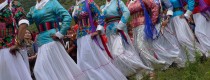
Qinggangling is home to a rich blend of Hui Muslim (回族) and Yi (彝族) cultural traditions. The Hui people celebrate traditional Islamic festivals, such as Eid al-Fitr (开斋节) and Eid al-Adha (古尔邦节), while the Yi people celebrate their agricultural and harvest festivals. The region's cultural heritage is celebrated through music, dance, and crafts, which visitors can explore through cultural tours.


Qinggangling Hui and Yi Ethnic Township in Zhaoyang District (昭阳区), Zhaotong City (昭通市), Yunnan Province (云南省), offers a unique opportunity to experience the rich ethnic diversity and culture of both the Hui and Yi peoples. With its beautiful landscapes, fertile plains, and welcoming communities, it is an ideal destination for those looking to explore authentic rural life in China. Whether you’re interested in cultural immersion, agricultural tourism, or simply enjoying the stunning natural scenery, Qinggangling provides a memorable experience.


Related Categories