7 Days GolfingTour
 8 Days Group Tour
 8 Days Yunnan Tour
 7 Days Shangri La Hiking
 11 Days Yunnan Tour
 6 Days Yuanyang Terraces
 11 Days Yunnan Tour
 8 Days South Yunnan
 7 Days Tea Tour
 8 Days Muslim Tour
 12 Days Self-Driving
 4 Days Haba Climbing
 Tiger Leaping Gorge
 Stone Forest
 Yunnan-Tibet
 Hani Rice Terraces
 Kunming
 Lijiang
 Shangri-la
 Dali
Dali
 XishuangBanna
 Honghe
 Kunming
 Lijiang
 Shangri-la
 Yuanyang Rice Terraces
 Nujiang
 XishuangBanna
 Spring City Golf
 Snow Mountain Golf
 Stone Mountain Golf






Nightlife and Entertainment in Nujiang
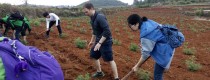
Nightlife and Entertainment in Nujiang will tell you what to do in Nujiang at night, and where to relax. You can relax at cafes and bars, or watch local people dancing at the square, and you may also go to farmyards at daytime to have a close contact with the nature and experience local life.
Recommended Clubs & Bars & KTVs in Nujiang
- GSM VIP Club(全球通VIP俱乐部)
Address: Pailuba Road 28, Lushui County, Nujiang Lisu Autonomous Prefecture(怒江傈僳族自治州泸水县排路坝路28) - Thumb Bar(大拇指)
Address: Chuancheng Road 313, Lushui County, Nujiang Lisu Autonomous Prefecture(怒江傈僳族自治州泸水县穿城路313)
Tel: 0886-3629292 - Provence Bar(普罗旺斯)
Address: Next to the Jiangdong Ficus Altissima, Lushui County, Nujiang Lisu Autonomous Prefecture(怒江傈僳族自治州泸水县江东大青树旁) - Jiuke Bar(酒客酒吧)
Address: Eastern Linjiang Road, Lushui County, Nujiang Lisu Autonomous Prefecture(怒江傈僳族自治州泸水县临江东路)
Tel: 0886-3625979 - Lanke KTV(蓝客KTV)
Address: Chuancheng Road, Lushui County, Nujiang Lisu Autonomous Prefecture(怒江傈僳族自治州泸水县穿城路)
Tel: 0886-3513416 - Gerui KTV Discount(格瑞KTV量贩)
Address: Chuancheng Road123, Liuku Town,Lushui County, Nujiang Lisu Autonomous Prefecture(怒江傈僳族自治州泸水县六库镇穿城路123号)
Tel: 08868885533 - Changlongda KTV(昌隆达KTV)
Address: Chuancheng Road115, Lushui County, Nujiang Lisu Autonomous Prefecture(怒江傈僳族自治州泸水县穿城路115号)
Tel: 0886-3630168
Recommended Coffee & Tea & Ice Cream Shops in Nujiang
- Golden Sandbeach(金色沙滩)
Address: Eastern Linjiang Road, Lushui County, Nujiang Lisu Autonomous Prefecture(怒江傈僳族自治州泸水县临江东路) - Dream in Summer(夏之梦)
Address: Lushui County, Nujiang Lisu Autonomous Prefecture(怒江傈僳族自治州泸水县临江东路) - Xiaodongtian Tea House(小洞天茶楼)
Address: Longxiang Alley, Lushui County, Nujiang Lisu Autonomous Prefecture(怒江傈僳族自治州泸水县隆祥巷口)
Tel: 0886-3637566; 0886-3637958 - Haowangjiao Tea House(好望角茶楼)
Address: Chuancheng Road 209, Lushui County, Nujiang Lisu Autonomous Prefecture(怒江傈僳族自治州泸水县穿城路209号) - Guomai Nationwide No.700(果麦全国NO.700)
Address: Renmin Road 186, Lushui County, Nujiang Lisu Autonomous Prefecture(怒江傈僳族自治州泸水县人民路186)
Tel: 18669244599 - Dawei Drink(大维饮品)
Address: Near the Dukou Road17, Lushui County, Nujiang Lisu Autonomous Prefecture(怒江傈僳族自治州泸水县渡口路17附近)
Performance in Nujiang
Canyon Nujiang (峡谷怒江)
“Canyon Nujiang” is a large-scale musical epic performance combining modern technologies such as acoustics, photoelectricity and so on. The performance is directed by Yang Xiaofan (杨晓凡), and is planned by Jiang Mingchu (蒋明初), a leading master in Yunnan’s entertainment industry, and the overall planning is carried out jointly with the well-known series of evening party planning teams in China. “Canyon Nujiang” focuses on the local customs of Nujiang and integrates the rich and colorful life of Nujiang people. The whole play is divided into three chapters, focusing on Nujiang Rivers, Nujiang Mountains and Nujiang people. It integrates the unique natural landscape of Nujiang and the essence of ethnic culture as a whole, and meticulously prepares a visual and auditory feast for the audience.
Address: Lisu Folk Town, Lushui City, Nujiang 泸水市傈僳风情小镇
Tel: 0886-3060111
Show Time:19:30-21:00 everyday
Join a Festival Party
Discovering traditional ethnic festivals and activities is an important part of Yunnan travel. As the major minorities inhabited in Nujiang, Lishu, Dulong and Nu formed their distinctive ethnic culture which is also revealed in their ethnic festivals. You can jion Nujiang Festival Tours arranged by Yunnan Exploration to have a site watch of the ethnic festival activities in Nujiang, such as the bath gathering, cattle-butchering sacrifice and climbing the knife poles. You can also appreciate the folk songs and dances of ethnic groups and enjoy the local food at the festivals.
Daogan Festival (刀秆节)
As a traditional festival of Lisu ethnic minority, the Knife-Pole Festival expresses good wishes to everyone of the Lisu. A phrase describing bravery in China goes like this, “climbing the Knife Mountain and diving into the Fire Sea” and the Daogan Festival is a vivid depiction of this. On the eve of the festival, a grand bonfire is set alight with people dancing around it, later, some of the bolder men leap in the fire, extinguishing it barefooted. It is widely believed that through this act all manner of disasters will be averted.
Kuoshi Festival (阔时节)
“Kuoshi”in Lisu language means New Yeas. It is traditional festival for Lisu minority. On December 1988, the government of Lisu Antonomous prefecture set up (on) 20, December of every year as legal festival. On that day, Lisu people in different area come to special place to celebrate the festival in their ways, like dancing, singing, toothily, rope skipping, swing, race and so on. Usually before the festival, people prepare a lot of food, goods for the days: making rice bread, more wooden, kill pigs and goat, do cleaning to welcome the New Years. The people who work outside must come back to home before the New Year. Every family collects a lot of green pine needle and put them everywhere in and around their house. It means pine needle will clear away evil. The first early morning of New Year, people go to river to get spring water to drink, because there is a saying goes that who the first to get the spring water will be lucky all the coming year around. On the first day of New Year, people cannot visit any other family. They can go hunting, sacrifice mountain god, or do other activities to celebrate the festival.
Spring Bathing Festival 澡堂会
The Bathing Gathering, also called ‘Tangquanhui’ 汤泉会, is a yearly bathing gathering held in spring among the Lisu people living in Nujiang. During the 2nd to 6th days of the 1st lunar month, the Lisu people will carry with them luggage and food, and go to the hot springs called ‘the 16 Hot Springs in the Valley’ to have a bath for getting rid of a year’s pains and misfortunes. In this spring bathing period, song competitions are also held.
Kaquewa Festival 卡雀哇节
Kaquewa Festival is the only New Year Festival of Dulong people. It is held during the 11th and 12th lunar months, there is no fixed date and the festivals lasts 3-5 days. Every family hangs up the colored tapestry as festival decoration on the first day. They honor the mountain god and hold shooting competition. On the last day, they hold the most exciting activity- cattle butchering for sacrifice. They keep drinking, singing and dancing until they enjoy themselves to their hearts’ content.
Agritainment
In recent years, agritainment is becoming more and more popular not only among local people but also the tourists. Local agritainment offer opportunity for tourists to have a close contact with the nature, taste local food and experience local life.
Recommended Farmyards in Nujiang
- Caotang Courtyard (草塘小院)
Address: Opposite Luyanlan Community, Pailuba Road, Lushui County泸水市排路坝路雅兰苑对面
Tel:13988652275 - Congbi Farmyard (聪碧农家乐)
Address: Downside the Water Plant of Laogan Village, Liuku Town of Lushui City 泸水市六库镇老干村水厂下面
Tel: 13378860805 - Meikelan Farmyard (美客来农家乐)
Address: 200 meters away from the intersection of No. 228 and No. 230 provincial roads, Lushui County 泸水市228省道与230省道交叉口北200米
Tel:0886-3629655 - Longchun Mountain Villa (龙春休闲山庄)
Address: Daliandi Village, Shangjiang Town 上江乡大练地村
Tel:13988633966 - Gongshan Zhapi Farmyard (贡山县扎啤休闲农庄)
Address: Wangzaka Group of Cikai Village Committe of Cikai Town, No.3, Cikai South Road 茨开南路3号茨开镇茨开村委会旺咱卡组
Tel:13988614730 - Sanjiang Qingyuan Farmyard (三江情园)
Address: Lanping County, Lushui City 兰坪白族普米族自治县
Tel:/
Regional Entertainment
- Lushui City Entertainment
- Bingzhongluo Entertainment
- Fugong County Entertainment
- Lanping County Entertainment
- Dulongjiang Entertainment