Yang Huiying: A Master of Bai Ethnic Paper-Cutting from Dali
Basic Background and Learning Journey
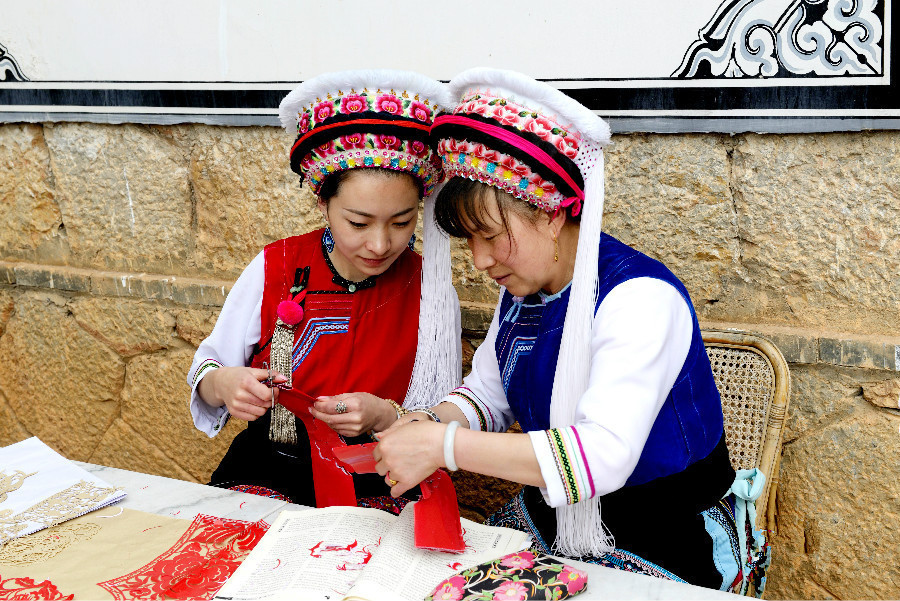
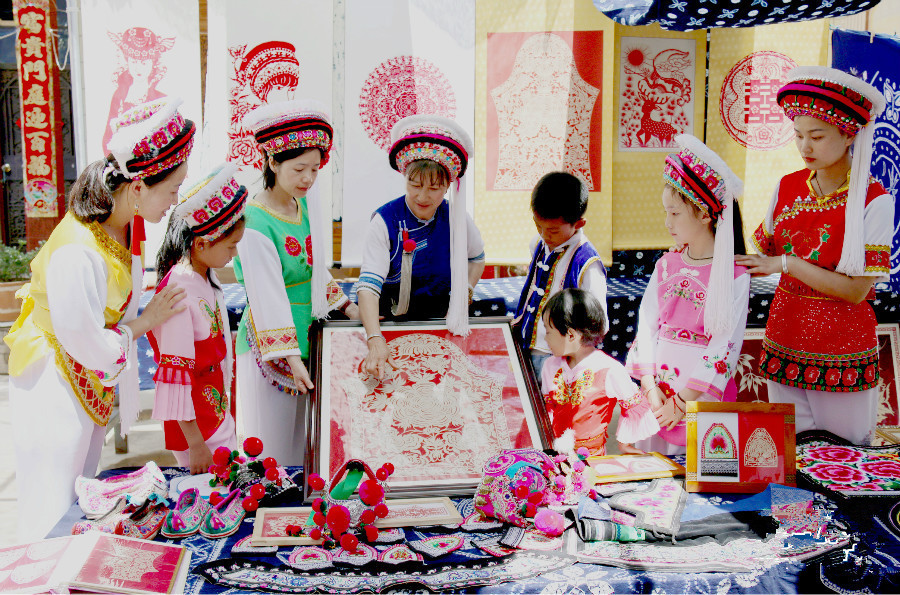
Yang Huiying (杨慧英), a Bai ethnic woman (白族女性) born in January 1964 (1964年1月) in Wenwu Village, Haidong Town, Dali City, Yunnan Province (云南省大理市海东镇文武村), is a second batch of provincial-level intangible cultural heritage representative inheritor (第二批省级非物质文化遗产代表性传承人) (recognized in 2002) for Bai paper-cutting techniques (白族剪纸技艺). Trained since age 16 under her grandmother and mother-in-law, she carries forward a three-generation family legacy of paper-cutting. Renowned for her intricate, three-dimensional works, her pieces—including dragon motifs with 25 hollowed sections and hundreds of scales—have earned national and international acclaim. As a cultural ambassador, she has exhibited globally, with works collected by museums and featured in universities as a distinguished expert.
Learning Journey: A Family Legacy of Scissors and Paper
| Life Stage |
Key Experiences |
Impact |
| Childhood (童年时期) |
Immersed in a family of paper-cutting masters; grandmother was a renowned local artist |
Developed early fascination with the craft amid a rich artistic environment |
| Adolescence (青少年时期) |
Began formal training at 16 under her grandmother’s guidance |
Mastered foundational techniques, learning to "cut what she envisioned" without drafts |
| Matrimonial Period (技艺成熟期) |
Received her grandmother’s legacy pieces from her mother-in-law, deepening knowledge of traditional patterns and embroidery pairing |
Strengthened family ties and expanded her repertory of classic designs |
| Heritage Expansion (传承发展期) |
Studied widely, integrating techniques from other regions while innovating |
Evolved Bai paper-cutting by blending Nanzhao primitive motifs with Tang Dynasty patterns |
Artistic Characteristics and Representative Works
Technical Features: Precision, Fusion, and Dimensionality
Yang’s paper-cutting blends technical mastery with artistic vision:
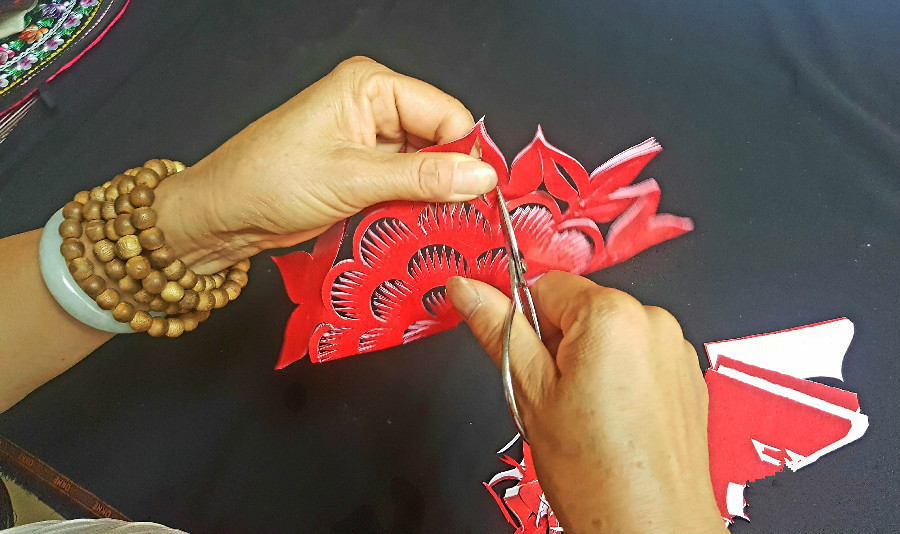
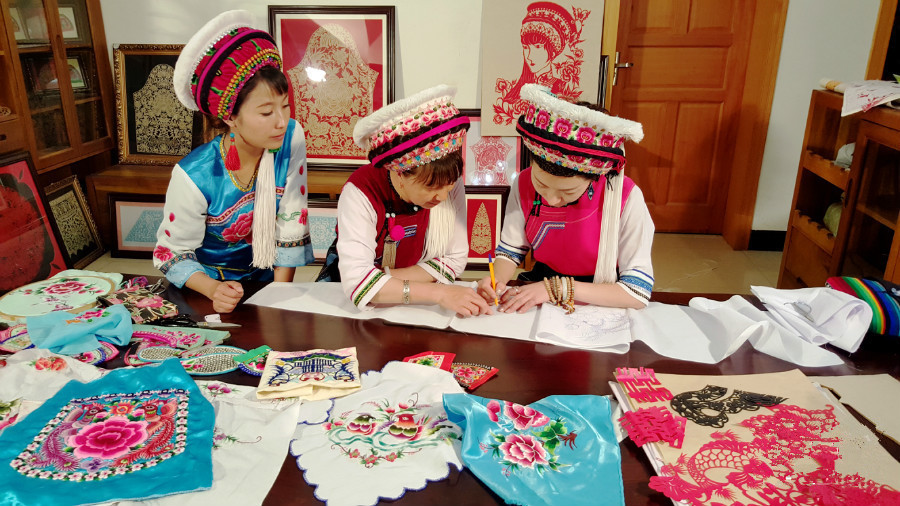
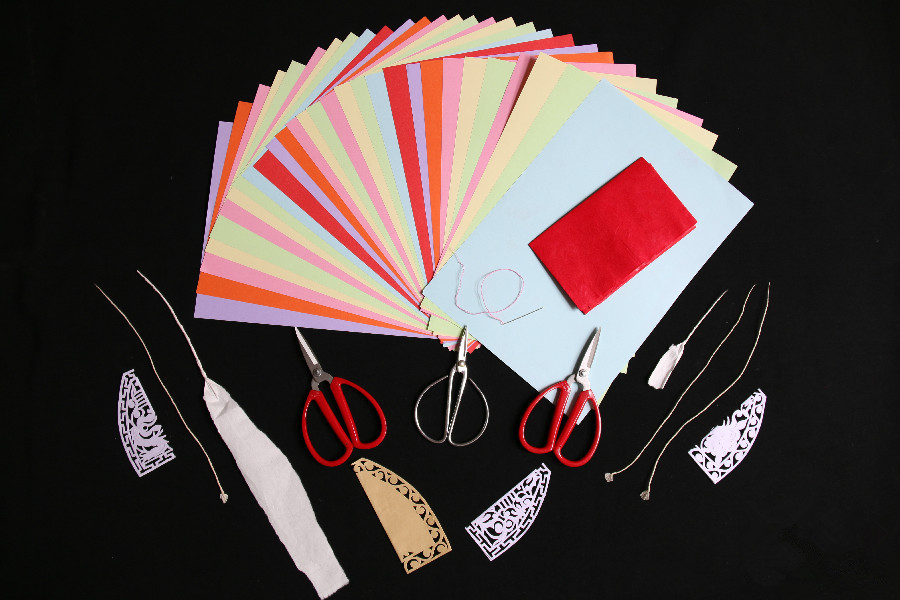
- Tool & Material Mastery: Primarily uses scissors, adapting to paper textures (e.g., rice paper, foil, leather) with fluidity. Her "no-draft" technique—cutting directly from imagination—highlights decades of skill.
- Folded-Cutting Technique: Specializes in folding paper to create symmetrical, repeating patterns, enhancing rhythm and depth. This method produces intricate animal and floral designs with balanced compositions.
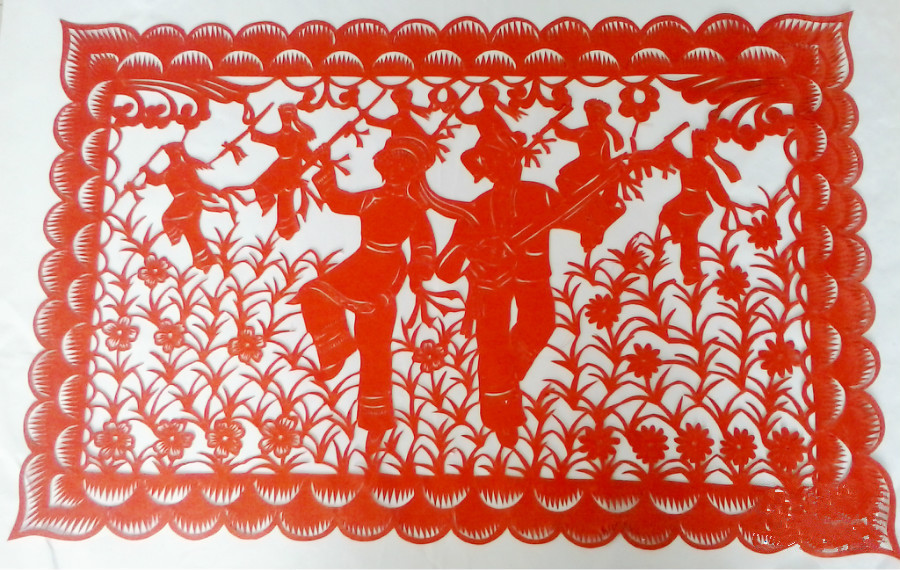
- Line & Texture: Lines are bold yet delicate, forming cohesive, lifelike shapes. Her dragon motifs, with 25 hollowed sections and hundreds of scales, exemplify her precision.
Representative Works: Threads of Bai Culture
Yang’s legacy is woven into both traditional and innovative pieces:
| Work Type |
Examples |
Features |
Significance |
| Traditional Window Decor |
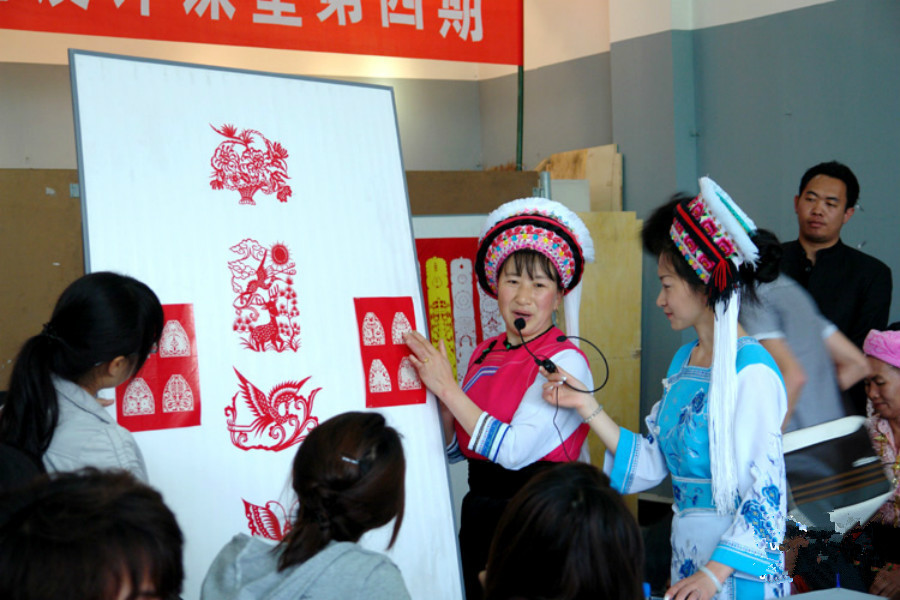
"Double Phoenix Facing the Sun", "Deer and Crane Sharing Spring" |
Strong three-dimensional sense, intricate details (e.g., dragon scales) |
Iconic local symbols; preserve Bai aesthetic traditions |
| Figure Cutouts |
"Bai Maidens" |
Lifelike expressions, showcasing Bai women’s grace |
Document ethnic identity and cultural narratives |
| Animal & Floral Motifs |
Butterflies, zodiac animals, camellias |
Vibrant, dynamic designs reflecting Dali’s biodiversity |
Celebrate nature and local flora/fauna |
| Functional Crafts |
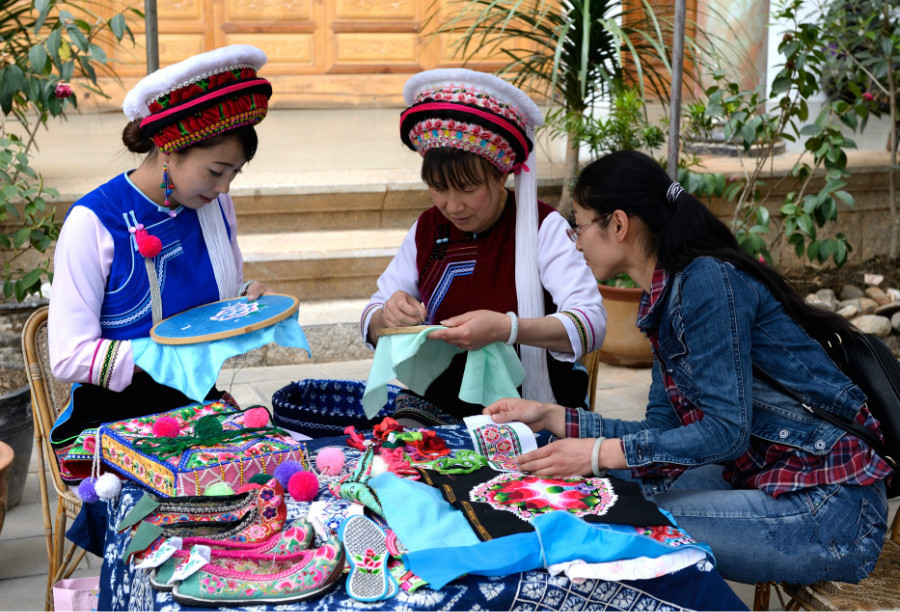
Waistbands, shoe patterns, sachet handles |
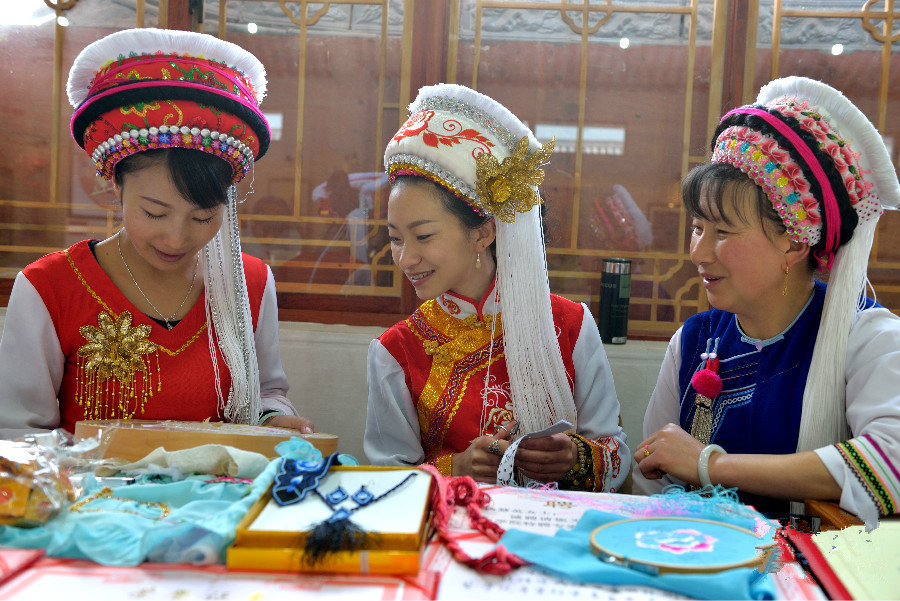
Practical yet ornate; essential for Bai weddings and daily attire |
Sustain traditional lifestyle and craftsmanship |
Cultural Contributions to Dali
Safeguarding a Century-Old Art
As a provincial inheritor, Yang preserved Bai paper-cutting from decline. Her hands-on practice and teaching ensured techniques remained authentic amid modernization.
Bridging Generations
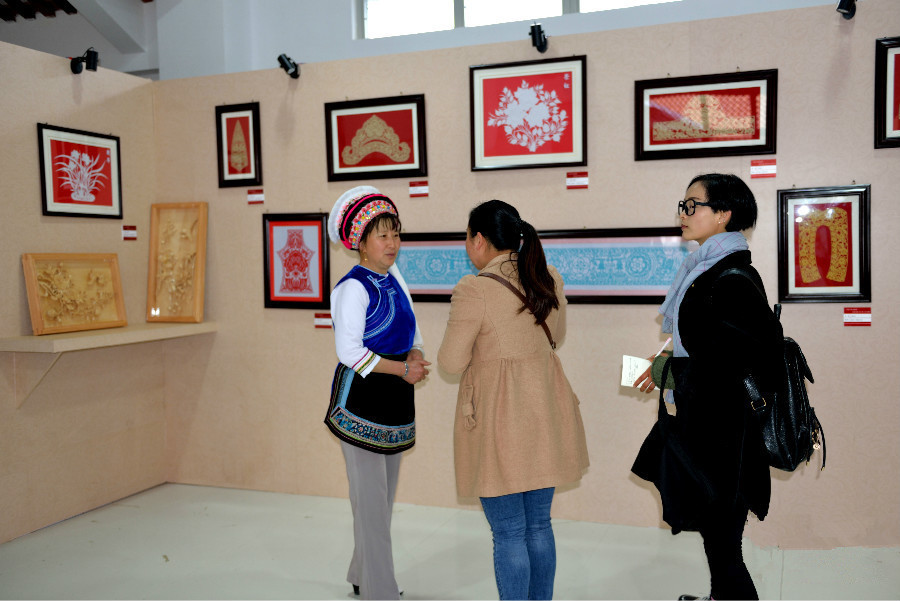
She established a four-generation family lineage, training her daughter and daughter-in-law (both recognized as Dali municipal inheritors). Beyond family, she teaches at universities (e.g., Yunnan Arts University) and schools, expanding access to the craft.
Innovating Tradition
By merging Nanzhao and Tang Dynasty motifs, Yang created a unique style that honors heritage while embracing modernity. Her works, exhibited globally (e.g., in the UK, Japan, Vietnam), introduce Bai culture to international audiences.
Cultural Context of Bai Paper-Cutting in Haidong
Roots in History
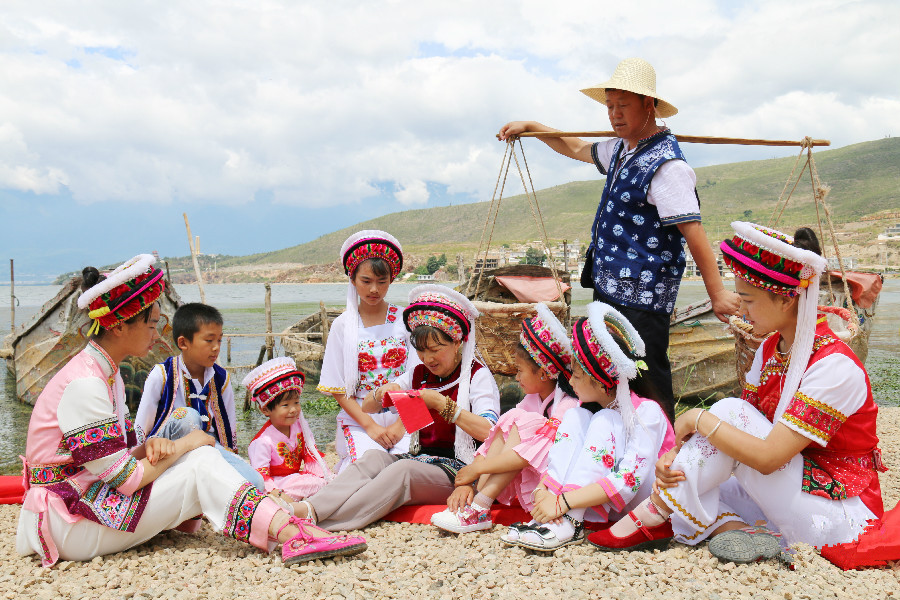
Bai paper-cutting dates to the Tang and Song dynasties, evolving from Han-Chinese and indigenous Bai traditions. It is integral to local life—used in festivals, weddings, and embroidery—serving as both art and cultural memory.
More Than Craft
Paper-cutting in Haidong is a cultural anchor:
- Identity: Decorated homes and garments signal Bai pride.
- History: Patterns like dragons and phoenixes narrate myths and values.
- Economy: Once vital for daily use, it now supports tourism and creative industries.
Current Challenges and Preservation
Challenges
- Aging Artisans: Few youth learn the craft (long training, low initial income).
- Modern Pressures: Machine cutting and synthetic materials threaten handmade traditions.
Protective Efforts
- Official Recognition: Bai paper-cutting is prioritized in Yunnan’s intangible heritage laws (since 2000).
- Inheritor Support: Yang (provincial) and local policies fund workshops and school programs.
- Tourism & Innovation: Efforts to pair crafts with tourism (e.g., "March Street" fairs) and develop modern products (e.g., eco-friendly decor) are growing.
Conclusion
Yang Huiying is more than a paper-cutter—she’s a guardian of Bai soul (白族文化的精神守护者). Her scissors, guided by 60 years of passion, weave tradition and innovation into timeless art. As a provincial inheritor, she proves that old crafts thrive when shared across generations and borders—ensuring Dali’s paper-cutting legacy will enchant the world for years to come.To learn more, contact the Dali Prefecture Culture and Tourism Bureau (大理州文化和旅游局) or visit Haidong Town to witness Yang’s craft and Bai culture firsthand.
Yang Huiying: A Master of Bai Ethnic Paper-Cutting from Dali
Basic Background and Learning Journey
Yang Huiying (杨慧英), a Bai ethnic woman (白族女性) born in January 1964 (1964年1月) in Wenwu Village, Haidong Town, Dali City, Yunnan Province (云南省大理市海东镇文武村), is a second batch of provincial-level intangible cultural heritage representative inheritor (第二批省级非物质文化遗产代表性传承人) (recognized in 2002) for Bai paper-cutting techniques (白族剪纸技艺). Trained since age 16 under her grandmother and mother-in-law, she carries forward a three-generation family legacy of paper-cutting. Renowned for her intricate, three-dimensional works, her pieces—including dragon motifs with 25 hollowed sections and hundreds of scales—have earned national and international acclaim. As a cultural ambassador, she has exhibited globally, with works collected by museums and featured in universities as a distinguished expert.
Learning Journey: A Family Legacy of Scissors and Paper
| Life Stage |
Key Experiences |
Impact |
| Childhood (童年时期) |
Immersed in a family of paper-cutting masters; grandmother was a renowned local artist |
Developed early fascination with the craft amid a rich artistic environment |
| Adolescence (青少年时期) |
Began formal training at 16 under her grandmother’s guidance |
Mastered foundational techniques, learning to "cut what she envisioned" without drafts |
| Matrimonial Period (技艺成熟期) |
Received her grandmother’s legacy pieces from her mother-in-law, deepening knowledge of traditional patterns and embroidery pairing |
Strengthened family ties and expanded her repertory of classic designs |
| Heritage Expansion (传承发展期) |
Studied widely, integrating techniques from other regions while innovating |
Evolved Bai paper-cutting by blending Nanzhao primitive motifs with Tang Dynasty patterns |
Artistic Characteristics and Representative Works
Technical Features: Precision, Fusion, and Dimensionality
Yang’s paper-cutting blends technical mastery with artistic vision:
- Tool & Material Mastery: Primarily uses scissors, adapting to paper textures (e.g., rice paper, foil, leather) with fluidity. Her "no-draft" technique—cutting directly from imagination—highlights decades of skill.
- Folded-Cutting Technique: Specializes in folding paper to create symmetrical, repeating patterns, enhancing rhythm and depth. This method produces intricate animal and floral designs with balanced compositions.
- Line & Texture: Lines are bold yet delicate, forming cohesive, lifelike shapes. Her dragon motifs, with 25 hollowed sections and hundreds of scales, exemplify her precision.
Representative Works: Threads of Bai Culture
Yang’s legacy is woven into both traditional and innovative pieces:
| Work Type |
Examples |
Features |
Significance |
| Traditional Window Decor |
"Double Phoenix Facing the Sun", "Deer and Crane Sharing Spring" |
Strong three-dimensional sense, intricate details (e.g., dragon scales) |
Iconic local symbols; preserve Bai aesthetic traditions |
| Figure Cutouts |
"Bai Maidens" |
Lifelike expressions, showcasing Bai women’s grace |
Document ethnic identity and cultural narratives |
| Animal & Floral Motifs |
Butterflies, zodiac animals, camellias |
Vibrant, dynamic designs reflecting Dali’s biodiversity |
Celebrate nature and local flora/fauna |
| Functional Crafts |
Waistbands, shoe patterns, sachet handles |
Practical yet ornate; essential for Bai weddings and daily attire |
Sustain traditional lifestyle and craftsmanship |
Cultural Contributions to Dali
Safeguarding a Century-Old Art
As a provincial inheritor, Yang preserved Bai paper-cutting from decline. Her hands-on practice and teaching ensured techniques remained authentic amid modernization.
Bridging Generations
She established a four-generation family lineage, training her daughter and daughter-in-law (both recognized as Dali municipal inheritors). Beyond family, she teaches at universities (e.g., Yunnan Arts University) and schools, expanding access to the craft.
Innovating Tradition
By merging Nanzhao and Tang Dynasty motifs, Yang created a unique style that honors heritage while embracing modernity. Her works, exhibited globally (e.g., in the UK, Japan, Vietnam), introduce Bai culture to international audiences.
Cultural Context of Bai Paper-Cutting in Haidong
Roots in History
Bai paper-cutting dates to the Tang and Song dynasties, evolving from Han-Chinese and indigenous Bai traditions. It is integral to local life—used in festivals, weddings, and embroidery—serving as both art and cultural memory.
More Than Craft
Paper-cutting in Haidong is a cultural anchor:
- Identity: Decorated homes and garments signal Bai pride.
- History: Patterns like dragons and phoenixes narrate myths and values.
- Economy: Once vital for daily use, it now supports tourism and creative industries.
Current Challenges and Preservation
Challenges
- Aging Artisans: Few youth learn the craft (long training, low initial income).
- Modern Pressures: Machine cutting and synthetic materials threaten handmade traditions.
Protective Efforts
- Official Recognition: Bai paper-cutting is prioritized in Yunnan’s intangible heritage laws (since 2000).
- Inheritor Support: Yang (provincial) and local policies fund workshops and school programs.
- Tourism & Innovation: Efforts to pair crafts with tourism (e.g., "March Street" fairs) and develop modern products (e.g., eco-friendly decor) are growing.
Conclusion
Yang Huiying is more than a paper-cutter—she’s a guardian of Bai soul (白族文化的精神守护者). Her scissors, guided by 60 years of passion, weave tradition and innovation into timeless art. As a provincial inheritor, she proves that old crafts thrive when shared across generations and borders—ensuring Dali’s paper-cutting legacy will enchant the world for years to come.To learn more, contact the Dali Prefecture Culture and Tourism Bureau (大理州文化和旅游局) or visit Haidong Town to witness Yang’s craft and Bai culture firsthand.