7 Days GolfingTour
 8 Days Group Tour
 8 Days Yunnan Tour
 7 Days Shangri La Hiking
 11 Days Yunnan Tour
 6 Days Yuanyang Terraces
 11 Days Yunnan Tour
 8 Days South Yunnan
 7 Days Tea Tour
 8 Days Muslim Tour
 12 Days Self-Driving
 4 Days Haba Climbing
 Tiger Leaping Gorge
 Stone Forest
 Yunnan-Tibet
 Hani Rice Terraces
 Kunming
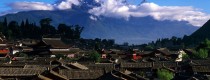 Lijiang
 Shangri-la
 Dali
Dali
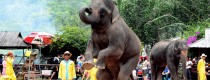 XishuangBanna
 Honghe
 Kunming
 Lijiang
 Shangri-la
 Yuanyang Rice Terraces
 Nujiang
 XishuangBanna
 Spring City Golf
 Snow Mountain Golf
 Stone Mountain Golf









Yang Yingjun – Inheritor of Yi Hulusheng Dance in Xichou County, Wenshan
Inheritance Background and Skills
Family Tradition: Yang Yingjun (born in 1953) followed his father to learn the Yi ethnic group’s Hulusheng dance and Hulusheng and Xianzi performance, becoming the lead dancer of the Hulusheng dance in Manlong Village.
Dance Style:
The dance is characterized by “one knee bend per beat,” which moves the waist, chest, and jaw to form an “S-shaped” rhythm. The movements are slow and drooping, simulating labor scenes like cotton picking and spinning, preserving the original dance style.
The dance consists of seven routines, including “Ya Nüe” (standing dance) and “Ya Qing” (starting dance), each corresponding to a specific Hulusheng melody.
Important Activities and Honors
Participation in Festivals: Yang Yingjun has participated in the first Wenshan Art Festival, Xichou Ethnic Festival, and Black-bone Chicken Festival, where his Hulusheng dance was praised by dancer Dai Ailian as the “Disco of the East.”
As a Provincial-Level Inheritor (Second Batch), he has long organized performances during festivals (such as from the first to the third day of the lunar new year, and the Qiaocai Festival), promoting cultural dissemination.
Inheritance Status
Together with the national-level inheritor Yang Yingjin (same name, different person, born in 1953, skilled in the same type of dance), Yang Yingjun is active on the Wenshan Intangible Cultural Heritage stage. However, Yang Yingjun focuses more on provincial-level inheritance and performances.
Facing the impact of external cultures, the inheritance of Hulusheng dance needs further protection.
Mastery of Yi Musical Instruments
Yang Yingjun (and his namesake Yang Yingjin) is not only skilled in performing Yi Hulusheng dance but also excels in various traditional instruments. In addition to Hulusheng, he can skillfully play the following instruments:
- Xianzi: A common Yi folk instrument used to accompany dances.
- Erhu: A traditional Chinese string instrument with rich expressiveness.
- Dizi: A bamboo wind instrument with a crisp and bright sound.
- Xiao: An ancient wind instrument with a mellow and charming tone.
- Suona: A double-reed instrument with a loud and bright sound.
These instruments play an essential role in Yi traditional music and dance. Yang Yingjun has enriched the musical expression of Hulusheng dance by mastering various instruments, making significant contributions to the inheritance and promotion of Yi musical culture.
Contributions to Yi Music Inheritance
- Inheritance and Teaching
Yang Yingjun learned to play Yi Hulusheng and dance from a young age. He is skilled in playing multiple instruments, including Hulusheng, Xianzi, Erhu, Dizi, Xiao, and Suona. He actively teaches young people in his village. During the slack farming season, he organizes teaching activities and has trained many young inheritors, including Yang Yonglong, Yang Yongfa, and Li Jinfo. His son, Yang Xiaolong, has also become his successor. - Cultural Display and Promotion
Yang Yingjun has led villagers to participate in large-scale cultural performances organized by the state, county, and province. Especially during important festivals such as the first to third day of the lunar new year, the fifteenth day of the first lunar month, and the “Qiaocai Festival” of the Huoluo people, he organizes performances of Hulusheng and Xianzi dances. Through these activities, he not only showcased the unique charm of Yi Hulusheng dance but also raised awareness of this intangible cultural heritage. - Honors and Recognition
In 2002, the Yunnan Provincial Department of Culture and the Yunnan Ethnic Affairs Committee named Yang Yingjun a “Folk Music Artist.” This honor not only recognizes his personal skills but also affirms his contributions to the inheritance of Yi music. - Protection and Innovation
While inheriting Yi music, Yang Yingjun also emphasizes innovation. By combining the performance of various instruments, he has enriched the musical expression of Hulusheng dance. He also actively participates in intangible cultural heritage protection activities organized by cultural departments, providing new ideas and methods for the inheritance and development of Yi music.
Through these contributions, Yang Yingjun has not only ensured the inheritance of Yi Hulusheng dance within his local community but also brought it to a broader stage, allowing more people to understand and appreciate this unique Yi culture.
For Chinese version please go to:
http://www.ynich.cn/view-ml-13111-2951.html