Yunnan Guide
  • Yunnan Guide
  • Travel Tips
  • Tour Planing
  • Ethnic Culture
  • Yunnan Climate
  • Golf Courses
  • Travel Articles
  • Huang Sidai - Inheritor of Bai "Benziqu" Opera in Jianchuan County, Dali 

    03/06/2019Brittany Tian4793 wordsAbout 16 minutes

    Introduction

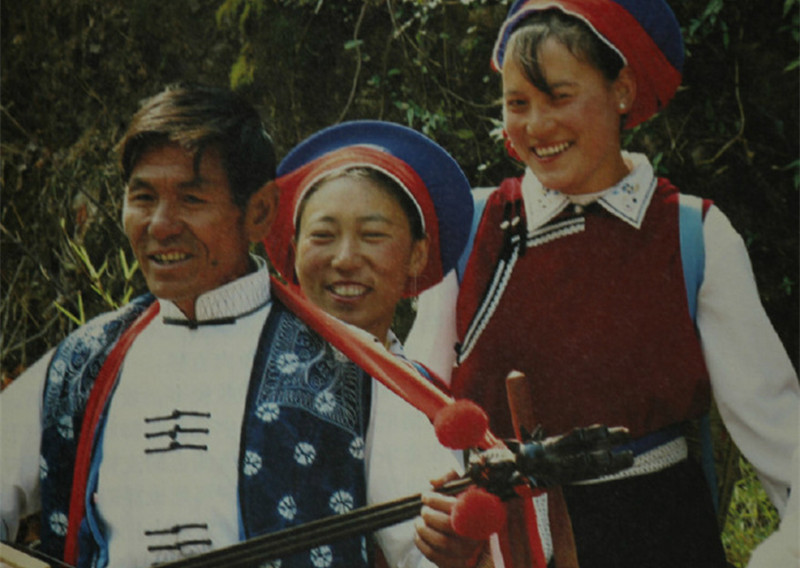
    Huang Sidao (黄四代), born in 1951, is a Bai musician from Huanghuaping Village (黄花坪村), Shaxi Town (沙溪镇), Jianchuan County (剑川县), Dali Prefecture (大理州), Yunnan Province. He is recognized as a provincial-level representative inheritor of intangible cultural heritage (second batch), specializing in Bai Benziqu (白族本子曲) singing, a traditional narrative and lyrical musical form.

    Huang Sidao is renowned for his powerful, rich voice and expressive singing style. Locally honored as the “King of Songs”, he excels in improvised singing duets and has won multiple awards, including the Shibao Mountain Song Festival First Prize and the March Street Benziqu Excellence Award. He has trained prominent disciples such as Li Genfan and Li Baomei, contributing significantly to the preservation and transmission of Bai traditional music.


    Early Life and Training

    Life Stage Experience Achievements
    Childhood Developed strong interest in Benziqu singing Displayed natural musical talent and passion
    Teenager Learned from multiple elder folk musicians Acquired solid foundational skills
    Young Adult Self-study to refine techniques Mastered classic pieces such as “Chumen Diao” (出门调), “August Osmanthus” (八月里桂花), “Flying Kite Song” (放鹞曲)
    Adult Became a renowned local performer Widely respected as the “King of Songs”; folk singers aspired to duet with him

    Huang Sidao’s training did not follow a single master but involved learning from many local folk artists, blending diverse styles into his unique artistic expression.


    Artistic Achievements

    Singing Style and Skills

    • Voice Characteristics: Loud, thick, and emotionally expressive; deeply admired by local communities.

    • Performance Style: Often invited to perform in Bai villages; audiences travel long distances to hear him.

    • Improvisation: Expert in creating impromptu duet songs, showcasing his musical creativity.

    • Artistic Philosophy: Believes a skilled Bai folk singer should have passion, musicality, and a strong voice.

    Representative Works

    Type Notable Pieces Performance Context Significance
    Traditional Benziqu Chumen Diao, August Osmanthus, Flying Kite Song Performed in villages and cultural events Preserves core Bai traditional repertoire
    Improvised Songs Various duets Shibao Mountain Song Festival and other gatherings Showcases improvisational talent and cultural vitality
    Major Performances 1986 Yunnan delegation at Gansu “Huā’ér Singing Festival” Provincial and national cultural exchange Promoted Bai music beyond local boundaries
    Media Featured in multiple TV documentaries Central and provincial TV Raised awareness of Bai music

    Awards and Recognition

    • Officially recognized as provincial-level intangible cultural heritage inheritor.

    • Multiple first prizes at Shibao Mountain Song Festival and March Street Excellence Awards.

    • Widely known as “King of Songs” in local communities.

    • Listed as an outstanding performer spreading Bai music nationally and internationally by the Jianchuan County government.


    Teaching and Cultural Transmission

    • Trains disciples such as Li Genfan (“Bai Song King”) and Li Baomei (provincial-level inheritor), passing on both techniques and cultural knowledge.

    • Employs oral teaching methods, tailored to each student, ensuring practical mastery.

    • Acts as a living link in Bai cultural continuity, helping younger generations learn and perform Benziqu.


    Contribution to Bai Culture

    1. Cultural Preservation: Collects, documents, and protects Benziqu repertoire; maintains original performance style.

    2. Cultural Transmission: Trains disciples who continue the tradition, ensuring generational continuity.

    3. Cultural Promotion: Performs in local festivals, provincial events, and media, expanding Bai music’s visibility.


    Bai Benziqu Cultural Context

    • Historical Roots: Also called Baiqu or Dabenziqu (大本子曲), with origins in Jianchuan over 1,000 years ago. Earliest records appear in historical texts such as Wudai Huiyao.

    • Cultural Significance: Integral to Bai society; proverbially said “Three fasting rituals cannot replace one Benziqu performance.”

    • Musical Features:

      • Pentatonic scales; repetition in two-part structures

      • Narrative and lyrical content; incorporates both Bai language and Mandarin

      • Accompanied by long-headed three-string instrument (龙头三弦)

      • Regional variations include Jianchuan, Eryuan, Yudiao, and Niqiu styles

    • Representative Repertoire: Hongyan Dai Shu (鸿雁带书), Chumen Diao (出门调), Flying Hawk Song (放鹰捕雀), Yue Li Guihua (月里桂花), among 50+ traditional pieces; includes long narrative poems exceeding 2,300 lines.


    Local Protection and Heritage Measures

    • National Recognition: Jianchuan Baiqu listed in 2014 as a national-level intangible cultural heritage (No. II-164).

    • Institutions: Jianchuan Baiqu Association and multiple training centers support inheritors.

    • Cultural Events: Regular festivals (Shibao Mountain Song Festival, March Street Ethnic Festival) provide performance platforms.

    • Education: Programs bring Benziqu into schools, teaching younger generations.

    • Policy Support: Financial and institutional backing for inheritors ensures sustainability.


    Conclusion

    Huang Sidao, as a provincial-level representative inheritor of Bai Benziqu, has devoted decades to performance, teaching, and cultural promotion. His work not only preserves a millennia-old musical tradition but also enhances its vitality, ensuring that the Bai people’s musical heritage continues to thrive for future generations. In the ancient Shaxi market along the Tea Horse Road, his voice still echoes across the mountains, embodying the enduring charm of Bai culture.

    Huang Sidai - Inheritor of Bai "Benziqu" Opera in Jianchuan County, Dali 

    ENQUIRY

    Have a question before booking? Message us to learn more.
    Click to change