Yunnan Guide
  • Yunnan Guide
  • Travel Tips
  • Tour Planing
  • Ethnic Culture
  • Yunnan Climate
  • Golf Courses
  • Travel Articles
  • "Cuocuo" - Folk Dance of Pumi Ethnic Minority in Lanping County, Nujiang

    22/05/2019Crazy Jone3434 wordsAbout 12 minutes

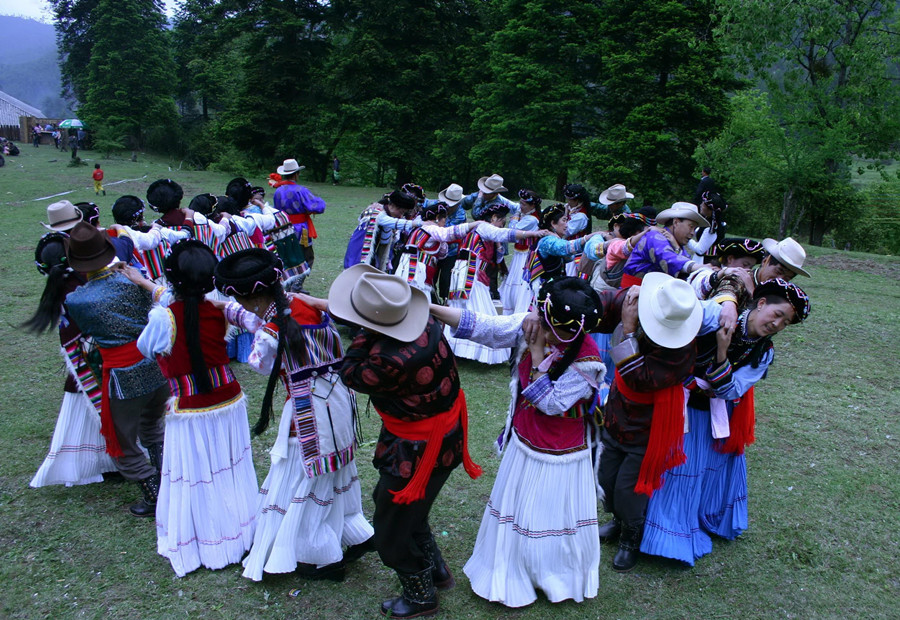
    The Pumi Ethnic Group Cuo Cuo (搓蹉) is a traditional dance originating in Lanping Bai and Pumi Autonomous County (兰坪白族普米族自治县), Yunnan Province. It is one of China’s National Intangible Cultural Heritage items.

    In the Pumi language, “Cuo” means “this dance,” while “Cuo” (蹉) means “to jump,” together meaning “to dance this dance.” During the performance, the lead dancer strikes a sheepskin in rhythm, creating a drum-like sound, which is why it is also known as the “Sheepskin Dance.” It is also referred to as the “Four-String Dance” (四弦舞) or “Pumi Guozhuang” (普米锅庄).

    "Cuocuo" - Folk Dance of Pumi Ethnic Minority in Lanping County, Nujiang

    Cuo Cuo is mainly practiced in Pumi-inhabited villages of Tongdian (通甸), Hexi (河西), Lajing (啦井), Jinding (金顶), and Shideng (石登) townships in Lanping County.

    On June 14, 2008, with the approval of the State Council of the People’s Republic of China, Pumi Ethnic Group Cuo Cuo was included in the second batch of National Intangible Cultural Heritage, with the registration code Ⅲ-78.

    Chinese Name: Pumi Ethnic Group Cuo Cuo (普米族搓蹉)
    Approval Date: June 14, 2006
    Heritage Level: National Level
    Category: Traditional Dance
    Declared Region: Lanping Bai and Pumi Autonomous County (兰坪白族普米族自治县), Yunnan Province
    Heritage Code: Ⅲ-78

    "Cuocuo" - Folk Dance of Pumi Ethnic Minority in Lanping County, Nujiang

    Historical Origins

    The origins of Cuo Cuo are not recorded in written history. According to folklore, during a war, Pumi ancestors lit bonfires and danced Cuo Cuo throughout the night. Their enemies mistook the dance for signs of a massive army and retreated in fear.

    According to old performers, the traditional Cuo Cuo originally had 72 variations of dance steps. Today, only 12 remain, including “Reunion Dance” (团聚舞), “Bowl-and-Chopstick Dance” (碗筷舞), “Close Dance” (相近舞), “Shoe-Sole-Clashing Dance” (鞋底相碰舞), “Hip-Bumping Dance” (臂部相撞舞), and “Ending Dance” (结尾舞).


    Artistic Features

    Form of Performance

    Cuo Cuo was said to have originally contained 12 sets, but through generations of transmission, new steps developed in different regions, increasing its diversity. Despite this, the methods of expression remain similar, with fixed melodic patterns and rhythmic structures.

    The dance features distinctive movements:

    • Vertical force direction: Represented by “Deng Peileng La” (登呸楞拉), where both feet move simultaneously.
    • Horizontal force direction: Represented by “Doubai Xuxu Cuo” (陡拜需徐蹉), a hip-bumping dance.
    • Opposing upper and lower body force: Represented by “Zong Cuo” (综蹉), one style of the Reunion Dance.

    The tempo is generally moderate. When slow, the steps appear light and graceful, resembling a breeze moving clothing. When fast, the steps are vigorous and powerful.

    Formation

    Dance formations include single circles, double circles, and semi-circles (often with hand-holding). The dance is usually performed counterclockwise but may also be clockwise. In double circles, participants may dance in the same or opposite directions.

    Cuo Cuo is unrestricted by time, place, or number of participants. Dancers may join or exit at will. Some may dance while others sing folk songs, resuming the dance after singing.


    Artistic Characteristics

    Cuo Cuo retains the ancient integration of song, dance, and music. It features diverse sets, varied formations, and rich step changes, balancing energy and grace.

    It is the most beloved dance of the Pumi people, widely performed for recreation, celebration, and fitness. Participation ranges from dozens to tens of thousands, expressing ethnic unity and joy while carrying significant artistic value.


    Inheritance and Protection

    Cultural Value

    Cuo Cuo is not only an entertainment and fitness activity but also an expression of ethnic solidarity and happiness. It is central to the cultural life of the Pumi people and holds high artistic significance.

    Protection Measures

    On October 31, 2023, the List of Representative Units for the Protection of National Intangible Cultural Heritage was released. The Lanping Bai and Pumi Autonomous County Intangible Cultural Heritage Protection Center (兰坪白族普米族自治县非物质文化遗产保护中心) was recognized as the protection unit for the Pumi Ethnic Group Cuo Cuo project.

    ENQUIRY

    Have a question before booking? Message us to learn more.
    Click to change