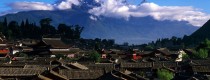
Dali Bai Autonomous Prefecture is positioned as a rising green growth engine in Yunnan Province, combining ecological protection, tourism-driven services, highland agriculture, and emerging green industries. In 2025, the region continues accelerating its transformation toward a low-carbon, service-led, and industrially upgraded economy, supported by strong policy alignment and resource advantages.
Macroeconomic Performance and GDP Structure
In 2025, Dali Bai Autonomous Prefecture recorded a GDP of 208.751 billion yuan, reflecting stable expansion under moderate growth pressure while maintaining structural optimization momentum.
Key Economic Indicators (Expanded Overview)
- GDP growth: 4.1% year-on-year, steady within national mid-tier range
- Provincial ranking: 7th in Yunnan Province, maintaining strong regional competitiveness
- Share of provincial GDP: 6.4%, gradually increasing contribution
- GDP per capita: ~62,600 yuan, reflecting rising household economic strength
- Five-year trajectory: continuous expansion from 157.55 billion yuan (2020) to over 200 billion
Growth is increasingly supported by services, green energy, and high-value agriculture, reducing dependence on traditional construction-led expansion.
Three-Industry Structure and Economic Composition
Industrial Distribution (2025)
| Sector |
Output (Billion RMB) |
Growth |
Share |
Key Role |
| Primary Industry |
42.352 |
3.4% |
20.3% |
High-altitude agriculture, rural economy stabilization |
| Secondary Industry |
58.213 |
3.0% |
27.9% |
Green manufacturing, energy-based industry upgrading |
| Tertiary Industry |
108.186 |
4.9% |
51.8% |
Tourism, logistics, modern services expansion |
The structure highlights a service-dominant economy, where tourism, consumption, and logistics continue to outperform traditional industrial sectors. Industrial upgrading is steadily improving the secondary sector’s resilience.
Fiscal System, Finance, and Market Vitality
Fiscal Revenue and Public Investment Expansion
- General public budget revenue: 10.802 billion yuan, showing stable tax base expansion
- Tax revenue: 6.619 billion yuan, driven by industrial parks and tourism recovery
- Public expenditure: 37.23 billion yuan, strongly oriented toward public welfare and ecological governance
Key spending priorities include:
- Education infrastructure improvement and workforce development
- Healthcare system modernization
- Social security expansion for rural populations
- Ecological protection of Erhai Lake, ensuring long-term tourism sustainability
Financial System Strengthening
- Bank deposits: 267.79 billion yuan
- Loan balance: 254.77 billion yuan
- Resident savings: 200.48 billion yuan
High deposit levels indicate strong household wealth accumulation, while balanced credit growth supports both industrial expansion and tourism infrastructure development.
Market Entity Growth
- Total registered entities: 437,000+
- Net increase since 2020: +185,000
- Scale enterprises: 1,959, nearly doubling from previous cycle
This reflects accelerating private sector vitality and entrepreneurial activity.
Fixed Asset Investment and Structural Transformation
Investment patterns are shifting significantly toward real economy and green industry:
- Industrial investment share reaches 49%, replacing real estate-led growth
- Manufacturing and energy sectors become primary investment targets
- Private investment growth: +11.1%, signaling strong business confidence
- Real estate investment continues to decline due to ecological and policy constraints
The investment structure is now aligned with industrial modernization and ecological protection priorities.
Highland Agriculture: Strong Primary Industry Foundation
The agricultural sector reached 77.489 billion yuan, maintaining its position as one of Yunnan’s top agricultural regions.
Core Agricultural Strength Expansion
- Dairy industry: No.1 in Yunnan, supported by industrialized farming systems
- Walnut production: No.1 in both area and output, forming large-scale rural economy clusters
- Core counties: Yongping, Yangbi, Yunlong
Diversified Agricultural Portfolio
- Blueberry cultivation for premium export markets
- High-altitude vegetable farming with organic branding
- Medicinal herb production for pharmaceutical supply chains
- Citrus and pomegranate industries led by Binchuan County
Agriculture is supported by cold-chain logistics and processing systems under the Cangshan–Erhai premium brand system, positioning the region as a western Yunnan agro-distribution hub.
Industrial Development: Green Manufacturing Engine
The secondary industry contributes 48.602 billion yuan, accounting for 23.3% of GDP, with a strong focus on green energy and new materials.
Strategic Industrial Directions
- Green energy system integration (wind, solar, hydro, geothermal)
- Silicon photovoltaic manufacturing cluster
- New energy battery materials supply chain
- Green aluminum and circular metallurgy
- Metal mining and deep processing industries
- Tobacco and agro-processing stabilization sector
Green Energy Infrastructure Strength
Total installed power capacity reaches 21.62 million kW, including over 8 million kW of renewable energy, enabling low-cost electricity for heavy industry.
Key industrial zones:
- Xiangyun Economic Development Zone (national zero-carbon pilot zone)
- Dali Economic Development Zone (provincial green manufacturing hub)
Industrial Clusters and Manufacturing Growth
Leading Enterprises and Industrial Output Acceleration
- Huasheng photovoltaic manufacturing
- Hongxin solar energy systems
- Betri advanced battery materials
- CITIC Dicastal aluminum component manufacturing
- Yixin aluminum processing chain
High-Growth Industrial Outputs
- Photovoltaic industry: +9.3 times growth vs 2022
- New energy batteries: +4.7 times expansion
- Green aluminum industry: 3.6 times increase since 2020
This reflects the formation of a complete green industrial chain: green electricity → materials → manufacturing → components.
Mining and Traditional Industrial Base
- Beiya Gold Mine operations
- Qingyang copper extraction zones
- Rare metal processing (antimony, indium)
- Mining sector growth rate: 45.4%, driven by resource upgrading
Tourism Economy: Core Service Industry Driver
The service sector contributes over 51% of GDP, with tourism as the dominant engine.
Tourism Scale and Economic Impact
- Annual tourist arrivals: 120 million+ visitors
- Employment supported: 850,000+ jobs
- Tourism economy now functions as a core employment stabilizer
Core Tourism Assets
- Dali Ancient City
- Erhai Lake scenic belt
- Cangshan Mountain ecological zone
- Cultural IP: “Wind, Flower, Snow, Moon” landscape system
- Popular culture boost from “Meet Yourself” TV influence
Industry Transformation Trends
- From ticket-based tourism → experiential economy
- Wellness and retirement migration tourism
- Outdoor hiking and cycling tourism
- Cultural heritage immersion experiences
International Hospitality Development
- InterContinental
- Conrad
- Le Méridien
- Grand Hyatt
High-end hospitality clusters are forming around Erhai Lake and Dali Old Town tourism belt.
Tourism and Service Industry Expansion
Modern Service System Development
- Western Yunnan logistics hub connecting agriculture and industry
- Cold-chain logistics for agricultural exports
- Growing urban consumption centers in Dali urban districts
Emerging Service Sectors
- Digital economy platforms
- Low-altitude aviation economy (tourism + logistics)
- Medical wellness and rehabilitation tourism
- Cultural creative industries
- Exhibition and conference economy
These sectors are gradually reducing dependence on traditional tourism cycles.
County-Level Economic Structure
Regional Economic Hierarchy
| Tier |
Region |
Economic Characteristics |
| Tier 1 |
Dali City |
Comprehensive hub for tourism, commerce, and industrial services |
| Tier 2 |
Xiangyun County, Binchuan County, Heqing County |
Industrial manufacturing, agriculture export base, aluminum economy |
| Tier 3 |
Eryuan, Midu, Yongping, Yangbi, Yunlong, Nanjian, Weishan, Jianchuan |
Agriculture-driven, localized tourism, small-scale processing industries |
Each county is developing distinct industrial specialization strategies, reducing redundancy and increasing regional balance.
Income Level and Consumer Market
Household Income Growth
- Per capita disposable income: 30,918 yuan (+4.0%)
Urban-Rural Income Structure
- Urban residents: 46,824 yuan (+2.9%)
- Rural residents: 19,300 yuan (+6.1%)
Rural income growth significantly outpaces urban growth, driven by:
- Agricultural industrialization
- Rural tourism development
- Logistics and e-commerce penetration
Consumption Trends
- Total per capita consumption: 25,562 yuan
- Rural consumption growth: 6.7%
- Urban consumption growth: 3.2%
Rural markets are becoming a new consumption growth frontier.
Strategic Advantages of Dali Economy
Structural Competitive Strengths
- World-class ecological asset: Erhai Lake ecological system
- Strong renewable energy base: wind, solar, hydro, geothermal integration
- Strategic transportation hub: railway, highway, and airport network
- High-altitude specialty agriculture with national recognition
- Multi-policy support: carbon neutrality pilot, ecological civilization model, international wetland city status
These advantages collectively position the region as a benchmark green economy zone in western China.
Challenges and Structural Constraints
- Industrial base remains relatively weak compared to service sector dominance
- Heavy reliance on tourism creates seasonal economic volatility
- Uneven development among counties and rural areas
- Strict ecological protection limits large-scale industrial expansion
- Shortage of high-end talent in technology and digital sectors
2026 Economic Development Targets
Key objectives for the 70th anniversary year:
- GDP growth target: ~5%
- Industrial value-added growth: 7%
- Fixed asset investment growth: 2%
- Retail sales growth: 5%
- Income growth exceeding GDP growth
Strategic Implementation Focus
- Industrial upgrading and green manufacturing expansion
- Industrial park consolidation and cluster development
- Tourism quality improvement and product diversification
- Market entity expansion and SME support
- Ecological city construction and carbon reduction systems
- Strengthening fiscal capacity and investment attraction
Green Development and Ecological Economy
Dali’s development model is fundamentally anchored in ecological priority and green transformation:
- Long-term protection of Erhai Lake ecological system
- National leading water quality preservation standards
- First international wetland city in Yunnan Province
- Expansion of zero-carbon industrial parks and clean energy substitution
- Growth of organic agriculture and low-carbon tourism economy
- Transition toward “green waters and mountains as productive assets” development model
This ecological foundation defines the long-term competitiveness of Dali’s economy.