Yunnan Guide
  • Yunnan Guide
  • Travel Tips
  • Tour Planing
  • Ethnic Culture
  • Yunnan Climate
  • Golf Courses
  • Travel Articles
  • Luowang Miao Ethnic Town in Yiliang County, Zhaotong

    12/07/2018Crazy Jone4370 wordsAbout 15 minutes

    ✨ Along the Baishui River (白水江), discover a land where cultures converge, where nature and traditions meet—the hidden tourism gem of Northeast Yunnan.

    ? Geographic Location

    Luowang Miao Ethnic Township (洛旺苗族乡) lies in the northeast of Yiliang County (彝良县), Zhaotong City (昭通市), Yunnan Province. It sits at the junction of two provinces (Yunnan and Sichuan), five counties, and eight townships, making it the true “Northern Gateway of Yiliang”.

    • East: Neighboring Chang’an Township (长安乡) in Weixin County (威信县)

    • South: Bordering Luokan Town (罗坎镇) in Zhenxiong County (镇雄县)

    • West: Adjacent to Liuxi Miao Ethnic Township (柳溪苗族乡)

    • North: Connected to Gaoping Miao Township (高坪苗族乡) in Junlian County (筠连县), Sichuan Province

    Thanks to its strategic location, Luowang has long been a transportation hub leading to Zhenxiong and Weixin counties. The township seat, Luowang Street (洛旺街), is about 97 km from Yiliang County town.

    ?️ Geographic Features

    • Total area: 170.35 sq km

    • Terrain: High mountains and steep slopes, with elevations ranging from 650–1,892 m

    • Highest peak: Yuntai Mountain (云台山) in Zhongchang, at 1,702 m

    • Lowest point: Confluence of Dashuixi River (大水溪) and Baishui River (白水江), at 580 m

    The Baishui River (白水江) flows through the township, with a basin area of 38 sq km and a 20 km-long river course, blessing Luowang with abundant water resources and scenic river views.

    ?‍?‍? Population & Ethnic Groups

    By the end of 2019, Luowang Miao Ethnic Township had a registered population of 33,274.

    • Miao people (苗族): 6,432 (21.9%)

    • Yi people (彝族): 213 (0.72%)

    • Han people (汉族): Majority population

    This multi-ethnic mix creates a vibrant cultural atmosphere where visitors can experience authentic Miao traditions and warm hospitality.

    ? Historical Evolution

    The name “Luowang” (洛旺) originated from the Luo (罗) clan, once a dominant family here. Later, “罗” was replaced with its homophone “洛,” forming the current name.

    • 1953: Established as Luowang District (洛旺区)

    • 1958: Converted to a commune

    • 1984: Restored as a district

    • 1988: Reorganized into Luowang Miao Ethnic Township (洛旺苗族乡)

    It is also the hometown of Xu Honggang (徐洪刚), a celebrated national hero, adding historical and cultural value to the land.

    ? Education Resources

    Luowang places strong emphasis on education, with:

    • 1 junior middle school: 20 teaching classes, 1,348 students

    • 33 primary schools: including 12 complete, 10 intermediate, and 11 small schools

    • 1 “Hand-in-Hand” Hope Primary School, the third of its kind nationwide

    • School-age enrollment rate: 98.5%

    • Junior middle school gross enrollment rate: 95.18%

    ? Unique Resources

    ? Haiziping Nature Reserve (海子坪自然保护区)

    • Provincial-level nature reserve

    • China’s largest wild bamboo base, covering 45,000 mu

    • Rich in Mao bamboo, square bamboo, and Luohan bamboo

    ? Natural Products

    Bamboo shoots, Luohan bamboo, wild vegetables, wild Gastrodia (天麻), and more.

    ? Water & Hydropower

    Three hydropower stations (Tangfang, Zhongchang, Luowang) with an installed capacity of 5,860 kW.

    ? Forest Resources

    Ecological forest: 108,000 mu
    Forest coverage: 42.9%

    ? Culture & Tourism

    ? Flower Season

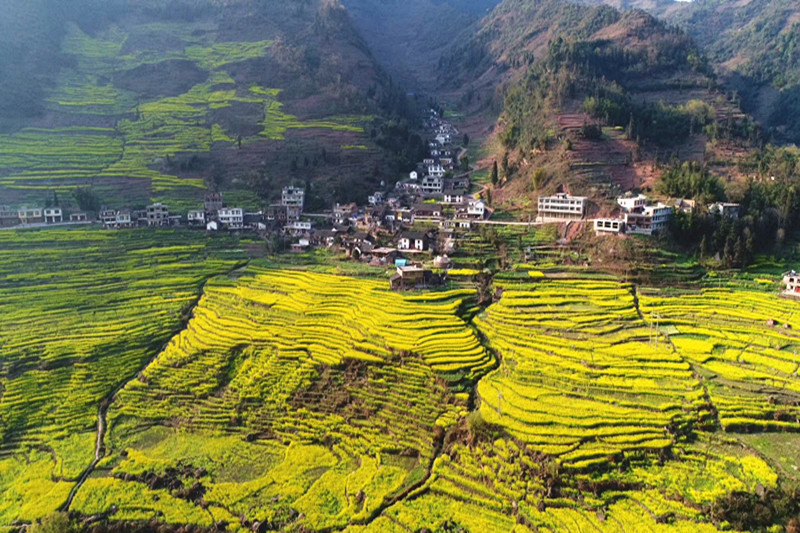
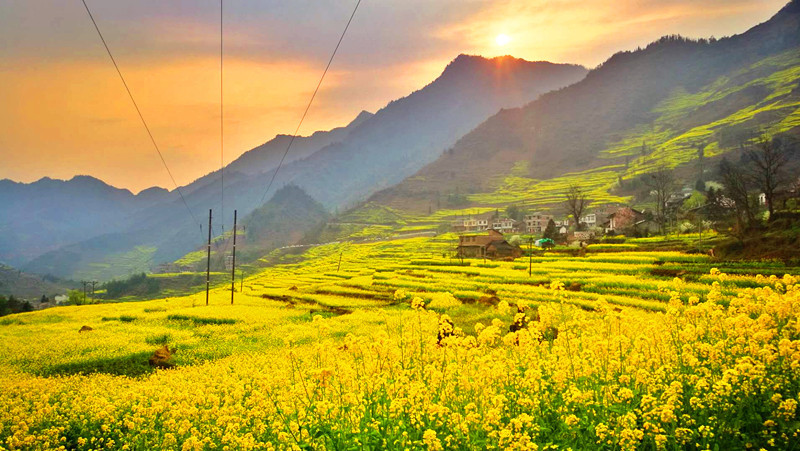
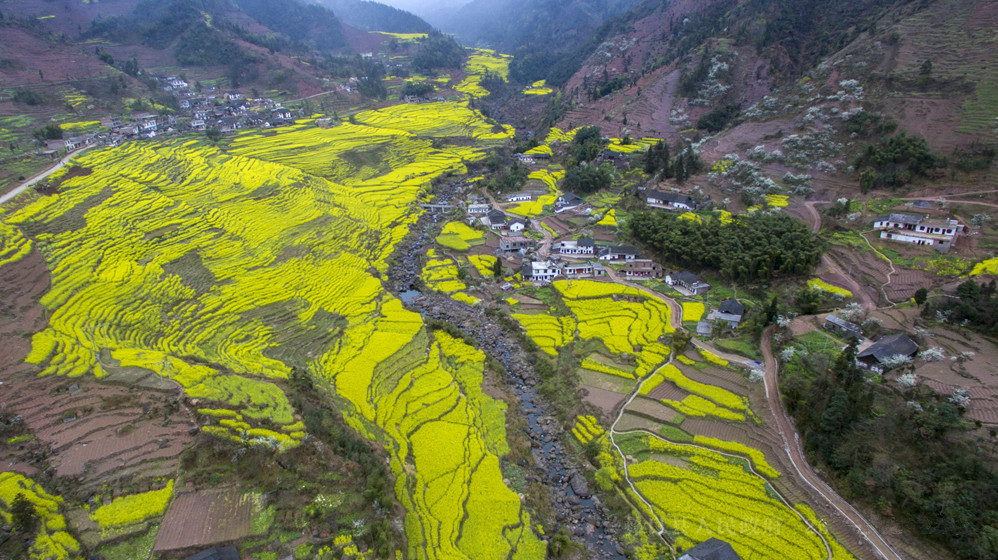
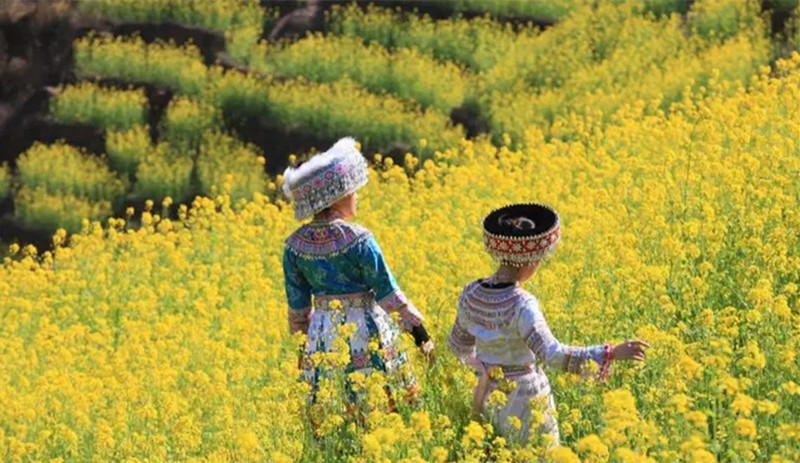
    From late February to mid-March, vast seas of rapeseed flowers bloom across the hillsides, creating breathtaking scenery for photographers and visitors alike.

    ? Bamboo Sea Exploration

    Haiziping Nature Reserve (海子坪) is a must-visit attraction, where a vast bamboo sea offers refreshing ecological tourism experiences.

    ? Rural Tourism Festival

    In March 2018, Luowang held its first Rural Tourism & Cultural Festival under the theme “Beautiful Countryside, Nostalgia Revisited.”
    Activities included poetry recitals, folk performances, bonfire nights, and photography tours.

    Visitors can:

    • Stroll through rural landscapes

    • Photograph rivers and mountains

    • Recite countryside poems

    • Taste authentic farm cuisines

    • Enjoy folk shows under the stars

    ? Transportation

    • Asphalt roads connect Luowang to the county seat

    • Zhaowei Highway (昭威公路) runs through the town

    • Township main roads are all hardened pavement

    • The nearest bus station is only 0.2 km away

    Convenient transport makes exploring local attractions easy and accessible.

    ? Festivals & Cultural Activities

    While detailed records of traditional festivals are limited, Luowang hosts diverse cultural celebrations. During the tourism festival, Miao villagers perform the welcoming song “Miaoling Yingkege” (苗岭迎客歌) and graceful Miao dances, expressing gratitude and joy for new times.

    Visitors can also join:

    • Bonfire parties

    • Folk song & dance shows

    • Local delicacies: rapeseed oil, honey, bamboo shoots, rice cakes, vermicelli, sticky rice cakes, potatoes, liangfen (凉粉), and barbecue skewers.

    Luowang Miao Ethnic Township (洛旺苗族乡) is a treasure trove of natural beauty, ethnic culture, and ecological resources. Whether you seek peace and nostalgia, wish to explore minority traditions, or simply want to immerse yourself in pristine landscapes, Luowang promises a unique and memorable journey.

    ? Welcome to Luowang

    Feel the charm of diverse cultures by the Baishui River,
    Breathe in the freshness of a sea of bamboo,
    And leave your footprints in golden fields of rapeseed flowers!

    More About

    ENQUIRY

    Have a question before booking? Message us to learn more.
    Click to change