Yunnan Guide
  • Yunnan Guide
  • Travel Tips
  • Tour Planing
  • Ethnic Culture
  • Yunnan Climate
  • Golf Courses
  • Travel Articles
  • White Elephant Dance and Deer Dance of Dai Ethnic Minority in Menglian County, Puer

    22/05/2019Crazy Jone3985 wordsAbout 14 minutes

    The Dai Ethnic White Elephant and Red Deer Dance (傣族白象、马鹿舞) is a traditional prop dance originating in Dai communities in Lincang City (临沧市) and Pu’er City (普洱市), Yunnan Province (云南省). On May 24, 2021, it was inscribed into the fifth batch of the National Intangible Cultural Heritage Representative Projects List.

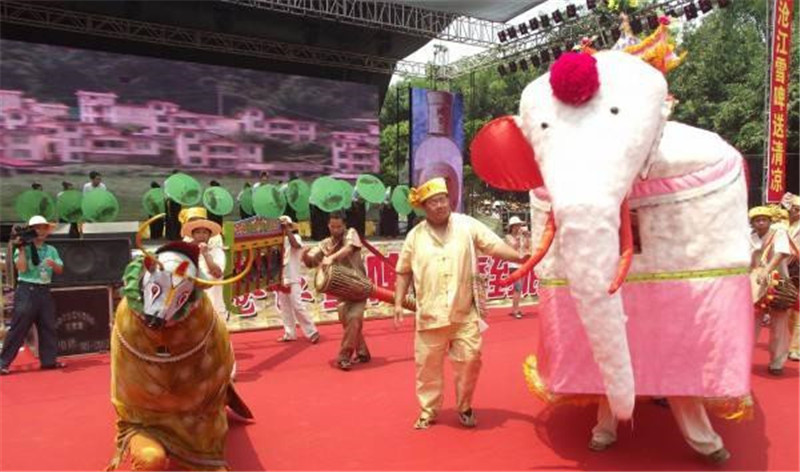
    This dance uses bamboo and wood-crafted props shaped like white elephants and red deer. Male performers wear and manipulate the props, imitating animal movements accompanied by elephant-foot drums and other percussion instruments to create an atmosphere of festivity and blessing. As an important part of Dai festivals such as the Water-Splashing Festival (泼水节), it conveys prayers for favorable weather, commemorates the pioneering achievements of ancestors, and fulfills Buddhist ritual functions.White Elephant Dance and Deer Dance of Dai Ethnic Minority in Menglian County, Puer

    Heritage Category: Traditional Dance
    Heritage Code: Ⅲ-141
    Inscribed: 2021
    Applicant Region: Yunnan Province (云南省)
    Protection Unit: Yunnan Provincial Intangible Cultural Heritage Protection Center (云南省非物质文化遗产保护中心)
    Popular Regions: Dai communities in Gengma County (耿马县), Menglian County (孟连县), and surrounding areas

    White Elephant Dance and Deer Dance of Dai Ethnic Minority in Menglian County, Puer

    Historical Origins

    The dance can be traced back to the Tang Dynasty (唐代). It originated from the Dai people’s imitation of a mysterious beast called “Duo” (朵) and later merged with Buddhist culture to become part of temple ritual dances. With the spread of Buddhism, the dance evolved into a form with strong religious functions.

    In the Dai language, the Red Deer Dance is called “Jiado” (戛朵), while the White Elephant Dance is divided into two types: White-Tusk Elephant and Red-Tusk Elephant. These dances are mainly distributed in Dai-populated areas of Menglian County (孟连县) in Pu’er City (普洱市) and Gengma Dai and Wa Autonomous County (耿马傣族佤族自治县) in Lincang City (临沧市). Passed down for centuries, they remain an integral part of community culture today.

    White Elephant Dance and Deer Dance of Dai Ethnic Minority in Menglian County, Puer

    Artistic Characteristics

    Prop Making

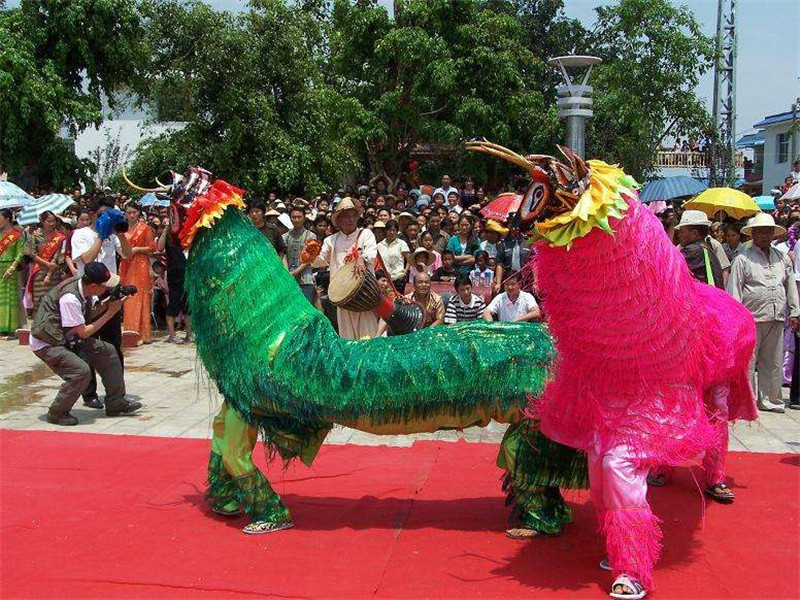
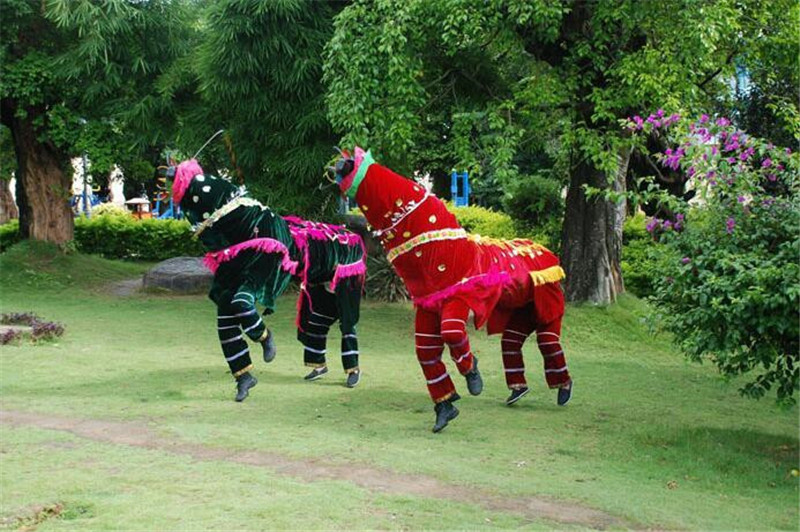
    Props are crafted from bamboo and wood frames covered with paper and cloth, decorated with tassels, fur, and beads. Eyes and noses can move flexibly. The white elephant prop is about 3 meters long and 2 meters high, while the red deer prop is about 2.5 meters long, each requiring two performers to operate.

    Performance Style

    Male performers wear the props to enact the dances. The Red Deer Dance features chasing and galloping movements, often with comic ghost characters for amusement. The White Elephant Dance emphasizes solemn, steady steps to convey sacredness. Both are often performed together with the Peacock Dance (孔雀舞).

    Musical Accompaniment

    Music is provided by elephant-foot drums, bronze gongs, and cymbals, usually in 2/4 time to create a lively rhythm. The number of deer props ranges from two to over a dozen, allowing flexible performance scales.


    Performance Occasions

    The dances are mainly performed during the Water-Splashing Festival (泼水节), Opening Gate Festival (开门节), Closing Gate Festival (关门节), God Fish Festival (神鱼节), and temple celebrations.

    In Gengma County (耿马县), large-scale performances are held every Water-Splashing Festival. During the 2021 Spring Festival, the dances were showcased as highlights of intangible cultural heritage displays. In Menglian County (孟连县), the dances are incorporated into tourism programs, where visitors can watch ceremonial performances at the former Administrative Office of the Pacification Commissioner (宣抚司署).


    Inheritance and Protection

    In 2021, Menglian County (孟连县), Ximeng County (西盟县), and Jinggu County (景谷县) jointly applied for the dance’s recognition, which was approved by the State Council. The Yunnan Provincial Intangible Cultural Heritage Protection Center (云南省非物质文化遗产保护中心) serves as the legal protection unit. In 2023, it passed the national evaluation of heritage protection units.

    The China Tourism Group integrated the White Elephant and Red Deer Dance into the ceremonial music and dance of the Menglian Pacification Commissioner’s Office (孟连宣抚司), successfully promoting its recognition as national intangible heritage and incorporating it into modern cultural tourism industries.


    Cultural Value

    As an important carrier of Dai traditional culture, the dance embodies both primitive animal-worship beliefs and Buddhist cultural elements. The ghost characters in the Red Deer Dance retain traces of ancient Nuo ritual theater, while the White Elephant Dance conveys the Buddhist symbolism of “Auspicious White Elephant.”

    Its choreographic design combines natural animal instincts with humanized expressions, enhancing artistic appeal. The dance serves as a living specimen for studying the Dai people’s history, religious beliefs, and artistic aesthetics.

    ENQUIRY

    Have a question before booking? Message us to learn more.
    Click to change