Baisha Fine Music (纳西族白沙细乐) is a traditional musical heritage of the Naxi ethnic group, widely performed in the Old Town of Lijiang (丽江市古城区) and Yulong Naxi Autonomous County (玉龙纳西族自治县) in Yunnan Province. Recognized as a National Intangible Cultural Heritage of China, this musical tradition reflects the Naxi people’s profound artistic sensibilities and their historical interactions with Central Plains and Mongolian cultures. Characterized by sorrowful, lyrical melodies, Baisha Fine Music integrates instrumental music, vocal performance, and dance, forming a classical suite that has been passed down for centuries.

History and Origins
The origins of Baisha Fine Music are surrounded by rich legends and historical narratives.
- One story attributes its beginnings to the Yuan Dynasty when Kublai Khan (元世祖忽必烈), during his expedition to Dali, left behind his Mongolian court musicians as a token of gratitude to the local Naxi chieftain.
- Another explanation suggests it emerged from celebrations after the Naxi people’s victory over the Pumi ethnic group.
- Some records also trace its transmission from Nanjing during the Ming Dynasty.
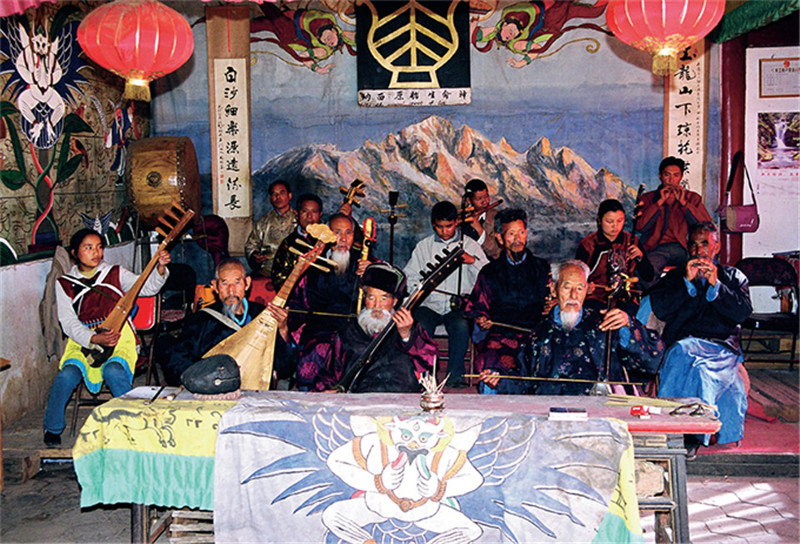
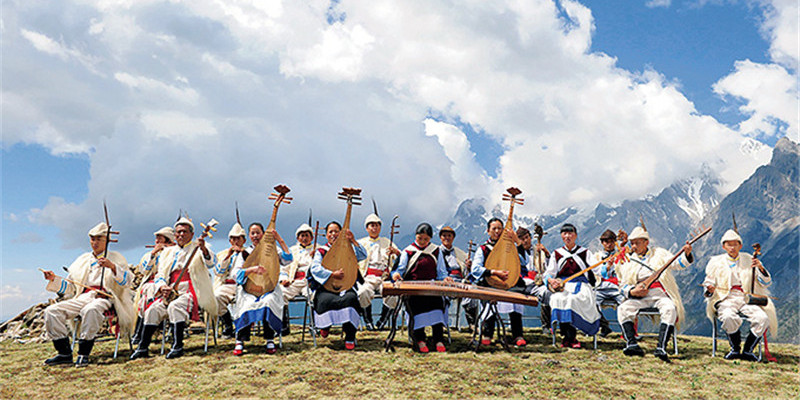
By the late Qing Dynasty, Baisha Fine Music was widely played in Lijiang. Traditionally, it was performed during funerals, ancestral rites, and important ceremonies, with musicians often dressed in robes and headgear resembling Mongolian attire.

Artistic Features
Baisha Fine Music is regarded as one of the most representative works of Naxi classical music. It blends ancient Yuan and Ming musical elements with indigenous Naxi traditions. The repertoire originally consisted of 10 musical modes, with 8 surviving today, including:
- “Du” (笃)
- “A Letter” (一封书)
- “Three Thoughts” (三思及)
- “Beautiful White Clouds” (美丽的白云)
- “Princess Weeping” (公主哭)
- “Tuo Cuo” (跺蹉)
- “Nan Qu” (南曲)
- “Bei Qu” (北曲)
The music is often performed alongside dances such as the Barefoot Dance (跺蹉), Skylark Dance (劳马蹉), Bow and Arrow Dance (抗蹉), and White Crane Dance (夸蹉), which are deeply tied to Naxi funeral rituals and oral history.

Musical Style
Baisha Fine Music is melancholic and expressive, often evoking themes of parting, longing, and remembrance. The compositions primarily follow pentatonic-based scales, occasionally expanding to six- or seven-note structures. Some pieces are soft, flowing, and graceful, while others carry solemn ritualistic tones.
Funeral performances, which typically lasted three days, followed a strict order of music and ritual. The ensemble was led by a senior musician who ensured adherence to ceremonial tradition.

Ensemble and Instruments
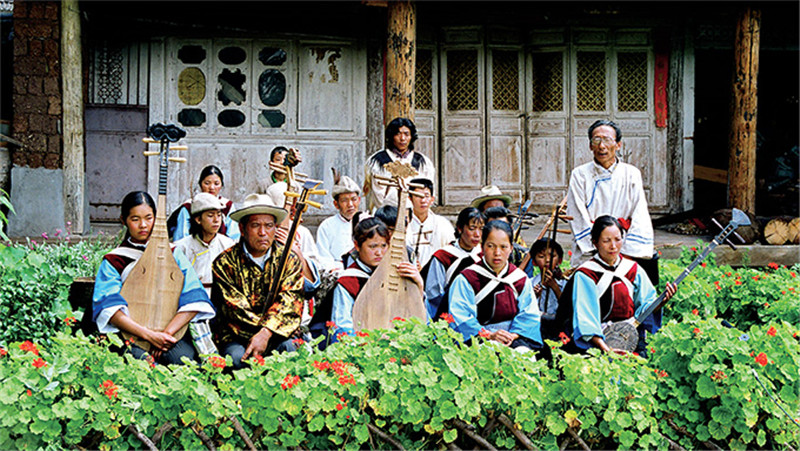
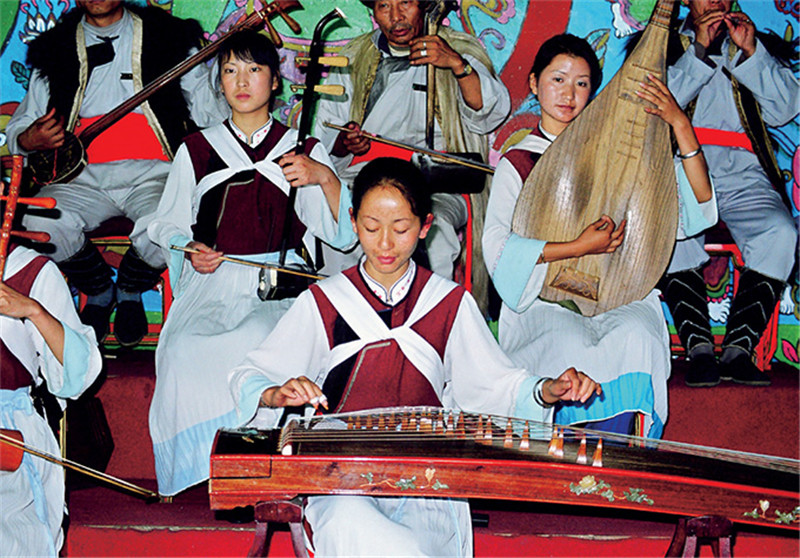
The Baisha Fine Music ensemble varies from 3–10 musicians, requiring at least 8 different instruments for a full performance. Instruments include:
- Flute (横笛, 直笛)
- Reed pipe (芦管)
- Su Gu Du (苏古杜) – similar to the Yuan dynasty “Huo Bu Si (火不思)” instrument
- Zither (筝)
- Pi-pa (琵琶)
- Hu Qin (胡琴)
- Er Zha (二箦) – a two-string bowed instrument
The flute typically leads the ensemble, accompanied by string and wind instruments, with singing and dancing as integral components.
Inheritance and Protection
Baisha Fine Music represents the artistic spirit of the Naxi people and has been passed down through oral traditions and apprenticeship. Since the 1960s, scholars and cultural workers have conducted research and documentation to preserve this heritage.
Key protection measures include:
- The “Naxi Folk Music Protection and Management Regulations” issued by Lijiang authorities.
- Establishment of transmission centers in Changshui Village (长水村), Huangshan Town (黄山镇).
- Designation of representative inheritors such as He Linyi (和凛毅).
- Recognition in 2011 as a National Intangible Cultural Heritage (Code II-152).
- In 2023, the Old Town of Lijiang Intangible Cultural Heritage Protection Center passed the national evaluation as the official protection unit.
Social and Cultural Influence
Baisha Fine Music holds immense cultural value, not only for the Naxi people but also as a symbol of cross-cultural fusion. Its performances provide insight into local history, migration, funeral customs, and ritual practices.
In modern times, it has gained international attention. On October 22, 2007, Naxi Ancient Music (including Baisha Fine Music) was performed at the Beijing Zhongshan Music Hall as a special concert to celebrate the 62nd United Nations Day, showcasing the unique beauty of this endangered tradition to the world.
Baisha Fine Music (纳西族白沙细乐) is more than a musical tradition; it is a cultural archive that preserves the collective memory of the Naxi people. With its fusion of Mongolian, Han, and Naxi elements, it represents centuries of intercultural exchange on the Southwest Silk Road. Despite challenges in transmission due to declining practitioners, government initiatives and scholarly efforts have ensured its survival. Today, Baisha Fine Music stands as a profound expression of the Naxi spirit, deserving both local reverence and global recognition.