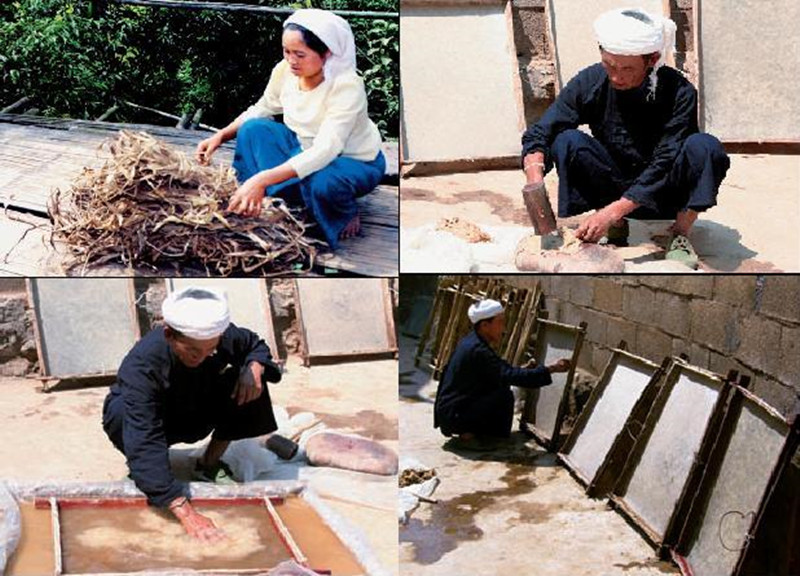
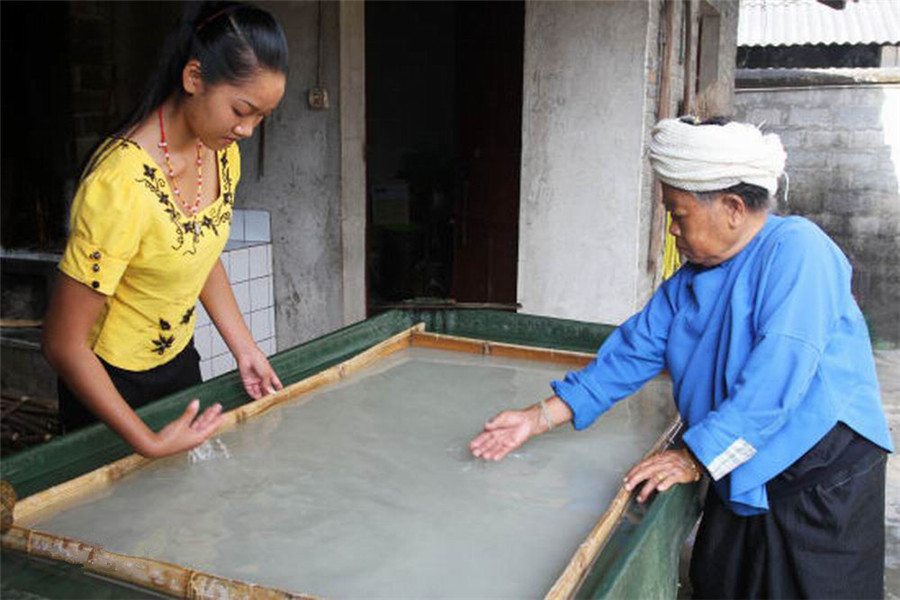
The Traditional Handmade Papermaking Techniques of the Dai (傣族) and Naxi (纳西族) are recognized as a National Intangible Cultural Heritage of China. Originating in Lincang City (临沧市) and Shangri-La County (香格里拉县) in Yunnan Province, this craft reflects centuries of cultural exchange, religious practice, and artisanal mastery.
The technique is the result of the integration of Han papermaking methods (抄纸法) introduced to Lijiang (丽江) during the Yuan Dynasty with Tibetan papermaking methods (浇纸法) during the Ming period. Over time, the Dai and Naxi peoples refined these techniques, producing durable, flexible, and culturally significant handmade papers such as Dai Cotton Paper (缅纸) and Dongba Paper (东巴纸).
On May 20, 2006, this tradition was officially inscribed in the First Batch of National Intangible Cultural Heritage List of China, with heritage code Ⅷ-68.
Yunnan Province has a long history of papermaking, dating back at least to the Three Kingdoms period (220–280 CE) when paper first entered the region.
This evolution established Yunnan as a center of fine handmade papermaking, blending multiple traditions into a unique regional craft.

The Dai and Naxi papermaking traditions are noted for their use of broussonetia bark (构树皮) and other plant fibers as raw materials.
Dai Paper: Thin, soft, strong, and slightly rough in texture, with a unique wood fragrance. It is resistant to insects, water-absorbent, breathable, and highly durable—lasting decades or even centuries. Common uses include:
Naxi Paper (Dongba Paper, 东巴纸): White, thick, insect-resistant, and highly durable. It has been used to preserve over 5,000 Dongba manuscripts, making it invaluable for religious and cultural continuity.
The Dai people traditionally favored bamboo for papermaking. Young bamboo shoots collected after Grain Rain (谷雨) and before Grain Full (小满) were ideal for fiber quality. The process included:
The Naxi people used Lijiang Daphne (丽江荛花, Adanda) from the Thymelaeaceae family. The process involved:
This meticulous process results in the high-quality Dongba Paper essential for scripture preservation and ritual use.
The papermaking traditions of the Dai and Naxi represent a fusion of Chinese and South Asian papermaking techniques, making them a living example of cross-cultural craftsmanship. They are crucial for studying early Chinese papermaking and its Southeast Asian connections.
Traditionally, papermaking knowledge was transmitted through family workshops and often father-to-son, limiting its spread. With the rise of industrial paper production, these crafts have faced decline and risk of extinction.
Dai and Naxi handmade papermaking has attracted global attention. Scholars, artisans, and businesses from the United States, Korea, Germany, Japan, and Malaysia have visited Yunnan to study or purchase the paper.
In 2014, the Yunnan Nationalities Museum produced the documentary Handmade Papermaking: Dongba Paper and Dai Cotton Paper, further raising awareness of these endangered traditions.
The Handmade Papermaking Techniques of the Dai (傣族) and Naxi (纳西族) are more than craft traditions—they are cultural vessels preserving religion, literature, and memory. From Buddhist scriptures and Dongba manuscripts to festive lanterns and umbrellas, this heritage showcases the ingenuity and artistry of Yunnan’s peoples.
While modern industrial paper threatens their survival, active protection measures, transmission by skilled inheritors, and growing international interest provide hope. Today, these papermaking traditions continue to serve as living testaments to the fusion of Chinese and Southeast Asian craftsmanship, deserving preservation for generations to come.