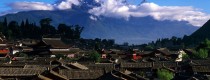
The folk ballad Yang Wentun Xiaoyin (阳温暾小引), also known as Chuiyan Tune (吹烟调), is a unique literary and musical work that originated in the Daoguang era of the Qing Dynasty (清道光年间). It is mainly circulated in Heshun Town (和顺镇) of Tengchong County (腾冲县), Yunnan Province (云南省). Heshun, historically called Yang Wentun (阳温暾), was a key gateway on the route connecting Tengchong with Myanmar. Known as a famous hometown of overseas Chinese, Heshun was the birthplace of countless men who ventured abroad, especially to Southeast Asia, in search of livelihood.
The ballad is both a heartfelt reflection of their longing for home and a practical manual for survival abroad. Written in a mix of colloquial speech and semi-classical Chinese, it captures the personal struggles, aspirations, and moral values of Tengchong men during their journeys overseas. Scholars regard it as both a cultural “guidebook for going abroad” and a cautionary folk song that instructed fellow villagers on how to navigate life’s uncertainties.
Historical Background
The ballad emerged during a time when large numbers of Tengchong men left their hometown for Myanmar and other Southeast Asian countries. As they carried with them the dream of returning to their ancestral land, their stories of hardship and success were distilled into this song.
The title, Yang Wentun Xiaoyin, literally refers to “Yang Wentun’s short prelude.” Its naming reflects the deep emotional ties of the overseas Chinese in Heshun to their homeland, symbolizing their hopes to one day return like fallen leaves to their roots.
Structure of the Ballad
The ballad is extensive in length and carefully structured:
- Opening: Begins with a Xijiangyue (西江月) poem.
- Body: Includes 20 verses of Wugeng Drum (五更鼓) songs, totaling 790 lines, arranged in vertical columns with a rhythmic pattern of “three, three, four” syllables (10 characters per line).
- Ending: Concludes with an ancient-style poem.
This layered composition blends multiple poetic forms, combining elegance with accessibility for common villagers.
Content and Themes
Life at Home and Abroad
The ballad vividly recounts the life journey of Tengchong men—from childhood in Heshun, their decision to leave home, and the arduous journey overseas, to the struggles and opportunities encountered in Myanmar.
It describes:
- A mother’s hardship in raising her children.
- The reasons sons leave for foreign lands.
- Dangers along the migration routes, including disease, accidents, and hostile environments.
- The loneliness of Tengchong men buried in foreign soil, far from their homeland.
- The challenges of settling down in Myanmar, from finding a foothold (“men tou 门头”) to learning trade skills, making profits, and deciding when to return home.
Social Customs and Morality
A major part of the ballad addresses social behavior and moral guidance. It elaborates on the “Nine Prohibitions” (九戒) for men abroad: avoiding gambling, prostitution, opium smoking, laziness, and other vices. Each prohibition is depicted with both its seductive appeal and its disastrous consequences.
The ballad also emphasizes women’s roles back home in Tengchong, teaching them how to live responsibly, maintain household stability, and uphold family honor.
Broader Cultural Reflection
Beyond practical advice, Yang Wentun Xiaoyin includes references to:
- Chinese history and moral lessons, such as the Twenty-Four Filial Exemplars (二十四孝).
- The customs and social life of Myanmar.
- The importance of filial piety, diligence, and moral restraint.
Through these themes, the ballad paints a panoramic picture of Yunnan’s western borderlands during the late Qing Dynasty, akin to a regional version of Along the River During the Qingming Festival (清明上河图).
Cultural Value and Preservation
The ballad is not only a historical document of Tengchong’s overseas trade and migration but also a cultural treasure that bridges homeland and diaspora identity. It reveals:
- Economic history: Insights into trade and livelihoods of Tengchong men abroad.
- Diaspora history: The hopes, hardships, and cultural exchanges of Yunnanese migrants in Southeast Asia.
- Folk traditions: The worldview, moral systems, and everyday life of local people.
Currently, only a few fragile handwritten manuscripts on traditional xuan paper survive in Heshun. These are often damaged and incomplete, and there are no longer living tradition-bearers able to perform the ballad in full. This makes preservation efforts urgent, as the ballad is a rare and valuable piece of Yunnan’s cultural heritage.
Yang Wentun Xiaoyin (阳温暾小引) is more than a folk ballad—it is a living chronicle of Tengchong’s people, their migration stories, and their moral codes. It reflects the intimate bond between overseas Chinese and their homeland, while also serving as a practical guide and moral compass for those venturing abroad.
By blending poetry, narrative, history, and ethics, the ballad transcends its local origins to become an important testimony of Yunnan’s borderland culture. Its survival not only enriches the study of folk literature but also preserves the memory of Tengchong’s overseas journeys, ensuring that the voices of those who left—and longed to return—continue to resonate across generations.