7 Days GolfingTour
 8 Days Group Tour
 8 Days Yunnan Tour
 7 Days Shangri La Hiking
 11 Days Yunnan Tour
 6 Days Yuanyang Terraces
 11 Days Yunnan Tour
 8 Days South Yunnan
 7 Days Tea Tour
 8 Days Muslim Tour
 12 Days Self-Driving
 4 Days Haba Climbing
 Tiger Leaping Gorge
 Stone Forest
 Yunnan-Tibet
 Hani Rice Terraces
 Kunming
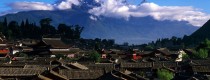 Lijiang
 Shangri-la
 Dali
Dali
 XishuangBanna
 Honghe
 Kunming
 Lijiang
 Shangri-la
 Yuanyang Rice Terraces
 Nujiang
 XishuangBanna
 Spring City Golf
 Snow Mountain Golf
 Stone Mountain Golf









Yunnan Birding Tours in April
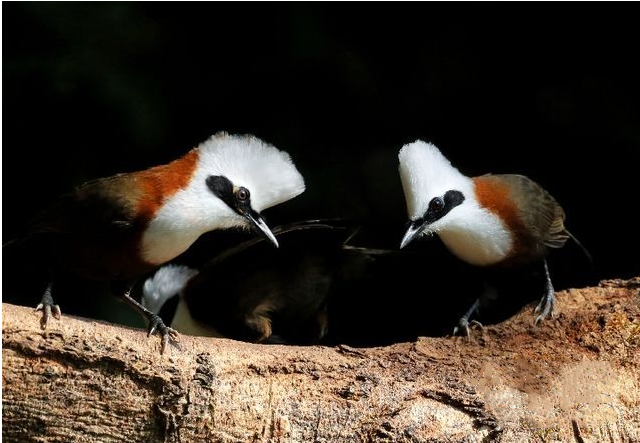
April is an exceptional month for birdwatching in Yunnan, offering diverse habitats across central, western, and northwestern regions. Key birding sites include Kunming’s Jinguishan Bird Ponds, the Gaoligong Mountains near Baoshan, Dehong’s Hornbill Valley, wetlands around Dali and Lijiang, and the high-altitude grasslands of Shangri-La’s Napa Lake. Birdwatchers can observe rare and endemic species such as the Black-necked Crane, Blue-throated Sunbird, and Rhinoceros Hornbill, with ample opportunities for behavioral photography during breeding and feeding seasons. Weather is generally mild but variable, necessitating layered clothing and versatile gear. To maximize the experience, visitors should consider early morning excursions, use appropriate optics and lenses, and respect wildlife regulations including drone restrictions and no-flash policies. Advance planning, including booking permits and local guides, is recommended to access protected areas and hidden birding gems. This comprehensive guide helps optimize itineraries and equipment choices for an immersive and rewarding birding adventure in Yunnan during April.
In April, Yunnan is a prime destination for birdwatching, offering a diverse array of bird species. Here is a list of some birds you might encounter:
- Yunnan Nuthatch (Sitta yunnanensis)
- Giant Nuthatch (Sitta magna)
- Mrs. Hume’s Pheasant (Syrmaticus humiae)
- Green Cochoa (Cochoa viridis)
- White-browed Fulvetta (Fulvetta vinipectus)
- Spot-breasted Parrotbill (Paradoxornis guttaticollis)
- Black-headed Greenfinch (Chloris ambigua)
- Fire-tailed Myzornis (Myzornis pyrrhoura)
- Blue-winged Minla (Minla cyanouroptera)
- Red-tailed Laughingthrush (Trochalopteron milnei)
- Collared Myna (Acridotheres albocinctus)
- White-rumped Munia (Lonchura striata)
- Silver-eared Mesia (Leiothrix argentauris)
- Chestnut-crowned Warbler (Seicercus castaniceps)
- Rusty-capped Fulvetta (Alcippe dubia)
- Black-necked Crane (Grus nigricollis)
- Himalayan Bluetail (Tarsiger rufilatus)
- Scarlet Finch (Carpodacus sipahi)
- Brown-winged Parrotbill (Sinosuthora brunnea)
- Gould’s Sunbird (Aethopyga gouldiae)
- Eurasian Hoopoe (Upupa epops)
- Grey-headed Woodpecker (Picus canus)
- Slaty-backed Forktail (Enicurus schistaceus)
- Yellow-bellied Flowerpecker (Dicaeum melanoxanthum)
- Asian Fairy-bluebird (Irena puella)
- Chestnut-tailed Minla (Minla strigula)
- Rufous-throated Partridge (Arborophila rufogularis)

Where to Take Birdwatching in Yunnan in April
Central Yunnan Region (Kunming and Surroundings)
Top Birding Spots & Photography Highlights
Jinguishan Bird Ponds (金龟山鸟塘) — about 35 km from Kunming
Pond No.1: Excellent for capturing Common Kestrel (Falco tinnunculus) hunting mice, best to stake out before 5:30 AM.
Pond No.2: Active periods for White-bellied Tragopan (Tragopan caboti) are early morning (6:00-8:00) and late afternoon (17:00-18:30), with a high chance to spot both males and females together.
Pond No.3: Key stopover for migratory forest birds like Brown-backed Shrike (Lanius vittatus) and Grey-headed Woodpecker (Picus canus).
Jindian Rear Hill Bird Pond (金殿后山鸟塘)
Blue-throated Sunbird (Anthreptes malacensis): Photograph feeding moments on cherry blossoms, best light from 9:00 to 11:00 AM.
Dark Green White-eye (Zosterops virens): Often mixed with Grey-bellied White-eye (Zosterops poliogastrus), distinguishable by their distinct calls.
Dianchi Lake Wetlands (滇池湿地群)
Haihong Wetland (海洪湿地): In early to mid-April, flocks of Black-headed Gull (Chroicocephalus ridibundus) can be observed feeding interactively around 8:00-9:00 AM.
Baofeng Wetland (宝丰湿地): Look for Crested Ibis (Nipponia nippon) foraging on tidal flats at low tide; a 600mm+ lens is recommended.
Western Yunnan – Gaoligong Mountains & Dehong Region
Highlights
Baoshan Baihualing (保山百花岭)
Pond No.77: Observe male Blood Pheasant (Ithaginis cruentus) losing its red breeding plumage and females incubating chicks.
Waterfall Loop:
Sword-billed Wren (Ensifera ensifera) frequents rocky stream cliffs—patience required for over 20 minutes.
Chestnut-crowned Bush Warbler (Cettia major) calls sound like “ding-ling-ling,” follow trail sounds backward.
Accommodation: Recommended stay at Old Houjia Guesthouse (老侯家民宿) including bird pond shuttle and three meals (~150 RMB/person/day).
Dehong Yingjiang Hornbill Valley (德宏盈江犀鸟谷)
Rhinoceros Hornbill (Buceros rhinoceros): April is the tail end of viewing season; stake out ponds #8 and #10 near Shiti Village before 6:30 AM.
Grey Peacock-Pheasant (Polyplectron bicalcaratum): Best photographed near Nabang Town’s farmland edges using camouflaged hides to capture courtship displays.
Border Reminder: Carry valid ID; avoid photographing border security installations.
Northwestern Yunnan Lakes and Wetlands
Dali Jianhu Wetland (大理剑湖湿地)
Oriental Stork (Ciconia boyciana): Concentrated in shallow eastern lake zones, cohabiting with Purple Swamphen (Porphyrio porphyrio).
Early Morning Fog Shots: Arrive by 5:30 AM at the bird observation deck to capture silhouettes of flying flocks.
Lijiang Lashihai Lake (丽江拉市海)
Chinese Merganser (Mergus squamatus): Frequent reed beds north of fishing villages; a long telephoto lens needed for underwater hunting shots.
Black-headed Gull Interaction: Feeding small fish at Migratory Bird Bay lures gulls close.
Shangri-La Napa Lake (香格里拉纳帕海)
Black-necked Crane (Grus nigricollis): A resident population can be seen daily on the grasslands about 8 km along the ring road until April 10th.
High-altitude Botanical Garden: Observe White-necked Stork (Ciconia episcopus) nests through binoculars.
Featured Bird Behavior & Photography Guide
| Bird Species | Behavior Scene | Photo Tips |
|---|---|---|
| Red-billed Blue Magpie (甸中鸟塘) | Carrying nesting material during chick-rearing | Continuous shooting to capture flight paths; choose dark woodland backgrounds |
| Green-throated Bee-eater (那邦镇) | Hovering and catching insects in teak forest | Use fast shutter speed (1/2000s) to freeze wings |
| Chestnut-tailed Minla (黄龙箐) | Spiraling up and down tree trunks | Pre-focus on bark crevices and wait for bird to enter |
Important Reminders
Equipment Recommendations
For pond bird photography: Use a 500mm lens with 1.4x teleconverter; keep ISO under 800 to minimize noise.
Essential gear: 8-10x binoculars for identifying distant species.
Prohibited Actions
Drones strictly forbidden to avoid disturbance (especially at Napa Lake and Nianhu Lake).
Flash photography prohibited during breeding seasons; maintain a minimum 30-meter distance from birds.
Itinerary Optimization
Gaoligongshan: Finish bird pond shooting before 9:00 AM, then move to waterfall loop for afternoon shade.
Hornbill Valley: Schedule early in the trip to avoid seasonal declines starting in May.
Hidden Experiences
At Jianhu Wetland, night-time listening for the calls of the Yunnan Narrow-mouthed Frog (Microhyla pulchra) forms a natural symphony with bird songs.
Advance booking (at least 3 days prior) required for most protected area visits; contact management stations for permits and guide services.
Kunming
- Cuihu Park (Green Lake Park)
- Dianchi Lake
- Xishan Forest Park
Qujing
- Nianhu Lake Nature Reserve
- Daqiao Township
Yuxi
- Fuxian Lake
- Yuxi Wetland Park
Baoshan
- Gaoligongshan Nature Reserve
- Baoshan Birding Areas
Lijiang
- Lashihai Lake
- Lijiang Ancient Town
Puer
- XiaoAoZi Coffee Farm
- Zhenkang Nansan Hongyan Smart Coffee Plantation
Zhaotong
- Dashanbao Black-necked Crane Nature Reserve
Dehong
- Yingjiang County Birdwatching Sites
- Tengchong Volcanic Park
Nujiang
- Nujiang Valley
- Gaoligongshan Nature Reserve
Dali
- Erhai Lake
- Cangshan Mountain
Honghe
- Yuanyang Rice Terraces
- Jianshui Birding Areas
Wenshan
- Puzhehei Scenic Area
- Wenshan Zhuang and Miao Autonomous Prefecture
Xishuangbanna
- Xishuangbanna Tropical Botanical Garden
- Menglun Nature Reserve
Chuxiong
- Zixi Mountain
- Chuxiong Yi Autonomous Prefecture
Diqing
- Shangri-La
- Pudacuo National Park
Lincang
- Tea Plantation Birdwatching Areas
-
Lincang Birding Trails
Birdwatching Travel Tips in Yunnan in April
Preparation
- Equipment: Bring binoculars, a spotting scope, a camera with a telephoto lens, and a field guide for bird identification.
- Clothing: Wear lightweight, breathable clothing suitable for warm weather, along with sturdy walking shoes.
- Insect Repellent: Use insect repellent to protect against mosquitoes and other insects.
- Weather Protection: Carry a hat, sunglasses, and sunscreen to protect against the sun. A light rain jacket is also advisable for unexpected showers.
Travel Tips
- Local Guides: Hiring a local birding guide can enhance the experience by providing expert knowledge and navigating the best birdwatching spots.
- Timing: Early morning and late afternoon are the best times for birdwatching when birds are most active.
- Respect Wildlife: Maintain a respectful distance from birds to avoid disturbing their natural behaviors.
- Accommodation: Choose accommodations close to birdwatching sites for convenient access. Many reserves and parks have nearby lodges or guesthouses.
By following these tips and visiting the recommended locations, birdwatchers can have a rewarding and enjoyable experience exploring Yunnan’s rich avian diversity in April.