Yunnan Guide
  • Yunnan Guide
  • Travel Tips
  • Tour Planing
  • Ethnic Culture
  • Yunnan Climate
  • Golf Courses
  • Travel Articles
  • Hulusheng Dance of Lahu Ethnic Minority

    22/05/2019Crazy Jone5091 wordsAbout 17 minutes

    The Hulusheng Dance (葫芦笙舞) is one of the most representative large-scale dances of the Lahu ethnic group (拉祜族). It is mainly popular in Lahu villages of Mangnuo Township (忙糯乡), Mengmeng Town (勐勐镇), Dawen Township (大文乡), and Mengku Town (勐库镇) in Shuangjiang Lahu, Wa, Blang, and Dai Autonomous County (双江拉祜族佤族布朗族傣族自治县), Lincang City (临沧市), and Mujia Township (木戛乡) in Lancang Lahu Autonomous County (澜沧拉祜族自治县), Pu’er City (思茅市).

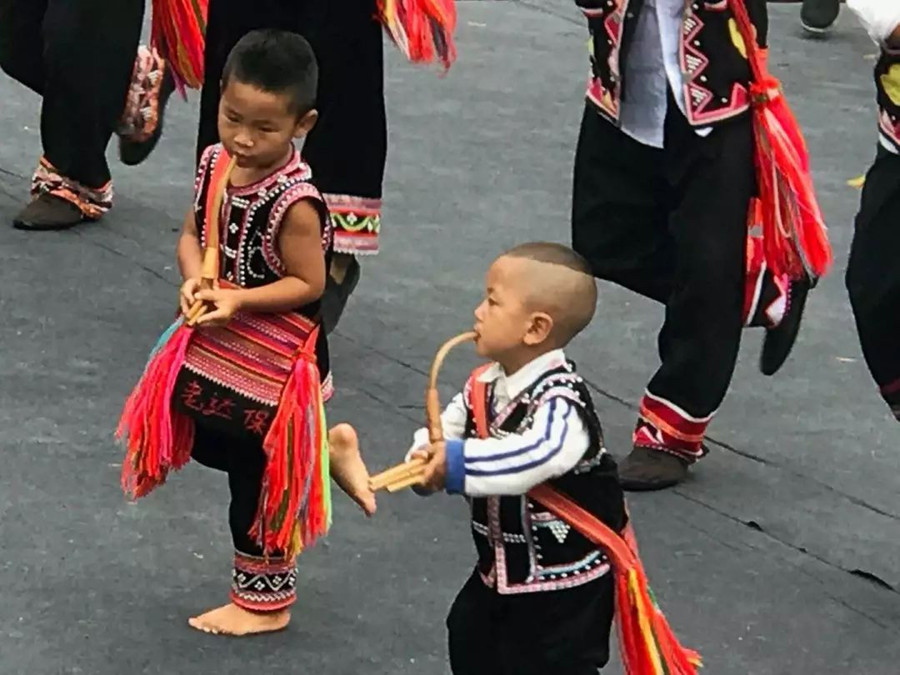
    This folk dance is performed with the hulusheng (葫芦笙, a gourd flute) as the main accompaniment. Historical records such as the Yunnan Gazetteer (《云南通志》) of the Daoguang reign note that when the Lahu gathered, they drank wine and danced to the sound of the hulusheng.

    Chinese Name: Lahu Ethnic Group Hulusheng Dance (拉祜族葫芦笙舞)
    Occasions: Festivals and leisure time after labor
    Forms: Religious and ritual activities; weddings, funerals, and entertainment occasionsHulusheng Dance of Lahu Ethnic Minority

    Introduction

    The Hulusheng Dance integrates religion, ritual, daily life, entertainment, and art. It vividly reflects the Lahu spirit and their identity as the “Tiger Hunting People” (猎虎民族).

    According to Lahu legend, the deity Esha (厄莎) created the Lahu people from a gourd and taught them farming. Thus, the gourd became a sacred symbol of the maternal origin of their ancestors. After harvest, the Lahu performed sacrificial dances to thank the gods.

    With the development of society, the religious function of the dance gradually diminished, and its entertainment aspect grew stronger. Eventually, it became an independent folk dance while still being central to traditional festivals that preserved its artistic expression.


    Activities

    Performance in Festivals and Daily Life

    The Hulusheng Dance is performed both during festivals and after labor. Legends say there are over 80 dance sets. Movements often imitate farming activities, daily life, or animals.

    • Harvesting rice: sweeping the legs inward or stretching outward.
    • Dove picking grains: imitating birds pecking and playing.

    Men dance in the inner circle while playing the hulusheng, with complex movements, while women hold hands in the outer circle with simpler steps. The tempo usually starts slow and gradually accelerates, with larger movements toward the climax.

    The dance strengthens ethnic unity, joy, and confidence, especially in Lahu-majority regions west of the Lancang River (澜沧江).

    Hulusheng Dance of Lahu Ethnic Minority

    Forms of Practice

    The Hulusheng Dance has two forms:

    1. Ritual Form: Performed during traditional festivals such as Shenlin (神林) on the 15th day of the 8th lunar month and Kuota (扩塔, Spring Festival). It follows fixed sequences, starting with the “Opening Song” (起歌), continuing for days, and ending with the “Main Road Song” (大路歌).
    2. Entertainment Form: Performed at weddings, funerals, and casual gatherings. It is freer in structure and can be improvised.

    During Spring Festival, entire villages or even multiple villages gather to dance together, sometimes with hundreds of teams singing and dancing in unison, lasting up to half a month.


    Lancang County Hulusheng Dance

    Known in the Lahu language as “Jiake” (戛克), this variation includes nearly 100 sets of movements, of which 98 have been documented. They are categorized as:

    • Ritual dances (10 sets), such as Gaji (嘎祭) and Gaji Gen (嘎祭根), which feature solemn movements of worship.
    • Agricultural labor dances (35 sets), imitating slash-and-burn farming, such as clearing fields, plowing, sowing, and harvesting.
    • Daily life dances (13 sets), imitating domestic activities.
    • Animal dances (20 sets), imitating birds and beasts.
    • Emotional dances (20 sets), expressing joy, harvest celebrations, or hunting triumphs.

    Lancang’s Hulusheng Dance has become a popular celebration dance, known for its artistry and visual appeal. It has won national awards and is taught in local schools as part of folk dance education.


    Shuangjiang County Hulusheng Dance

    Also called “Dagē” (打歌), this version preserves older and more rustic artistic styles. Typically, men dance counterclockwise in circles while playing the hulusheng, and women join around them. Dancers range from a handful to several hundred.

    “Dagē” has 72 routines grouped into six categories: agriculture, daily life, entertainment, animals, social customs, and non-agricultural labor. Steps include stamping, kicking, turning, squatting, and leaping, combining grace with humor.

    The dance is transmitted orally, led by “Singers-in-Chief” (歌头). Each village maintains cultural troupes of 50–100 members, and the tradition has spread throughout Lincang and neighboring regions, becoming a cultural hallmark of the Lahu.


    Historical Development

    The Hulusheng Dance has a long history, retaining elements of ancient ritual, labor, and festive dances. It reflects the evolution of Lahu religious practices, agricultural life, and festivals.

    Originally tied to primitive religion, it incorporated ritual gestures such as Gaji, Sweeping Out, Sweeping In, and Praying for Blessings. Over time, these naturalistic movements were codified into structured dance sets, documenting the development of Lahu society.

    This integration of belief, farming, and festivity ensured the dance’s vitality across generations, elevating it from sacred ritual to artistic symbol of Lahu identity and spirit.


    Content and Meaning

    The Hulusheng Dance draws heavily from Lahu life:

    • Worship of ancestral deities.
    • Animal imitations.
    • Scenes of farming, hunting, and household chores.
    • Expressions of joy, unity, and vitality.

    It reflects the close relationship between the Lahu people’s livelihood and their spiritual traditions. As a communal dance, it embodies ethnic consciousness, aesthetics, moral values, and unity.


    Significance

    Festivals are not only cultural carriers but also expressions of ethnic identity, values, aesthetics, and beliefs. The Hulusheng Dance effectively preserves Lahu material and spiritual culture.

    It plays a vital role in inheriting traditions, promoting ethnic culture, and strengthening the collective spirit of the Lahu people.

    ENQUIRY

    Have a question before booking? Message us to learn more.
    Click to change