Yunnan Guide
  • Yunnan Guide
  • Travel Tips
  • Tour Planing
  • Ethnic Culture
  • Yunnan Climate
  • Golf Courses
  • Travel Articles
  • Wenshan City History

    27/06/2018Crazy Jone9474 wordsAbout 32 minutes


    Wenshan City (文山市, Wenshan Shi)—formerly Wenshan County (文山县, Wenshan Xian)—is the capital of Wenshan Zhuang and Miao Autonomous Prefecture (文山壮族苗族自治州, Wenshan Zhuangzu Miaozu Zizhizhou) in Yunnan Province (云南省, Yunnan Province). Located in southeastern Yunnan (滇东南, Dian Dongnan) near the China–Vietnam border, Wenshan has long served as the political, economic, and cultural center of the region.

    The city's history can be traced back to the Neolithic Age, evolving through multiple historical stages including the Juting Ancient Kingdom, imperial county administration, the Tusi chieftain system, prefectural governance, and finally its modern role as the capital of an autonomous prefecture.

    Today, Wenshan is widely known as the “Capital of Sanqi”, referring to the famous medicinal herb Notoginseng (Sanqi – Sanqi / 三七), and is also a center for Juting culture, ethnic culture, and revolutionary “Red Culture.”


    Prehistoric Era and the Juting Kingdom

    (Ancient Times – 221 BC)

    Early Human Activity

    Archaeological evidence shows that around 50,000 years ago, early humans known as Xichou Man (西畴人, Xichou Ren)—belonging to Late Homo sapiens—were active across the region of present-day Wenshan Prefecture. The area around modern Wenshan City was one of their important habitats, leaving behind Paleolithic cultural remains.

    During the Neolithic Age, permanent settlements emerged. Local communities practiced rice cultivation, hunting, and pottery-making, while maintaining frequent cultural exchanges with neighboring ethnic groups. The region became a crossroads where ancient populations such as the Baiyue (百越族群, Baiyue Zuqun), Di-Qiang (氐羌族群, Diqiang Zuqun), and Baipu (百濮族群, Baipu Zuqun) interacted and merged.

    Juting Ancient Kingdom

    From the Warring States Period (战国时期, Zhanguo Shiqi) to the early Western Han Dynasty, Wenshan was part of the influence zone of the Juting Kingdom (句町国, Juting Guo), a powerful ancient state in southwestern China.

    The capital of Juting was located in present-day Guangnan County (广南县, Guangnan Xian), while the Wenshan area served as an important cultural and economic hinterland. The kingdom operated under a tribal alliance system and developed advanced rice agriculture, bronze metallurgy, and bronze drum culture.

    In 81 BC, the Juting ruler Wu Bo (毋波, Wubo) assisted the Han Dynasty (汉朝, Han Chao) in suppressing local rebellions and was granted the title King of Juting (句町王, Juting Wang). This marked the beginning of closer interaction between the Central Plains civilization and the southeastern Yunnan frontier.


    Qin–Han to Northern and Southern Dynasties

    (111 BC – 589 AD)

    Establishment of Imperial Administration

    In 111 BC, during the reign of Emperor Wu of Han (汉武帝, Han Wudi), the Han Empire launched campaigns in southwestern China and incorporated the region into its territory. The government established Dumeng County (都梦县, Dumeng Xian) in the Wenshan area, under Zangke Commandery (牂牁郡, Zangke Jun). This was the earliest county-level administrative unit in the region.

    Relations between the Juting rulers and the Han court fluctuated over time. During the reforms of Wang Mang (王莽, Wang Mang), the title of “king” was reduced to “marquis,” which led to several local uprisings.

    Administrative Changes through Dynasties

    Throughout the following centuries, the region experienced multiple administrative adjustments:

    • Eastern Han Dynasty (东汉, Dong Han): Dumeng County remained under Zangke Commandery.

    • Shu Han Kingdom (蜀汉, Shu Han): The county was renamed Dutang County (都唐县, Dutang Xian) under Xinggu Commandery (兴古郡, Xinggu Jun).

    • Western Jin Dynasty (西晋, Xi Jin): The area continued as Dutang County under Ning Province (宁州, Ningzhou).

    • Eastern Jin and Southern Dynasties (东晋—南朝, Dong Jin – Nan Chao): The region remained under Xinggu Commandery.

    • Northern Zhou Dynasty (北周, Bei Zhou): It became part of Nanning Prefecture (南宁州, Nanning Zhou), during a period when central control weakened and local tribal influence grew stronger.


    Sui, Tang, Song, and Yuan Periods

    (581–1368)

    Sui and Tang Dynasties

    During the Sui Dynasty (隋朝, Sui Chao), the area fell under the Nanning Regional Administration (南宁州总管府, Nanningzhou Zongguanfu) as a frontier region governed through indirect rule.

    In the early Tang Dynasty (唐朝, Tang Chao), it was placed under Lang Prefecture (郎州, Langzhou) and Kun Prefecture (昆州, Kunzhou).

    During the Nanzhao Kingdom (南诏国, Nanzhao Guo) period (738–902), Wenshan became part of the Tonghai Military Governor’s Office (通海都督府, Tonghai Dudufu) and served as an important eastern military stronghold, where defensive cities and garrisons were built.

    Dali Kingdom and the Emergence of the Tusi System

    During the Dali Kingdom (大理国, Dali Guo) period (937–1253), the region belonged to Zuining Prefecture (最宁府, Zuining Fu) and was governed by the Jiaohua Three Tribes (教化三部, Jiaohua Sanbu). Local leaders from ethnic groups such as the Zhuang (壮族, Zhuangzu) and Yi (彝族, Yizu) ruled the region through hereditary authority—an early form of the Tusi chieftain system.

    Yuan Dynasty Rule

    After the Mongol conquest, the Yuan Dynasty (元朝, Yuan Chao) incorporated the region into Linan Circuit (临安路, Linan Lu) under Yunnan Province (云南行省, Yunnan Xingsheng).

    The imperial government formally implemented the Tusi system, appointing hereditary chieftains to govern local territories. The administrative seat of the Jiaohua Tusi was located in what is now Wenshan City, with the central government exercising indirect rule through these local leaders.


    Ming and Qing Dynasties: Formation of Wenshan County

    (1368–1911)

    Ming Dynasty Administration

    During the Ming Dynasty (明朝, Ming Chao), the region was governed by the Jiaohua Chieftain Office (教化三部长官司, Jiaohua Sanbu Zhangguansi) under Linan Prefecture (临安府, Linan Fu).

    While the hereditary chieftain system remained in place, the Ming government also introduced military garrison farms (卫所屯田, Weisuo Tuntian) and gradually encouraged Han Chinese migration, which accelerated agricultural development and cultural exchange.

    Establishment of Kaihua Prefecture

    A major turning point came during the Qing Dynasty (清朝, Qing Chao).

    • 1666 (Kangxi 5th Year): The Qing government created Kaihua Prefecture (开化府, Kaihua Fu), separating it from Linan Prefecture. The prefectural seat was established in Kaihua Town (开化镇, Kaihua Zhen) in present-day Wenshan City, making it the administrative center of southeastern Yunnan.

    • 1669: The territory of Weimo Prefecture (维摩州, Weimo Zhou) was incorporated into Kaihua Prefecture, expanding its jurisdiction.

    Origin of the Name “Wenshan”

    In 1730 (Yongzheng 7th Year), the Qing government established Wenshan County (文山县, Wenshan Xian) as the county attached to the prefectural seat. The name “Wenshan” originated from Dongwenshan Mountain (东文山, Dong Wenshan) located east of the city.

    The name carries a cultural meaning: “culture carries the Way, and mountains symbolize virtue.”

    During the late Qing period, Kaihua Prefecture governed several counties including:

    • Wenshan County (文山县, Wenshan Xian)

    • Anping Sub-Prefecture (安平厅, Anping Ting) – present-day Maguan County (马关县, Maguan Xian)

    • Qiubei County (丘北县, Qiubei Xian)

    Wenshan became the administrative, commercial, and educational center of the region. Institutions such as Wenshan Academy (文山书院, Wenshan Shuyuan) were established, and the city walls were rebuilt with brick during the Qianlong reign (乾隆年间, Qianlong Nianjian).

    Rise of Sanqi Industry

    The medicinal herb Notoginseng (Sanqi – Sanqi / 三七) began to be cultivated during the Ming Dynasty and flourished during the Qing Dynasty.

    Wenshan gradually became the original production area and distribution center of this famous herb. “Wenshan Sanqi (文山三七, Wenshan Sanqi)” gained national recognition and remains a key pillar of the local economy and traditional Chinese medicine culture.


    Republic of China Period

    (1912–1949)

    Administrative Changes

    In 1913, Kaihua Prefecture was abolished and replaced by Kaihua County.

    In 1914, the county name was restored to Wenshan County to avoid duplication with another county named Kaihua in Zhejiang Province (浙江省, Zhejiang Province). It was placed under Mengzi Circuit (蒙自道, Mengzi Dao).

    Later reforms abolished the circuit system, and Wenshan County became directly governed by Yunnan Province.

    Revolutionary Movement

    Wenshan also played a role in the revolutionary history of southwestern China.

    • 1927: The first Communist Party branch in the region was established in Wenshan City.

    • 1946: Underground party organizations resumed activities after earlier disruptions.

    • April 15, 1949: A democratic county government was established in Wenshan.

    • January 7, 1950: The county town was officially liberated and a People’s Government of Wenshan County was founded.


    Modern Era: From County to Prefecture Capital

    (1950 – Present)

    Autonomous Prefecture Formation

    In 1950, Wenshan became part of the Wenshan Administrative Region (文山专区, Wenshan Zhuanqu).

    In 1958, the Wenshan Zhuang and Miao Autonomous Prefecture (文山壮族苗族自治州, Wenshan Zhuangzu Miaozu Zizhizhou) was officially established, with Wenshan County as its capital. In 1961, the prefecture’s name was formally standardized.

    Establishment of Wenshan City

    On December 2, 2010, the State Council of China (国务院, Guowuyuan) approved the administrative upgrade of Wenshan County to Wenshan City, a county-level city that continues to serve as the capital of the autonomous prefecture.

    Today, Wenshan is positioned as:

    • The central city of southeastern Yunnan

    • The “Capital of Sanqi” in China

    • A gateway city for China–Vietnam border trade and cooperation


    Cultural and Historical Highlights of Wenshan

    Juting Cultural Heritage

    Wenshan lies within the historical sphere of the Juting Kingdom, making it an important center for ancient bronze drum culture and early rice agriculture in southwestern China.

    Sanqi Culture

    The city is globally famous for Notoginseng (Sanqi – Sanqi / 三七), a valuable medicinal herb used in Traditional Chinese Medicine for more than 500 years.

    Wenshan Sanqi (文山三七, Wenshan Sanqi) is recognized as a National Geographical Indication Product and plays a vital role in the region’s pharmaceutical and agricultural economy.

    Revolutionary “Red Culture”

    Wenshan is part of the revolutionary base areas of southeastern Yunnan, associated with the Laoshan Spirit (老山精神, Laoshan Jingshen) and Xichou Spirit (西畴精神, Xichou Jingshen)—symbols of resilience and dedication in modern Chinese history.

    Diverse Ethnic Culture

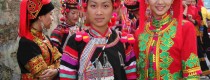
    The Wenshan region is home to 11 ethnic groups, including:

    • Zhuang (壮族, Zhuangzu)

    • Miao (苗族, Miaozu)

    • Yi (彝族, Yizu)

    • Yao (瑶族, Yaozu)

    Traditional festivals and customs—such as the “March 3 Festival” (三月三, Sanyue San), the Torch Festival (火把节, Huoba Jie), and Bronze Drum Dance (铜鼓舞, Tonggu Wu)—create a vibrant cultural landscape.


    Wenshan City’s history reflects the transformation of a frontier region—from tribal alliances to imperial administration, from Tusi chieftain rule to modern ethnic autonomy. Today, it stands as a dynamic cultural gateway in southeastern Yunnan and a living showcase of the region’s diverse heritage.


    More About

    ENQUIRY

    Have a question before booking? Message us to learn more.
    Click to change
  • Related Posts
  • Attractions
  • Related Categories